

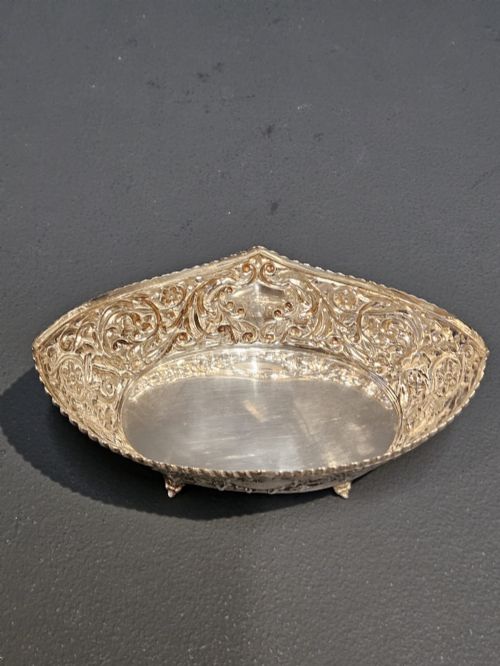
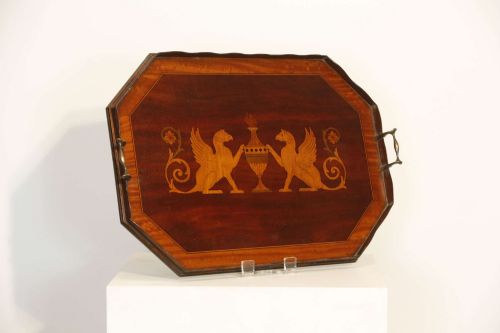
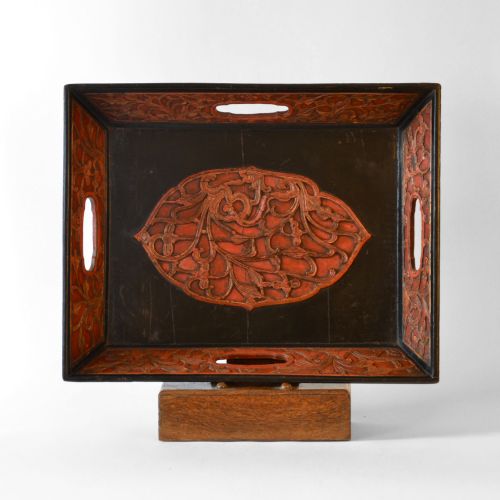

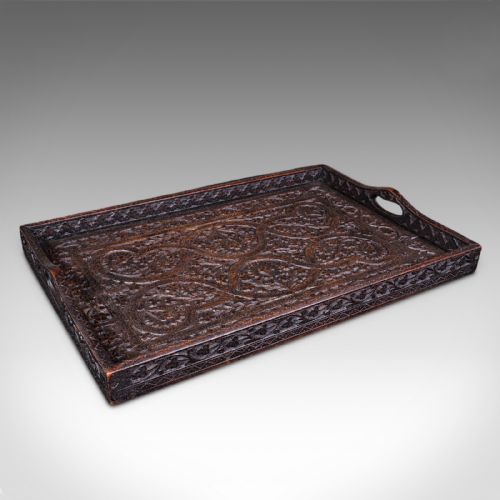
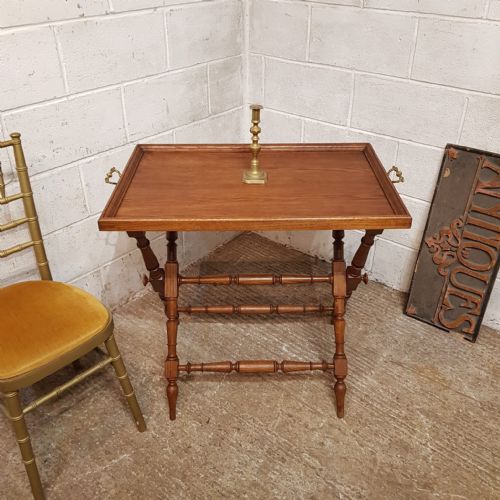

Carved Serving Tray
These carved serving tray selections bring substantial timber and careful handwork to the table, offering a practical centrepiece for hosting.
Carved Serving Tray
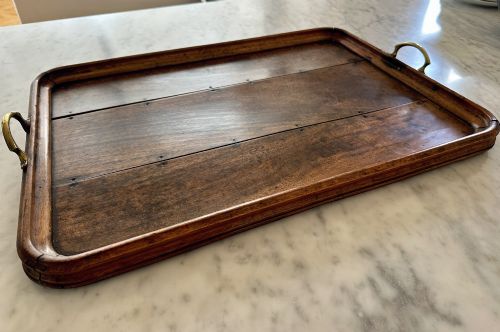
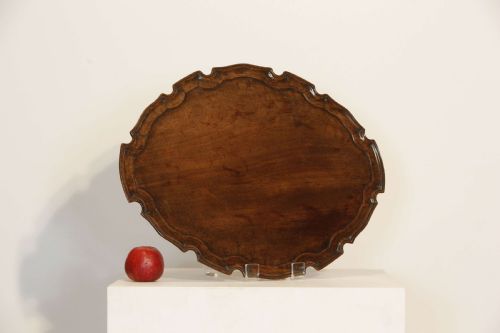
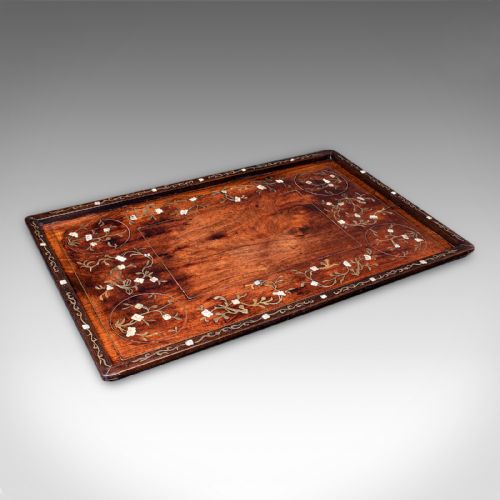
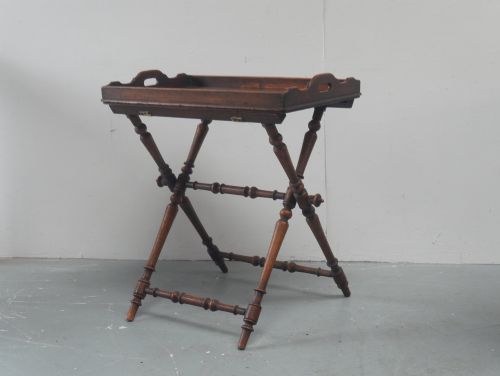
A carved serving tray takes many forms across the selection, ranging from nineteenth-century oak butler trays on folding stands to walnut Kashmiri platters and teak Anglo-Indian afternoon tea service pieces. Buyers searching for a carved serving tray encounter items spanning the Georgian period, the Victorian era, and early twentieth-century Edwardian and Art Deco designs.
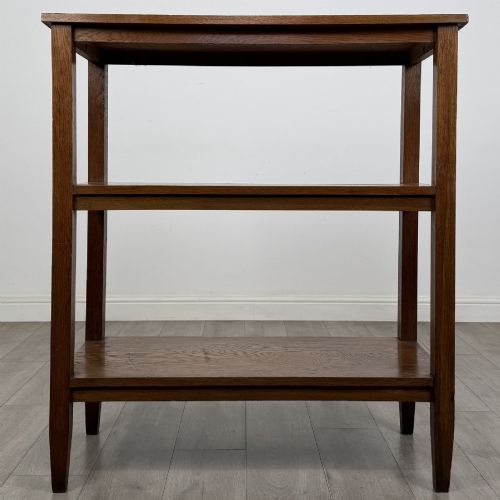
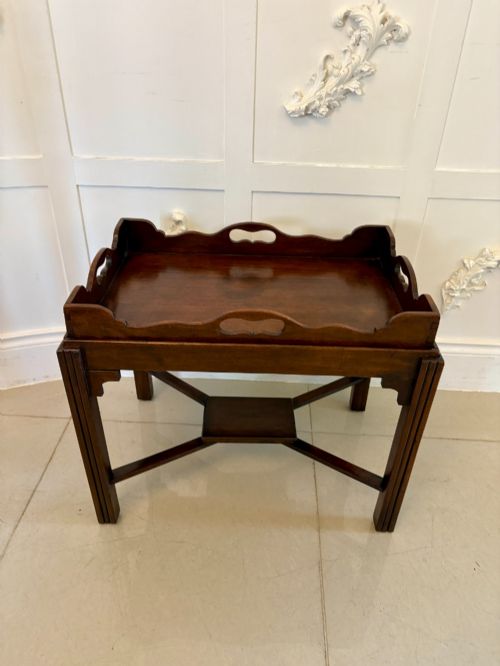
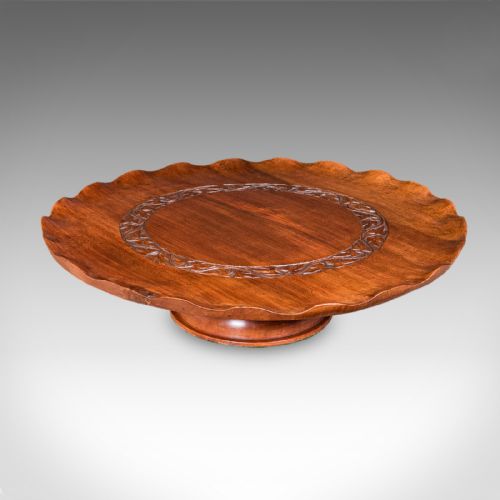
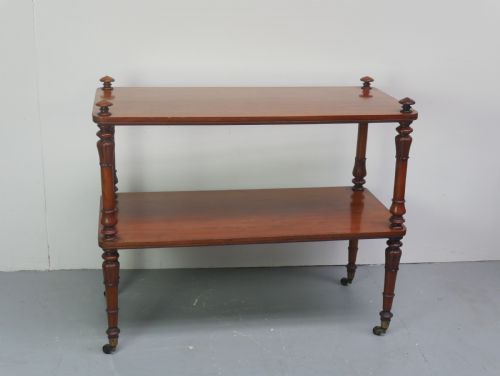
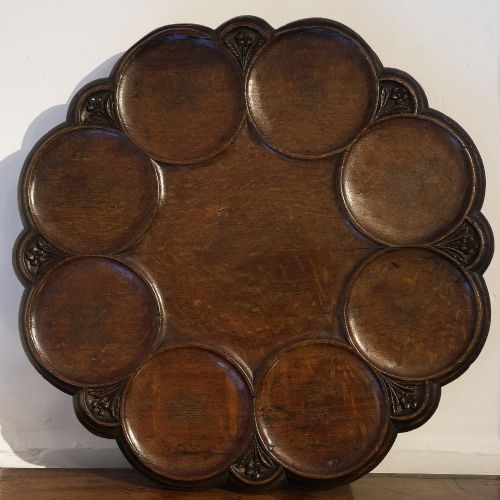
The assortment includes related serving vessels and furniture such as lazy susans, afternoon tea trolleys, galleried oval trays, and occasional tables with lift-off trays. Mahogany and oak dominate the timber choices, accompanied by brass, silver plate, and Chinese carved hardwood.
Victorian oak butler trays paired with folding stands appear frequently, alongside regional pieces from Kashmir and Anglo-Indian workshops. Each object reflects the domestic habits of its period, whether designed for portable tea service or revolving condiments.
How they were made
Craftsmen shaped these serving items from dense hardwoods including mahogany, teak, walnut, and oak, often employing deep hand-carving to create floral, foliate, or geometric borders. Timber sections were joined using traditional woodworking joints, while galleried edges and scalloped rims were fashioned directly from the solid wood or applied with separate mouldings.
Metal components such as brass circular trays and silver-plated warming dishes utilised sheet metal forming and applied handles, sometimes incorporating intricate engraved decoration. Where stands and trolleys accompany the trays, turned wooden legs and folding hinges provide stable support for heavy service use.
Carved Serving Tray Retail Price Guide 2026
Typical asking prices for carved serving tray among the pieces listed under this phrase on Sellingantiques today, from the lower quarter to the upper quarter. They describe what is for sale here now, not the wider market.
Several pieces include revolving lazy susans, proving that nineteenth-century diners appreciated effortless condiment rotation just as much as modern households do.
What varies in quality
The depth and crispness of the hand-carving define the upper tier of these pieces, distinguishing sharp relief work from softer, shallower execution. Timber selection also dictates grade, with finely figured mahogany and rich burr walnut achieving greater visual depth than plain utility hardwoods.
Structural integrity in folding mechanisms, galleried joints, and fitted stands separates everyday workshop production from superior examples. Original surfaces, patination, and intact brass or silver-plated mountings preserve the material honesty prized by collectors.
Maple & Co·Tiffany & Co
The Carved Serving Tray Glossary
- Butler tray
- A portable wooden tray with raised sides, frequently resting on a separate folding X-frame stand for domestic service.
- Galleried tray
- A tray featuring an elevated rim or gallery around the perimeter to secure items during transport.
- Lazy susan
- A revolving apparatus placed on a table or tray to allow easy sharing of dishes and condiments.
- Anglo-Indian
- A descriptive term for nineteenth-century furniture and decorative items made in India using British forms combined with local carving styles.
- Kashmiri tray
- A carved wooden platter originating from Kashmir, typically fashioned from walnut with dense floral relief carving.
Carved Serving Tray: Frequently Asked Questions
What is a butler tray stand?
A butler tray stand is a folding wooden base designed to support a removable tray at a comfortable height for serving.
These stands typically feature X-frame or scissor actions that allow them to be folded flat when not in use.
What distinguishes Anglo-Indian trays?
Anglo-Indian trays combine traditional British furniture shapes with intricate, dense hand-carved ornamentation executed by Indian artisans.
These pieces typically utilise dense tropical timbers such as teak and feature elaborate floral and foliate motifs.
Are these trays suitable for daily use?
Many of these pieces were built for active domestic service and remain sturdy enough for contemporary hosting.
Careful handling of antique timber and polished surfaces ensures these trays continue to function as intended.