


Carved Rosewood Side Cupboard
A carved rosewood side cupboard brings dense tropical grain and confident architectural presence to a room, drawing the eye with dark timber and crisp hand-carved detail.
Carved Rosewood Side Cupboard
A carved rosewood side cupboard is a low storage piece intended for the perimeter of a principal room, taking various forms from chiffoniers to credenzas and pier cabinets. These items originate predominantly from the nineteenth century, spanning Regency, William IV and Victorian periods, alongside later Anglo-Indian and Chinese export examples.
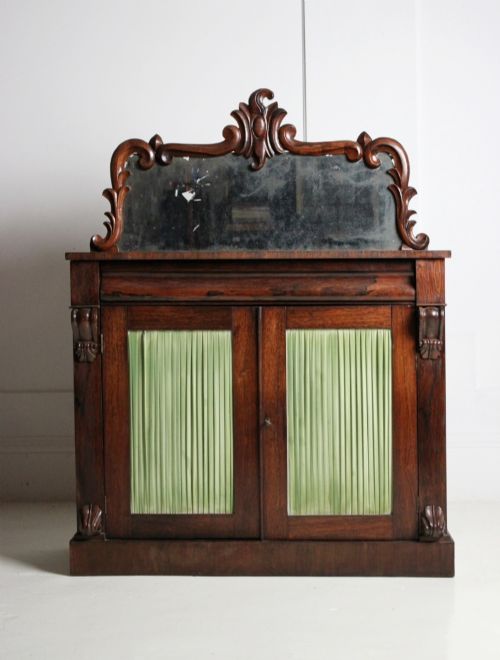
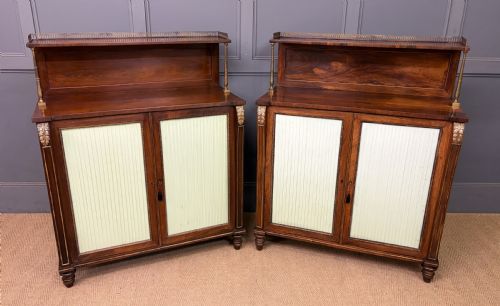
The version most commonly met on this page is the nineteenth-century side cabinet, often fitted with panelled doors or glass fronts. Pieces frequently reflect revivalist movements such as French Rococo, Egyptian Revival, and classical Regency design.
Makers and workshops utilised exotic hardwoods to construct low cabinets that doubled as display surfaces. Their proportions suited the formal reception rooms of the period, offering concealed storage beneath decorative tabletops.
What varies in quality
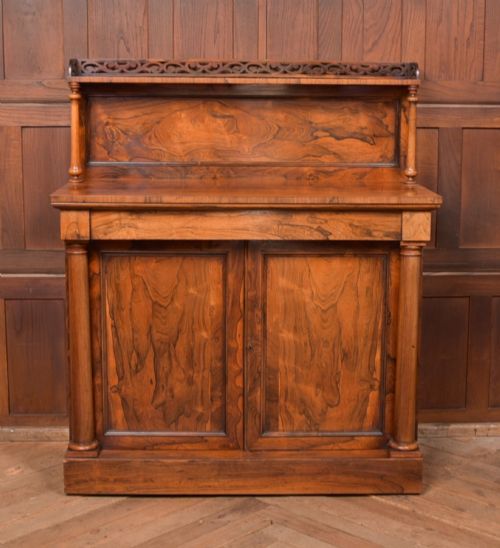
The standard of a carved rosewood side cupboard rests upon the crispness of the hand-carving and the selection of the timber grain. Finer examples display deep, deliberate chisel work that retains sharp edges, whereas lesser pieces show softer, more mechanical detailing.
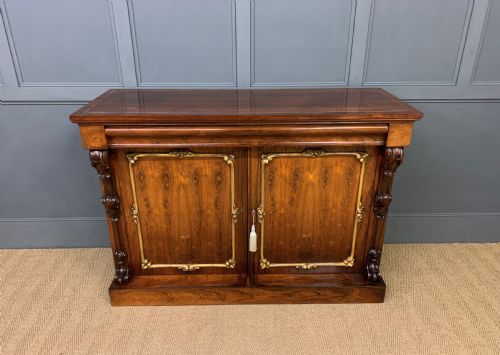
The choice of materials dictates the upper tier of the range, with select pieces featuring richly figured Rio rosewood or Gonçalo-Alvez paired with premium Ormolu mounts. Secondary woods and simpler internal fittings separate standard production items from master-carved workshop commissions.
Proportion and architectural cohesion define the distinction between ordinary and exceptional pieces. Integrated elements such as matching mirrors or precise Egyptian revival motifs demonstrate a higher tier of design intent.
Materials recorded on this page range from solid and veneered rosewood to brass, ormolu, marble, and silk.
The Carved Rosewood Side Cupboard Glossary
- Rosewood
- A dense, heavily figured tropical hardwood prized for its dark purple-brown colour and contrasting dark streaks. It takes a high polish and forms the primary material for these cabinets.
- Ormolu
- Gilded bronze applied as decorative mounts and feet on nineteenth-century furniture. This technique adds metallic brilliance against dark timber surfaces.
- Chiffonier
- A compact sideboard or low cabinet developed in the early nineteenth century, typically featuring enclosed shelving below and sometimes a raised back tier.
- Pier Cabinet
- A narrow display cabinet designed specifically to stand against the wall space between windows. These pieces often incorporate glass doors to showcase collections.
- Gonçalo-Alvez
- An exotic dense hardwood featuring striking contrasting dark brown and golden stripes. Cabinetmakers utilised it for high-status furniture during the Regency period.
Carved Rosewood Side Cupboard: Frequently Asked Questions
What is a carved rosewood side cupboard used for?
These cabinets serve as practical low storage units and display surfaces in living rooms, hallways, and dining spaces. Their enclosed shelving accommodates tableware, books, or collections while the top surface holds decorative objects.
Historically, they filled wall spaces between windows or anchored the perimeter of formal reception rooms. Today, they function effectively as media consoles, sideboards, or statement storage pieces in modern interiors.
How do I date a rosewood side cabinet?
Dating relies on stylistic markers, construction methods, and the specific revival movements evident in the carving. Regency and William IV pieces show classical restraint or bold architectural moulding, whereas Victorian examples often incorporate heavier relief carving and revivalist motifs.
Examining the secondary timbers inside the cabinet and the style of the brass hardware helps confirm the period. Nineteenth-century workshops left subtle clues in their joinery that separate early century work from late Victorian production.
How do I style a side cupboard at home?
Pair the dark timber grain against neutral walls to let the rich rosewood tones and carved details stand out. Placing a lamp, a bronze sculpture, or a collection of ceramics on the surface balances the visual weight of the low cabinet.
Because these pieces vary from compact bedside cabinets to wide credenzas, measure the wall space carefully before placement. They anchor a room well when paired with complementary antique seating or large mirrors.
Are these cabinets made of solid rosewood?
Many nineteenth-century pieces utilise rosewood veneers applied over stable secondary timbers like mahogany or pine to prevent warping. Solid rosewood construction appears on smaller components, mouldings, and deeply carved decorative elements.
The use of veneer allowed cabinetmakers to display striking grain patterns across large door panels without compromising the structural integrity of the furniture.