
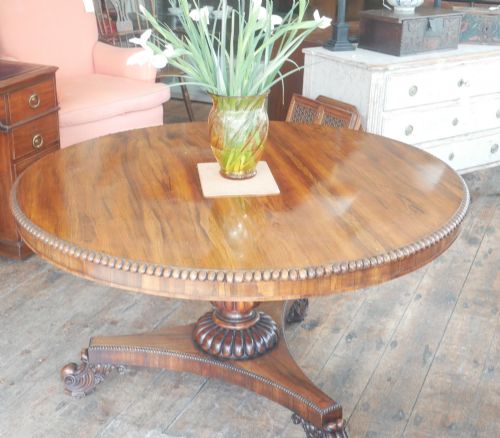


Carved Rosewood Library Table
A carved rosewood library table brings warmth and formal utility to a room, offering rich timber grain and structural presence suited to central placement.
Carved Rosewood Library Table
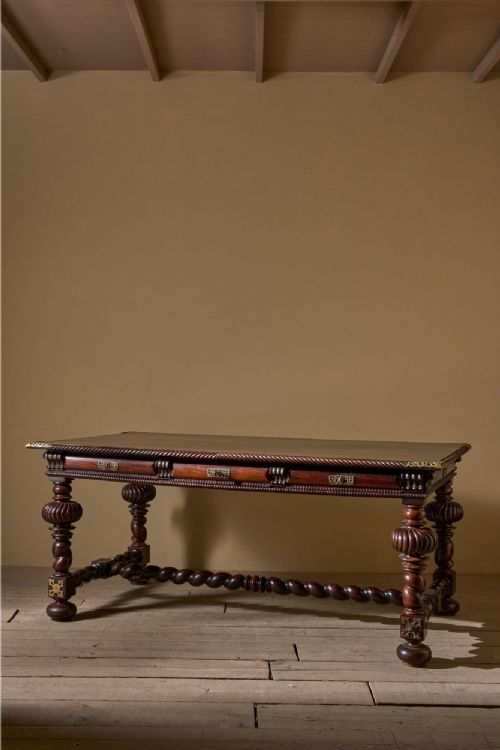
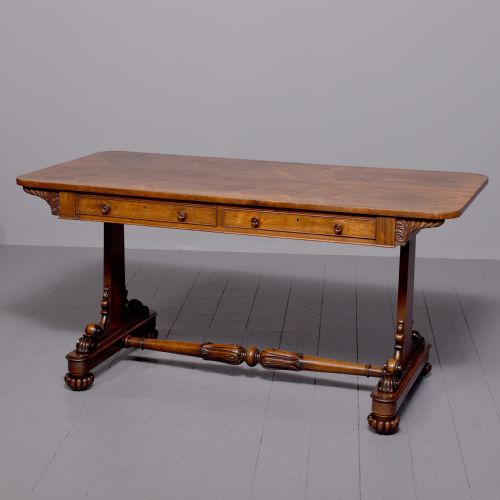
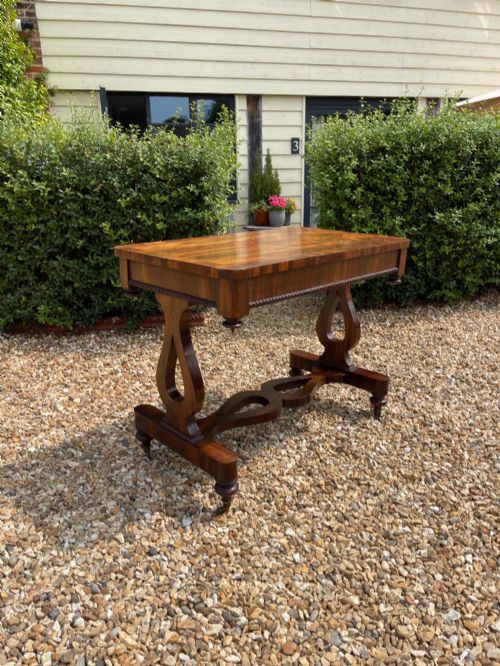
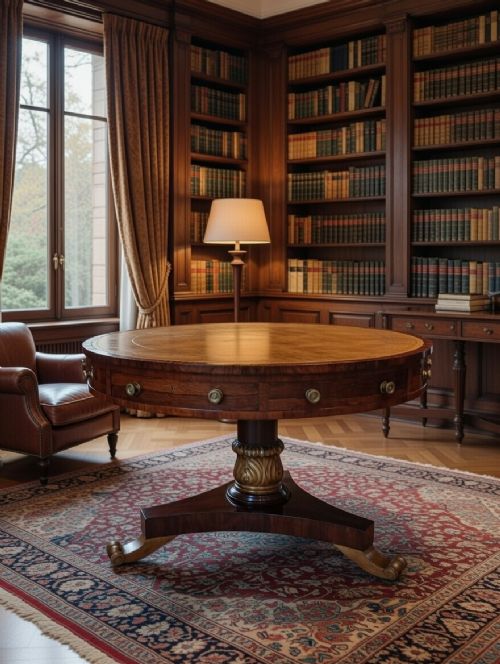
A carved rosewood library table is a substantial freestanding piece designed to sit in the middle of a room rather than against a wall. When you search for this phrase, you encounter heavy timber forms produced across the nineteenth century, spanning Regency, William IV, and Victorian periods.
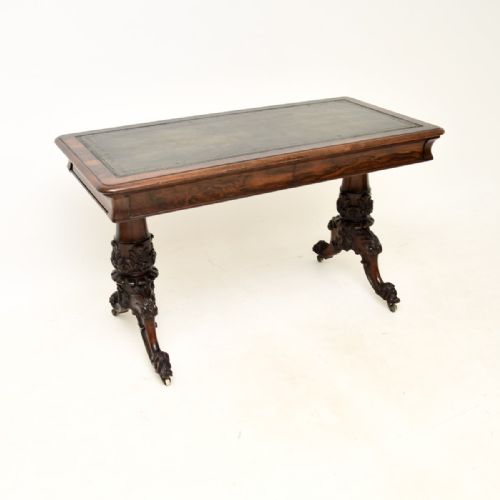
The versions most common on this page date from the Georgian era through to the late Victorian decades, featuring deep timber tops above carved pedestals or legs. Makers fashioned these surfaces for study and writing, often integrating drawers and leather inserts.
Origins stretch across British workshops, including pieces attributed to Gillows and Scottish makers, alongside Portuguese colonial examples in exotic woods. These tables serve equally as centre tables, writing desks, and freestanding library fixtures.
Materials and construction
Cabinet makers utilised dense rosewood veneers and solid timbers, sometimes pairing the primary wood with mahogany, oak, and zebrawood for secondary structures and internal framing. Brass castors, ceramic components, and inset leather writing surfaces provide functional contrast to the dark timber.
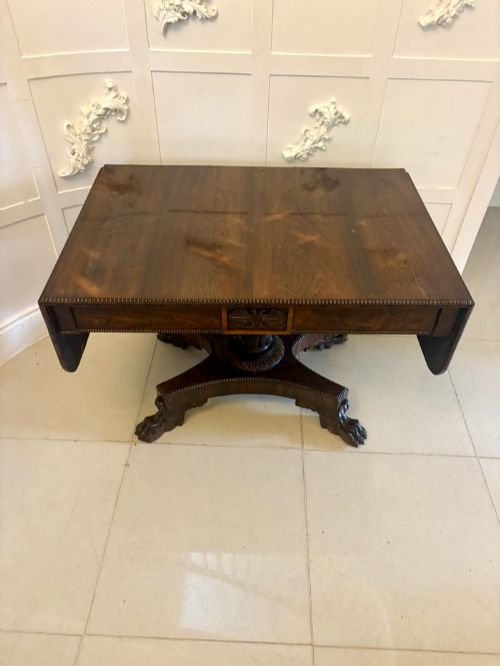
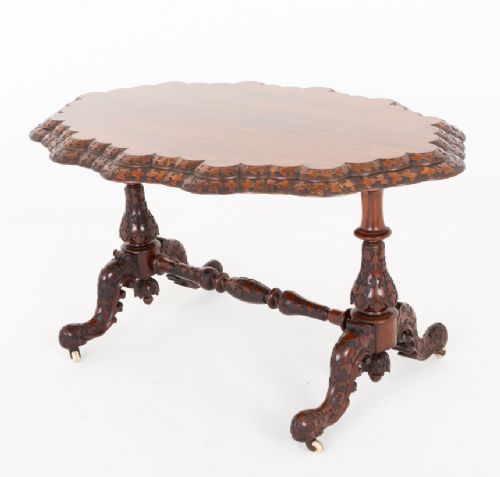
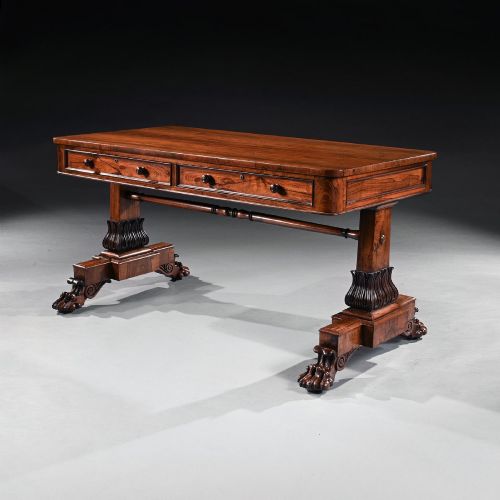
Carvers shaped heavy pedestals, lion paw feet, and stretcher supports by hand, relying on timber movement allowances and robust joinery to sustain large expanses of wood. Surface finishing depended on French polishing to heighten the natural figuring and deep red-brown tones of the rosewood.
Several tables feature carved lion paw feet designed to grip the floor with permanent feline vigilance.
The markers of quality
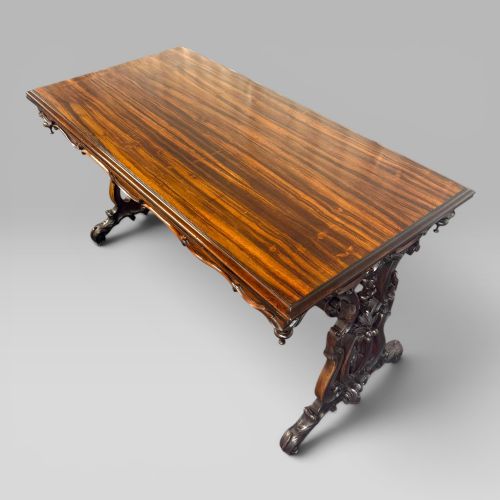
Quality rests upon the selection of timber figures and the crispness of the hand carving on feet and pedestals. Superior pieces display symmetrical grain patterns across the top and deeply undercut foliage or animal forms rather than shallow, mechanical moulding.
Construction integrity separates standard utility tables from exhibition pieces, particularly in the stability of the central pillar and the smooth operation of lined writing drawers. Gillows style elements and documented workshop attributions elevate certain examples through refined proportions and secondary wood selection.
Gillows·Mein of Kelso·William Trotter
The Carved Rosewood Library Table Glossary
- Rosewood
- A dense, heavily figured tropical hardwood prized for its dark grain and durability. Cabinet makers selected it for formal nineteenth-century library and centre tables.
- Library Table
- A large freestanding desk finished on all sides for placement in the centre of a room. These pieces typically include drawers and leather-lined writing surfaces.
- Sofa Table
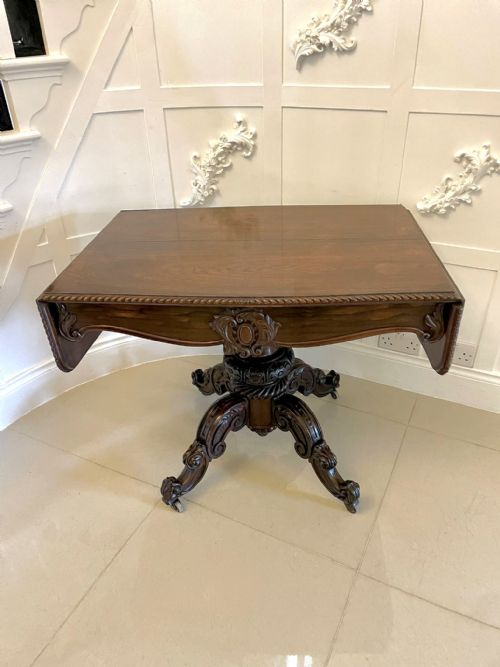
- A small rectangular table traditionally placed in front of a sofa, featuring drop leaves and often supported by trestle ends or pillar pedestals.
- Pedestal Table
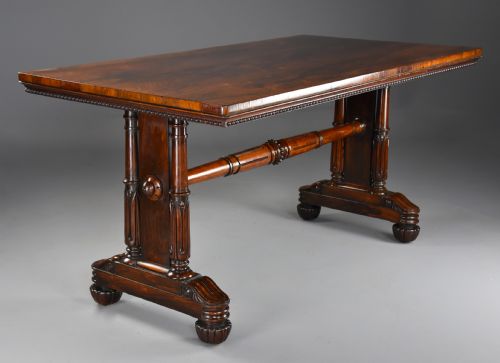
- A table supported by a central pillar rising from a platform base with feet. This design allows generous legroom around the perimeter.
- Gonçalo Alves
- A dense exotic timber with striking contrasting dark stripes, sometimes utilised interchangeably with rosewood in high-status nineteenth-century furniture.
Carved Rosewood Library Table: Frequently Asked Questions
How do I identify a library table?
A library table is distinguished by its finished back and sides, allowing it to stand away from walls in the middle of a room. Most examples include frieze drawers and a generous writing surface.
Unlike standard side tables, they are proportioned for seated study and feature robust central pillars or heavy legs designed to support substantial weight.
What is the difference between a centre table and a library table?
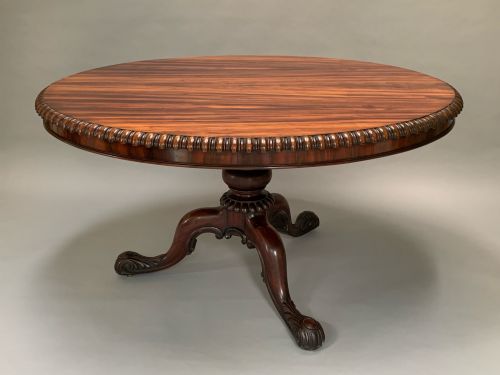
Centre tables tend to be circular or octagonal and serve a decorative or general utility function in the middle of a saloon or reception space. Library tables are typically rectangular, built specifically for reading, sorting papers, and writing.
Both types share the finished all-round construction that defines freestanding nineteenth-century furniture.
How do I care for a rosewood surface?
Rosewood requires stable humidity levels and protection from direct sunlight to prevent the timber from fading and the French polish from crazing. Dust the surface regularly with a dry cloth and avoid silicone-based polishes.
Conditioning the wood occasionally with appropriate microcrystalline wax preserves the depth of the grain without building up a sticky residue.
How can I tell a Regency table from a Victorian one?
Regency tables generally display cleaner classical lines influenced by Greek and Roman revival styles, often featuring brass inlay, rosewood crossbanding, and slender pillars. Victorian pieces tend to be heavier, with bolder, more deeply undercut carved ornamentation and substantial pedestals.
Examination of secondary woods and construction methods further clarifies the transition from early nineteenth-century minimalism to mid-century elaboration.