

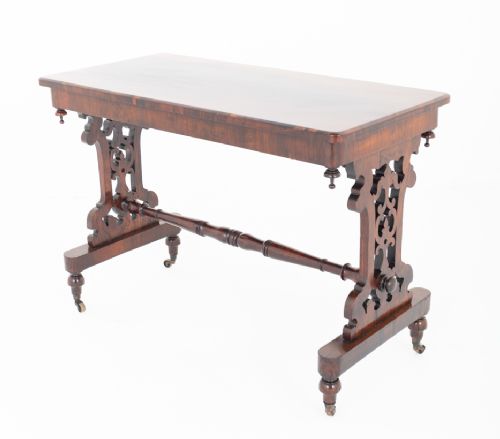
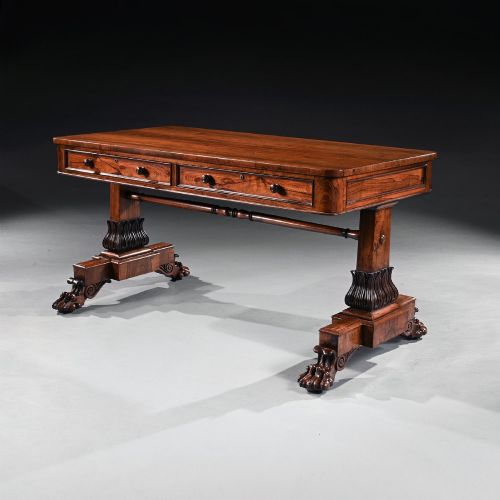
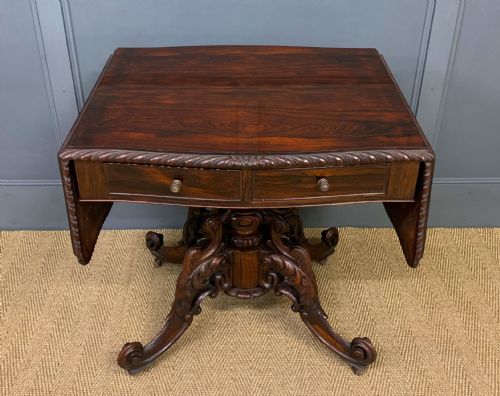
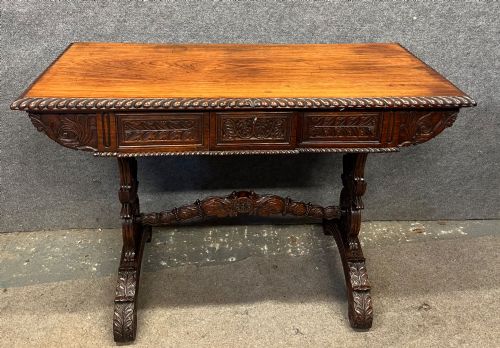


Carved Rosewood Library Desk
A carved rosewood library desk offers a heavy, dark timber surface designed for serious study during the nineteenth century.
Materials and construction
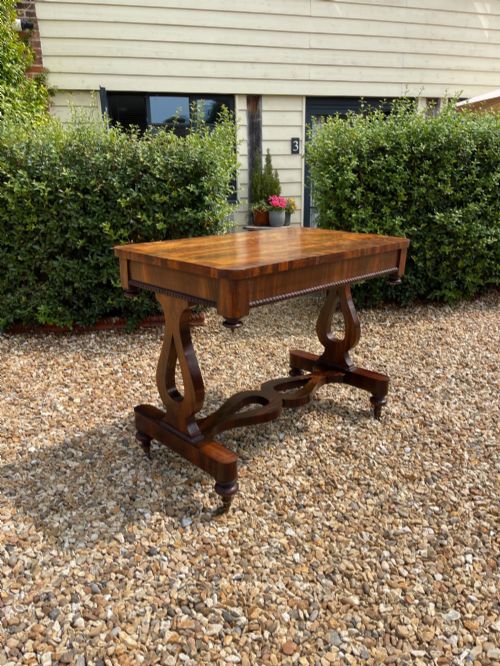
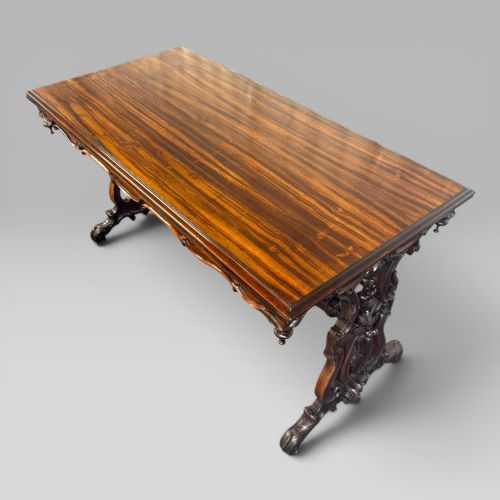
Cabinetmakers constructed these tables using solid rosewood or thick rosewood veneers laid over secondary timbers like mahogany and oak. Many examples incorporate secondary exotic woods such as zebrawood and goncalo alves to add contrast and visual depth to the tops and borders.
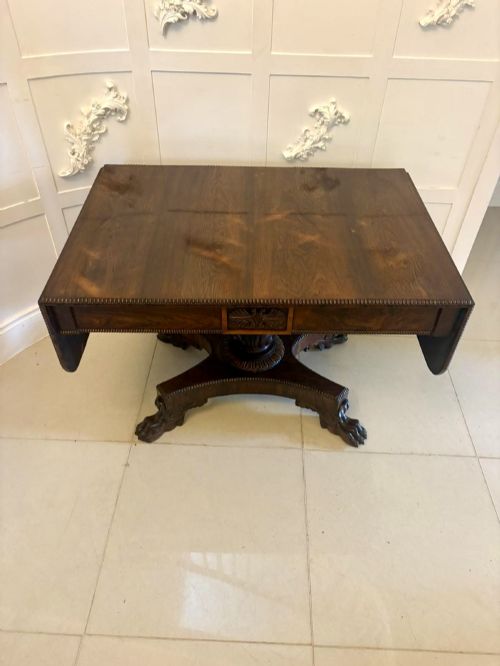
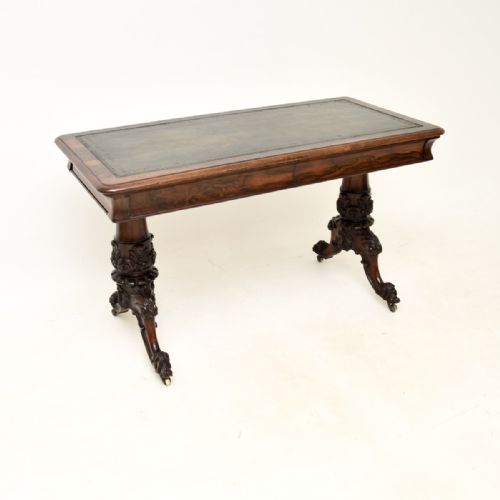
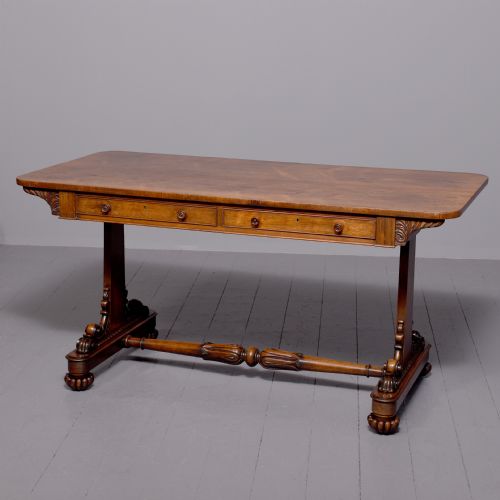
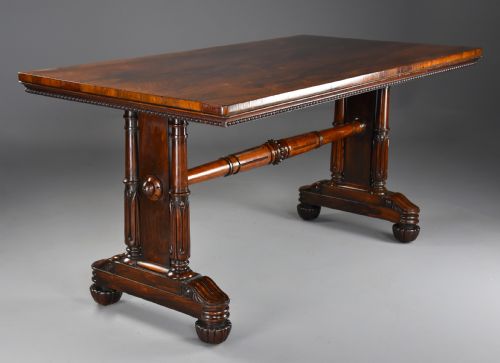
The structural elements rely on heavy pedestal bases, pillar supports, or carved cabriole legs that anchor the substantial weight of the timber top. Brass castors frequently conceal beneath carved feet to allow movement across heavy carpets.
Writing surfaces frequently inset panels of tooled leather or velvet into the timber frame, providing a contrasting texture for daily correspondence. Carved motifs on pedestals and stretcher rails demonstrate the hand-chiselled work characteristic of the period.
Evaluating craftsmanship and build
The distinction between ordinary and superior examples lies in the selection of the timber grain and the crispness of the hand-carved ornamentation. Finer tables display symmetrical figuring across large rosewood surfaces without distracting patches or mismatched veneers.
Structural integrity separates pieces built by prominent workshops from standard commercial production. High quality tables maintain rigid joints in the pedestal and stretcher framework, preventing wobble across heavy writing surfaces.
Carving depth and execution define the upper tier of these pieces, where foliage, scrollwork, and animal paws show sharp undercut details rather than soft, rounded moulding.
Carved Rosewood Library Desk Retail Price Guide 2026
Typical asking prices for carved rosewood library desk among the pieces listed under this phrase on Sellingantiques today, from the lower quarter to the upper quarter. They describe what is for sale here now, not the wider market.
Some library tables include hidden compartments designed for stashing private correspondence away from prying eyes.
Mein of Kelso·Gillows·William Trotter
The Carved Rosewood Library Desk Glossary
- Rosewood
- A heavy, dense tropical timber prized for its dark purple-brown colour and contrasting black grain figures. It forms the primary structural and visual medium for nineteenth-century library furniture.
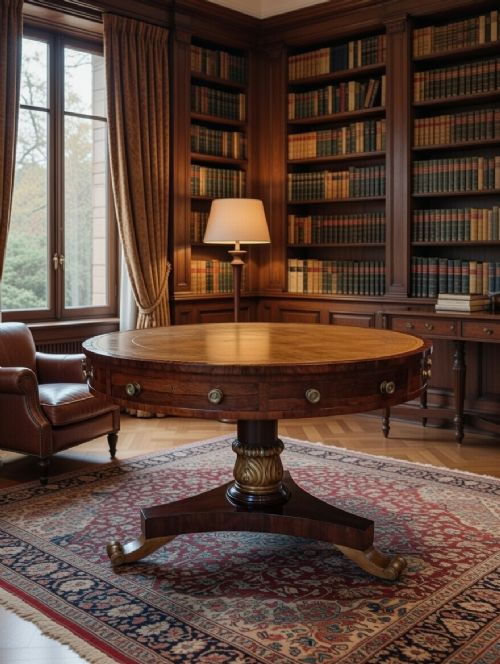
- Drum table
- A circular library table fitted with a deep frieze containing alternating drawers and dummy drawers. This form typically stands on a central pillar with tripod or platform feet.
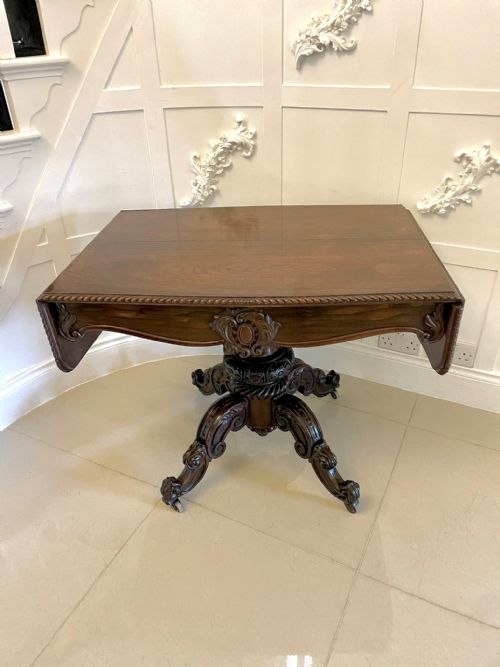
- Sofa table
- A rectangular occasional table featuring drop leaves on either end and a pair of small drawers beneath the top. These pieces were originally designed to sit in front of a sofa.
- Goncalo alves
- A dense exotic hardwood with striking contrasting dark brown and golden zebra-like figuring. Cabinetmakers utilised this timber for select writing tables alongside rosewood.
- Freestanding
- Finished on all four sides so the piece sits comfortably in the middle of a room rather than pushed against a wall.
Carved Rosewood Library Desk: Frequently Asked Questions
Where should a library table go?
These pieces function best when placed in the centre of a room rather than against a perimeter wall, as finished backs and pedestals invite viewing from all angles.
Ensure adequate clearance around the edges for chairs and movement, as their substantial timber frames occupy considerable visual and physical space.
How do I care for rosewood?
Protect the polished timber surface from direct sunlight and excessive heat sources to prevent the rosewood from drying out or fading over time.
Apply occasional gentle waxing using traditional formulations to maintain the natural lustre of the dense grain without building up heavy chemical layers.
Can I write on the leather tops?
Tooled leather and velvet inserts provide a traditional writing surface that accommodates daily correspondence when paired with a blotter.
Avoid pressing excessively hard with sharp metal nibs directly onto unpadded leather to prevent permanent indentations in the underlying material.
How do I date a rosewood table?
Examine the structural framing, leg profiles, and secondary woods underneath the top to distinguish between Regency, William IV, and Victorian manufacturing traits.
heavy pedestal bases and architectural carved details typically signal the robust tastes of the 1830s and 1850s, whereas lighter cabriole forms point towards later Victorian decades.