




Carved Rail Chairs
Carved rail chairs span centuries of woodworking skill, offering distinct periods and timbers for everyday seating.
Carved Rail Chairs
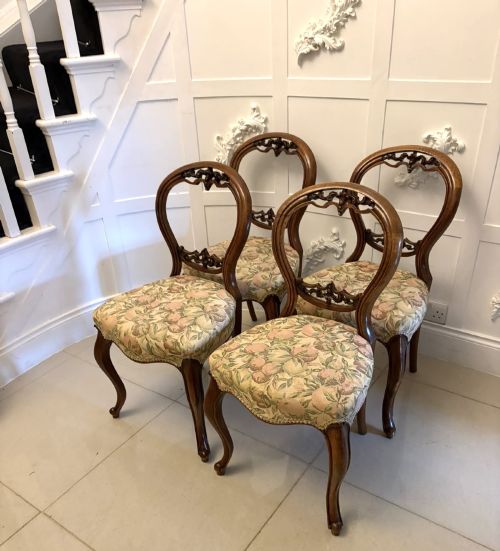
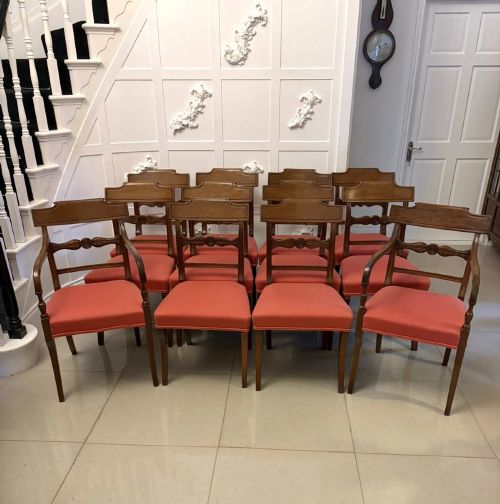
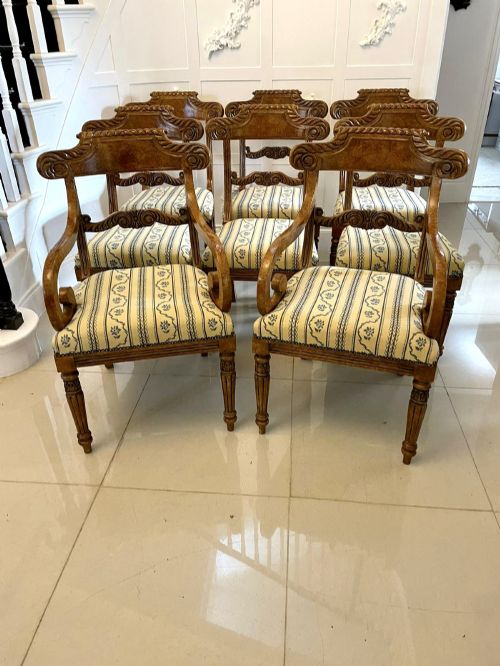
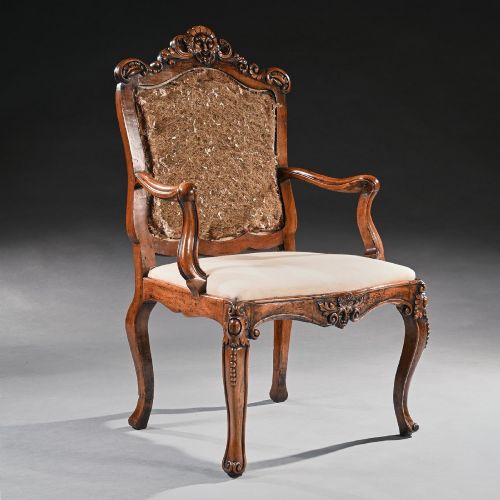
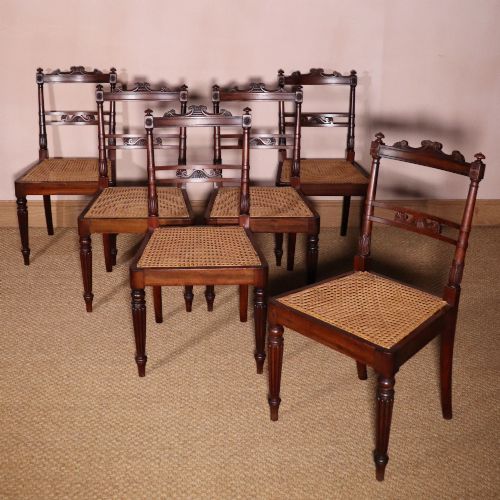
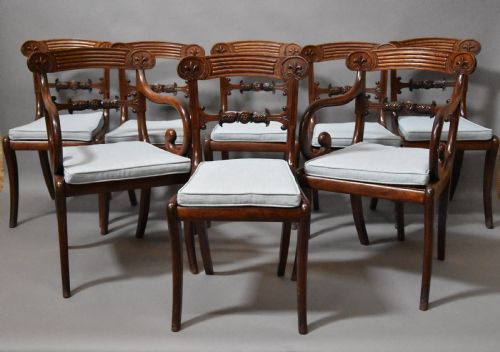
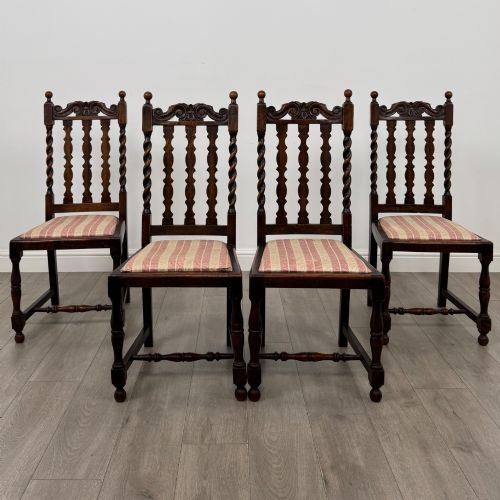
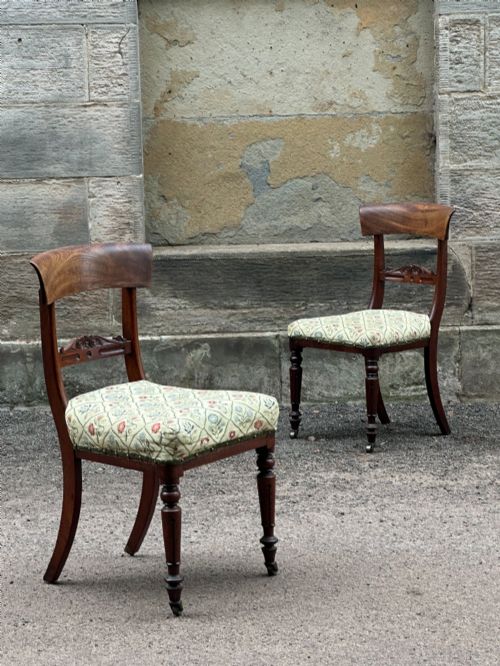
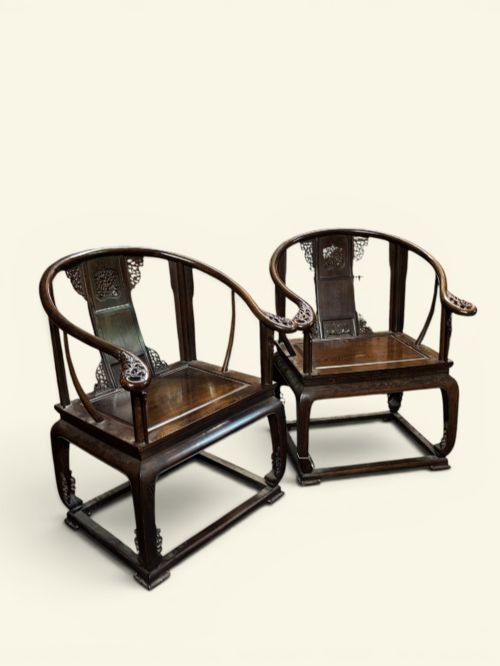
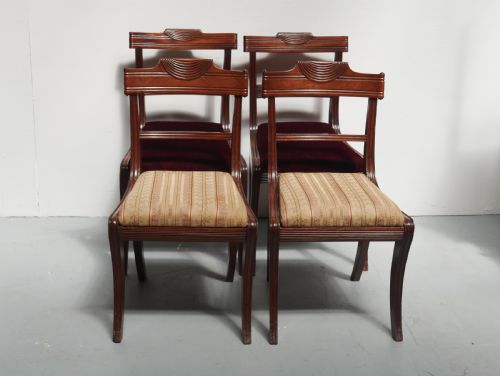
Carved rail chairs encompass dining chairs, armchairs, and side chairs defined by shaped or ornamented upper members. The pieces encountered on this page range from seventeenth-century joined oak examples to Regency mahogany sets and Edwardian walnut designs.
Makers produced these seating forms in various styles including Jacobean, Carolean, William IV, and Arts and Crafts. Buyers often find single chairs, pairs, or larger matched dining sets fitted with timber, cane, fabric, or leather seats.
How they were made
Cabinet makers utilised dense hardwoods such as oak, mahogany, walnut, and beech to construct the frames, frequently employing turning, joinery, and piercing techniques. Timber components were shaped by hand to create the characteristic decorative crests and back rails.
Upholstery methods varied from drop-in silk cotton pads and velvet cushioning to woven cane panels and bergere seats. Additional decorative elements included brass inlay, bone button details, and lacquered finishes.
Carved Rail Chairs Retail Price Guide 2026
Typical asking prices for carved rail chairs among the pieces listed under this phrase on Sellingantiques today, from the lower quarter to the upper quarter. They describe what is for sale here now, not the wider market.
The listings here feature oak, mahogany, walnut, beech, and faux birds eye maple across periods from the seventeenth century to the twentieth.
What varies in quality
The standard of execution in the crest rail carving dictates much of the distinction between ordinary seating and superior examples. Crisp depth in the hand-cut details and balanced proportions across the frame separate workshop output from mass production.
Timber selection and the preservation of original surfaces also govern quality. Pieces retaining their early patination, integrated frame construction, and undamaged secondary materials command greater appreciation among collectors.
Liberty & Co
The Carved Rail Chairs Glossary
- Crest rail
- The top horizontal member of a chair back, frequently shaped or carved with ornament. This component defines the silhouette of the piece.
- Bergere
- An upholstered armchair featuring an enclosed cane back and sides. The woven cane panels require skilled labour to produce.
- Backstool
- An early form of seating without arms, effectively an upholstered or wooden chair with a high back. These date predominantly to the seventeenth century.
- Klismos
- A classical chair type with concave curved legs and a sweeping back rail. This revival style appeared during the Regency period.
- Barley twist
- A woodworking turnery pattern resembling a twisted rope. It occurs frequently on seventeenth-century and Edwardian revival oak furniture.
Carved Rail Chairs: Frequently Asked Questions
What is a carved rail chair?
A carved rail chair is any seating furniture featuring an ornamented or shaped upper back rail. These pieces utilise decorative woodworking traditions across multiple centuries.
Design styles range from early oak joint stools to refined Regency mahogany dining seats and later revival models.
How do I date a carved wooden chair?
Dating relies on examining the timber species, joinery methods, and the style of the carved crest rail. Oak predominates in earlier periods, while mahogany and walnut gain prominence later.
Tool marks, peg construction, and wear patterns also help establish the approximate age of the frame.
Can I use antique chairs daily?
Most sturdy antique chairs suit regular domestic use provided the joints remain tight and stable. Oak and mahogany frames offer considerable structural strength for daily seating.
Periodic checks of the construction help preserve the longevity of older wooden chairs.
What is the difference between a side chair and a carver?
Side chairs are built without armrests, designed primarily for dining tables or placement against room walls. They occupy less space than armed variants.
Carvers feature elbow rests and typically served as head-of-table seating or desk chairs.