

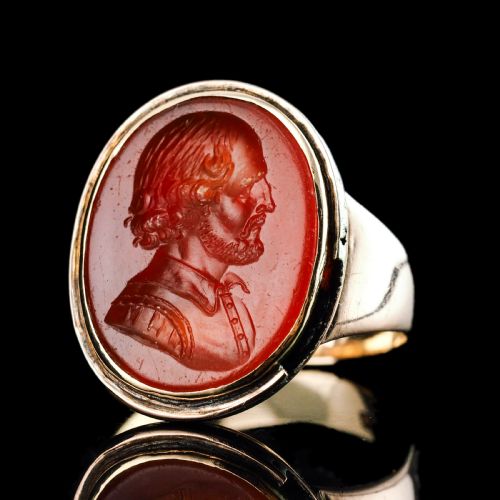


Carved Profile Ring
These carved profile ring examples bring together classical portraiture and miniature sculpture, offering wearable history that anchors any collection.
Carved Profile Ring
A carved profile ring displays a human or mythological portrait rendered in relief or intaglio within a precious metal band. These pieces function as miniature works of glyptic art, capturing likenesses from classical antiquity to the Edwardian era.
The versions most commonly met on this page span the Georgian, Victorian, and Edwardian periods, featuring hardstone, carnelian, agate, and coral. Artisans carved these materials directly, creating distinct male and female profiles that tell stories of past aesthetic movements.
Collectors seek out a carved profile ring to secure a tangible piece of portraiture history. The combinations of 9ct gold, 18ct gold, and gemstone settings provide both durability and elegance for daily wear or display.
Materials and construction
Lapidaries carved profiles into banded agates, layered carnelians, and coral using specialised miniature tools. These hardstone mediums required immense precision to reveal contrasting colour strata within the stone.
Goldsmiths set the carved gems into robust mounts of 9ct and 18ct yellow or rose gold. The bezels and shoulders frequently exhibit hand-finished details that secure the stone while complementing the curvilinear portrait.
Carved Profile Ring Retail Price Guide 2026
Typical asking prices for carved profile ring among the pieces listed under this phrase on Sellingantiques today, from the lower quarter to the upper quarter. They describe what is for sale here now, not the wider market.
Zeus watches sternly from one tiny stone, proving that ancient gods make surprisingly good companions for morning coffee.
Markers of quality
The depth and anatomical precision of the carving separate superior examples from simpler work. Master carvers defined facial musculature, hair strands, and drapery with subtle relief that creates genuine depth.
The harmony between the stone selection and the metal setting dictates the overall success of the piece. Natural colour zoning in agates and carnelians enhances the profile when chosen with artistic foresight.
The Carved Profile Ring Glossary
- Intaglio
- A gem or stone carved beneath the surface so that an impression taken from it produces a raised image in relief. These served historically as signet seals for stamping hot wax.
- Cameo
- A method of carving where the subject is raised above the background. This technique utilises layered hardstone or shell to create a contrasting two-tone portrait effect.
- Hardstone
- A collective term for semi-precious stones harder than ordinary marble, such as agate, carnelian, and jasper. Lapidaries favored these dense minerals for their durability in fine intaglio work.
- Classical Revival
- An artistic movement drawing inspiration from the art and architecture of ancient Greece and Rome. This aesthetic heavily influenced the portrait subjects chosen for early nineteenth-century jewellery.
Carved Profile Ring: Frequently Asked Questions
How should I care for a carved profile ring?
Store each ring individually in a fabric-lined compartment to prevent harder gemstones from scratching the softer gold or coral elements. Avoid ultrasonic cleaners, particularly with glued or organic materials like coral.
Clean the metal and stone gently using a soft brush, warm water, and mild soap. Pat dry thoroughly with a lint-free cloth before storage.
Can I wear my carved ring every day?
Daily wear is possible with robust hardstone and gold combinations, provided you remove the ring during heavy manual tasks. Hardstone and agate withstand regular use better than organic materials like coral.
Inspect the claw settings or bezel edges periodically to ensure the carved gem remains secure. Preventive maintenance preserves these antique settings for future generations.
What subjects typically appear on these rings?
Classical female portraits, classical gentlemen, and mythological figures such as Zeus dominate the carved imagery. These motifs reflect the enduring popularity of classical antiquity across Georgian and Victorian design.
Individual pieces also showcase specific historical revivals, aligning the portrait style with the prevailing artistic tastes of the maker's decade.
How do I distinguish between Victorian and Georgian examples?
Georgian rings frequently display deep, naturalistic intaglios set in closed-back gold mounts designed for sealing wax. The carving styles reflect the early nineteenth-century obsession with classical archaeology.
Victorian pieces often incorporate varied gold alloys like rose gold alongside brighter hardstone contrasts. The mounting techniques shifted during this era to showcase open-backed settings that let light pass through the stone.