
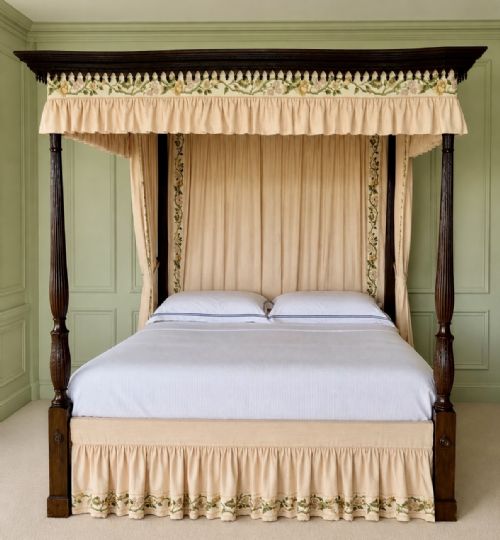


Carved Post Bed
A carved post bed brings architectural presence to a sleeping chamber through solid timbers and substantial uprights.
Carved Post Bed
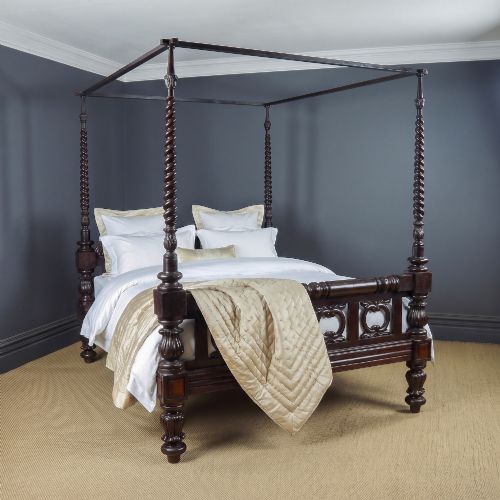
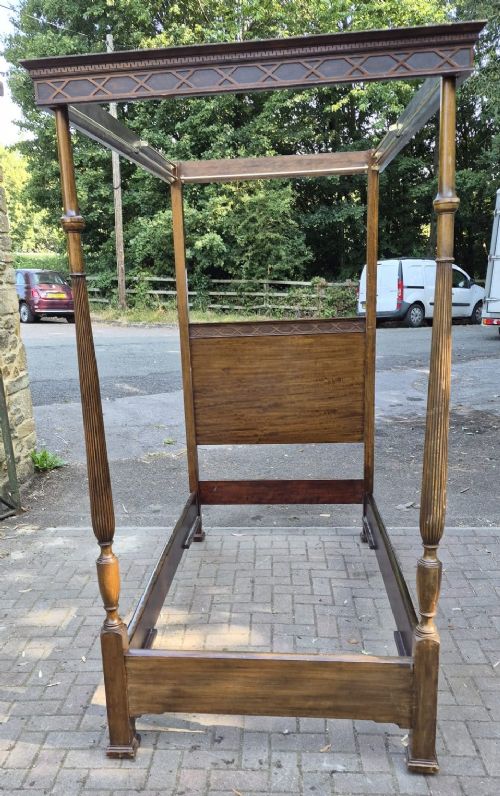
When you search for a carved post bed, you encounter substantial sleeping furniture defined by prominent upright structural timbers rather than simple frames. These pieces range from grand four-poster testers to twin bedsteads and individual architectural posts originating across the nineteenth and early twentieth centuries.
Continental workshops and colonial centres such as Anglo-Indian makers contributed distinct regional interpretations alongside British production. Alongside complete frames, the inventory occasionally preserves standalone bed posts repurposed as columns or architectural salvage.
Materials and construction
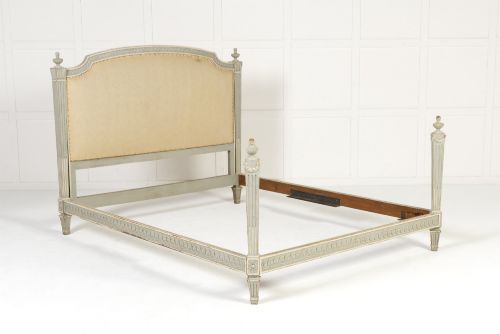
Cabinetmakers relied heavily on dense hardwoods, particularly mahogany and oak, which provided the structural integrity required to support heavy tester frames and deep relief carving. Pine and secondary hardwoods appeared in concealed internal framing, while selected pieces received coats of paint, gilding, or upholstered textile panels.
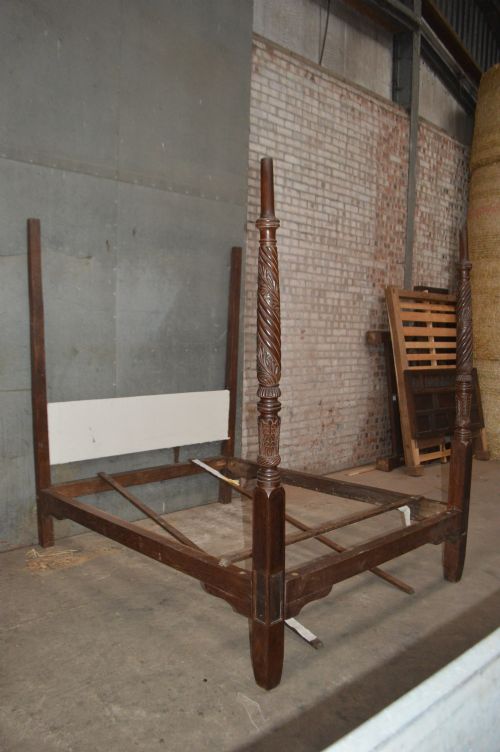
Carving was executed by hand directly into the solid timber posts, producing spiral twists, fluting, acanthus foliage, and classical architectural motifs. Joinery combined traditional tenon and mortise framing with heavy iron bolts to stabilize the towering superstructure against lateral movement.
One historic artisan carved a solitary wooden figure straight into a bedpost, perhaps watching over sleepers with silent folk-art charm.
Judging execution and proportion
Quality rests upon the depth and crispness of the hand-carved ornamentation on the posts, where sharp undercutting distinguishes superior work from shallow, mechanical shaping. The balance between the mass of the uprights and the proportions of the headboard and tester frame dictates visual success.
The choice of timber grain and the integrity of the original joins separate master-built commissions from standard commercial output. Pieces retaining their matching original posts and authentic structural components command greater regard than altered or married assemblies.
Howard And Sons
The Carved Post Bed Glossary
- Bedstead
- The complete structural framework of a bed, excluding the mattress and bedding. This term typically refers to wooden or metal supports designed for domestic sleeping quarters.
- Acanthus
- A classical leaf ornament carved into wood or stone, frequently seen curling down the length of classical bed posts.
- Half tester
- A wall-mounted or post-supported canopy that covers only the head portion of the bed rather than the entire length.
Carved Post Bed: Frequently Asked Questions
How do I fit a modern mattress?
Many antique frames require custom mattress dimensions or discreet modern slat systems to support contemporary depths without altering the visible side rails.
Consult the internal dimensions of the specific bedstead before purchasing standard retail bedding sizes.
Are these beds easy to dismantle?
Most historic four-poster frames utilise heavy iron bed bolts and tenon joints designed for straightforward disassembly during house moves.
Having two people manage the heavy mahogany or oak posts ensures the joints and carved details remain undamaged during transit.
How do I distinguish Regency from Victorian examples?
Regency frames often display restrained classical lines, delicate reeding, and rosewood or mahogany veneers influenced by ancient Roman and Greek forms.
Victorian and later revival pieces tend toward heavier proportions, darker finishes, and deep, robust carvings reflecting Jacobean or Gothic revivals.
Can I hang curtains from a tester?
Original tester frames frequently retain internal iron or wooden rings intended for suspending fabric draperies around the sleeping area.
Adding curtains helps recreate historical room layouts and provides practical insulation against draughts in high-ceilinged chambers.