



Carved Piano Seat
A carved piano seat brings solid timber and turning to the music room, built for height adjustment and long hours at the keys.
Carved Piano Seat
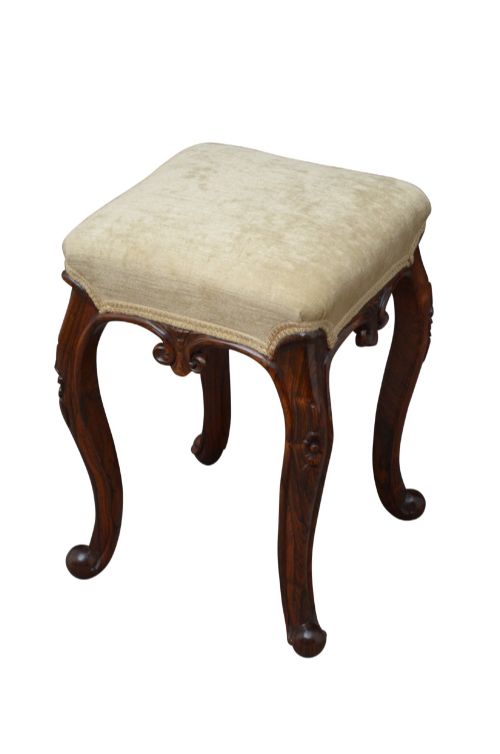
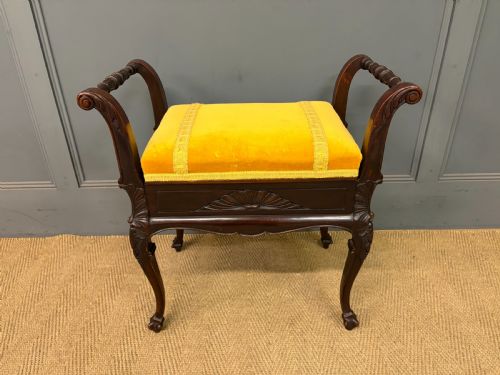
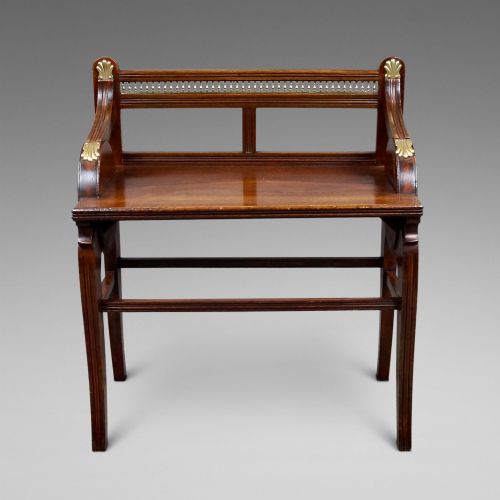
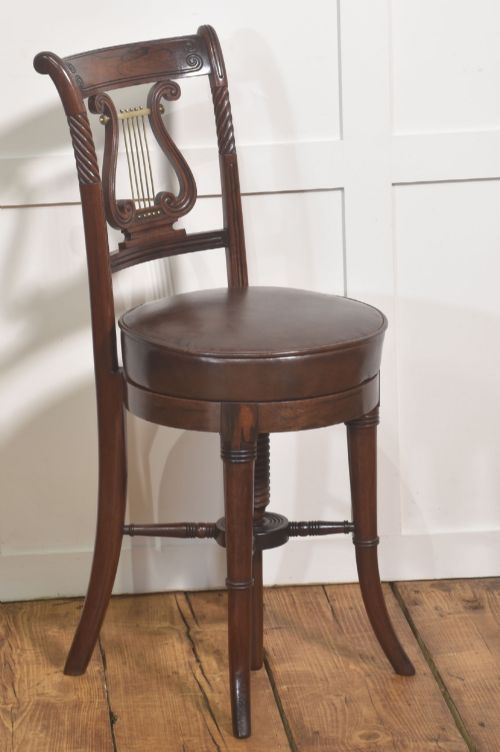
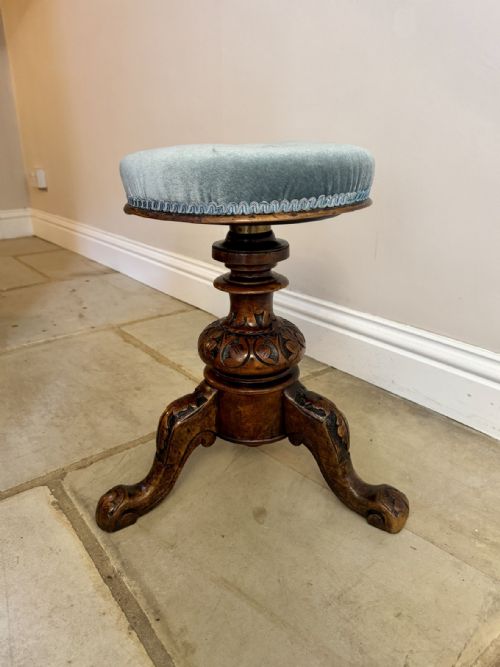
A carved piano seat is a functional music room furnishing designed for keyboard players, appearing frequently in Victorian walnut, mahogany, and rosewood forms. These pieces often feature adjustable mechanisms, revolving tops, or fixed frames set on cabriole legs.
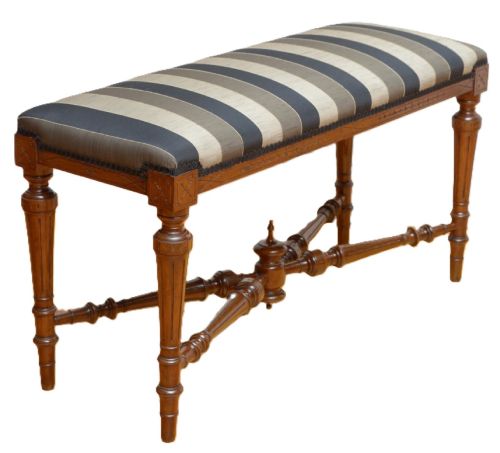
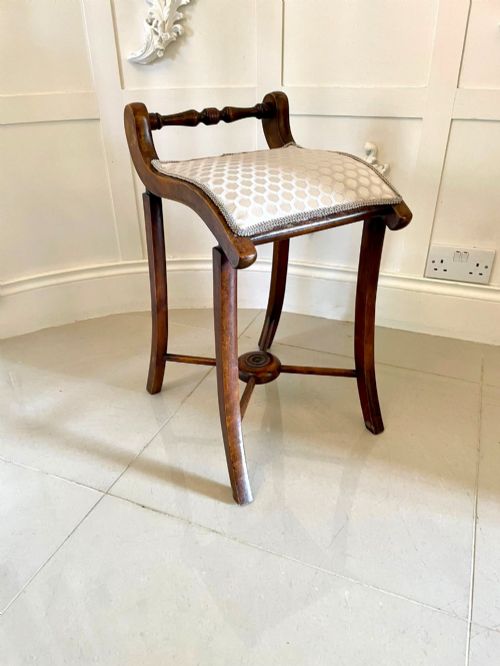
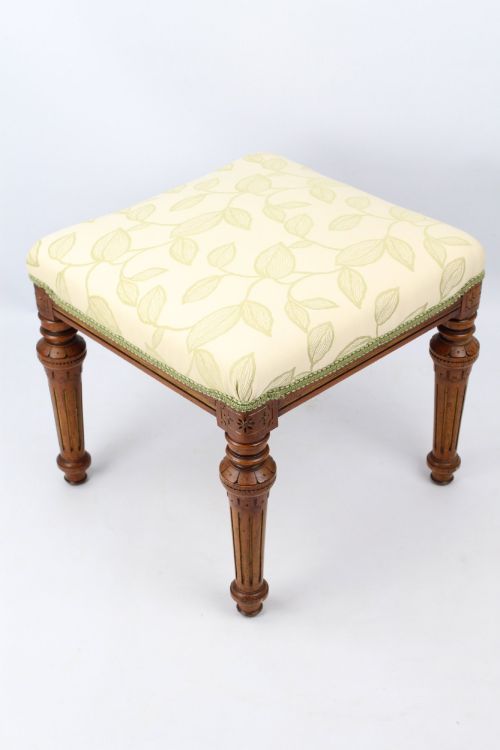
The selection ranges from simple Edwardian examples to elaborate William IV and Victorian items with needlepoint upholstery, fabric, velvet, or leather seats. Buyers encounter music chairs, duet benches, and single stools spanning the nineteenth century and into the early twentieth century.
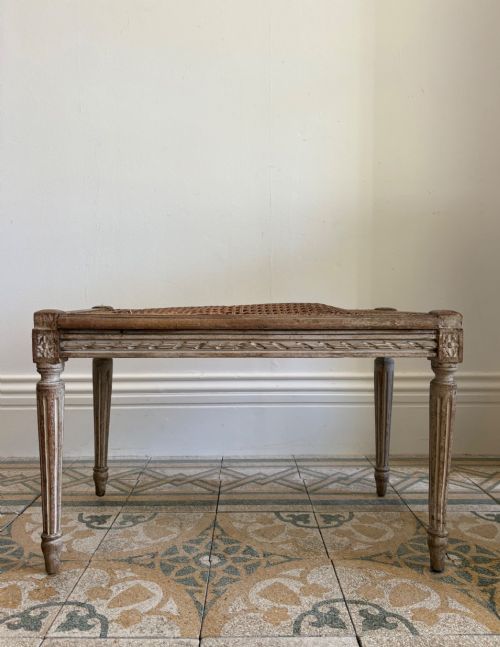
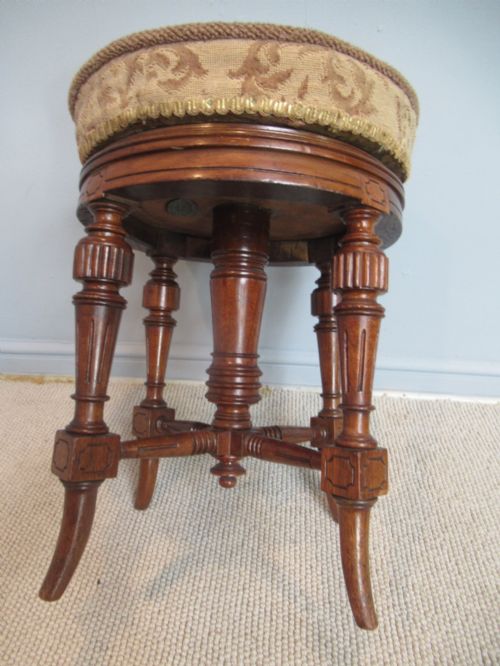
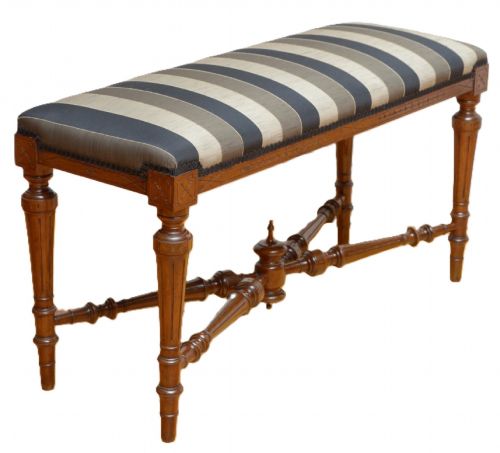
Many items double as dressing table stools or window seats, showing diverse stylistic influences including Georgian Revival, Louis XVI Neoclassical, and Victorian Rococo Revival. The primary forms include round revolving tops, square adjustable seats, and long duet benches.
Materials and construction
Cabinet makers utilised dense hardwoods such as walnut, mahogany, and rosewood, often shaping the timber into cabriole legs with detailed carving. Secondary woods like goncalo alves or ebonised finishes appear alongside papier-mâché and gilt oak structures.
Internal mechanisms employ brass hardware to facilitate the rise-and-fall height adjustment or the swivel action on revolving music chairs. Seats are finished with traditional padding and covered in leather, velvet, fabric, or needlepoint upholstery fixed with tacks.
Carved Piano Seat Retail Price Guide 2026
Typical asking prices for carved piano seat among the pieces listed under this phrase on Sellingantiques today, from the lower quarter to the upper quarter. They describe what is for sale here now, not the wider market.
Materials span walnut, mahogany, rosewood, and goncalo alves wood, paired with brass fittings and various upholstered fabrics.
Assessing quality
The sophistication of the wood carving and the choice of primary timber define the standard of a piece, with figured walnut and rosewood representing the upper tier. Heavier framing and substantial secondary woods indicate sturdier construction.
The precision and smooth operation of the mechanical height adjustment or revolving screw mechanism separate basic stools from superior examples. Intricate details such as brass fittings, needlepoint upholstery, and well-executed cabriole legs elevate the piece.
Jennens and Bettridge·Jas Shoolbred
The Carved Piano Seat Glossary
- Cabriole leg
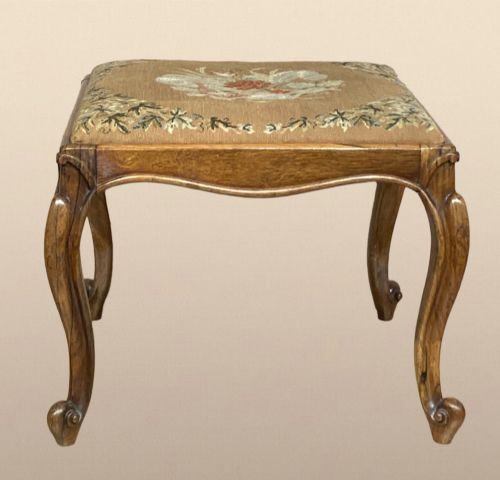
- A furniture leg that curves outward at the knee and tapers inward to an ankle, mimicking an animal limb. This form is common on Victorian and Georgian style walnut and mahogany stools.
- Rise and fall
- A mechanical system operated via a screw mechanism that allows the seat height to be adjusted. It is typically found on nineteenth-century music stools and chairs.
- Revolving stool
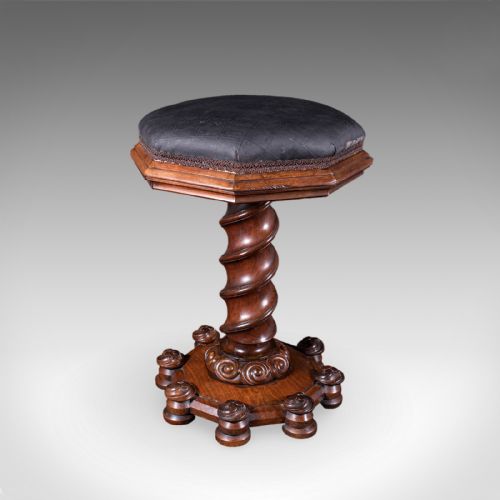
- A seat featuring a top that rotates fully on a central wooden or metal screw. Pianists utilised this action to turn toward sheet music cabinets.
- Needlepoint
- A type of canvas work embroidery used for upholstery on top of Victorian and Edwardian dressing table stools and piano seats. It provides a durable, textured surface.
- Duet bench
- A wider stool designed to accommodate two players for piano duets. These longer seats frequently incorporate window seat proportions and upholstered tops.
Carved Piano Seat: Frequently Asked Questions
How do I adjust the height?
Most adjustable piano seats operate by turning the top clockwise or anti-clockwise to raise or lower the seat via an internal wooden or metal screw mechanism.
Some examples utilise a side handle or lever system to lock the rise-and-fall mechanism at the desired playing height.
Were these only used for pianos?
While primarily built for keyboard instruments and organ practice, many of these stools served dual purposes in period homes as dressing table chairs or window seats.
Duet benches and revolving chairs were easily moved between rooms depending on household seating requirements.
How do I date a Victorian piece?
Dating relies on identifying the primary wood, such as rosewood or figured walnut, alongside specific design traits like Victorian Rococo Revival carving or cabriole leg shapes.
Hardware materials like brass screws and the style of upholstery also offer clues to whether a piece originates from the early nineteenth century or the Edwardian era.
What is a duet stool?
A duet stool is an elongated bench built to seat two musicians side by side during piano duet performances.
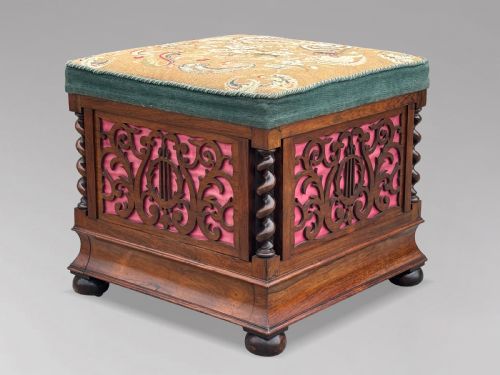
These pieces often feature upholstered hinged seats that open to reveal internal storage compartments for sheet music.