

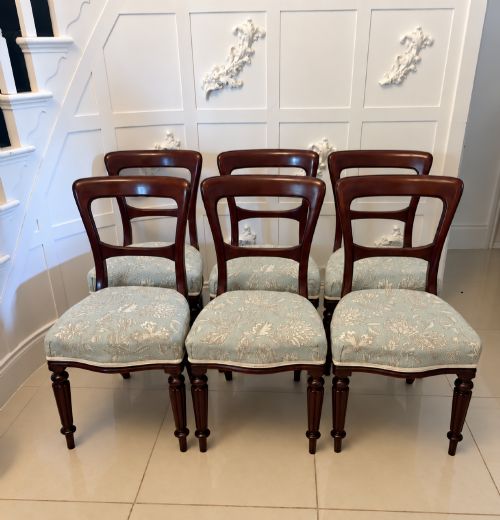
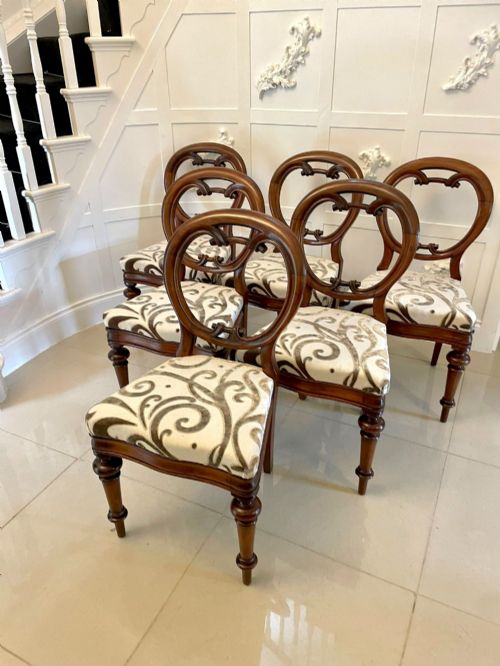
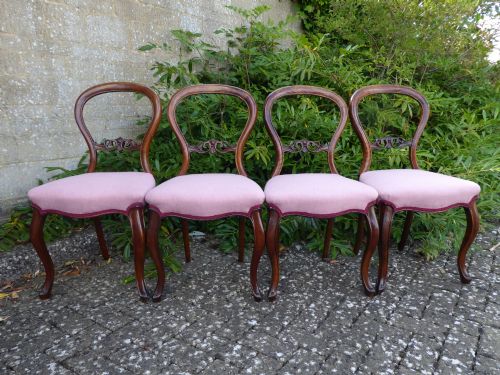
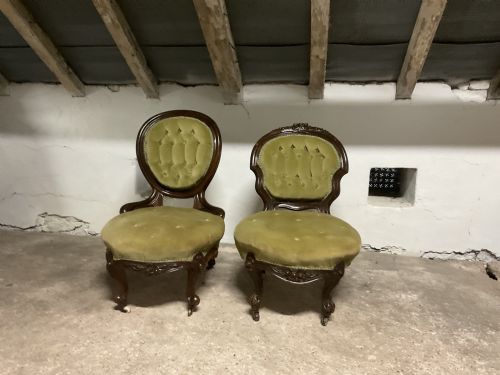
Carved Parlour Chairs
Carved parlour chairs are formal seats designed for sitting rooms and reception spaces, offering decorative woodwork and upholstered comfort for entertaining guests.
Carved Parlour Chairs
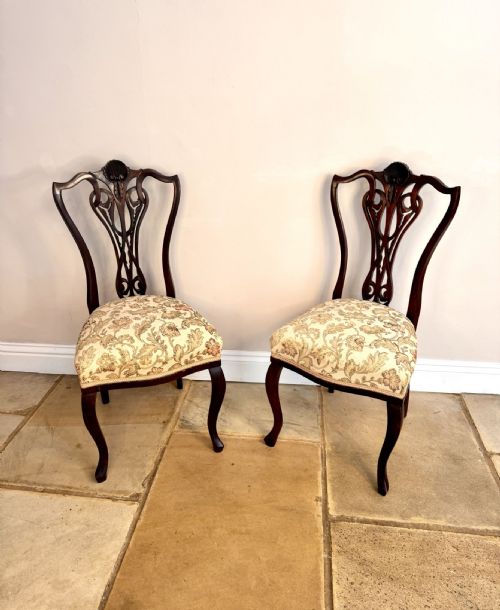
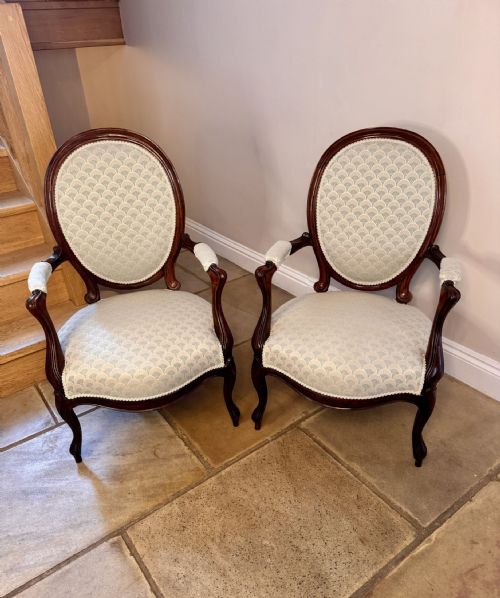
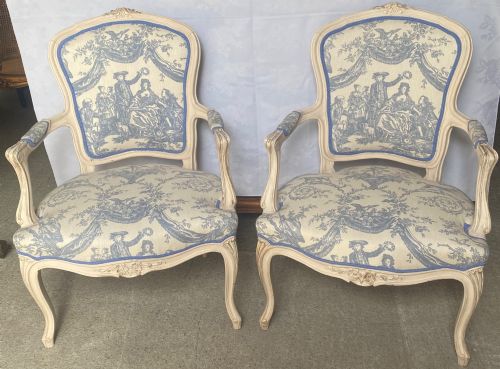
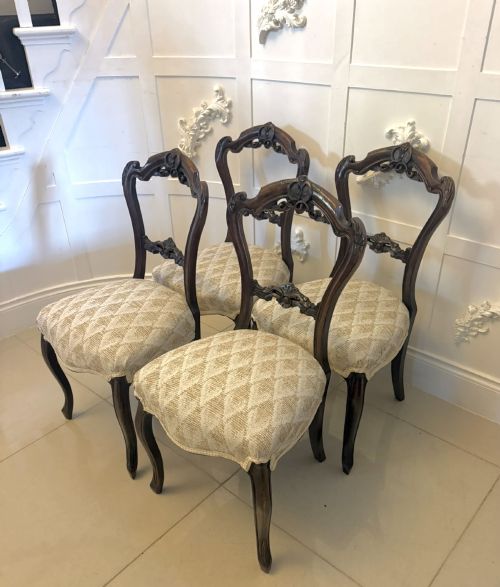
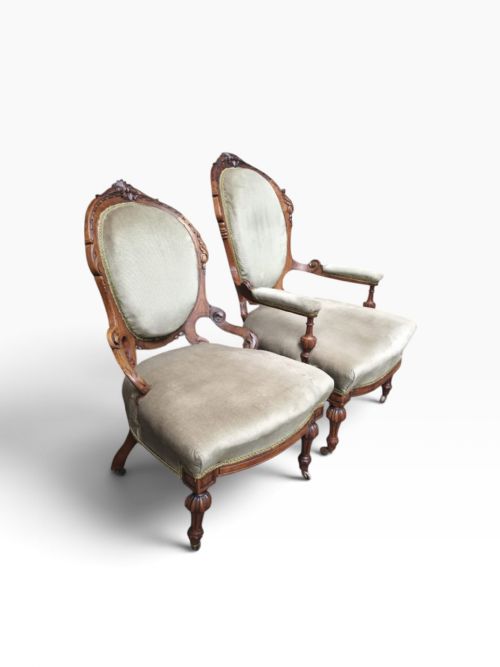
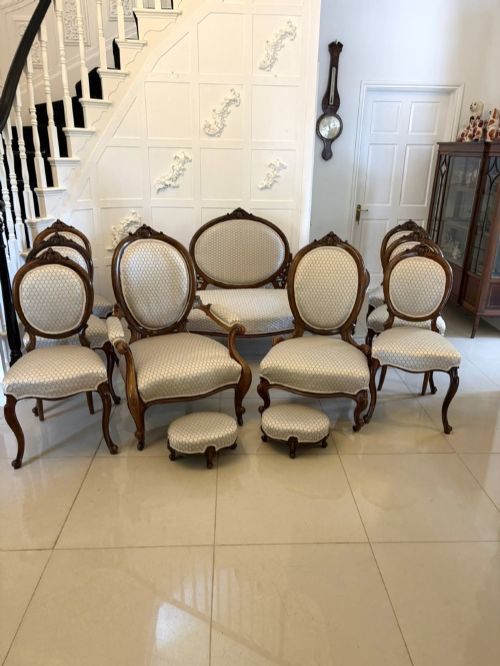
Carved parlour chairs encompass various seating forms found in nineteenth-century reception rooms, including side chairs, armchairs, and occasional chairs. These pieces served domestic entertaining and display, frequently appearing in matching sets or larger salon suites alongside sofas and footstools.
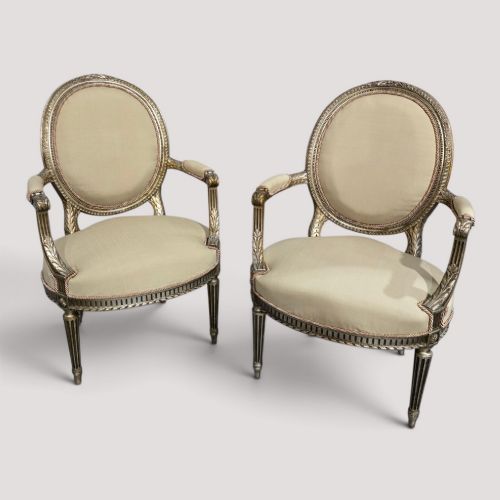
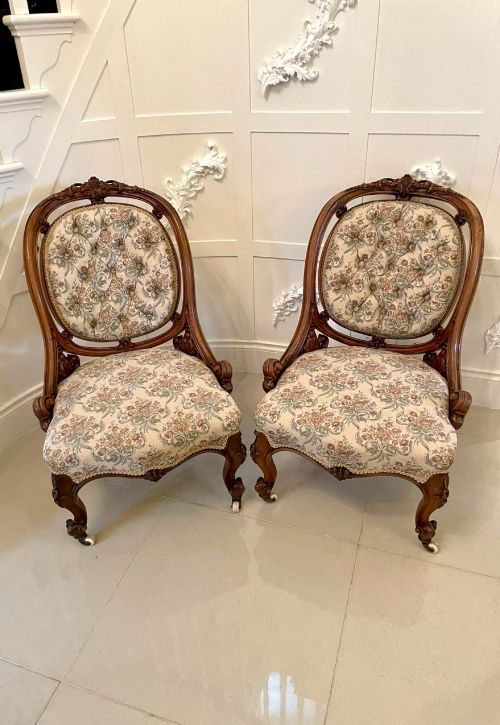
The selections available here lean heavily toward Victorian production, dominated by walnut and mahogany timbers. Makers utilised specific revival aesthetics such as Rococo and Louis XVI styles to shape domestic interiors during the period.
How they were made
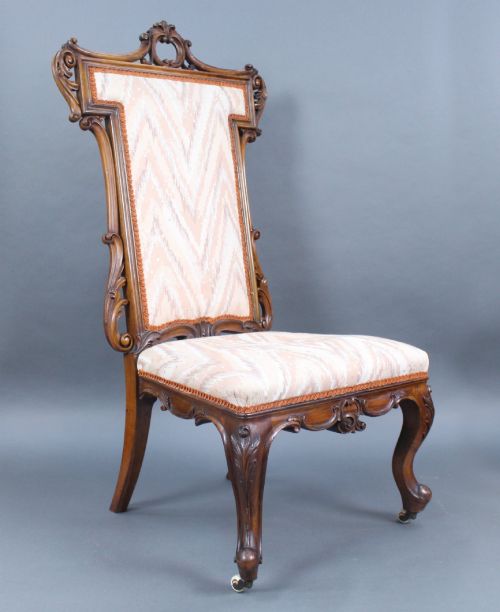
Cabinetmakers worked primarily with dense hardwoods like walnut, mahogany, and rosewood, which accepted crisp hand-carved ornamentation along crest rails and cabriole legs. Frames were joined using traditional woodworking joints before receiving decorative embellishments.
Upholstery completed the structure, employing textile coverings such as velvet, fabric, and brocade over sprung or padded seats. Brass details occasionally appeared as hardware or castors supporting the wooden frames.
Carved Parlour Chairs Retail Price Guide 2026
Typical asking prices for carved parlour chairs among the pieces listed under this phrase on Sellingantiques today, from the lower quarter to the upper quarter. They describe what is for sale here now, not the wider market.
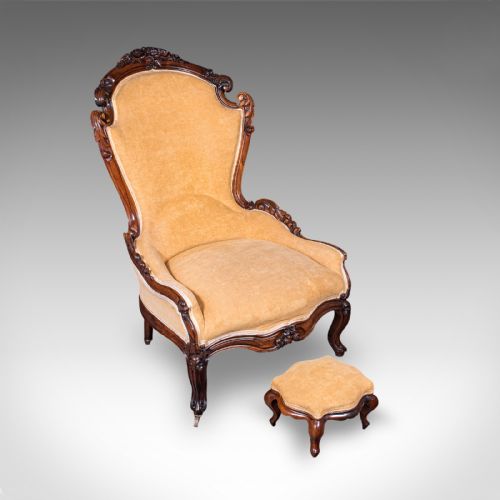
Several sets include matching footstools, proving that Victorian feet rarely touched the floor.
What varies in quality
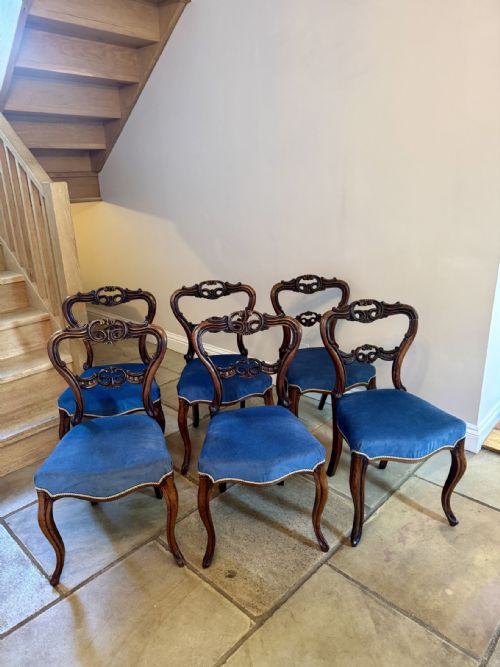
Depth and crispness of the hand-carving distinguish standard output from exhibition pieces, where botanical and scroll motifs show sharper definition. The selection of timber grain, particularly in figured walnut and rosewood veneers, also separates ordinary framework from superior examples.
Proportion and structural integrity define the remaining differences, as well-balanced frames maintain their rigidity across sets of four or six chairs. The retention of matching components within a salon suite preserves the original character of the seating group.
The Carved Parlour Chairs Glossary
- Balloon back
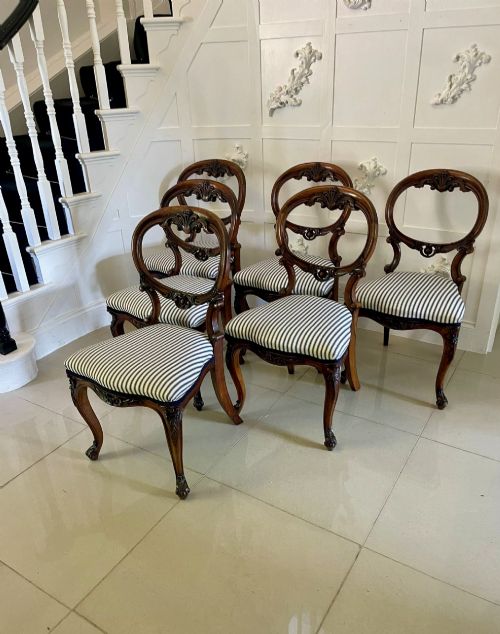
- A chair back shaped in a continuous curved oval resembling an inflated balloon. This design gained popularity during the Victorian era on mahogany and walnut dining and parlour chairs.
- Cabriole leg
- A furniture leg that curves outward at the knee and tapers inward toward the foot, often ending in a scroll or pad. The form derives from animal limbs and frequently appears on revival pieces.
- Salon suite
- A matched set of seating furniture comprising a sofa and multiple chairs designed for a formal drawing room. These groupings share identical wood species, carving details, and upholstery fabrics.
- Rococo Revival
- A nineteenth-century design movement inspired by French eighteenth-century ornamentation, characterised by asymmetrical curves, scrollwork, and naturalistic floral carvings.
- Occasional chair
- A light, movable chair intended for periodic use in various rooms rather than fixed placement around a dining table. These pieces often feature decorative openwork backs and upholstered seats.
Carved Parlour Chairs: Frequently Asked Questions
Where were carved parlour chairs placed?
These chairs stood in formal reception spaces and drawing rooms where families received visitors. They were arranged to facilitate conversation or positioned against walls when not in active use.
Larger matching suites allowed hosts to coordinate seating across an entire entertaining space, maintaining a consistent aesthetic during gatherings.
How do I identify a parlour chair?
Parlour chairs typically feature decorative carved wooden frames, exposed woodwork, and upholstered seats designed for comfort during social occasions. They often present lighter proportions than heavy dining chairs.
Many examples incorporate stylistic influences from French revival periods, displaying curved legs and ornamental crest rails suited to domestic display.
Can I use these chairs daily?
These nineteenth-century seats function well for regular domestic use provided the wooden framework remains stable and the internal webbing is secure. Periodic checks on the joints prevent loosening from everyday weight.
Modern placement should account for the historic nature of the timber and delicate carved elements, avoiding overly harsh environmental conditions.
What woods were used for frames?
Cabinetmakers relied on dense hardwoods including walnut, mahogany, and rosewood to construct durable chair structures. These materials supported intricate hand-carved details without splintering.
Some continental and regional pieces also utilised alternative timbers or giltwood finishes to achieve specific decorative effects requested by buyers.