
Carved Panelled Chest
A carved panelled chest is a sturdy timber storage box built for domestic keeping, combining robust joinery with decorative relief work.
Carved Panelled Chest
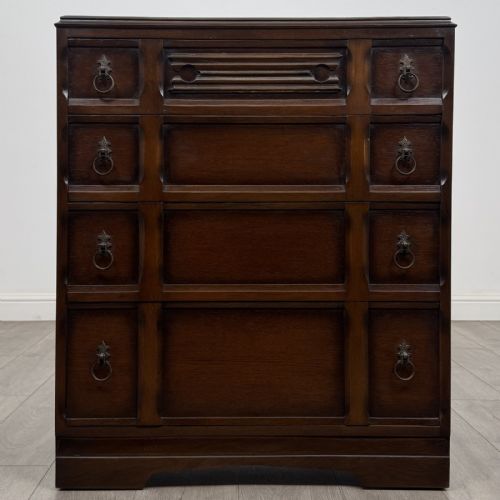
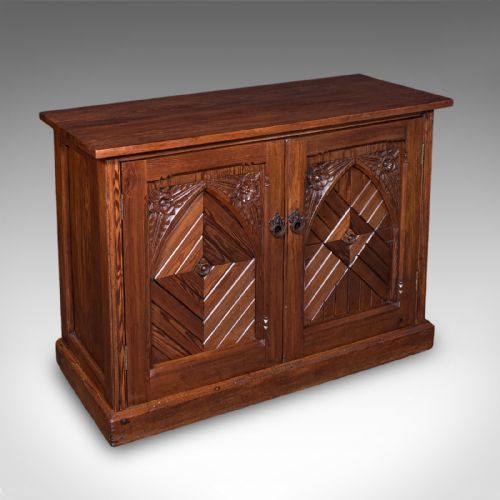
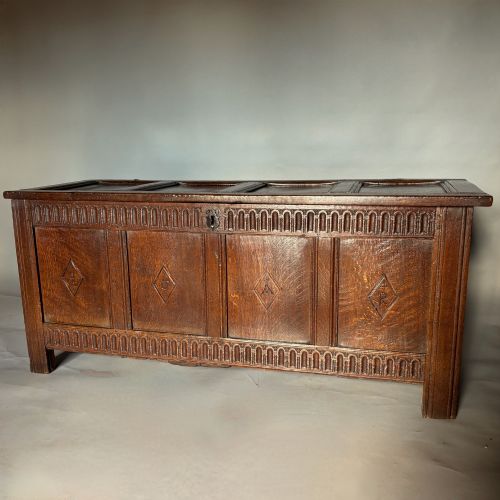
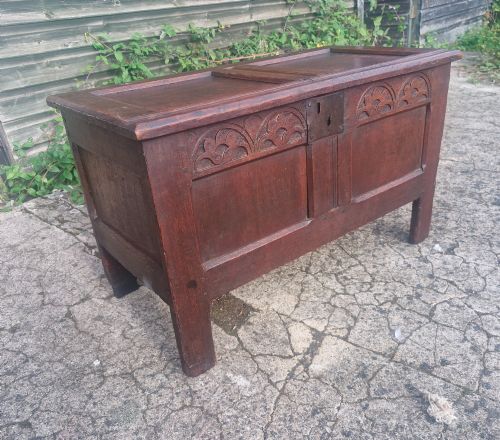
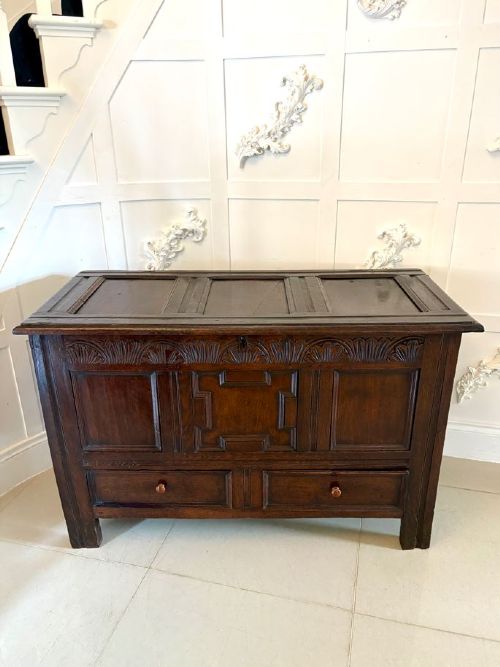
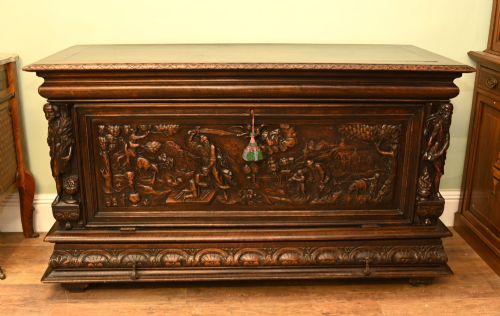
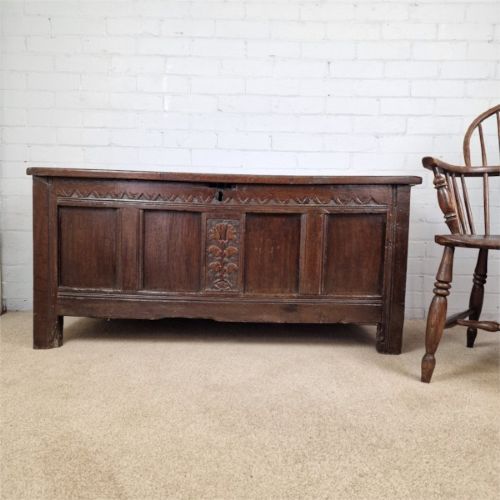
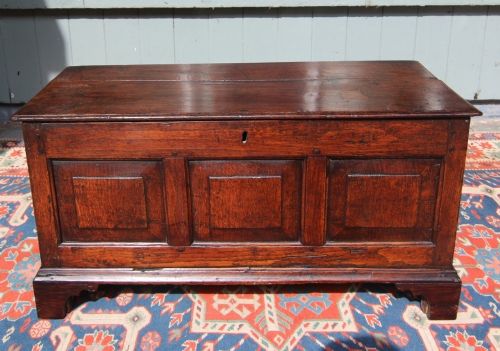
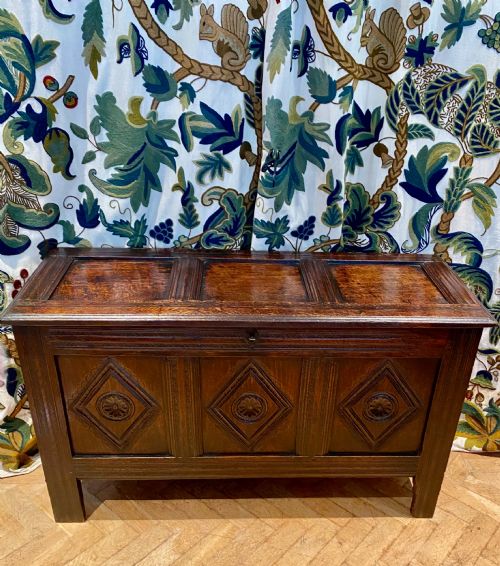
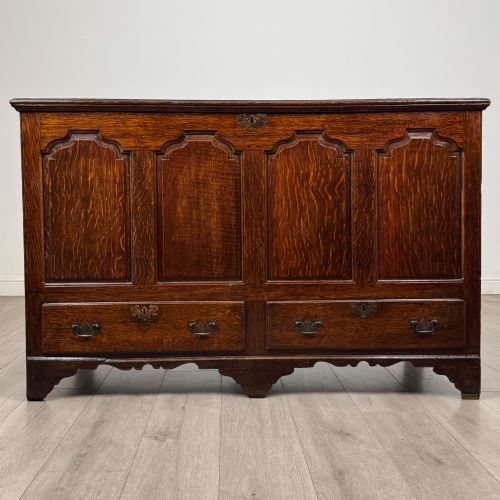
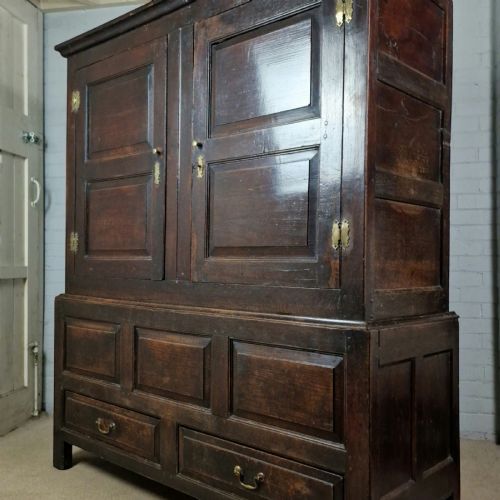
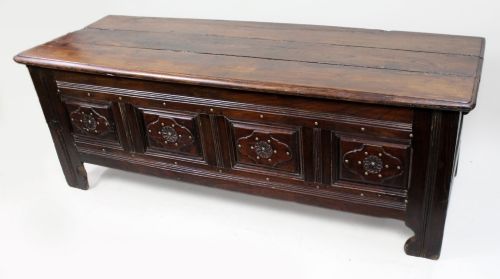
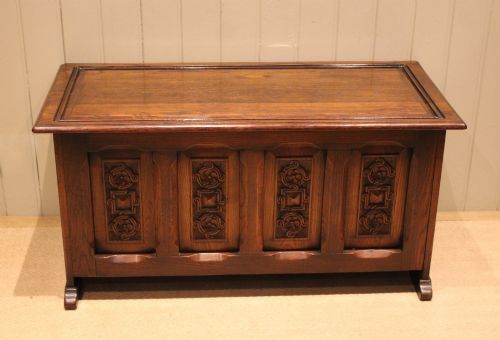
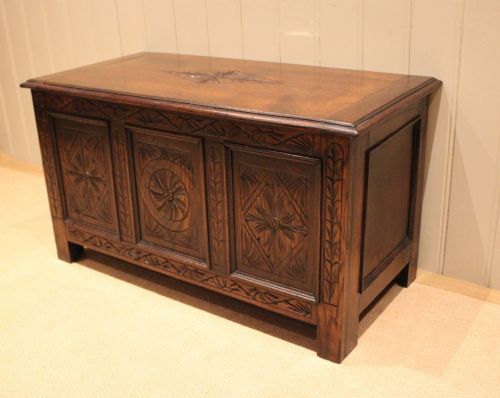
A carved panelled chest brings together centuries of domestic storage, spanning seventeenth-century joined examples and eighteenth-century mule chests fitted with lower drawers. Buyers looking for a carved panelled chest will find that oak dominates the selection, often featuring geometric or figurative carving across the front frieze and panels. Many pieces originate from seventeenth-century workshops, though later revival periods also produced sturdy boarded and panelled storage boxes.
The construction typically relies on frame and panel joinery, which allowed the timber to expand and contract safely through seasonal humidity changes. While standard coffers open from a single lid to reveal a deep interior space, mule chests incorporate one or two drawers beneath the main compartment. Examples range from small provincial Welsh coffer bach formats to substantial Jacobean and Georgian pieces designed for linen, woollens and valuables.
Materials and construction methods
Joiners relied heavily on English oak, quarter-sawn to reveal attractive medullary rays and ensure structural stability. Boards were shaped using hand saws and joined with mortise and tenon joints secured by wooden pegs, avoiding modern metal fasteners in early work.
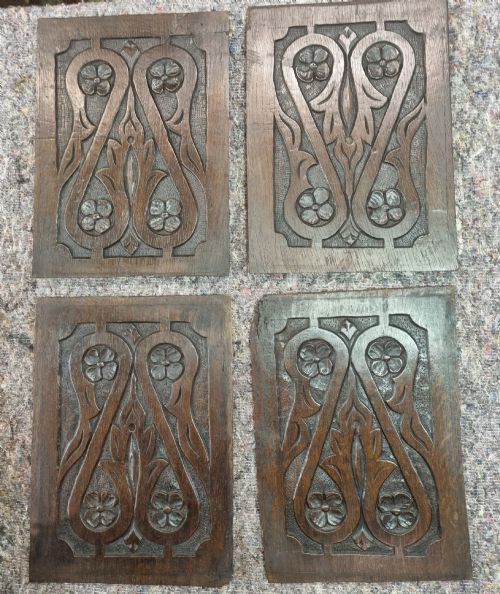
Carving was executed directly onto the solid timber using gouges and chisels, producing shallow relief patterns such as guilloche, lunettes and stylised foliage. Iron hinges and brass escutcheons were frequently added to reinforce lids and secure locks, while secondary timbers like pine occasionally appeared in internal partitions or drawer linings.
Early makers frequently carved initials and marriage dates directly into the front frieze, creating permanent domestic monuments in wood.
Distinguishing quality in early storage
The distinction between standard utility boxes and finer items rests on the depth and crispness of the carving, alongside the integrity of the original timber. Superior examples exhibit tightly fitted frame and panel construction with minimal replacement wood in the lids, feet and base rails.
Proportion and surface patination further separate average items from exceptional survivors, particularly where original ironwork, boarded lids and period locks remain intact. Rich, deep colour developed through centuries of beeswax polishing signals an honest, well-preserved surface.
The Carved Panelled Chest Glossary
- Coffer
- A large wooden chest used historically for storing valuables, textiles and documents. These sturdy boxes often feature hinged lids and raised feet to lift them away from damp floors.
- Mule chest
- A storage chest featuring one or more drawers built into the base beneath the main compartment. This form bridges the traditional coffer and the modern chest of drawers.
- Joined oak
- Furniture construction utilising closely fitted mortise and tenon joints secured with wooden dowels. This method provides superior strength compared to simple nailed or glued joints.
- Coffer bach
- A small Welsh chest traditionally made in domestic settings for personal use or as a gift. The term translates simply from Welsh as little coffer.
- Frieze
- The horizontal decorative band running across the upper section of a chest front. Carvers frequently utilised this space for carved dates, initials or repeating geometric motifs.
Carved Panelled Chest: Frequently Asked Questions
How were these chests used historically?
These chests served primarily for storing household textiles, garments, blankets and valuable documents in domestic interiors. Before fitted wardrobes became common, they functioned as the main storage furniture in homes.
Travellers and merchants also utilised sturdy chests for transporting personal belongings securely. Their heavy timber construction and iron locks provided reliable protection against theft and moisture.
How do I care for an old oak chest?
Keep wooden storage pieces away from direct heat sources and drastic humidity shifts to prevent timber splitting. Natural beeswax applied sparingly helps maintain the lustre of old oak surfaces.
Avoid modern liquid polishes containing silicone, which can penetrate porous historic timber and damage the finish. Dust gently with a dry, soft cloth during routine maintenance.
What is the difference between a coffer and a mule chest?
A standard coffer opens only from the top lid to access a deep, undivided storage well inside. This design represents the earlier form of domestic box storage.
A mule chest incorporates one or two drawers beneath the main upper compartment, offering easier access to smaller garments without lifting the heavy lid.
How can I tell the period of a carved chest?
Dating relies on examining the construction marks, joinery methods, timber preparation and stylistic carving details. Seventeenth-century examples typically feature hand-riven oak, pegged mortise and tenon joints, and characteristic Jacobean geometric relief carving.
Later eighteenth-century and revival pieces often display machine-sawn timber uniformity, secondary woods, or modified hardware fittings. Contemporary nineteenth and twentieth-century interpretations frequently combine older decorative motifs with modern internal assembly techniques.