

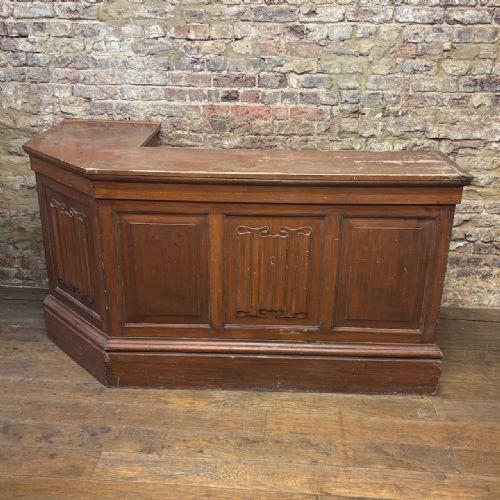
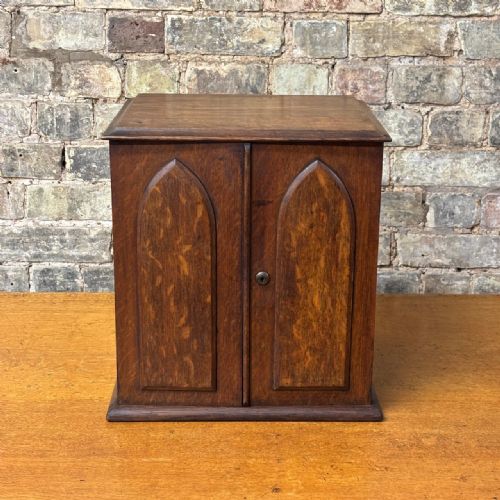


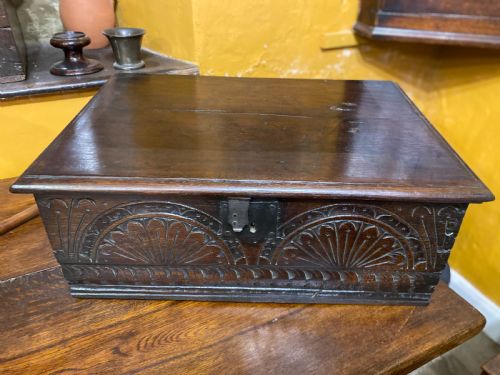

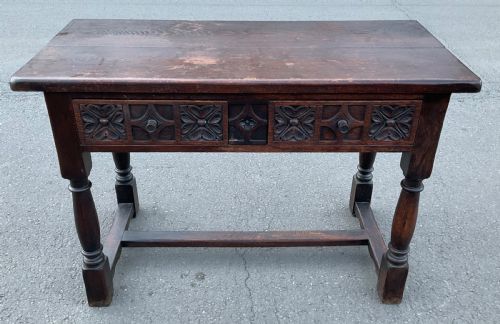


Carved Panel Oak Desk
A carved panel oak desk brings solid timber structure and worked surfaces into a room, offering practical writing space alongside distinct period character.
Carved Panel Oak Desk
A carved panel oak desk brings together heavy timber construction and detailed surface carving, appearing in forms such as bureaux, writing tables, and secretaire bookcases. These pieces draw on historical styles including Jacobean Revival, Gothic Revival, and Victorian designs.
The versions most commonly met span from the seventeenth century through to the Edwardian era and the early twentieth century. Alongside traditional writing desks, related pieces incorporate similar oak construction and panel detailing, including bible boxes and table cabinets.
Makers and craftsmen utilised solid oak and oak veneer, sometimes pairing the timber with brass, glass, textile, iron, and leather. Buyers encounter everything from compact presentation desks to large writing tables and partner desks.
Materials and Construction
The primary material is oak, utilised either as solid timber or as an oak veneer over secondary woods. Construction methods rely on traditional joinery to support the weight of heavy writing surfaces and fitted interior compartments.
Surface ornamentation involves hand carving directly into the timber panels, creating relief patterns that define styles from seventeenth-century motifs to later revivals. Secondary elements such as brass hinges, iron hardware, and leather inserts complete the construction.
Carved Panel Oak Desk Retail Price Guide 2026
Typical asking prices for carved panel oak desk among the pieces listed under this phrase on Sellingantiques today, from the lower quarter to the upper quarter. They describe what is for sale here now, not the wider market.
Listings feature oak as the primary material, occasionally combined with brass, glass, textile, iron, and leather across pieces spanning the seventeenth century to nineteen-twenty.
Judging Quality and Execution
The distinction between standard examples and superior pieces rests on the depth and crispness of the hand-carved panels. Well-executed carving displays sharp relief and careful integration into the structural framework of the desk.
Proportion and configuration also dictate quality, where unusual layouts or harmonious proportions elevate a piece above simpler utilitarian furniture. The integration of materials like brass hardware and leather writing surfaces further separates workshop output.
The Carved Panel Oak Desk Glossary
- Secretaire Bookcase
- A piece of furniture combining a upper bookcase section with a lower writing cabinet that has a drop-down desk flap. The interior contains small drawers and pigeonholes.
- Bureaux
- Writing furniture featuring a sloping flap that opens to reveal a fitted interior of small compartments and drawers. They stand on bracket feet or stretchered bases.
- Gothic Revival
- An architectural and decorative style drawing on medieval forms, often seen in pointed arches, trefoils, and heavy tracery carved into panels. This style appeared frequently on nineteenth-century cabinets and desks.
- Oak Veneer
- A thin layer of oak timber applied over a core base material to provide a decorative surface figure while maintaining structural stability. It is found on pieces from the Edwardian period.
Carved Panel Oak Desk: Frequently Asked Questions
What periods do these desks come from?
The pieces span from the seventeenth century through the Victorian and Edwardian eras up to the nineteen-twenties. Revival styles from the nineteenth and early twentieth centuries frequently replicate earlier seventeenth-century aesthetics.
Buyers encounter a mix of genuine seventeenth-century items alongside later revival pieces and commercial furniture from nineteen-hundred to nineteen-twenty.
What materials were used besides oak?
While solid oak and oak veneer form the structural basis of these items, makers incorporated several supplementary materials. Brass appears in handles, key escutcheons, and panel accents.
Leather provides the writing surface on tables and desks, while iron, glass, and textiles appear in specific cabinets and associated commercial counters.
How do I tell a revival piece from an older one?
Revival pieces, particularly those from the nineteenth and early twentieth centuries, often exhibit machine-assisted construction techniques alongside hand-carved details. Their timber surfaces and hardware reflect the manufacturing standards of the Victorian and Edwardian eras.
Seventeenth-century pieces display authentic period tool marks, traditional peg joinery, and timber patination developed through centuries of use.