



Carved Oak Trinket Chest
A carved oak trinket chest is a sturdy receptacle for small valuables, offering centuries of regional craftsmanship and practical storage.
Carved Oak Trinket Chest
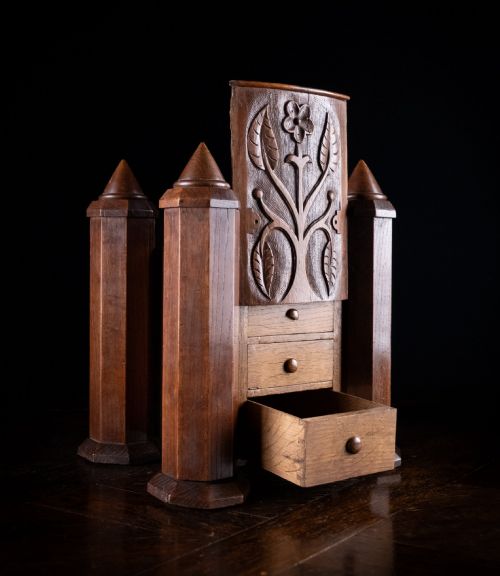
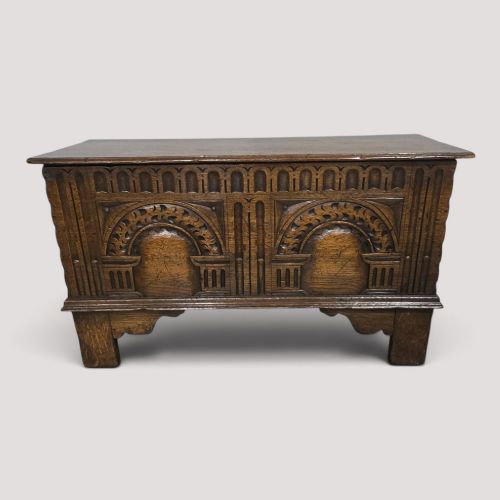
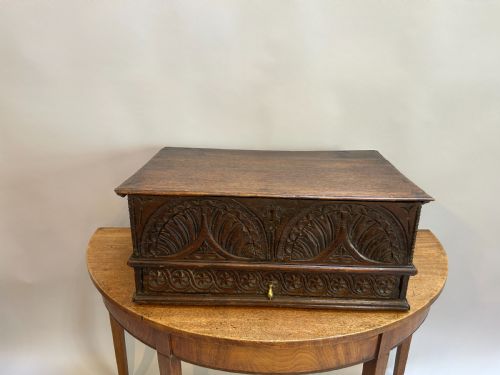
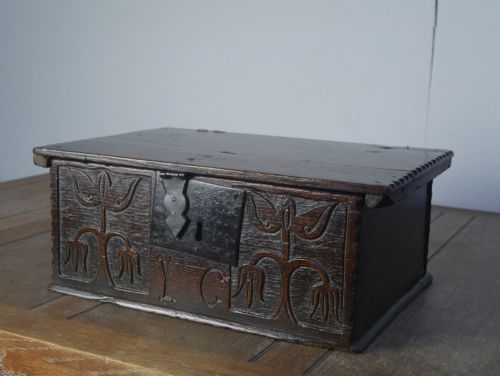
When you search for a carved oak trinket chest, you find small receptacles spanning several centuries of British woodwork. The selection on this page includes miniature coffers, bible boxes, desk boxes, and table boxes from the seventeenth and eighteenth centuries, alongside later twentieth-century interpretations.
Many of these pieces originate from Welsh workshops, frequently taking the form of a coffor bach or miniature coffer with chip carving and inlay. You also encounter early English examples dated to the seventeenth century, constructed with simple lids and iron or brass hardware.
The forms vary from plain desk boxes with drawers to elaborate chests decorated with holly and bog oak inlay. These smaller wooden chests served various domestic functions, holding documents, money, scales, or personal trinkets.
Construction and Materials
Makers built these pieces primarily from solid oak, sometimes combining mixed wood inlay, holly, and bog oak to create contrasting patterns on the surface. Carpenters utilised traditional joining methods suited to timber, constructing lids and sides that withstand decades of use.
Decoration on these boxes relies heavily on chip carving, a technique that removes small chips of wood to form geometric or floral motifs. Metal components such as iron hinges and brass fittings provide structural support and secure the closures.
Carved Oak Trinket Chest Retail Price Guide 2026
Typical asking prices for carved oak trinket chest among the pieces listed under this phrase on Sellingantiques today, from the lower quarter to the upper quarter. They describe what is for sale here now, not the wider market.
Some miniature chests include secret internal compartments designed to outwit curious family members.
Judging Quality
Quality in these small chests depends on the crispness of the carving and the complexity of the design. Pieces featuring detailed chip carving or mixed wood inlay using holly and bog oak display higher craftsmanship than plain utility boxes.
The condition of the original timber and the retention of period brass or iron hardware influence the overall character of the piece. Surviving examples that maintain their original patination and structural integrity represent the stronger end of the range.
The Carved Oak Trinket Chest Glossary
- Coffor Bach
- A small Welsh miniature coffer used for holding valuables or marriage certificates. These chests often feature drawers beneath the main compartment.
- Chip Carving
- A relief carving technique where the maker cuts small chips from a wooden surface at an angle to create geometric patterns.
- Bible Box
- A small wooden desk box originally designed to store a family bible or important documents securely.
- Bog Oak
- Subfossil oak buried in peat bogs that darkens to a deep brown or black colour, utilised for contrasting inlay work.
- Inlay
- A technique where pieces of contrasting materials like holly or bog oak are inserted into recessed cavities in the primary oak surface.
Carved Oak Trinket Chest: Frequently Asked Questions
What did people store in a carved oak trinket chest?
These small chests held personal valuables, documents, money, or bibles depending on the specific form.
Desk boxes and coffor bach variants served households as secure containers for daily essentials and treasured items.
How do I date a seventeenth century oak box?
Dating relies on construction methods, hinge types, and the style of carving present on the oak panels.
Early pieces from the seventeenth century often show tool marks and simpler joinery compared to later Georgian examples.
What is a Welsh coffor bach?
A coffor bach is a miniature coffer originating from Wales, typically featuring a hinged lid and sometimes a lower drawer.
These small chests frequently display local chip carving and functioned as presentation pieces or dowry items.
Where were these wooden boxes made?
The pieces originate from various regions across Britain, with several specific examples attributed to Welsh workshops.
English cabinet makers also produced desk boxes and miniature coffers during the seventeenth and eighteenth centuries.
How do I care for antique oak furniture?
Keep wooden boxes away from direct heat sources and sudden temperature changes to prevent the oak from splitting.
Apply a light wax polish occasionally to nourish the timber and maintain the natural finish of the surface.