




Carved Oak Thermometer Barometer
A carved oak thermometer barometer brings practical weather-tracking into a room with the rich warmth of solid timber.
Carved Oak Thermometer Barometer
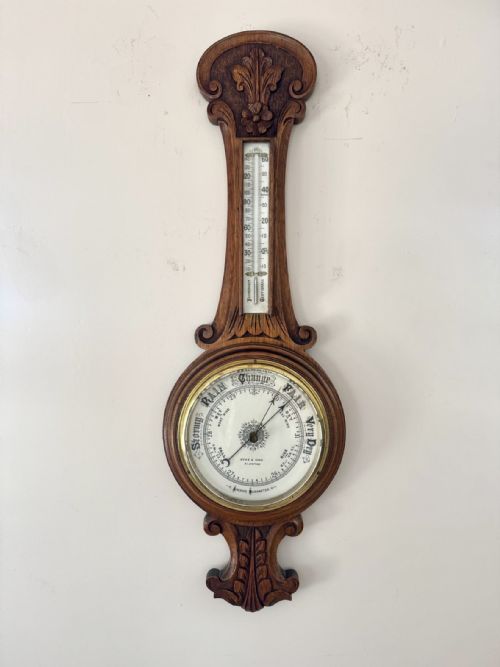
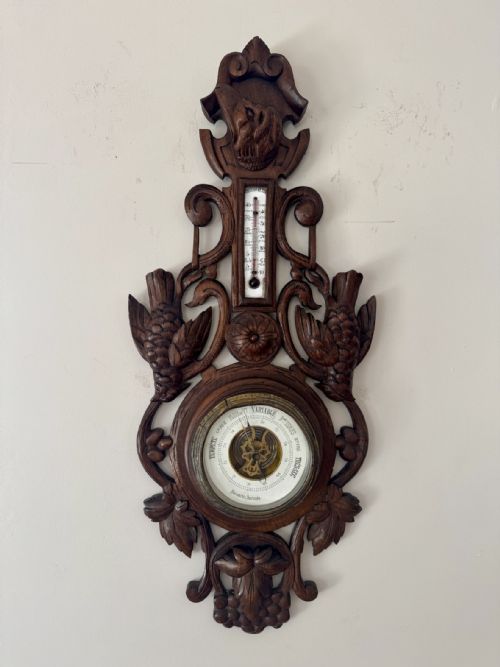
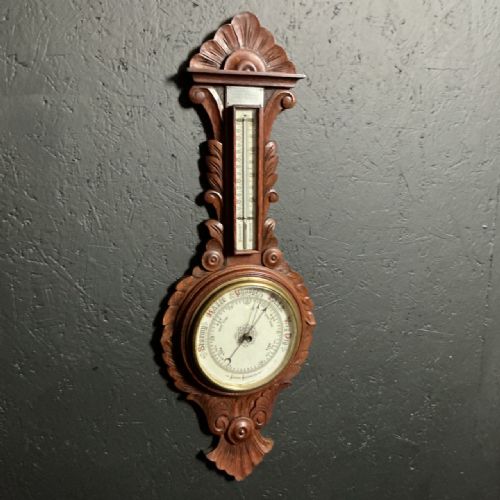
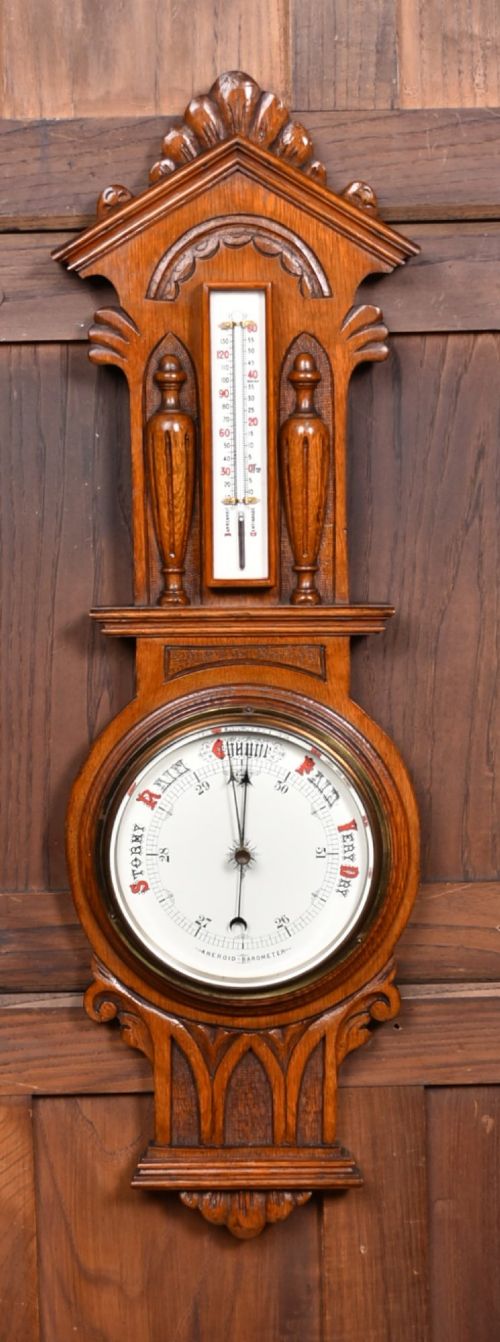
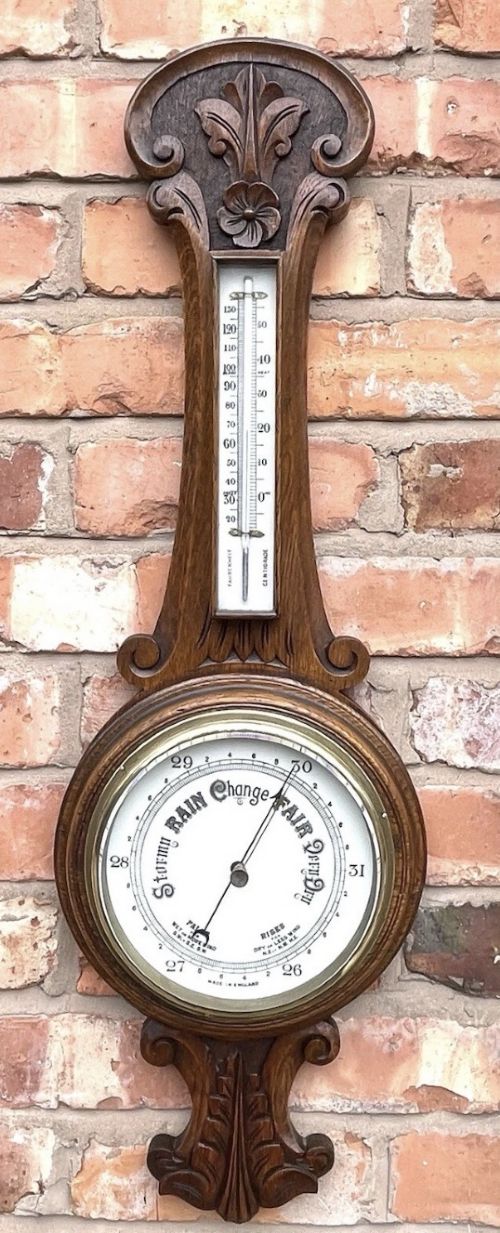
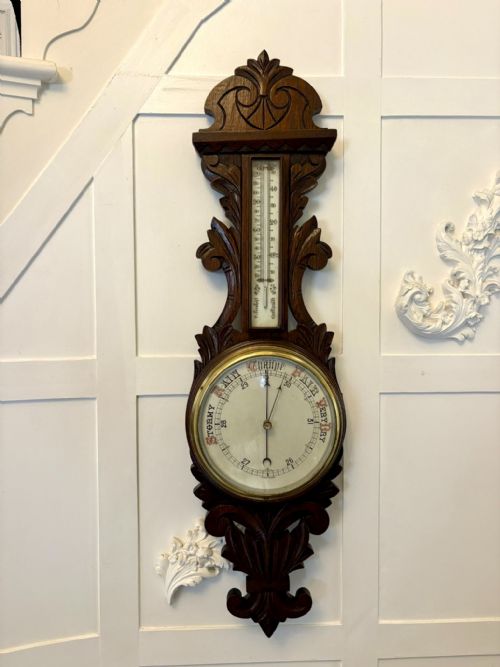
A carved oak thermometer barometer combines a weather-measuring instrument with deeply figured woodwork, appearing most often in substantial Victorian and Edwardian banjo formats. These wall-hanging pieces typically pair an aneroid dial with a matching glass thermometer tube, mounted onto panels shaped with scrolling foliage or avian motifs. Buyers find examples originating across the nineteenth and early twentieth centuries, spanning straightforward domestic models to elaborate Black Forest interpretations.
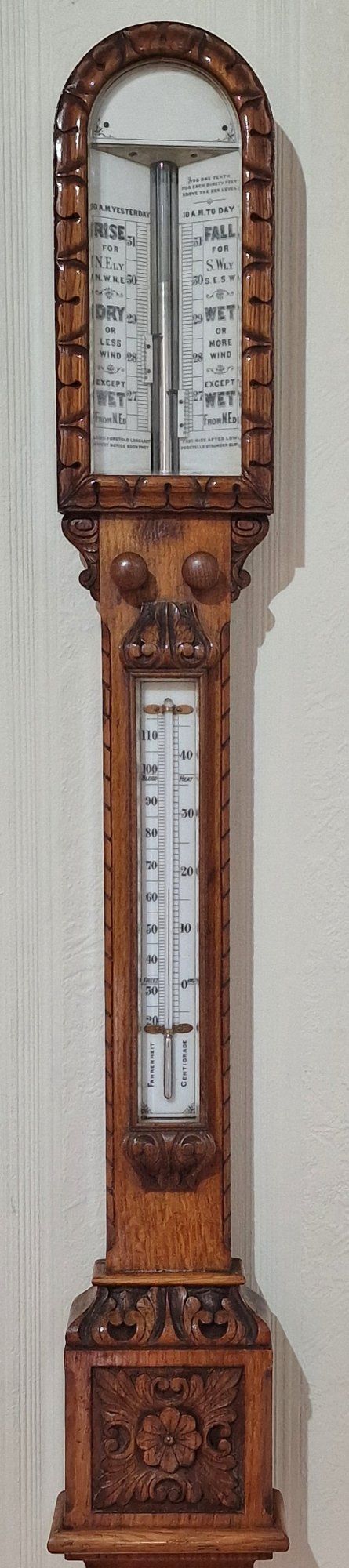
The prevalent form on this page is the banjo barometer, named for its curvaceous silhouette that swells at the base to house the main weather dial. Alongside these, wall-mounted stick barometers and architectural desk clocks appear in seasoned oak, offering alternative ways to display the mechanism. Whether sourced from English workshops or continental makers, each piece reflects a period when domestic meteorology demanded functional art.
Makers ranged from notable scientific instrument houses to regional retailers who sourced reliable movements and housed them in local timber cases. Pieces often incorporate white porcelain or ceramic scales alongside brass bezels and protective glass covers. The combination of carved oak housings and sensitive measuring instruments creates a focal point for hallways and studies.
How they were made
Craftsmen built these instruments using solid oak and lindenwood, selected for stability and responsiveness to deep carving techniques. Artisans worked the timber by hand, cutting high-relief foliage and sculptural details directly into the dense grain of the wood case. Brass bezels and hanging rings were fitted to secure the glass dials and thermometer tubes safely within the timber frame.
Internal mechanisms relied upon sensitive aneroid capsules or mercury-filled glass tubes to register atmospheric pressure shifts. Instrument makers calibrated each dial precisely, often mounting them alongside ceramic or porcelain scale plates inscribed with weather terminology. The finished assemblies united heavy joinery with delicate scientific instruments designed to endure decades of domestic use.
Listings feature oak and lindenwood cases housing glass, brass, and ceramic components across Victorian and Edwardian periods.
What varies in quality
Depth and crispness of the woodwork set individual instruments apart, distinguishing sharp, hand-chiseled foliage from softer, more mechanical shaping. The reputation of the instrument maker also influences standing, with signed dials from established opticians commanding particular attention. Furthermore, the integration of secondary materials such as clear glass, brass bezels, and unblemished ceramic scales contributes to the overall cohesion of the piece.
Proportion and scale dictate the visual weight of the barometer on the wall, ranging from compact hall pieces to massive carved wall assemblies. The clarity and legibility of the engraved dial faces reveal the care taken during production. Well-preserved timber surfaces with a rich, patinated finish demonstrate how the oak has aged over generations.
Hyde & Sons Sleaford·Negretti & Zambra·W Watson & Sons·J Hughes London·Maple & Co
The Carved Oak Thermometer Barometer Glossary
- Aneroid barometer
- A sealed metal capsule that expands and contracts with atmospheric pressure changes, moving a needle across a dial without using liquid. This design allowed barometers to be mounted vertically on walls without spilling mercury.
- Banjo barometer
- A wall-mounted instrument featuring a distinctive shape with a narrow neck and a bulbous circular base. This form dominated domestic weather-recording during the Victorian era.
- Stick barometer
- A tall, vertical instrument that displays atmospheric pressure using a long glass tube filled with mercury. These pieces emphasise the pure movement over decorative woodwork.
- Black Forest
- A style of wood carving originating in Central Europe, known for highly detailed naturalistic motifs including birds and foliage. Pieces in this style often display exceptional sculptural depth.
- Bezel
- The brass or metal ring that holds the protective glass cover in place over the barometer dial. It allows easy access to the instrument face while securing the delicate parts.
Carved Oak Thermometer Barometer: Frequently Asked Questions
How do I read an aneroid barometer?
Read the main dial by observing the position of the pointer relative to weather descriptions like rain or fair. Turning the small brass knob sets the needle pointer over the current reading to track future atmospheric movement.
Changes in pressure over the course of a day indicate whether weather conditions are improving or deteriorating. Comparing the primary hand to the set hand shows the direction of the trend.
Where should I hang a wall barometer?
Mount the piece securely on an interior wall away from direct sunlight and sudden temperature fluctuations from heaters or drafts. Hallways and studies provide stable environments that protect the sensitive internal mechanisms.
Ensure the hanging point supports the weight of the solid oak housing and glass components safely. Keeping the instrument at eye level makes daily weather checks effortless.
How do I date a Victorian oak barometer?
Examine the style of the wood carving, the typography on the dial face, and any maker signatures recorded on the paper or porcelain scale. Victorian Gothic Revival and Black Forest motifs point toward specific decades in the nineteenth century.
Construction details such as screw types and backing boards also offer clues to the manufacturing period. Consulting records of known retailers helps narrow down the decade of production.
Can antique barometers still measure weather?
Many surviving aneroid and mercurial instruments remain operational and respond accurately to local atmospheric shifts. Regular barometric pressure changes will move the internal linkages and turn the indicator needle.
Calibration can sometimes be adjusted via a small screw on the back if the reading needs alignment with local forecasts. Even when uncalibrated, they serve as remarkable historical records of domestic science.