

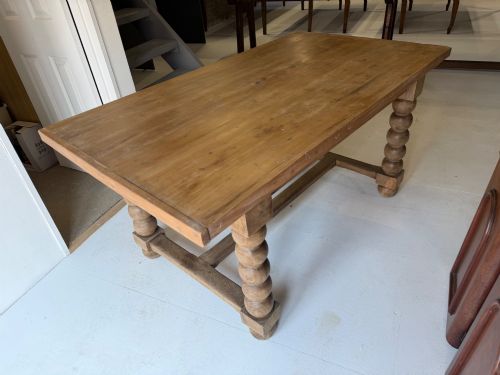
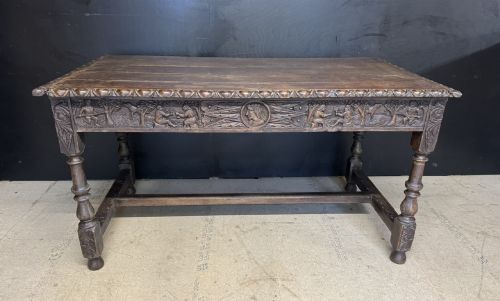
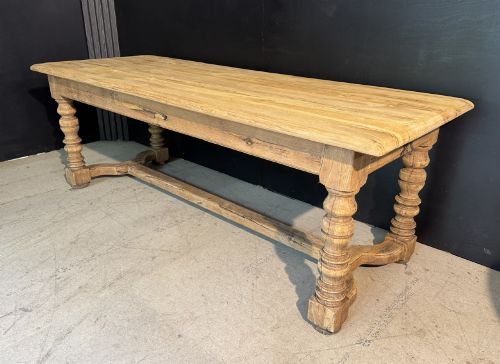


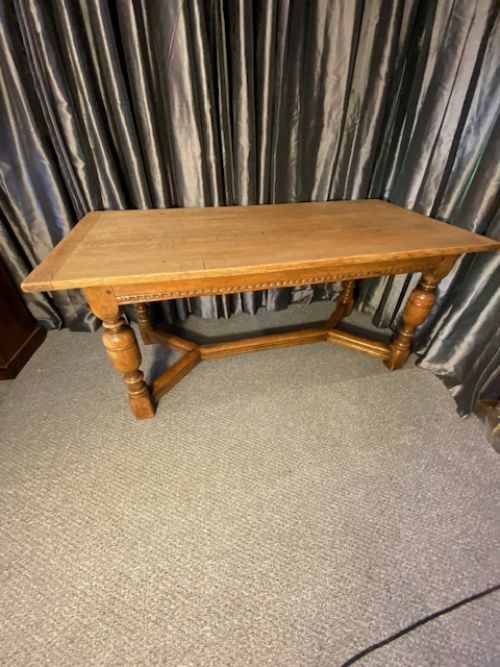


Carved Oak Refectory Desk
These carved oak refectory desk examples combine sturdy timbers and period styling to serve as substantial dining or working surfaces.

Carved Oak Refectory Desk
A carved oak refectory desk or table provides a long, heavy surface rooted in domestic and monastic traditions. You meet these pieces mostly in nineteenth century and early twentieth century manifestations, drawing on Jacobean, Gothic, and rustic farmhouse styles.
The inventory on this page ranges from large dining tables and abbey trestle forms down to side and serving tables fitted with drawers. Timbers lean heavily on oak supplemented by beech, alongside iron and brass hardware.
Makers and workshops from the Victorian era onward produced these sturdy tables to mimic earlier centuries, employing styles such as Renaissance revival and French country alongside strict Gothic revival.
How they were made
Carpenters built these tables primarily using solid oak for its durability and prominent grain, often pairing it with beech for structural elements or legs such as bobbin turnings. Iron and brass components supplied functional hinges, brackets, or drawer pulls.
Construction methods rely on heavy framing and trestle supports designed to bear substantial weight without shifting. Carving was applied by hand to skirts, friezes, and legs to achieve the revivalist motifs demanded by the period.
Carved Oak Refectory Desk Retail Price Guide 2026
Typical asking prices for carved oak refectory desk among the pieces listed under this phrase on Sellingantiques today, from the lower quarter to the upper quarter. They describe what is for sale here now, not the wider market.
Listings span the nineteenth century, Edwardian era, and nineteen-twenty, featuring oak, beech, iron, and brass.
What varies in quality
Quality rests in the weight of the timber and the depth of the hand carving rather than surface finish alone. Substantial, heavy pieces demonstrate greater integrity in their joinery than lighter revival items.
The articulation of historical styles, from restrained French farmhouse lines to intricate Victorian Gothic tracery, dictates the level of craftsmanship invested by the maker.
The Carved Oak Refectory Desk Glossary
- Refectory table
- A long dining or serving table traditionally used in communal dining halls. These examples span nineteenth and early twentieth century revivals.
- Trestle table
- A table supported by two or more upright frames connected by a horizontal beam. This form underpins abbey and farmhouse designs.
- Bobbin leg
- A turned furniture leg shaped to resemble a string of bobbins or spools. This detail appears on nineteenth century beech and oak frames.
- Gothic revival
- An architectural and decorative style drawing on medieval forms. Tables in this style feature pointed arches and heavy tracery.
- Jacobean style
- A heavy, angular furniture design originating from the seventeenth century and revived in later periods. It relies on dark oak and geometric carving.
Carved Oak Refectory Desk: Frequently Asked Questions
What is a refectory table?
A refectory table is a long, narrow table historically designed for communal dining in monasteries or large halls. Later revival versions adapted this generous proportion for domestic dining rooms and studies.
These pieces rely on sturdy timber construction and long stretches of oak to accommodate multiple diners or heavy working use.
How do I date an oak table?
Dating relies on examining the timber preparation, tool marks, joinery methods, and stylistic cues present in the carving. Nineteenth century and Edwardian makers often copied earlier Jacobean or Gothic motifs.
Matching the wood species, such as oak paired with beech, to the documented periods helps narrow down the decade of production.
Are these tables suitable for daily use?
These tables were built with heavy timbers and sturdy frames specifically to withstand daily use as dining surfaces or desks. Their robust construction makes them practical for modern living.
Routine maintenance involves treating the oak surface carefully to preserve the historic finish against moisture and heat.
What is an abbey trestle table?
An abbey trestle table uses upright end supports joined by a central beam rather than four standard corner legs. This design provides maximum legroom along the length of the top.
Makers utilised this form in nineteenth century interpretations to evoke medieval monastic interiors.