


Carved Oak Looking Glass
A carved oak looking glass brings substantial timber grain and deep relief work to a wall, offering both function and architectural presence.
Carved Oak Looking Glass
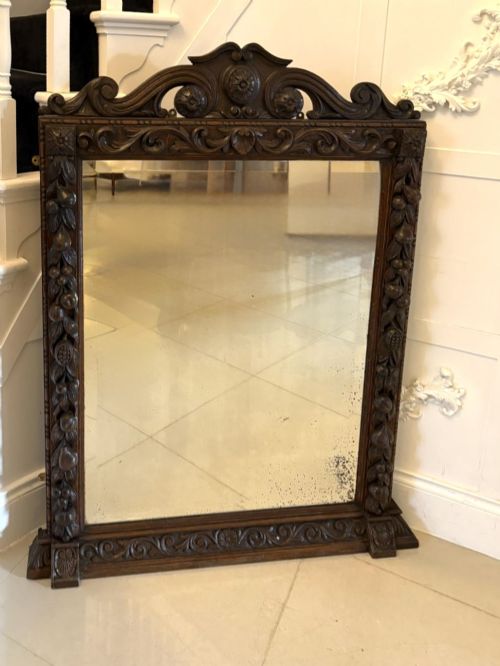
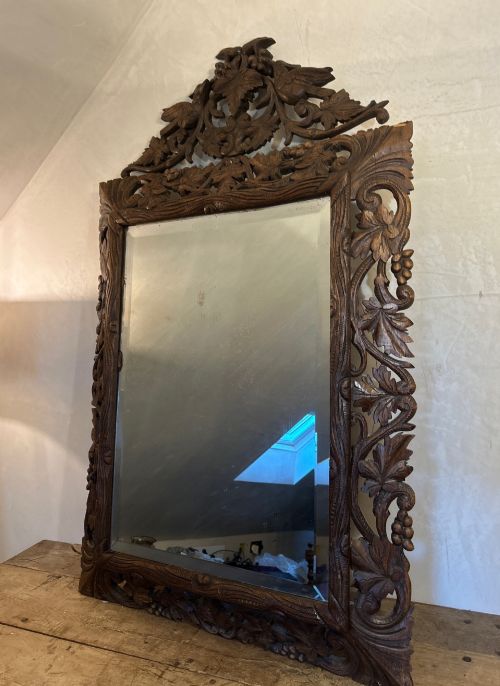
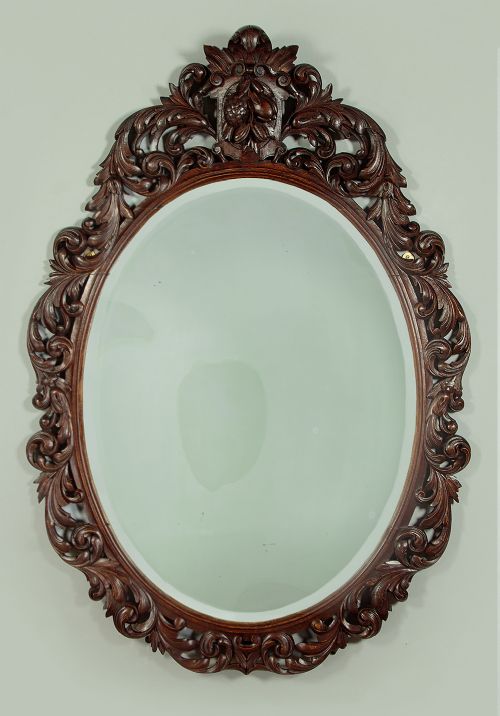
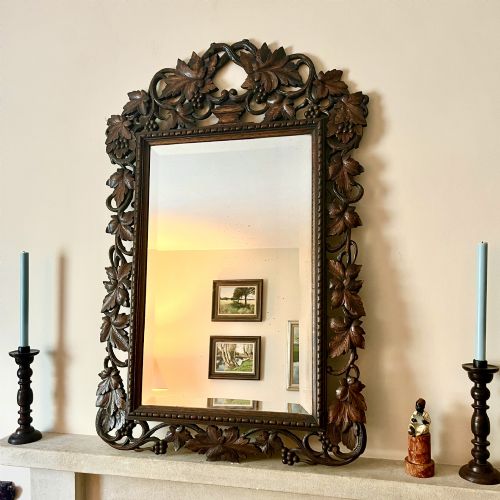
A carved oak looking glass is a wall mirror framed in sturdy timber, frequently decorated with relief carving, foliage, or architectural motifs. Buyers seeking these pieces generally find rectangular, oval, or larger wall-hanging formats dating primarily from the nineteenth century.
The versions most commonly met on this page span the Victorian era, alongside specific interpretations such as Black Forest work, French Renaissance Revival, and Rococo Revival styles. These wall mirrors function as focal points in a room, combining heavy wood frames with reflective glass plates.
How they were made
Makers constructed these frames using solid oak, often applying hand-carving techniques directly to the timber to achieve deep relief and textured surfaces. Some examples incorporate gesso, gold leaf, paint, or brass elements to accent the wooden structure.
The integration of the mirror plate into the heavy wooden surround required secure backing and precise rebate cutting. Original glass plates frequently show signs of age, such as slight foxing or oxidation, reflecting the period manufacturing methods.
An eighteenth-century oak mirror frame often outlives several generations of walls, having witnessed countless different wallpapers come and go.
What varies in quality
Quality in a carved oak looking glass rests upon the depth, crispness, and artistic execution of the woodworking. Finer examples display undercut foliage, balanced proportions, and confident relief work rather than shallow, mechanical stamping.
The condition and retention of original components, such as the mirror plate, backing boards, and surface finish, distinguish superior items. Frames that retain their original patination and uncompromised structural joints command greater regard from collectors.
The Carved Oak Looking Glass Glossary
- Carved oak
- Timber shaped by hand using gouges and chisels to create three-dimensional surface decoration. This dense hardwood holds fine detail and darkens richly with age.
- Gesso
- A plaster-based mixture applied to wood frames to provide a smooth surface for gilding or painting. It allows for crisp decorative moulding beneath gold leaf.
- Gold leaf
- Extremely thin sheets of beaten gold applied to a prepared surface for decoration. It provides a metallic contrast against the dark grain of the wood.
- Foxing
- Age-related brown spots and speckles that develop on antique mirror plates due to the oxidation of the silver backing. Many collectors view this as an authentic indicator of period age.
- Black Forest
- A regional style of woodwork originating from Germany, known for highly naturalistic carvings of animals, leaves, and forest motifs. These pieces utilise deep relief and dark timber.
Carved Oak Looking Glass: Frequently Asked Questions
Are the mirror plates original?
Many surviving examples retain their original glass plates, which often exhibit characteristic signs of age such as minor scratching or foxing. Replacement plates do occur when earlier glass has suffered damage over the centuries.
Examining the back of the frame and the mounting method can help determine whether the glass has remained undisturbed since manufacture. Slight imperfections in the reflection usually point toward period glass.
How should I clean the oak frame?
Maintenance of the wood involves dusting gently with a dry, soft cloth to prevent buildup in the carved recesses. Avoid using modern silicone-based polishes or harsh chemical sprays, which can damage the historic finish and dry out the timber.
Applying a sparing amount of quality beeswax periodically helps nourish the oak and maintain its natural lustre. Care must be taken to keep moisture away from both the wood and the mirror edge.
What distinguishes French Renaissance Revival styles?
French Renaissance Revival pieces draw inspiration from sixteenth-century design, featuring architectural elements such as columns, pediments, and strapwork. The carving on these frames tends to be bold, symmetrical, and deeply cut into the oak.
Such mirrors project a formal, monumental presence compared to the more organic or rustic nature of other nineteenth-century regional styles. They suit interiors designed with classical proportions and heavier furniture.