





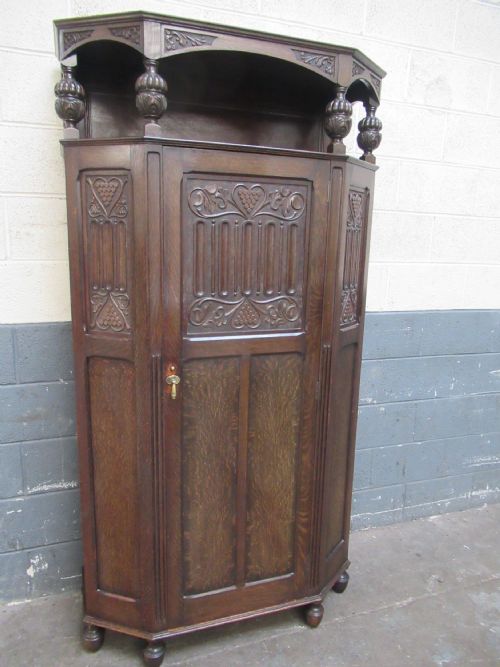
Carved Oak Hallway Stand
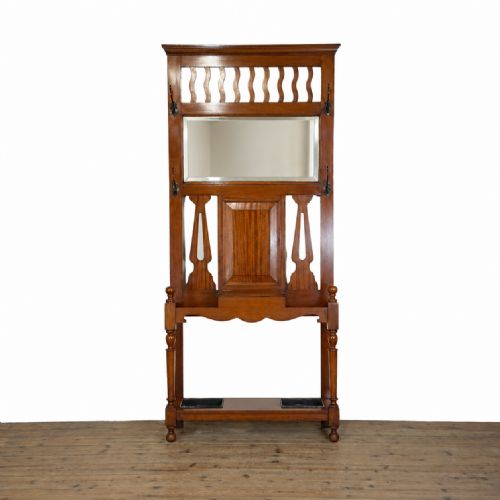
A carved oak hallway stand welcomes visitors with deep relief panels, central mirrors and sturdy pegs forged for daily household use.
Carved Oak Hallway Stand
A carved oak hallway stand combines utilitarian coat storage with architectural presence, forming the first impression of an interior. These pieces serve to organise outdoor garments and walking gear in entrance passages.
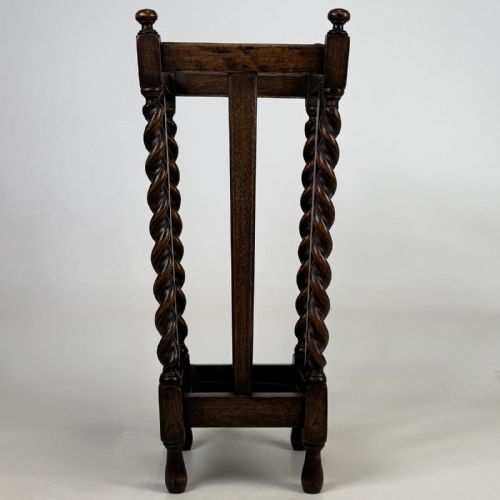
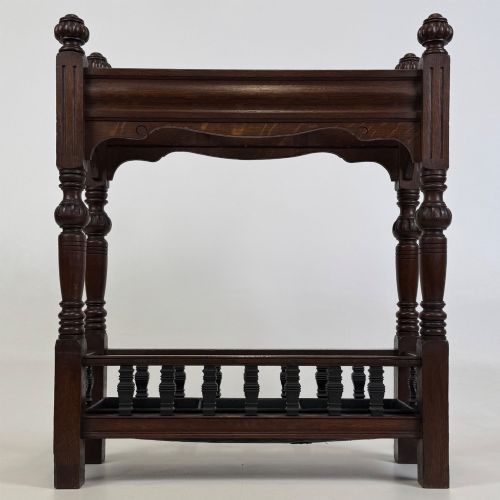
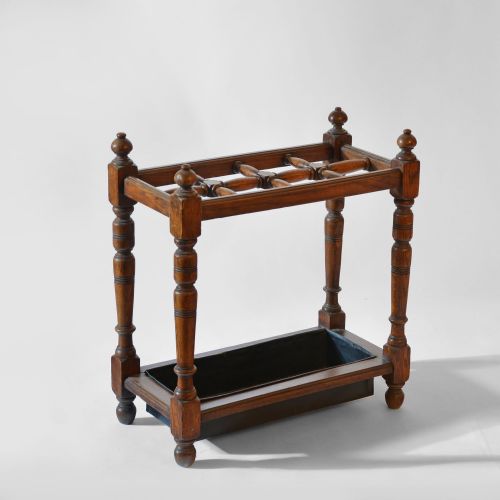
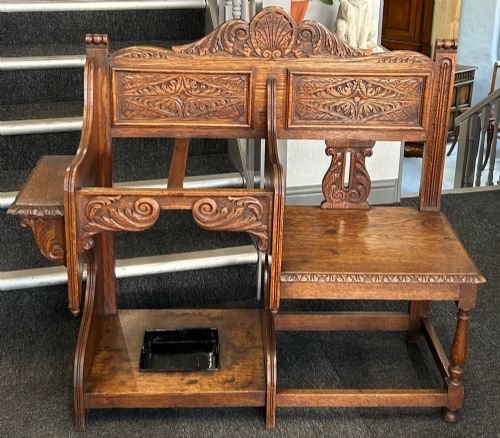
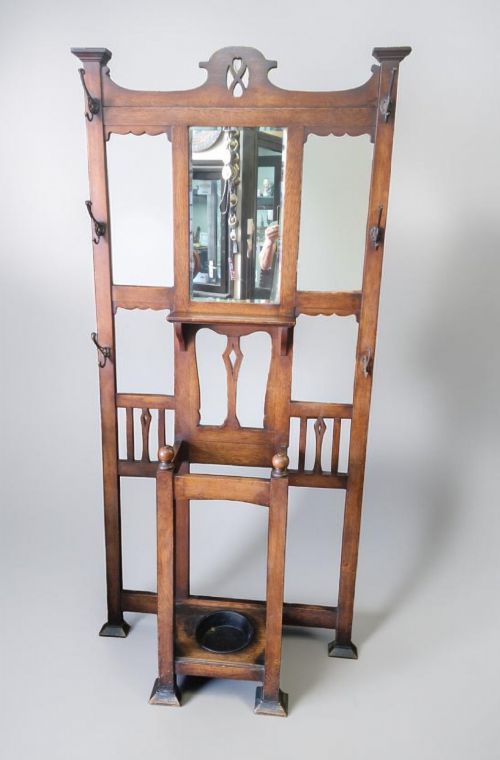
The version most commonly encountered on this page originates from the Victorian and Edwardian periods. Examples frequently incorporate umbrella wells, brass drip pans and integrated seats alongside carved umbrella and stick compartments.
Makers of these hallway furnishings drew upon diverse historicist vocabularies, ranging from robust Jacobean Revival motifs to linear Arts and Crafts construction. Regional country house pieces often display simpler panel work designed for functional longevity.
How they were made
Construction relies heavily upon solid oak, selected for its density and stability under daily domestic weight. Workshops utilised traditional mortise and tenon joinery to anchor heavy framework supporting mirrors and iron coat hooks.
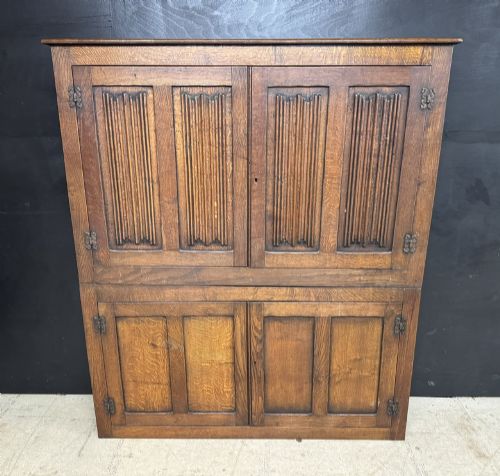
Surface ornamentation involved hand carving executed directly into the timber, yielding deep undercut foliage, linenfold panels, or figurative elements such as Greenman masks. Secondary materials including brass, cast iron, and ceramic components were integrated for drip pans, rails, and hardware.
Finishes typically involved polishing or waxing the oak grain to accentuate natural figuring, while mirrors were bevelled and secured into rebated frames. Metalwork components, particularly brass mounts and umbrella rings, were screwed directly into structural timber.
Carved Oak Hallway Stand Retail Price Guide 2026
Typical asking prices for carved oak hallway stand among the pieces listed under this phrase on Sellingantiques today, from the lower quarter to the upper quarter. They describe what is for sale here now, not the wider market.
Listings feature oak hallway furniture spanning from the mid-nineteenth century through the Edwardian era, incorporating brass, cast iron, and ceramic fittings.
What varies in quality
The calibre of a carved oak hallway stand rests upon the depth and execution of its sculptural detail. Superior examples display crisp, hand-chiselled carving with clear undercut relief, whereas lesser pieces rely on shallow mechanical stamping or plain surfaces.
Structural integrity and material selection define the upper tier of production. Dense, quarter-sawn oak timbers resist warping better than plain-sawn boards, and heavy cast iron or brass fittings outlast thin stamped sheet metal.
The Carved Oak Hallway Stand Glossary
- Quarter-sawn oak
- Timber cut radially from the growth rings, producing distinctive figuring known as medullary rays. This method yields stable boards less prone to shrinking or warping.
- Greenman
- A sculptural motif depicting a human face entwined with or emerging from foliage. This ancient symbol of rebirth appears frequently in late Victorian carved woodwork.
- Drip pan
- A removable metal or ceramic tray placed at the base of stick and umbrella stands. These vessels catch rainwater from wet canes and protect the wooden floorboards beneath.
- Jacobean Revival
- An architectural and decorative style popular during the nineteenth century, mimicking seventeenth-century English furnishings. It is characterised by heavy geometric mouldings, strapwork, and dark polished oak.
- Arts and Crafts
- A design movement prioritising honest construction, visible joinery, and utility. Pieces from this tradition avoid excessive ornamentation in favour of simple oak forms.
Carved Oak Hallway Stand: Frequently Asked Questions
What is a carved oak hallway stand?
A carved oak hallway stand is a multi-functional piece of furniture designed for entrance halls to hold coats, hats, sticks, and umbrellas. Many incorporate integrated mirrors, glove boxes, or bench seats.
These pieces emerged as staple furnishings in Victorian and Edwardian homes to keep outerwear organised near the front door. Their robust construction allowed them to withstand heavy daily use by household residents and visitors.
How do I care for antique oak?
Maintain antique oak by applying a traditional beeswax polish periodically to nourish the timber and preserve the finish. Avoid placing hallway stands directly against hot radiators or in damp entryways.
Protect the wood from standing water by ensuring umbrella drip pans are emptied and dried regularly. Gentle dusting with a dry lint-free cloth prevents dirt accumulation in carved recesses.
How can I tell Victorian from Edwardian stands?
Victorian hallway stands generally feature heavier, darker carved ornamentation with dense motifs such as Greenman masks or Gothic Revival arches. Their timber finishes tend to be dark and heavily polished.
Edwardian examples often display lighter oak tones, simpler linear framing, and occasional influences from the Arts and Crafts movement. They frequently utilise cleaner surfaces with less dense foliage carving.
Were these stands used in smaller homes?
Hallway stands were manufactured in various sizes to accommodate different domestic scales, including narrow variations designed for restricted spaces. Compact models often omitted bench seats to save floor space.
Narrow wall-mounted hat and coat racks were also produced alongside floor-standing versions for smaller entrance areas. These smaller formats maintained the functional umbrella storage of their larger counterparts.