
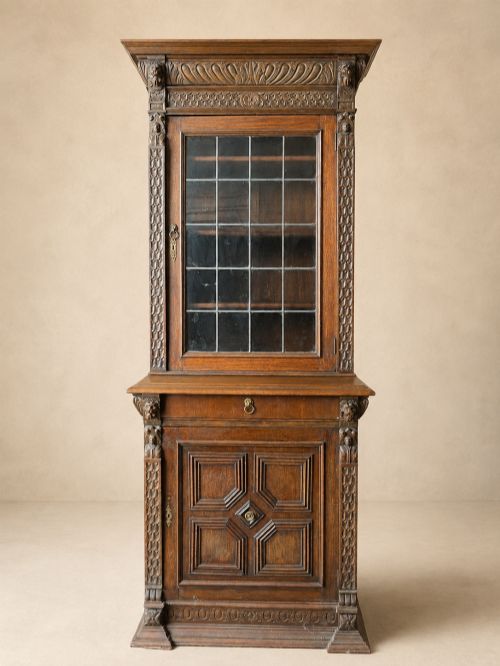
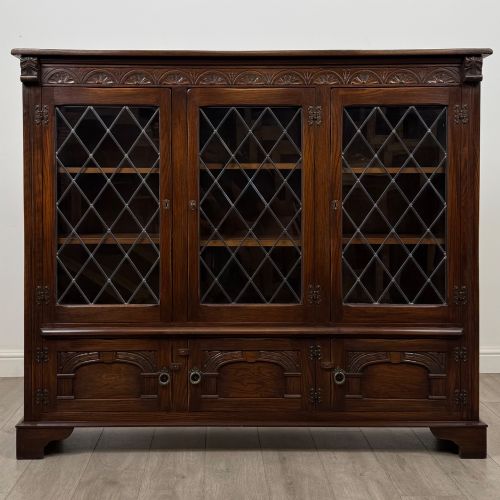
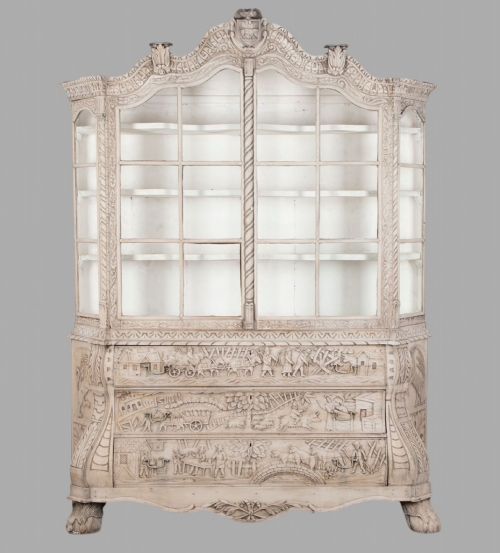
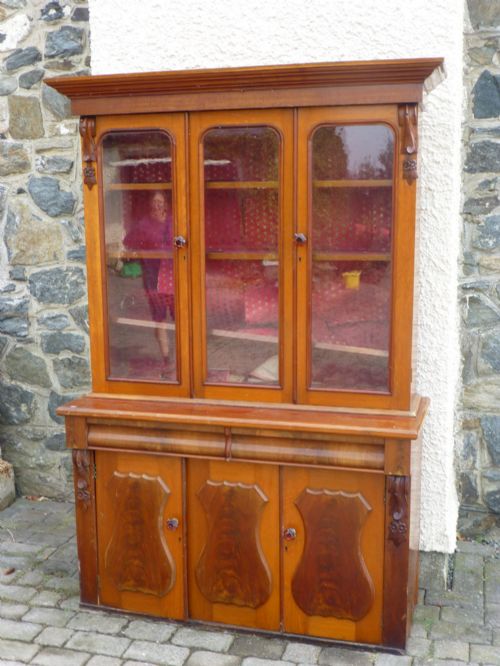
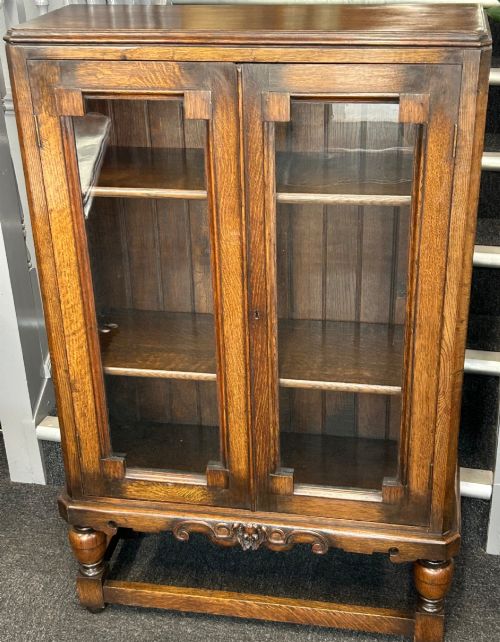
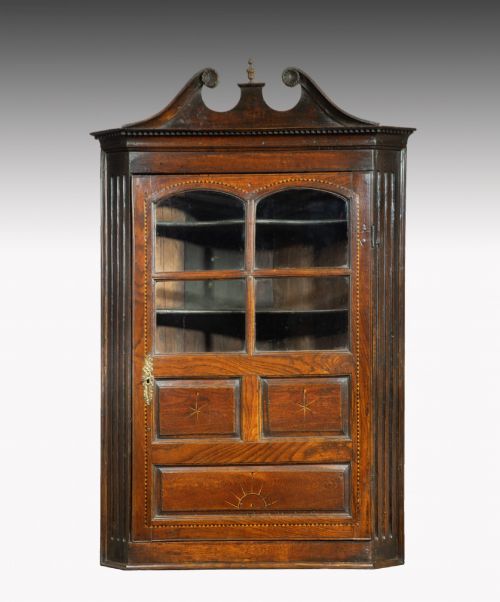
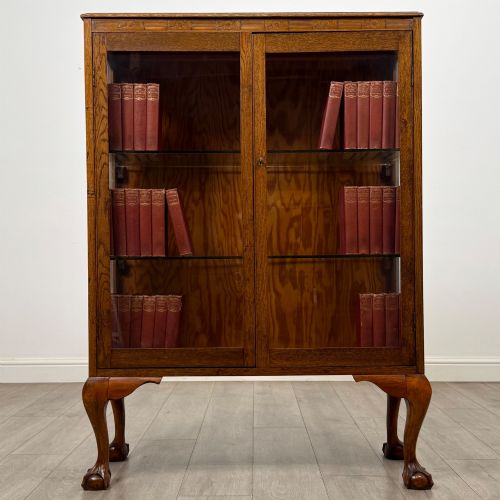

Carved Oak Glazed Cupboard
A carved oak glazed cupboard brings together sturdy timber and clear glass to house books and display objects.
Carved Oak Glazed Cupboard
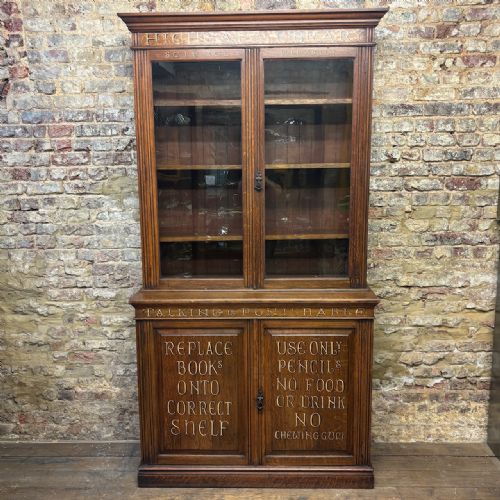
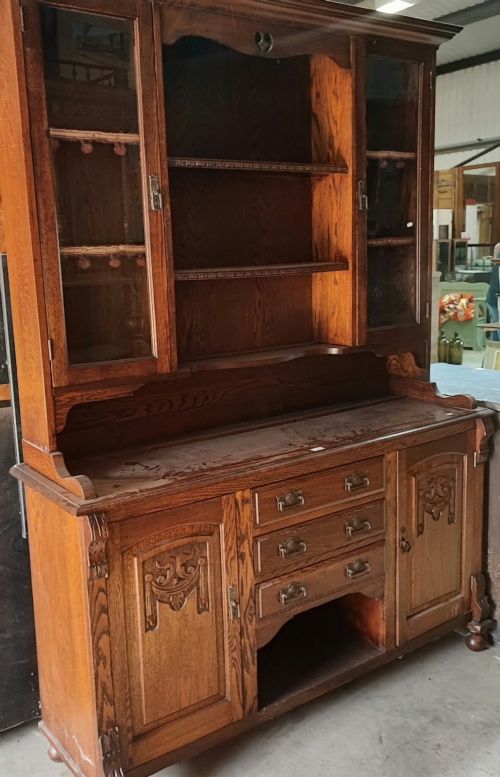
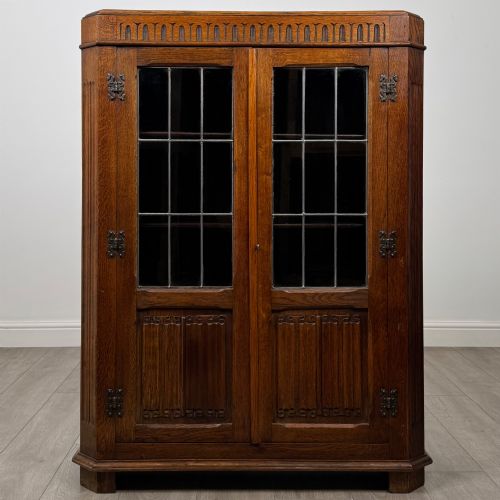
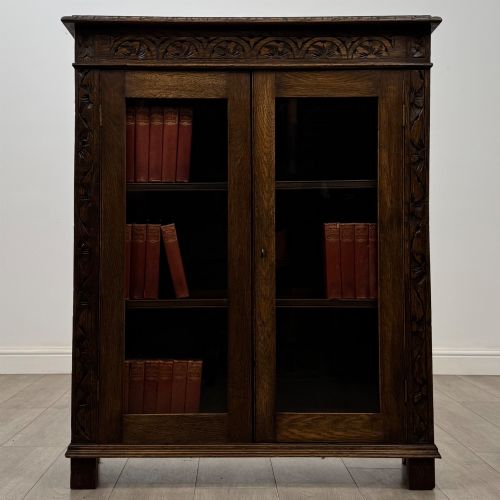
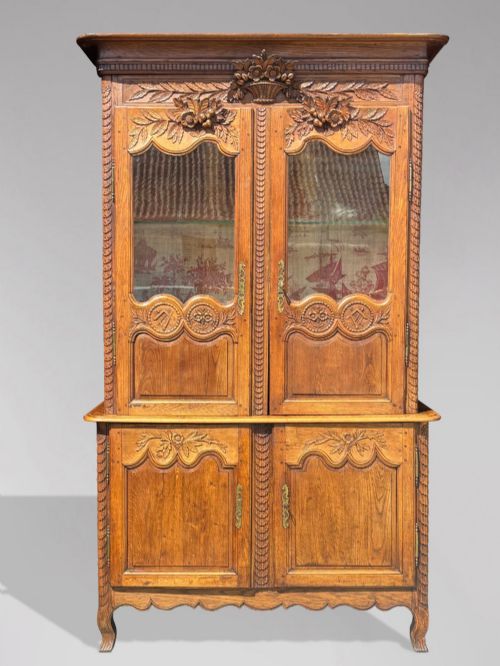
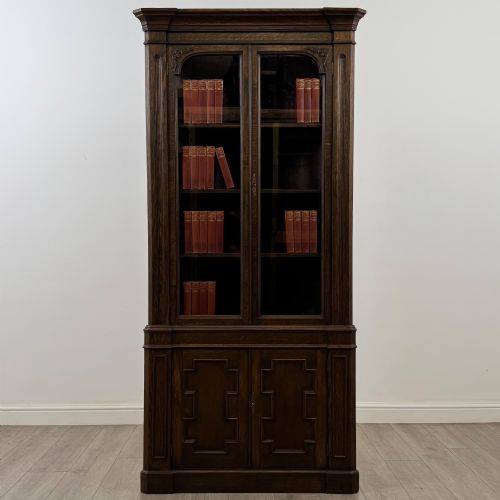
A carved oak glazed cupboard appears in numerous guises across this selection, ranging from corner cupboards and tall library bookcases to display cabinets, corner cabinets and two-part dressers. Buyers seeking a carved oak glazed cupboard encounter examples spanning the eighteenth century, the Georgian era, the Victorian period, the Edwardian years and the nineteen-twenties.
The regional origins and stylistic influences are similarly diverse, taking in French provincial pieces, Dutch bombé designs, Italian vitrines, and English examples executed in Jacobean, Tudor, Gothic and Renaissance revival manners.
Materials and construction
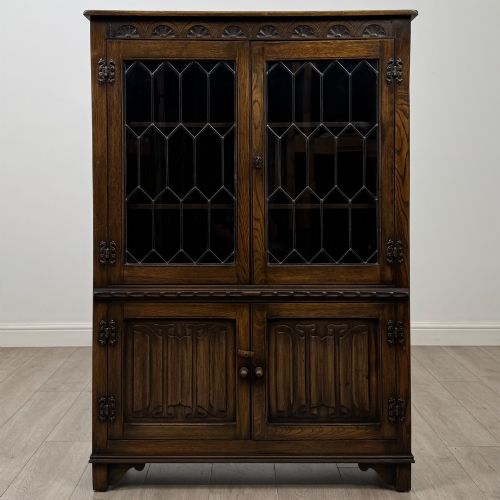
Construction relies primarily upon solid oak, occasionally augmented with pollard oak, alongside glass panels for doors and windows. Metal components such as brass, iron and lead appear in hinges, key escutcheons and window cames holding leaded glass panes together.
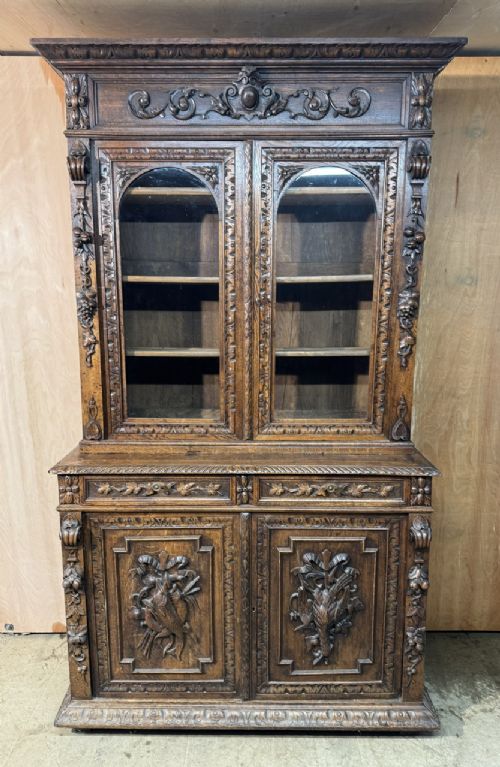
Carving provides the principal ornamentation across panels, friezes and cornices, whilst secondary woods like mahogany integrate into specific hybrid furniture forms. Fabric linings occasionally furnish the interior spaces of display compartments.
One heavily carved bookcase cabinet comes bearing later sign-written German beer-related emblems.
Judging execution
Quality rests upon the crispness and depth of the carved enrichment and the proportional harmony of the timber carcass. Pieces displaying deeply articulated relief work and well-figured oak boards stand apart from plainer, mechanically produced alternatives.
The integration of the glazed doors within the heavy oak frame dictates the overall refinement, where tight joinery and original leaded or clear glass panes elevate the execution.
The Carved Oak Glazed Cupboard Glossary
- Bombé
- A swelling or bulging outward contour found on the lower chests and bases of specific continental cabinets. This curving profile requires advanced cabinet-making skill to execute successfully in solid timber.
- Vitrine
- A glass-fronted display cabinet designed for the exhibition of porcelain, curiosities and fine objects. The term frequently applies to continental European examples.
- Linenfold
- A carved panel motif mimicking folded fabric or linen cloth. This ornamental carving style appears frequently on pieces influenced by Tudor and Jacobean revivals.
- Lead cames
- Slender strips of cast lead used to hold individual pieces of glass together within a window or cupboard door. They form geometric or patterned grids across the opening.
- Pollard oak
- Timber taken from trees that have been pollarded, producing a dense, highly figured grain pattern with clustered knots. It is selected for decorative veneer and accent panels.
Carved Oak Glazed Cupboard: Frequently Asked Questions
What rooms suit a carved oak glazed cupboard?
These cabinets suit libraries, studies, dining rooms and drawing rooms where books, ceramics or glassware require enclosed storage and display. Their substantial wooden presence anchors a room's interior scheme.
Smaller corner cupboards fit snugly into neglected angles of compact spaces, whilst large monumental bookcases function as primary architectural furniture pieces in expansive hallways.
How do I identify a Gothic revival piece?
Gothic revival pieces display architectural motifs borrowed from medieval stone buildings, including pointed arches, quatrefoils, tracery and heavy buttress-like uprights carved directly into the oak timber.
These cabinets often date from the nineteenth century when designers drew heavy inspiration from medieval European architecture for domestic library furniture.
Are these cupboards made of solid oak?
The majority of these pieces utilise solid oak for their structural frames, doors, shelves and carved exterior elements. Some examples incorporate pollard oak for decorative surface panels.
Secondary timbers occasionally appear on interior drawer linings or backboards, reflecting standard period construction methods used by regional cabinet makers.
How do I care for antique oak furniture?
Maintain a stable indoor environment away from direct heat sources and strong sunlight to prevent the oak timber from drying out or splitting. Dust the carved surfaces regularly with a dry cloth.
Apply a microcrystalline wax polish occasionally to nourish the timber and protect the natural finish without building up excessive residue in the carved recesses.