



Carved Oak Clothes Cabinet
These carved oak clothes cabinet examples offer generous storage in enduring timber, bringing genuine character and practical function to any traditional bedroom scheme.
Carved Oak Clothes Cabinet
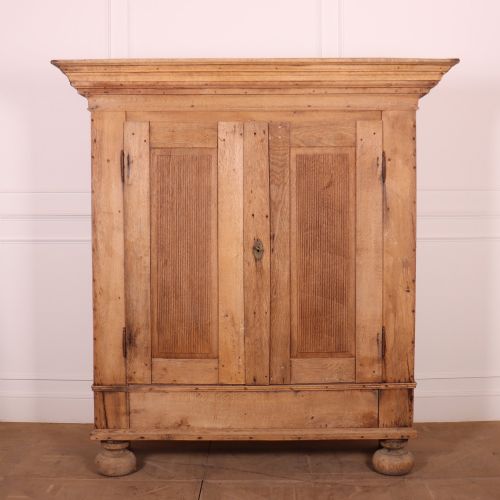
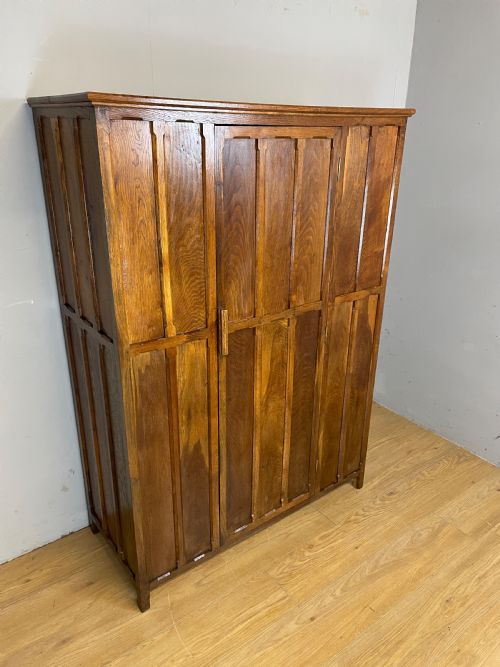
When searching for a carved oak clothes cabinet, you are looking at substantial storage furniture designed for garments and linen, spanning periods from the eighteenth century through to the Edwardian era and the 1930s. The selection on this page ranges from Georgian linen presses and press cupboards to nineteenth-century wardrobes, armoires, and gentleman's wardrobes.
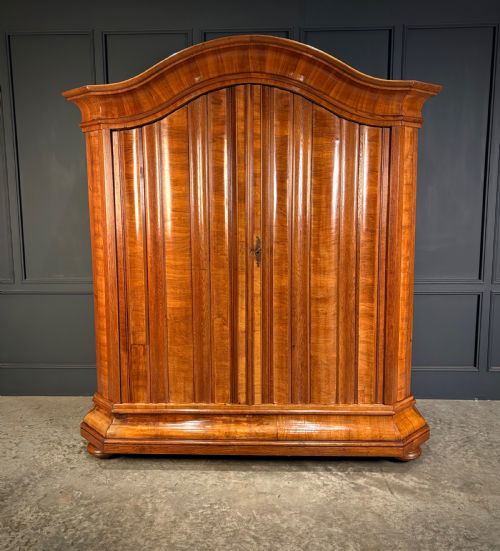
The versions you are most likely to meet here include English country and Welsh country pieces alongside Continental examples such as French provincial and Dutch Baroque designs. Regional variations appear frequently, demonstrating distinct local joinery traditions and proportions tailored to storing domestic textiles.
How they were made
The construction relies primarily on solid oak, selected for its strength and durability, often paired with secondary woods and mounted with brass or iron hinges, handles, and locks. Joinery methods involve traditional pegged mortise and tenon frames, panelled doors, and hand-cut dovetails within internal drawers.
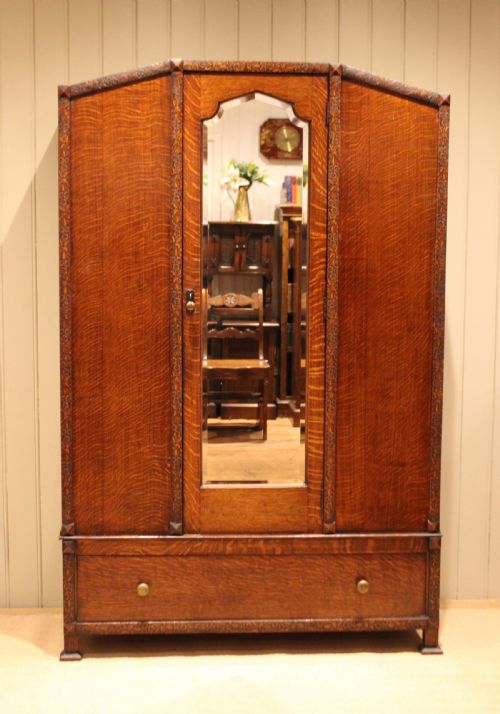
Carving is a defining decorative technique across these pieces, executed by hand to render floral motifs, geometric panels, linenfold patterns, or bold Baroque relief work. Surfaces finished with period waxing methods or later bleaching highlight the natural grain structure and deep patination of the timber.
Carved Oak Clothes Cabinet Retail Price Guide 2026
Typical asking prices for carved oak clothes cabinet among the pieces listed under this phrase on Sellingantiques today, from the lower quarter to the upper quarter. They describe what is for sale here now, not the wider market.
Styles represented include French provincial, English country, Dutch Baroque, Victorian Gothic Revival, Welsh country, and Early Georgian forms.
What varies in quality
The standard of a carved oak clothes cabinet rests on the crispness and depth of the hand-carving and the integrity of the original timber frame. Pieces featuring deeply articulated relief work and well-figured oak panels demonstrate superior craftsmanship compared to simpler, flatter surfaces.
Proportion and structural balance dictate the visual success of each piece, with finer examples maintaining harmonious dimensions between upper storage cupboards and lower drawer sections. Original hardware, intact locks, and well-preserved internal shelving or hanging space further elevate the standing of individual items.
The Carved Oak Clothes Cabinet Glossary
- Linen press
- A tall storage piece comprising an upper section with sliding trays or shelves enclosed by doors, positioned above a chest of drawers. This form was traditionally used to store household linens flat before the widespread adoption of vertical hanging space.
- Armoire
- A large freestanding wardrobe or cupboard of Continental European origin, typically featuring double doors and deep internal capacity. These pieces often display regional architectural details and heavy timber framing.
- Press cupboard
- An early form of storage furniture featuring enclosed upper and lower compartments used for garments and household goods. They rely heavily on solid frame-and-panel construction.
- Gentleman's wardrobe
- A specialised compact wardrobe designed for male attire, combining hanging compartments with sliding trays, shirt drawers, and tie rails. They date predominantly from the Victorian and Edwardian periods.
- Bleached oak
- Oak timber treated to lighten its natural dark tone, creating a pale, neutral finish. This treatment appears on specific Continental and mid-century items to soften the visual weight of the wood.
Carved Oak Clothes Cabinet: Frequently Asked Questions
What is a linen press?
A linen press is a traditional storage unit featuring sliding internal trays or shelves enclosed by upper doors, sitting above a chest of base drawers. They were designed to keep household textiles flat and organised.
Over time, many of these presses have been converted internally to accommodate modern hanging rails while retaining their traditional exterior appearance and proportions.
How do I use an armoire?
An armoire functions as a primary wardrobe or general storage cupboard, offering deep internal space for folded garments, shelves, or hanging rails. Their substantial presence suits larger bedrooms or hallways.
When living with these pieces, ensure adequate wall clearance for the large doors and consider freestanding internal drawer units if the original configuration lacks modern compartmentalization.
How do I date an oak wardrobe?
Dating relies on examining construction techniques, hardware, and stylistic details such as panel thickness, hand-cut dovetails, and lock types. Eighteenth-century examples often display pegged frames and fielded panels.
Later Victorian and Edwardian pieces frequently introduce mirrored doors, factory-made screws, and machine-cut elements alongside revival carving styles influenced by Gothic or Baroque precedents.
Are these cabinets difficult to move?
These cabinets are heavy, solid wood structures built in single pieces or large modular sections that require careful handling during transport. Many period wardrobes and presses do not dismantle entirely.
Measuring stairwells, ceiling heights, and doorway clearances is essential before introducing one of these substantial pieces into a room.