






Carved Marble Vases
These carved marble vases bring classical weight and mineral grain into a room, offering the sculptural permanence that collectors seek.
Carved Marble Vases
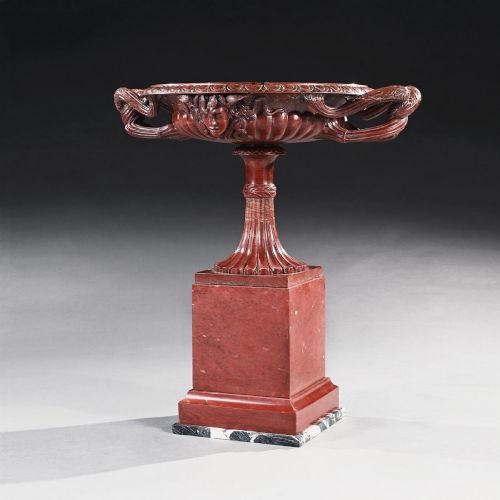
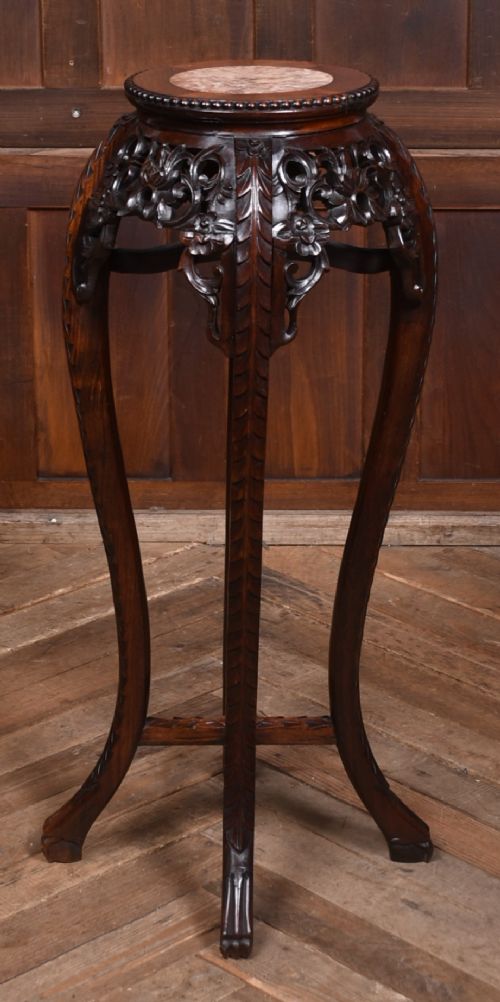
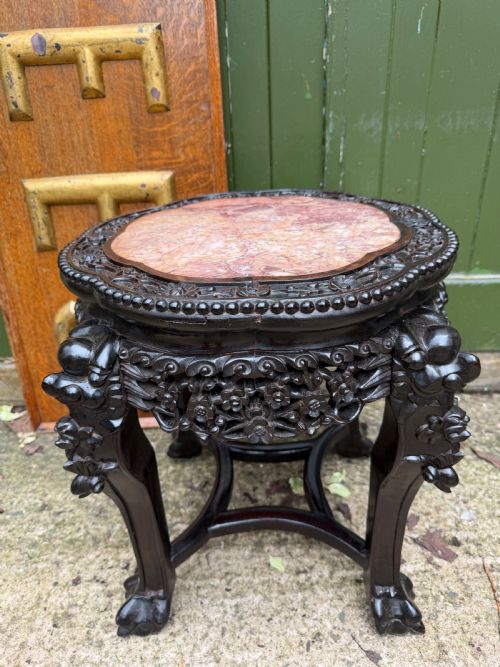
Carved marble vases encompass grand Italian Grand Tour souvenirs and substantial garden urns alongside Chinese hardwood stands inset with marble panels. The pieces on this page primarily date from the nineteenth century, including Victorian and Edwardian examples reflecting neoclassical and Qing dynasty aesthetics.
Forms range from campana urns and tazzas to low plant stands and jardiniere pedestals designed to elevate greenery or display mineral specimens. Buyers encounter items fashioned in white marble, rosso antico, serpentine, and breccia medicea, often paired with rosewood or hongmu frames.
Origin points divide clearly between European classical revival workshops and Asian export studios, each bringing a distinct sculptural vocabulary to the stone. Whether utilised as garden ornaments or interior centrepieces, these items anchor a space through sheer density and carved detail.
What varies in quality
Quality rests in the selection of the stone, where lively natural veining and uniform mineral density elevate an ordinary vessel into a striking specimen. Superior Italian pieces demonstrate crisp undercutting on classical handles and foliage, while fine Chinese stands show precise joinery in hongmu or rosewood around the inset marble.
Proportion and scale dictate the visual success of the piece, separating modest decorative items from monumental garden urns and exhibition pieces. The integrity of the carved relief, free from clumsy later repairs, determines the enduring stature of the object.
Carved Marble Vases Retail Price Guide 2026
Typical asking prices for carved marble vases among the pieces listed under this phrase on Sellingantiques today, from the lower quarter to the upper quarter. They describe what is for sale here now, not the wider market.
Materials recorded on this page include rosso antico marble, breccia medicea, white marble, stone, alabaster, hardwood, rosewood, and hongmu.
Benedetto Boschetti
The Carved Marble Vases Glossary
- Rosso Antico
- A deep red antique marble prized by Italian lapidaries for its rich colour and smooth texture. It was frequently utilised during the Grand Tour period for classical revival vases.
- Breccia Medicea
- A distinctive multi-coloured Italian marble characterised by angular mineral fragments suspended in a contrasting matrix. This material creates a dramatic patterned surface on neoclassical urns.
- Campana Urn
- A bell-shaped vessel with a flaring rim and a pedestal foot, originating in classical antiquity. Nineteenth-century interpreters carved these forms in solid marble for interior and garden display.
- Hongmu
- A dense, dark Asian hardwood translated as red wood, used extensively in Chinese furniture and vase stands. It provides a robust structural frame for inset marble panels.
- Tazza
- A shallow saucer-like ornamental cup mounted on a stem and foot. These pieces served as decorative centrepieces on tables during the nineteenth century.
Carved Marble Vases: Frequently Asked Questions
How do I clean a marble vase?
Dust the stone regularly with a soft, dry cloth to prevent grime settling into the natural pores of the marble. Avoid acidic cleaners, soaps, or water immersion, which can dull the historical polish and damage the mineral surface.
For stubborn residue, consult a professional conservator rather than applying domestic chemical treatments. Gentle maintenance preserves the original patina built up over centuries of handling.
Can these garden urns stay outside?
Substantial stone garden urns withstand outdoor placement if situated on stable footings away from standing water. Freezing temperatures can exploit tiny fissures in the marble, so vulnerable pieces require shelter during harsh winters.
Check local weather conditions and stone porosity before committing heavy planters to permanent exterior display. Many buyers prefer indoor placement to protect the carved details from weathering.
What defines a Grand Tour piece?
Grand Tour items are nineteenth-century European souvenirs purchased by travellers visiting classical sites in Italy and Greece. These decorative vases and tazzas capture ancient architectural forms in local marbles and alabaster.
Such objects served as scholarly mementoes for elite homes, combining classical motifs with meticulous nineteenth-century stonemasonry. Their provenance often links directly to prominent Roman workshops of the era.
How do I distinguish Chinese stands?
Chinese plant and vase stands utilise traditional joinery in dense hardwoods like hongmu or rosewood without metal fasteners. The inset marble panels typically feature natural cloud-like or mountainous veining intended to resemble landscape paintings.
These pieces reflect Qing dynasty taste, pairing organic stone surfaces with geometric or carved floral aprons. Their scale suits tabletop display or low pedestals for jardiniere pots.