

Carved Marble Table
A carved marble table brings substantial weight and classical poise into a room, uniting heavy stone surfaces with ornate wooden frames.
Carved Marble Table
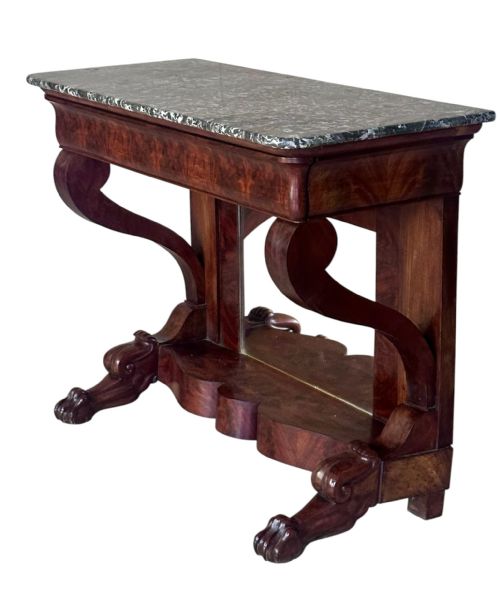
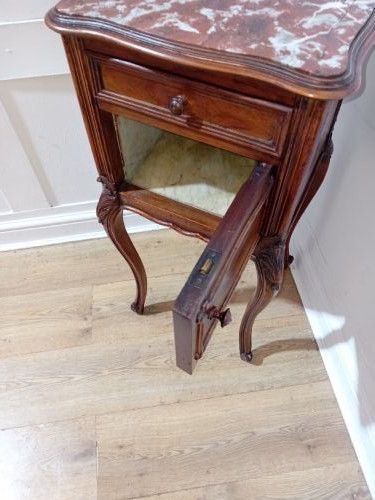
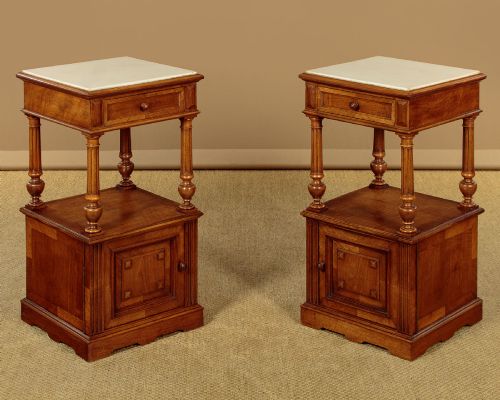
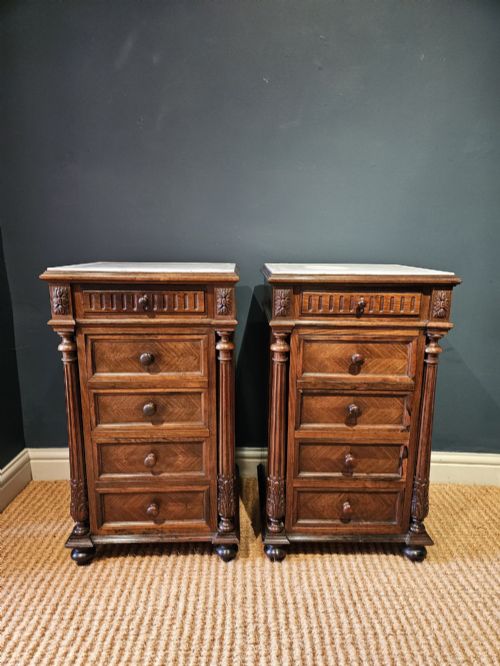
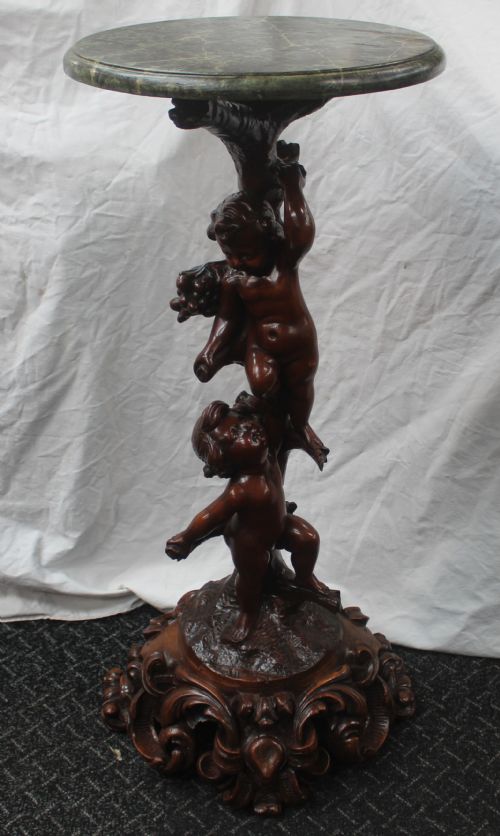
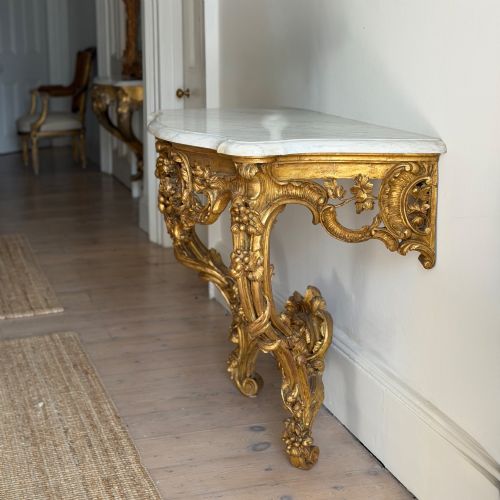
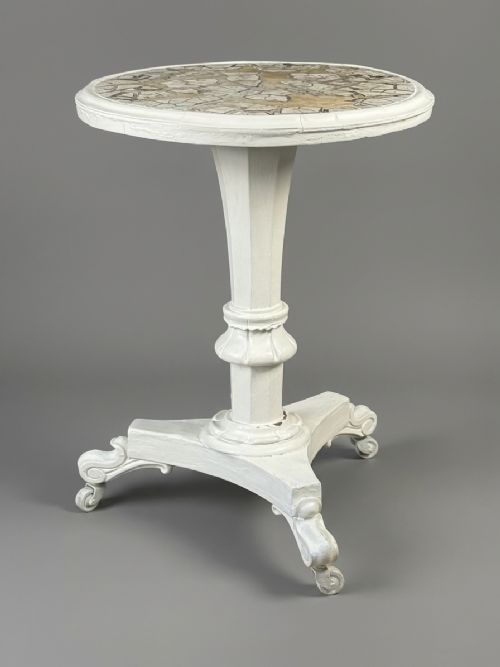
A carved marble table encompasses console tables, side tables, centre tables, and bedside cabinets sourced mainly from the eighteenth, nineteenth, and early twentieth centuries.
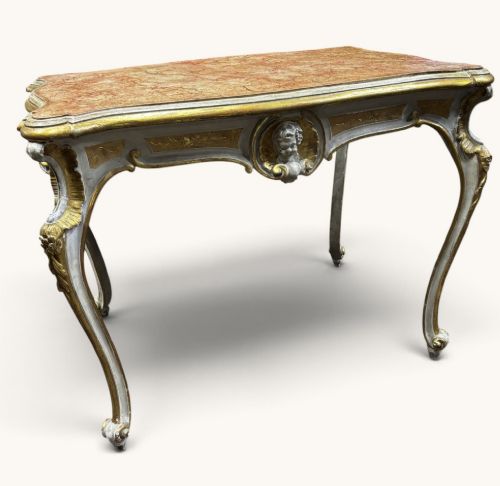
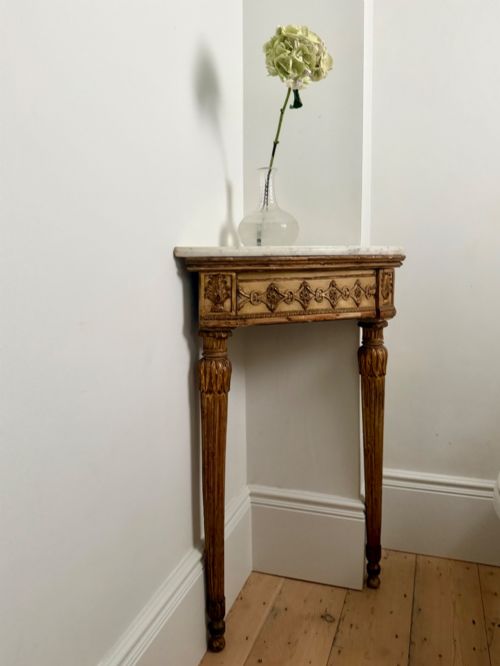
Console tables dominate the selection, frequently paired with matching mirrors and shaped with serpentine fronts or heavy giltwood carving.
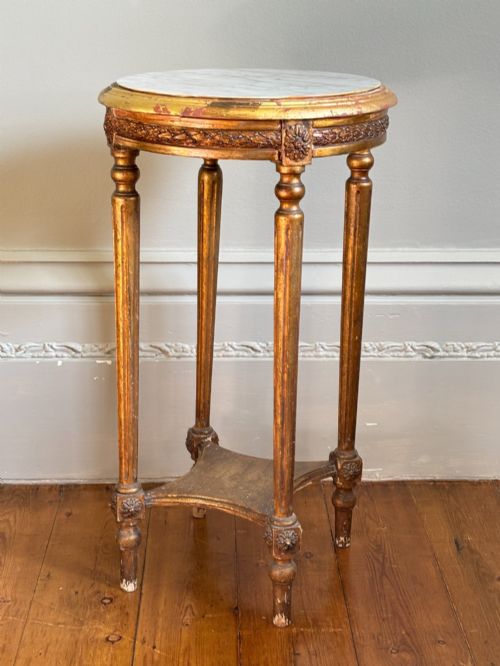
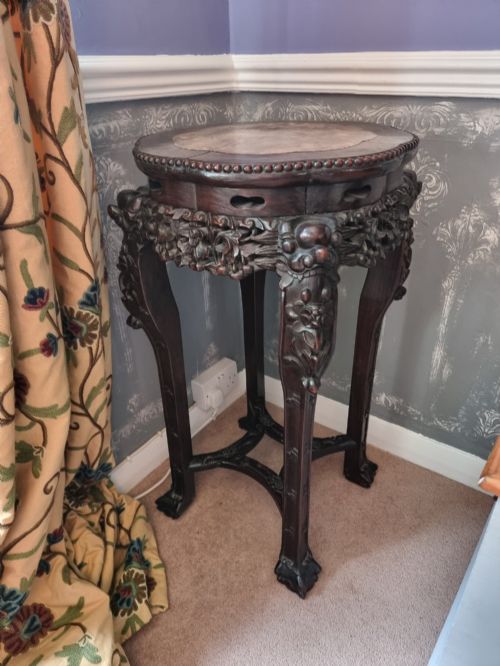
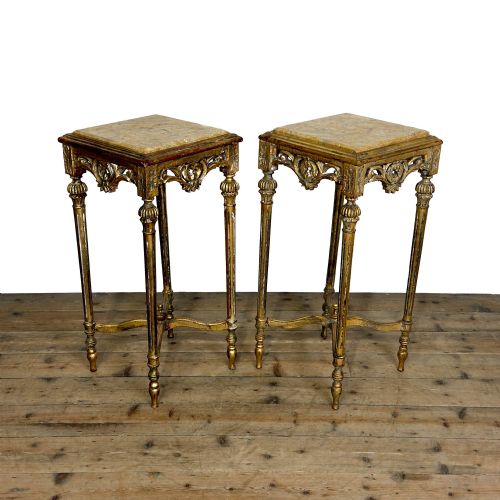
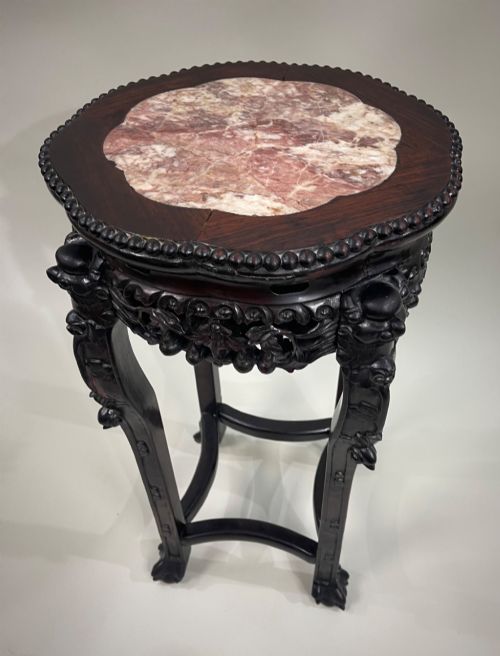
Buyers also encounter smaller occasional pieces, plant stands, and washstands featuring inset stone tops across various European and Asian regional styles.
Materials and Construction
Carved wooden frames utilise mahogany, walnut, rosewood, oak, and pine, often finished with gold leaf, giltwood, or painted pigments.
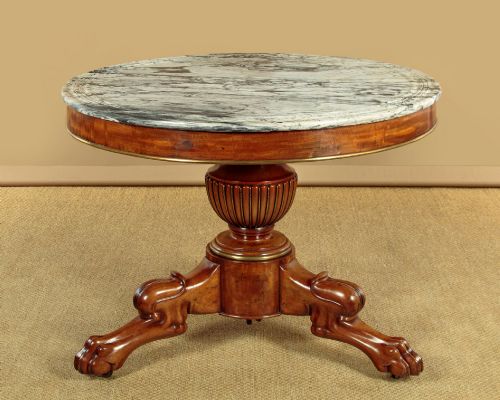
Heavy stone tops incorporate specialised varieties such as rouge marble and Breccia Medicea, shaped to fit precisely within carved wooden rebates.
Joinery methods reflect traditional cabinet-making standards of the period, supporting the considerable downward weight of solid stone slabs.
Carved Marble Table Retail Price Guide 2026
Typical asking prices for carved marble table among the pieces listed under this phrase on Sellingantiques today, from the lower quarter to the upper quarter. They describe what is for sale here now, not the wider market.
Distinctions in Execution
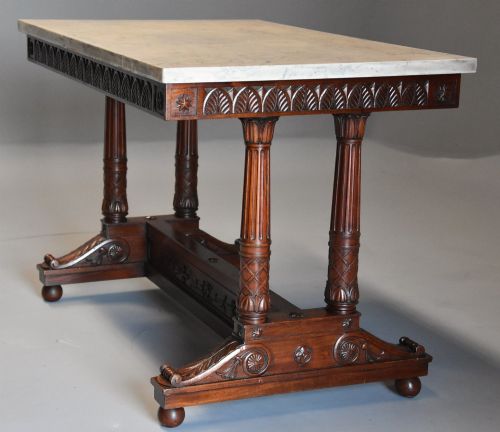
Quality rests primarily on the depth and crispness of the wood carving, distinguishing fluid Rococo or Neoclassical ornamentation from mechanical reproduction.
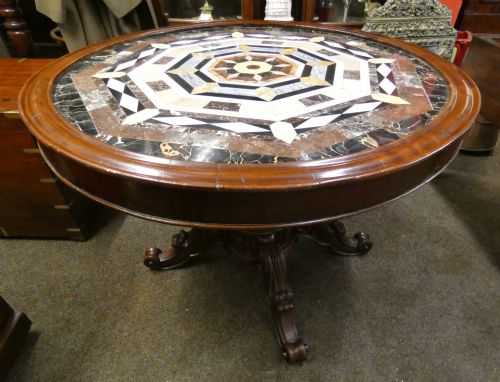
The selection of the marble slab, including colour variation and the integration of specimen stones, dictates the visual prominence of the piece.
Proportion and structural integrity define superior examples, ensuring the base supports the stone without sagging or lateral movement.
Gabriel Viardot·Felix-Alfred Ternisien·Sir Godfrey Kneller
The Carved Marble Table Glossary
- Console table
- A wall-mounted or freestanding table designed to stand against a vertical surface, frequently topped with heavy stone.
- Giltwood
- Wood that has been coated with thin gold leaf or powder, commonly utilised on ornate eighteenth and nineteenth-century frames.
- Gueridon
- A small French table, typically circular and supported by a single central pillar or tripod base.
- Serpentine front
- A furniture front characterised by a concave central section flanked by two convex curves.
- Specimen marble
- A decorative surface composed of various coloured marbles arranged in geometric patterns or pictorial designs.
Carved Marble Table: Frequently Asked Questions
How do I clean a marble top?
Use a damp cloth with mild, pH-neutral soap to wipe the surface gently, avoiding acidic solutions that etch stone.
Dry the marble thoroughly with a soft cloth to maintain the polish and prevent water marks.
Are these tables fixed to walls?
Console tables historically required wall brackets for stability due to their heavy stone tops and narrow footprints.
Many surviving examples stand independently today, though tall console tables often benefit from discrete wall tethering.
Can I place hot items on marble?
Marble withstands moderate heat better than polished wood, but extreme thermal shock can still crack the stone.
Utilise coasters and trivets to protect both the stone polish and any inlaid mineral details from damage.
How do I identify the period?
Examine the tool marks, secondary woods, and stylistic motifs such as Rococo Revival curves or Neoclassical symmetry.
Construction techniques often reveal the manufacturing era long before consulting written documentation or labels.