
Carved Mahogany Storage Cabinets
Carved mahogany storage cabinets bring enduring timber character and structured organisation to an interior, drawing on centuries of refined cabinet-making.
Carved Mahogany Storage Cabinets
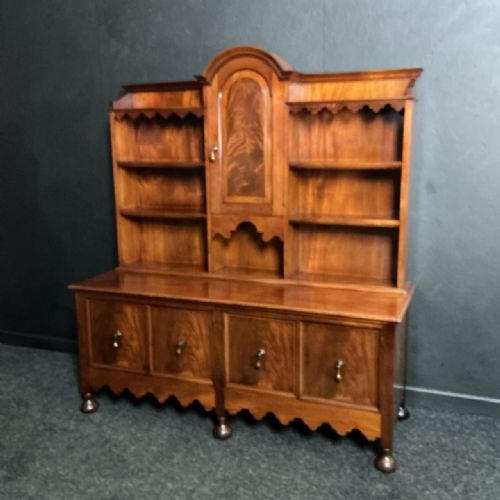
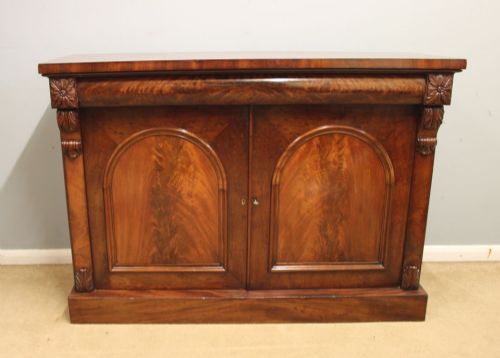
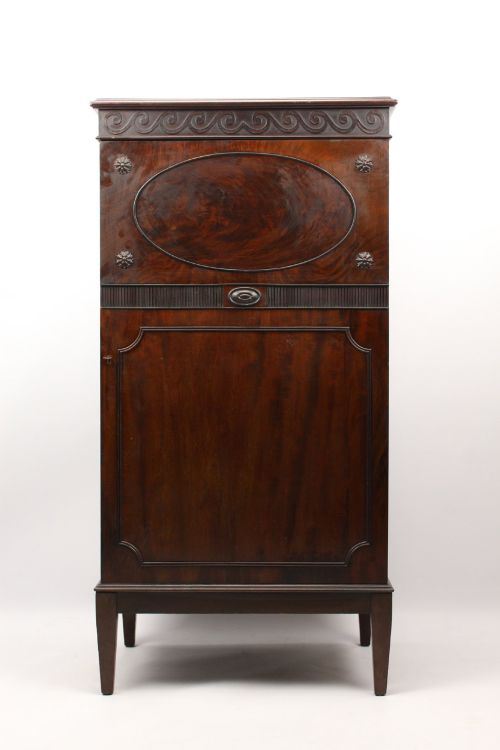
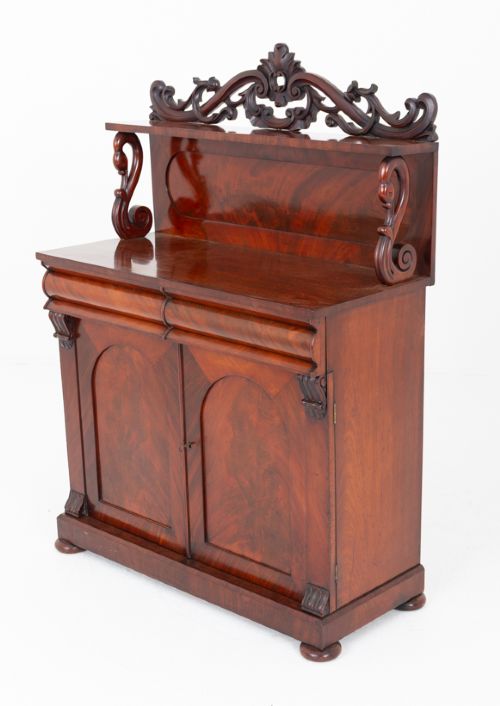
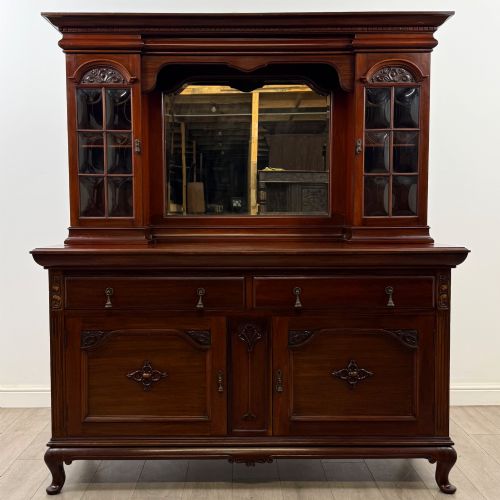
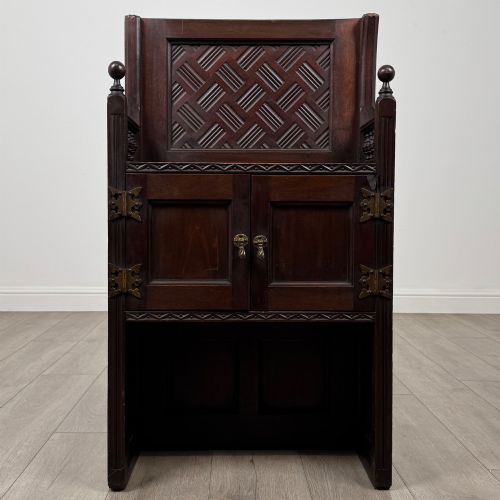
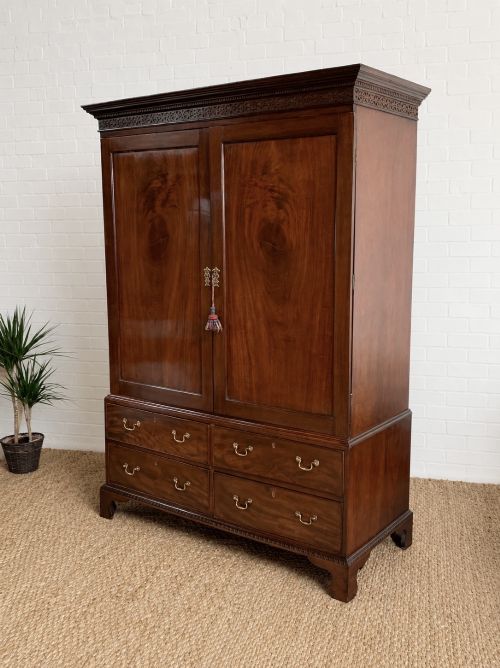
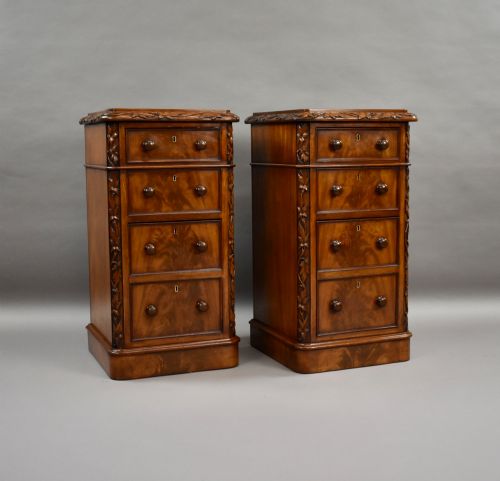
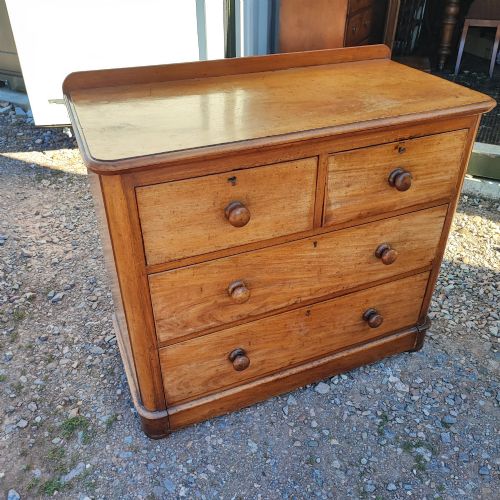
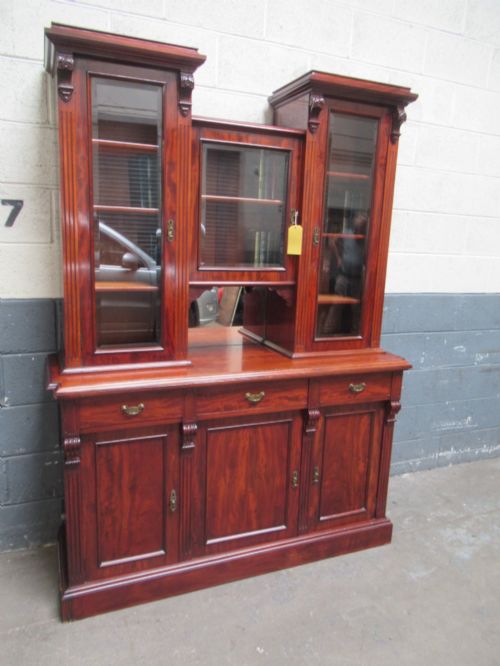
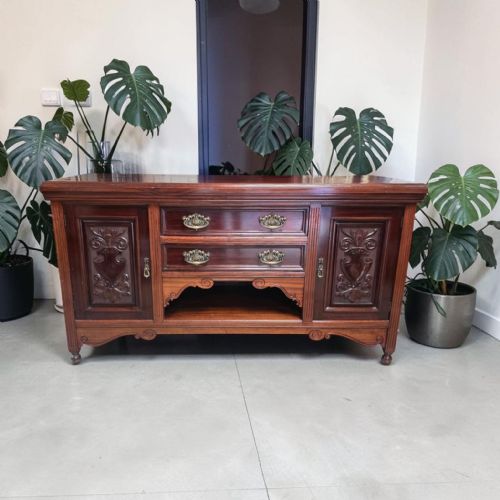
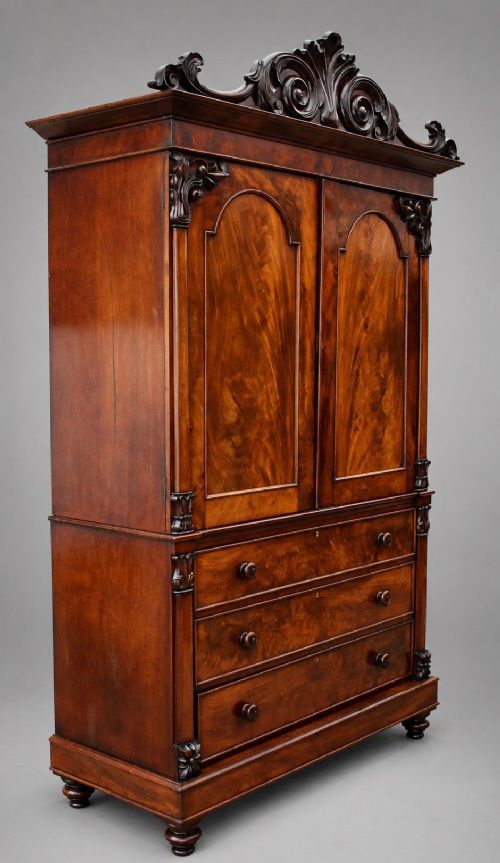
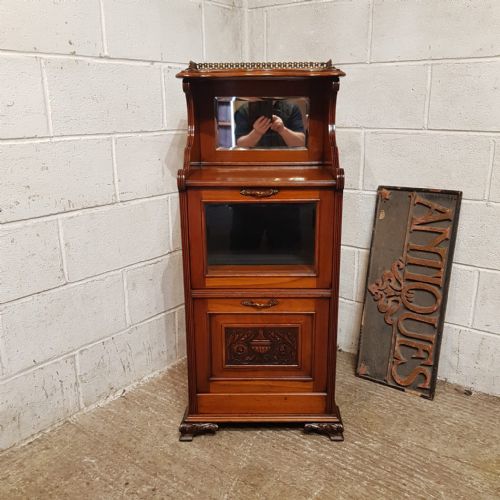
When searching for carved mahogany storage cabinets, buyers encounter a diverse array of nineteenth and early twentieth-century forms ranging from functional chiffoniers to grand linen presses. The selection on this page leans heavily toward Victorian and Edwardian examples, alongside pieces from the Regency and Georgian periods. These items encompass sideboards, chests of drawers, bookcases, and specialised bedside or music cabinets designed for domestic utility.
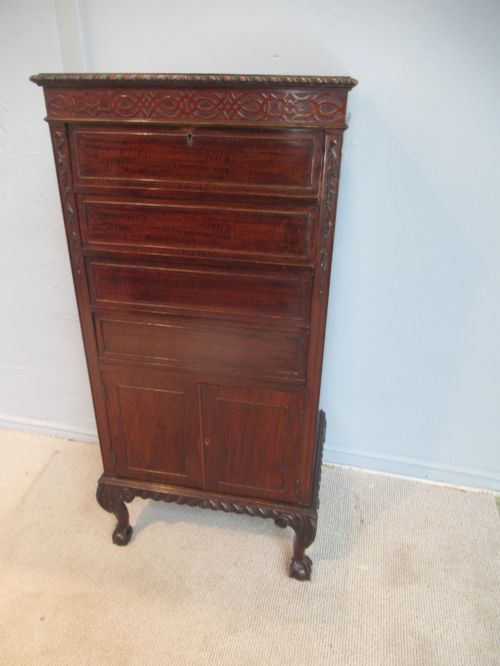
The aesthetic vocabulary spans classical styling, Chippendale revivals, and occasional Arts and Crafts or Art Nouveau inflections. Pieces often incorporate carved details, blind fretwork cornices, or figured veneers to elevate their visual presence. Whether selecting a compact bedside cupboard or a tall Wellington chest, buyers find items built to house belongings with architectural dignity.
Materials and construction
Makers relied primarily on solid mahogany and mahogany veneer, frequently utilising flame mahogany for striking grain patterns on drawer fronts and doors. Structural integrity was bolstered by secondary timbers, while visual contrast came from brass hardware, metal accents, and glass paneling in bookcases or cabinets.
Joinery techniques ranged from traditional hand-cut dovetails in drawer construction to applied decorative carvings and fretwork. Surface finishing highlighted the natural warmth and depth of the timber, sometimes enhanced by mirror glass or specialised internal fittings such as sliding linen trays.
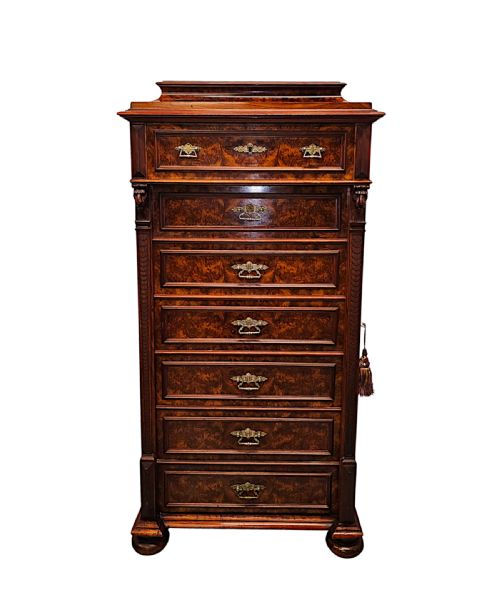
Gentlemen secured their detachable collars and files in specialised music and file cabinets long before office drawers took over.
Evaluating craftsmanship and distinction
The distinction between standard utility items and exceptional pieces rests upon the precision of the carving, the selection of figured timber veneers, and the integrity of the original hardware. Superior examples display crisp hand-carved motifs and balanced proportions that reflect the aesthetic ambition of the workshop.
Internal execution also dictates standing, with finely fitted drawers, original brasses, and thoughtful compartmentalization marking out the better pieces. Maker attribution, through stamps or known stylistic signatures, further separates standard production from high workshop output.
Denby & Spinks·M. D. Miller & Sons·Gillows·Maple and Co·Hille
The Carved Mahogany Storage Cabinets Glossary
- Chiffonier
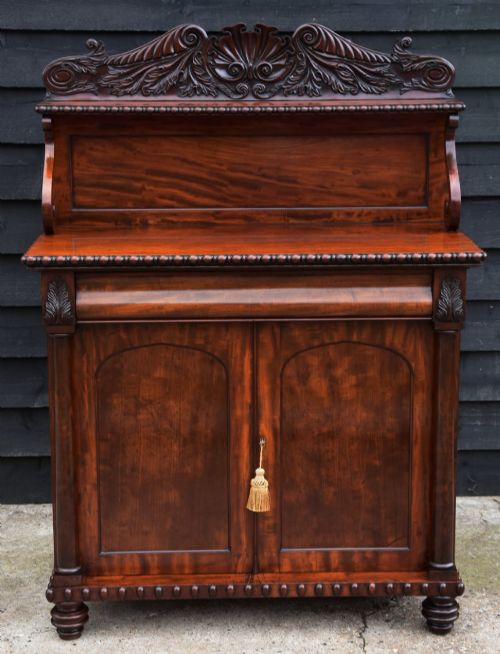
- A low sideboard or cabinet featuring a combination of drawers, cupboards, and frequently a raised shelf back. It evolved during the nineteenth century as a versatile dining or living room storage piece.
- Wellington chest
- A tall, narrow chest of drawers secured by a hinged vertical locking side bar. This locking mechanism kept all drawers safely shut with a single padlock or key.
- Linen press
- A large wardrobe-like storage cabinet containing sliding shelves or trays in the upper section for textiles, paired with clothes drawers below. They often featured panel doors and decorative cornices.
- Flame mahogany
- A highly figured timber veneer cut from the fork of the mahogany tree where branches meet the trunk. The grain creates a distinctive flickering, flame-like pattern across large surface areas.
- Blind fretwork
- Carved ornamentation applied to a flat surface in an openwork lattice pattern without piercing through to the background. It was a favored decorative detail in Chippendale and revival furniture.
Carved Mahogany Storage Cabinets: Frequently Asked Questions
What is a Wellington chest used for?
A Wellington chest serves as a tall, narrow drawer unit designed to maximise vertical storage while occupying minimal floor space. It typically accommodates small garments, papers, or valuables securely behind its hinged locking stile.
Originally utilised in bedrooms or dressing rooms, the distinct locking mechanism ensured personal items remained safely enclosed. Today, these chests function well in hallways or studies for organised storage.
How do I identify a chiffonier?
A chiffonier is recognised by its compact sideboard form, featuring enclosed lower cupboards and frequently a mirrored or shelved superstructure. These pieces emerged as staple dining room furniture during the nineteenth century.
They offer convenient surface space for serving alongside concealed storage for china or linens. The presence of a low gallery back distinguishes them from standard low cabinets.
What distinguishes flame mahogany?
Flame mahogany is identified by its dramatic, undulating grain pattern resembling flickering fire tongues. This visual effect is achieved by slicing veneer from specific timber forks where grain swirls intersect.
Cabinet-makers reserved this prized material for prominent surfaces like drawer fronts and door panels to catch the light. It adds significant decorative depth to otherwise austere furniture forms.
Where were linen presses placed?
Linen presses were historically positioned in bedrooms, dressing rooms, or upstairs landings to store household textiles and folded garments. Their dual structure of upper sliding trays and lower drawers provided comprehensive wardrobe organisation.
In modern interiors, these substantial pieces find placement in master bedrooms or large dressing areas as statement storage wardrobes. Their architectural cornices and panel doors bring classic presence to a room.