


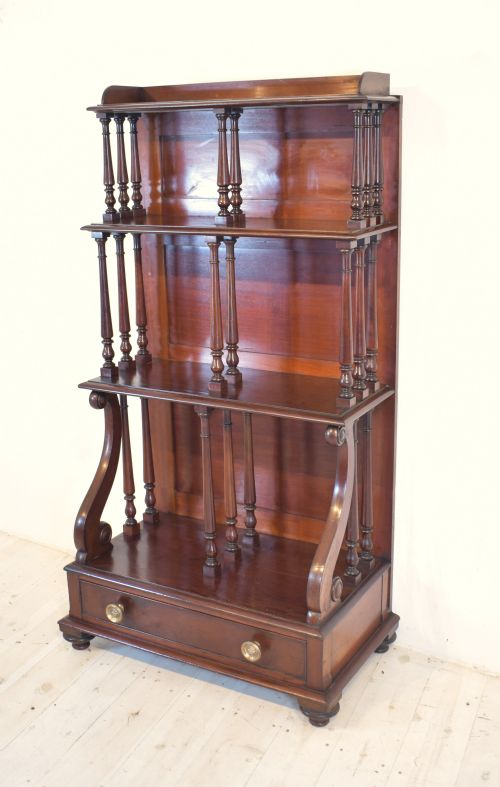
Carved Mahogany Open Shelf
A carved mahogany open shelf brings architectural warmth to a room while displaying books and objects with accessible grace.
Carved Mahogany Open Shelf
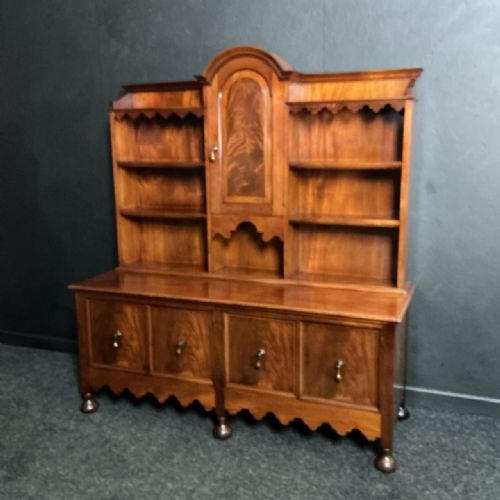
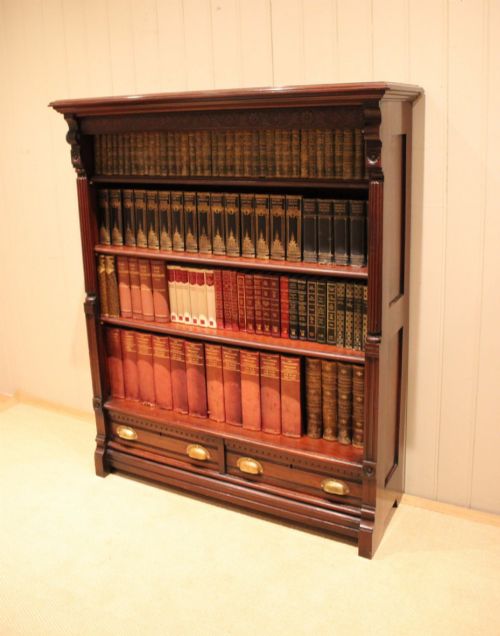
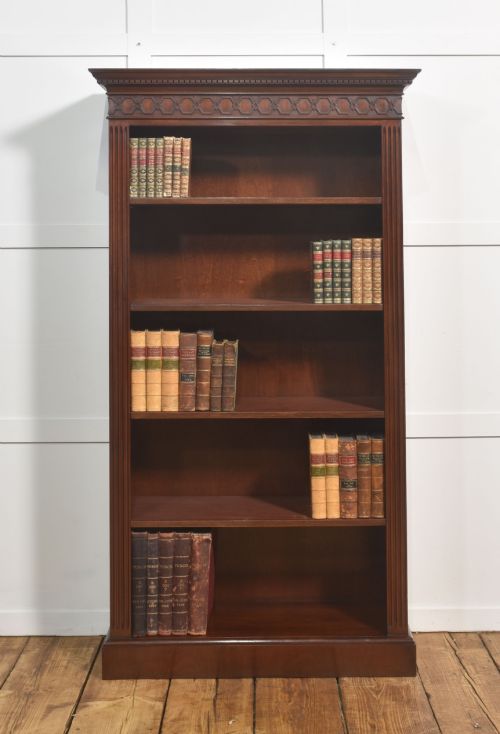
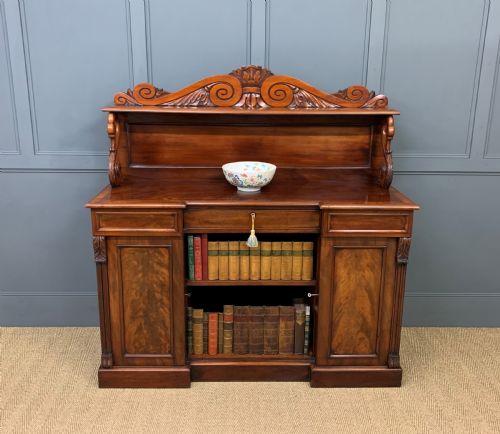
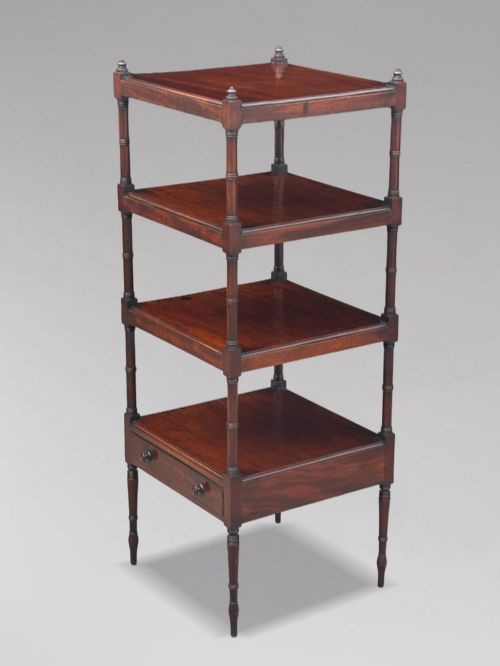
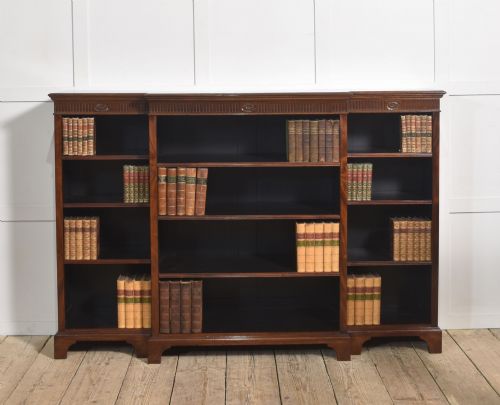
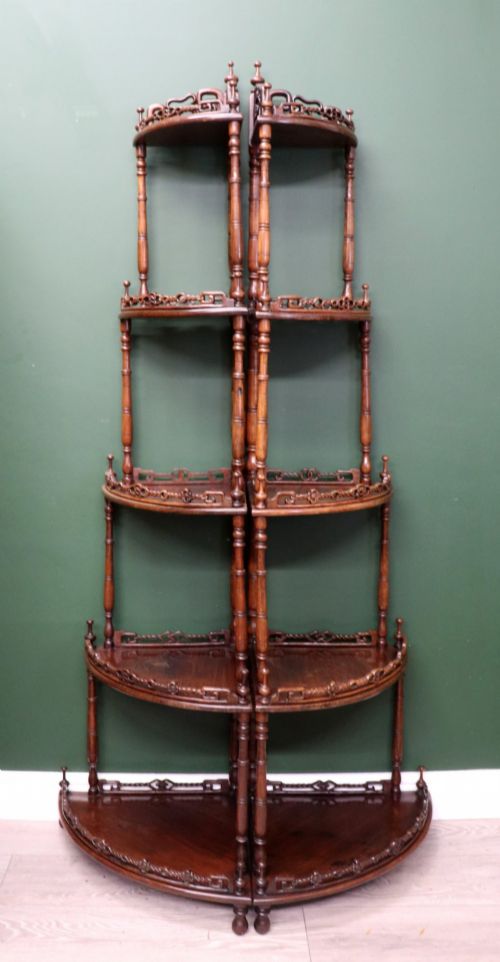
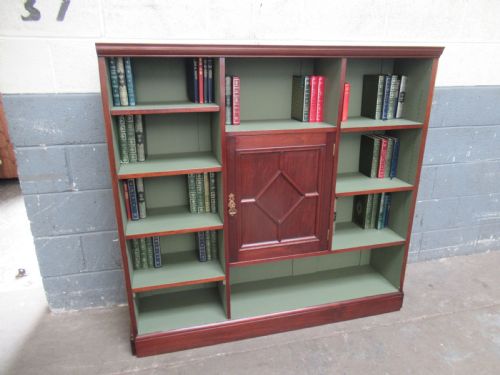
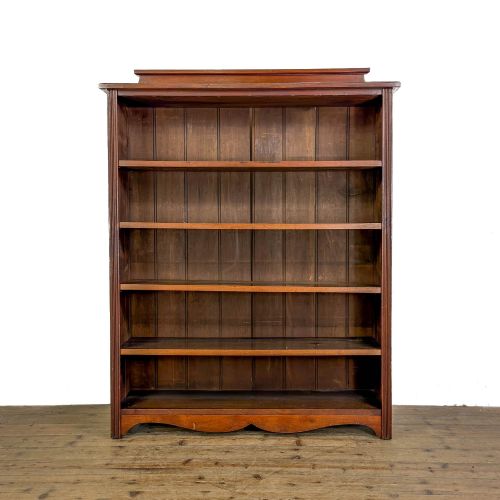
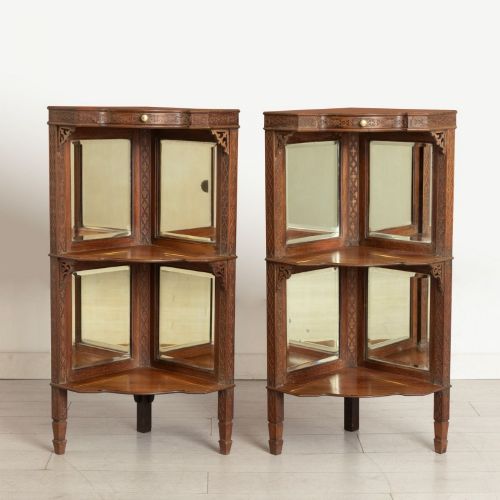
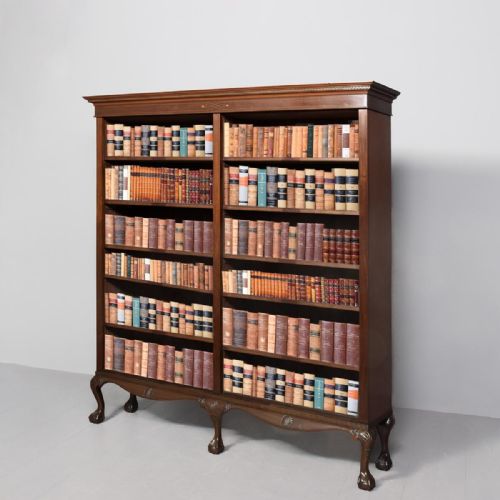
When you search for a carved mahogany open shelf, you encounter pieces primarily spanning the nineteenth century and the Edwardian era, taking the form of bookcases, wall shelves, whatnots, and etageres. These items range from wall-hanging display tiers to large library bookcases and corner stands, reflecting the diverse domestic storage needs of past centuries.
The versions most frequently met on this page are nineteenth-century and Victorian open bookcases, alongside multi-tiered wall shelves and whatnots. They utilise straightforward open access rather than enclosed glazed doors, presenting functional platforms for books and decorative objects.
How they were made
Cabinet makers constructed these pieces principally from solid mahogany and flame mahogany veneer, occasionally incorporating secondary timbers such as pine and oak for internal framing and drawer linings. Surface detailing often relied on hand-carved elements, brass mounts, and occasional inlay work rather than heavy applied ornamentation.
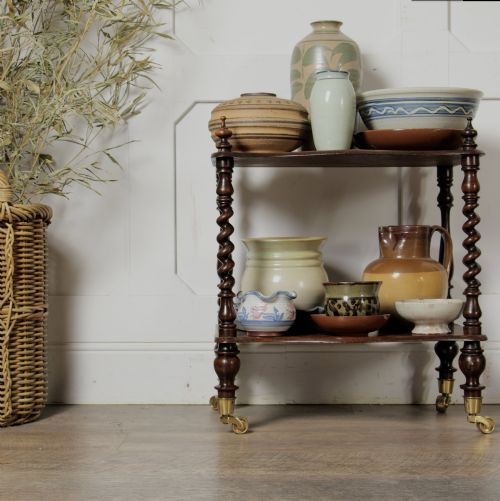
Structural methods included adjustable shelving systems utilising wooden ratchets or brass pins, alongside pegged joints and turned supports such as barley twists. Finishing involved hand-applied polish that highlighted the deep grain and figuring of the mahogany timber.
One versatile item combines a bookcase with a music stand, proving that nineteenth-century designers accommodated sheet music alongside novels.
What varies in quality
The distinction between standard utility furniture and superior cabinet work lies in the selection of timber and the execution of carved detail. Finer pieces display carefully matched flame mahogany veneers and crisp, hand-carved mouldings rather than mechanical press-work.
Structural integrity and proportion also separate the grades. Better examples maintain balanced proportions, solid backing timbers, and well-integrated adjustable shelving mechanisms that operate smoothly without timber distortion.
Edwards & Roberts·Robert Strahan·Shapland & Petter
The Carved Mahogany Open Shelf Glossary
- Etagere
- A set of open shelves for displaying small objects, typically with multiple tiers supported by slender columns.
- Whatnot
- A freestanding piece of furniture with several tiers of shelves, developed in the eighteenth century and popular throughout the Victorian period.
- Flame mahogany
- A timber veneer cut from the fork of the mahogany tree, producing a distinctive flickering flame-like grain pattern.
- Breakfront
- A piece of furniture where the central section projects forward from the flanking outer sections.
- Barley twist
- A type of turning shaped like a spiral rope, frequently used for upright supports and table legs in nineteenth-century furniture.
Carved Mahogany Open Shelf: Frequently Asked Questions
What is a whatnot shelf?
A whatnot is a multi-tiered freestanding open shelf unit designed for ornaments and small books. These pieces appeared in various rooms to maximise display space without heavy cabinetry.
Victorian examples often incorporated mirrors, small drawers, or turned supports, making them both decorative and functional additions to a domestic interior.
Are these shelves adjustable?
Many nineteenth-century and Edwardian open bookcases listed here feature adjustable shelving. Makers employed systems using vertical wooden ratchets, rows of peg holes, or brass strips to allow shelf repositioning.
This adaptability makes period bookcases practical for housing modern books of varying heights while retaining their original timber framework.
Where should I place wall shelves?
Wall-hanging shelves suit compact spaces where floor area is limited, offering display capacity above desks, sideboards, or seating. Ensure secure fixing to a solid wall to support the weight of timber and books.
Early examples often feature shaped brackets or fretwork plates designed specifically for wall attachment.