
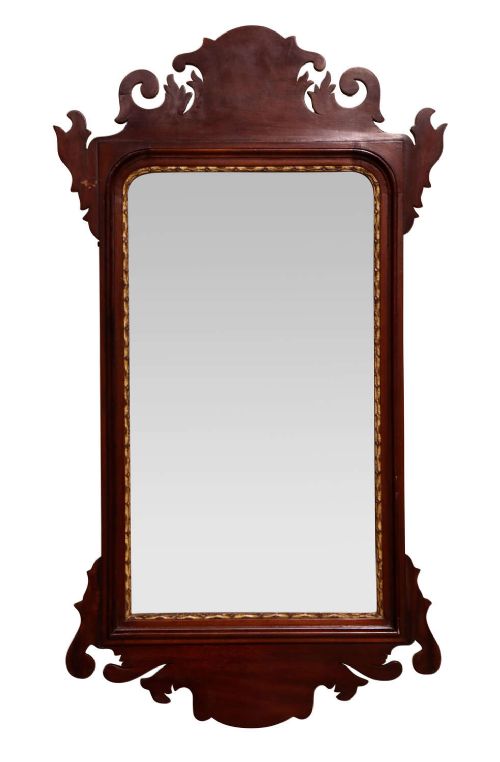
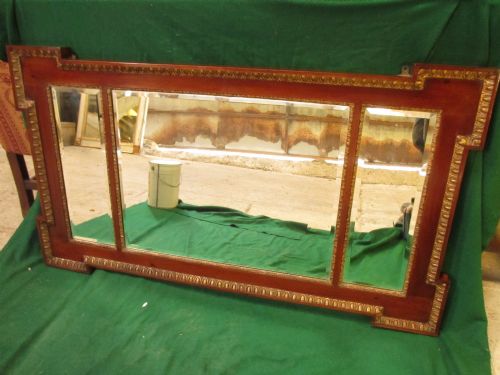
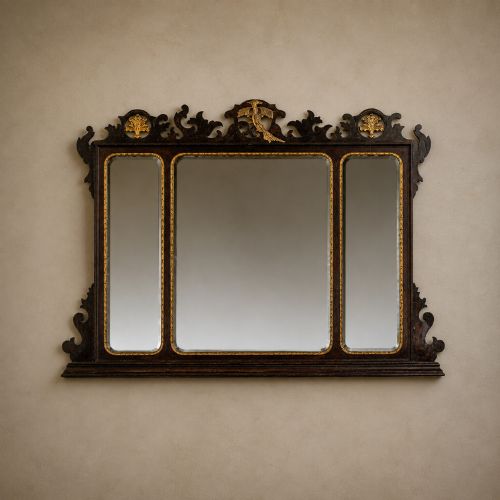
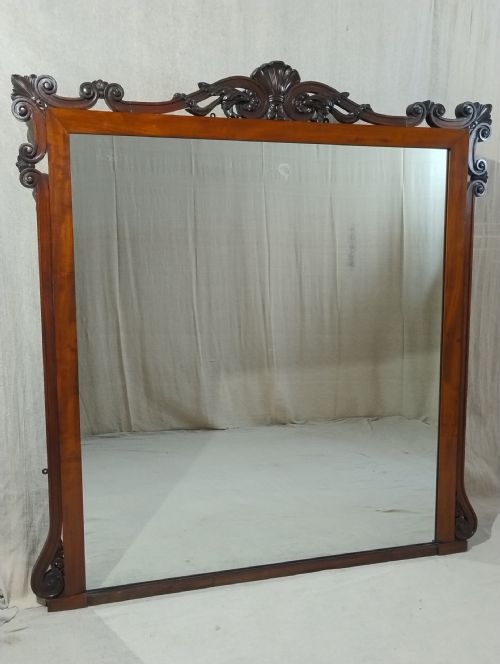


Carved Mahogany Mantel Mirror
These carved mahogany mantel mirror pieces offer rich timber tones and classic architectural presence, grounding a room with genuine period warmth.
Carved Mahogany Mantel Mirror
A carved mahogany mantel mirror sits above a fireplace or serves as a principal wall hanging, bringing significant architectural weight to an interior. When searching for a carved mahogany mantel mirror, buyers encounter a range of formats spanning the Georgian, Victorian, and Edwardian periods.
Victorian examples dominate the selection, often incorporating Chippendale revival motifs or Rococo revival curves. Earlier Georgian and George IV pieces sit alongside Edwardian variants utilising rosewood and marquetry or gilt and mahogany veneer.
How they were made
Cabinetmakers constructed these frames primarily from solid mahogany or mahogany veneer over secondary timbers. Workshops utilised specialist woodworking techniques to achieve intricate fretwork, carved crestings, and polished timber surfaces.
Gilded wood and gold leaf frequently highlight specific carved elements, such as mouldings, floral details, or crests like the Ho-Ho bird. Mirror glass is set within the timber frames, occasionally split into triple plates or large triptych formats.
Inlays involving rosewood and other decorative woods appear on later Edwardian pieces, adding contrasting geometric or floral patterns to the core mahogany structure.
Styles include Chippendale Revival, Regency, Rococo Revival, and Chinese Chippendale across various wall and overmantel formats.
What varies in quality
The sophistication of the woodcarving dictates much of the distinction between standard production and exceptional work. Crisp, deep relief work on fretwork panels and figural crestings indicates a higher standard of craftsmanship.
The choice of timber grain and the condition of the original mirror glass influence the overall character of the piece. Superior examples display carefully selected mahogany veneers or solid timber matched with clear, well-preserved reflective plates.
The Carved Mahogany Mantel Mirror Glossary
- Overmantel mirror
- A large mirror designed specifically to be hung on the wall directly above a fireplace mantel. These pieces often feature wide horizontal proportions or triptych glass plates.
- Chippendale revival
- A style popular in the nineteenth century that reinterprets eighteenth-century designs associated with Thomas Chippendale. Pieces in this style typically feature elaborate fretwork, scroll motifs, and classical bird crestings.
- Pier mirror
- A tall vertical mirror designed to be hung on the narrow section of wall between two windows. They share timber construction methods with mantel mirrors but emphasise height.
- Triptych
- A mirror divided into three distinct vertical sections or plates within a single frame. This configuration creates a wider field of reflection above a fireplace.
- Fretwork
- Openwork ornamentation carved or pierced through thin boards of wood. It appears frequently on the borders and crests of eighteenth-century and revival mirrors.
Carved Mahogany Mantel Mirror: Frequently Asked Questions
Where should I hang an overmantel mirror?
These large mirrors are traditionally mounted directly above a fireplace mantel to reflect light and anchor the room's central hearth. Ensure the wall fixings are secured firmly into masonry or studs to support the substantial weight of the timber frame and glass.
Position the mirror at a height that balances the proportions of the fireplace surround and the ceiling height above. This placement naturally draws the eye upward and enhances the architectural scale of the interior.
How do I identify a Victorian Chippendale revival mirror?
Victorian Chippendale revival pieces combine nineteenth-century manufacturing methods with eighteenth-century stylistic motifs such as fret-cut borders and scrolling pediments. Look for characteristic details like applied Ho-Ho bird crestings and rich mahogany grain.
Examine the backboards, fixings, and construction joints, which often reveal the characteristic tool marks and timber ageing associated with the Victorian period rather than the seventeen-hundreds.
What is the difference between a wall mirror and a pier mirror?
Wall mirrors encompass a broad category of hanging looking glasses designed for general placement throughout a domestic interior. Their proportions vary widely depending on the specific style and period of manufacture.
Pier mirrors are specifically proportioned for the narrow wall space located between two windows or architectural openings. They emphasise vertical height to maximise light capture in darker architectural corners.