


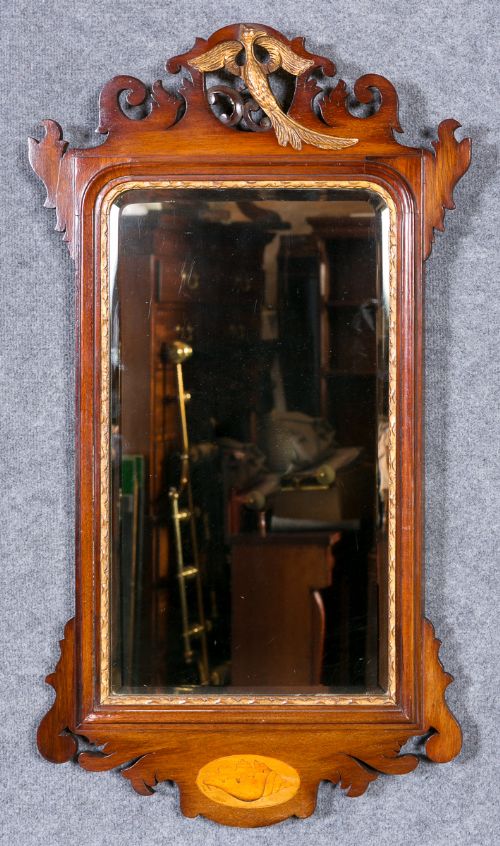
Carved Mahogany Looking Glass
A carved mahogany looking glass brings warmth and historic presence to a room, offering both practical reflection and rich timber grain.
Carved Mahogany Looking Glass
A carved mahogany looking glass represents a traditional form of wall mirror produced across several centuries, utilising rich timbers to frame domestic reflection. Buyers searching for a carved mahogany looking glass encounter wall mirrors spanning the Georgian era, the nineteenth century, and later revival periods.
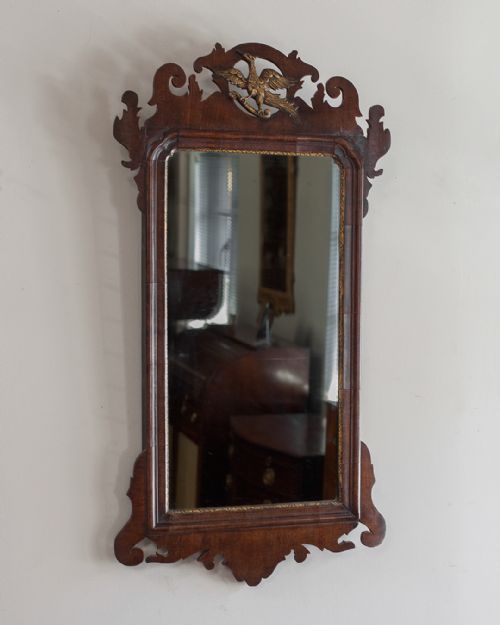
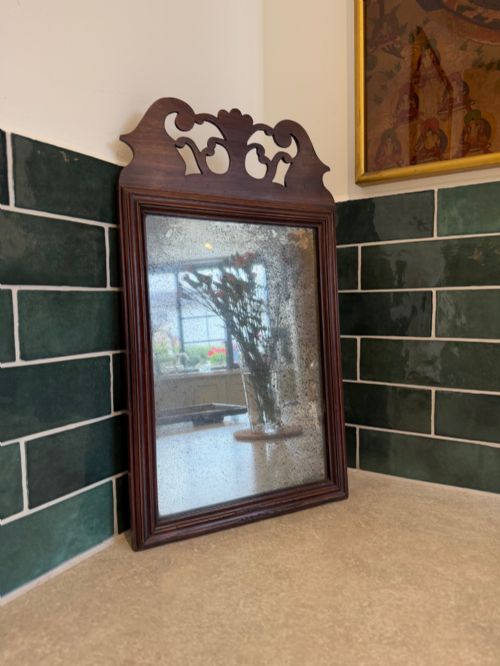
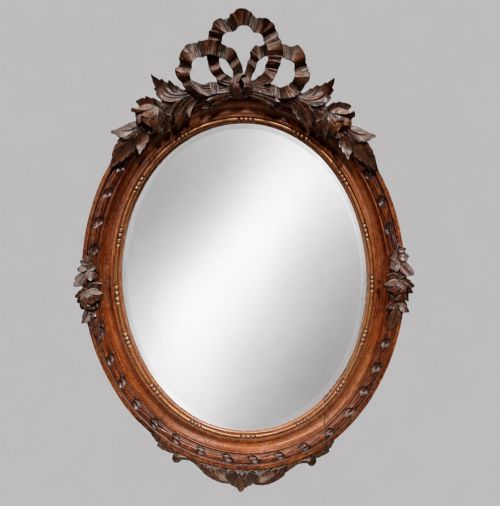
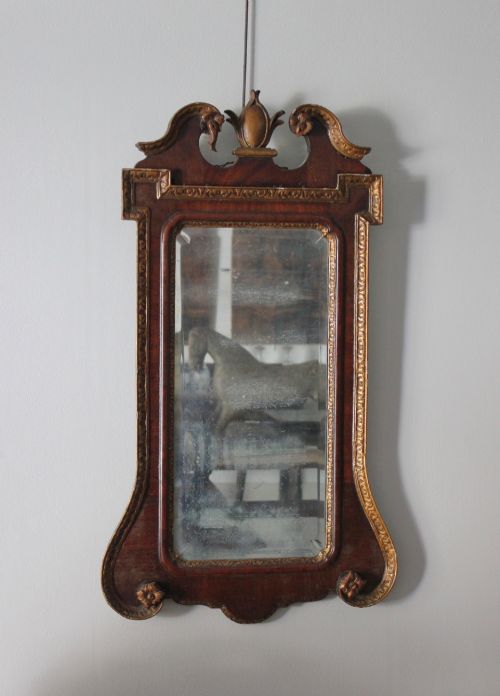
The pieces available on this page run from eighteenth-century fretwork designs and Georgian wall mirrors through to Edwardian interpretations and later overmantle pieces. Forms vary from simple rectangular frames to elaborate oval wall mirrors, pierced fret designs, and Swedish pier mirrors incorporating gilded wood details.
Originating largely from English workshops alongside occasional continental examples, these mirrors serve primarily as functional wall hangings that anchor a room's decorative scheme. Their survival across centuries demonstrates the enduring appeal of carved mahogany combined with traditional glass plates.
How they were made
Makers constructed these frames predominantly from solid mahogany, frequently embellishing the timber with hand-carved details and applied giltwood or gilded wood accents. Craftspeople shaped the wood using traditional joinery and hand-carving tools to create complex fretwork borders, scrolling outlines, and architectural mouldings.
Surfaces were finished with polished wax to highlight the natural grain of the mahogany, while gilding was applied to specific ornamental highlights such asbezels, ears, or inner fillets. Glass plates were traditionally hand-silvered and fitted into the timber rebates behind protective wooden backs.
Styles represented include Georgian, Victorian, Edwardian, Chippendale Revival, and Swedish Gustavian forms.
What varies in quality
The distinction between standard examples and superior pieces rests on the crispness of the hand-carving and the depth of the mahogany grain. Fretwork panels executed with sharp, well-defined pierced edges demonstrate a higher level of artisan skill than softer, more rounded cutting.
Proportion and architectural balance dictate the visual success of the frame, alongside the originality of the mirror plate and the retention of early gilding. Pieces that maintain their original surface patination and structural integrity carry greater historical continuity.
The Carved Mahogany Looking Glass Glossary
- Fret mirror
- A wall mirror featuring a flat wooden frame decorated with pierced fretwork patterns. These designs were popular during the Georgian period.
- Giltwood
- Wood that has been coated with a thin layer of gold leaf or gesso and gold paint. It frequently accents carved mahogany frames.
- Pier mirror
- A tall wall mirror designed to hang on the wall space between two windows. They often incorporate elaborate crests and gilded details.
- Overmantle mirror
- A wide wall mirror specifically proportioned to hang above a fireplace mantelpiece. They combine mahogany veneer and gilt elements.
- Plate
- The sheet of glass that provides the reflective surface within the mirror frame. Older plates often display subtle distortions and hand-bevelled edges.
Carved Mahogany Looking Glass: Frequently Asked Questions
Where should I hang a carved mahogany looking glass?
These mirrors suit principal reception rooms, hallways, or above a fireplace where their architectural framing can anchor the wall space. Pairing them with traditional furniture enhances their historic character.
Ensure the wall fixings are robust enough to support the weight of solid timber and glass, particularly for larger Georgian or overmantle examples.
How do I date a mahogany wall mirror?
Dating relies on examining the timber construction, the style of the fretwork, and the assembly methods used at the back of the frame. Georgian pieces exhibit distinct joinery compared to later nineteenth-century or Edwardian revivals.
The character of the glass plate and the type of secondary wood also provide reliable clues to the period of manufacture.
Are these mirrors suitable for modern interiors?
The rich reddish-brown tones of polished mahogany and the warmth of gilded highlights integrate smoothly into contemporary decorative schemes. Their classic proportions add texture and contrast to plain walls.
A carved mahogany looking glass acts as a focal point that brings traditional craftsmanship into a modern living space.
How do I care for the timber and glass?
Dust the carved frame gently with a dry, soft cloth and avoid applying modern chemical sprays directly onto the mahogany or the gilding. Periodic application of a traditional wax polish maintains the finish.
Clean the glass plate using a minimal amount of neutral glass cleaner applied to a cloth rather than the mirror itself, preventing moisture from seeping behind the frame.