




Carved Mahogany Hat Stand
A carved mahogany hat stand brings immediate presence to an entrance hall, combining practicality with rich timber tones.
Carved Mahogany Hat Stand
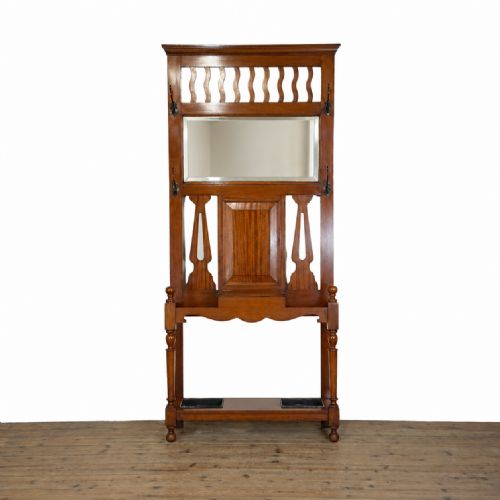
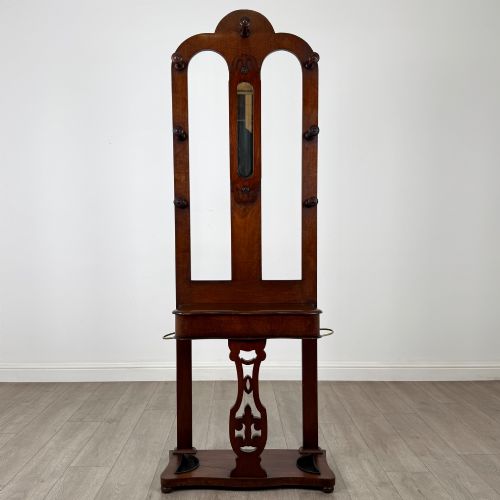
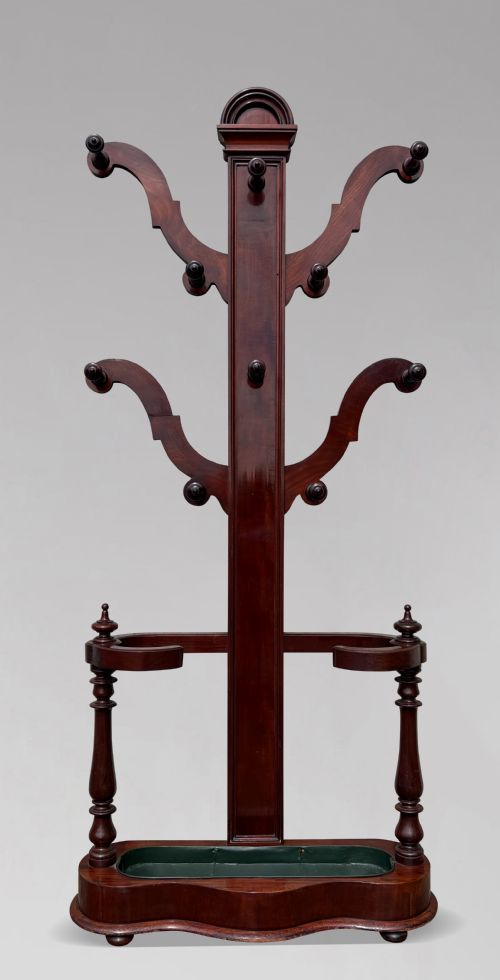
A carved mahogany hat stand serves as a functional piece of entrance furniture designed to hold coats, hats and umbrellas. These items originate predominantly from the Victorian and Edwardian eras, spanning the nineteenth and early twentieth centuries.
The selections on this page appear mainly as traditional hall stands and coat racks, frequently incorporating mirrors and marble shelves alongside brass or metal hooks. Examples range from column designs to elaborate Regency and Victorian equestrian interpretations.
Buyers encounter forms that integrate coat and umbrella stands into a single unit, utilising sturdy mahogany frames to support heavy winter garments. The scale varies from large freestanding hall stands down to wall-mounted or specialised horseshoe mirror coat racks.
How they were made
Makers shaped these hall pieces using solid mahogany, often enriching the timber with carved decorative elements, columns, and deep bevelling on mirror plates. Structural integrity relied on dense hardwoods complemented by secondary materials like oak in supporting components.
Functional hardware was integrated through the use of brass hooks for hanging garments and cast iron elements for weight and stability in floor-standing models. Marble shelves and inset glass mirrors provided durable surfaces and reflective light in dark entranceways.
Carved Mahogany Hat Stand Retail Price Guide 2026
Typical asking prices for carved mahogany hat stand among the pieces listed under this phrase on Sellingantiques today, from the lower quarter to the upper quarter. They describe what is for sale here now, not the wider market.
Some horseshoes found a second life framing reflections, turning everyday equestrian gear into handsome hall mirrors.
What varies in quality
The distinction between standard examples and superior pieces rests upon the depth and crispness of the carving on the mahogany frame. Heavier, larger forms with integrated architectural columns or detailed equestrian motifs demonstrate greater ambition in design.
Quality also manifests in the inclusion of original bevelled mirror plates, intact marble shelves, and heavy brass or cast iron fittings rather than replacement elements. The selection of finely figured mahogany timber elevates the overall presence of the piece.
The Carved Mahogany Hat Stand Glossary
- Mahogany
- A durable, reddish-brown tropical hardwood chosen for its rich colour and capacity to hold intricate carved detail. It forms the primary structural timber across these nineteenth and twentieth-century items.
- Hall Stand
- A piece of hallway furniture combining coat hooks, a hat rack, an umbrella well, and frequently a mirror and shelf. These units served as the central reception hub for visitors' outerwear.
- Bevelled Plate
- A mirror glass edge that has been ground and polished to an angled slope, creating a decorative framed border effect. This technique appears on the mirror plates set into larger hall stands.
- Marble Shelf
- A smooth stone slab integrated into the lower section of a hall stand to receive small items like keys or gloves. It offers a contrasting cool, hard texture against the polished mahogany wood.
Carved Mahogany Hat Stand: Frequently Asked Questions
What is a hall stand?
A hall stand is a tall piece of entrance furniture designed to hold hats, coats, and umbrellas while often providing a mirror and shelf. They became essential fixtures in nineteenth-century homes to keep hallways tidy.
Most examples combine several functions into one heavy timber unit, standing upright against an entrance wall to greet arriving guests.
How do I date a mahogany hat stand?
Dating relies on stylistic clues such as Victorian columns, Edwardian proportions, or Regency decorative details recorded in the construction. The presence of specific hardware like brass hooks and bevelled mirror plates also helps assign pieces to the nineteenth or early twentieth century.
Examining the secondary timbers and the depth of the mahogany carving further clarifies the period of manufacture.
Are these stands suitable for modern hallways?
These mahogany stands fit naturally into contemporary spaces by offering vertical storage for coats and umbrellas without taking up excessive floor area. Their sturdy construction handles daily use just as it did in Victorian times.
The built-in mirrors and marble shelves remain practical additions for checking appearances or dropping small accessories.
What materials are used besides mahogany?
While mahogany serves as the primary timber, these pieces frequently incorporate brass hooks for hanging garments and cast iron for structural weight. Marble appears as inset shelving, and glass forms the central mirror plates.
Oak occasionally supplements the construction in concealed areas or backing boards to ensure overall stability.