
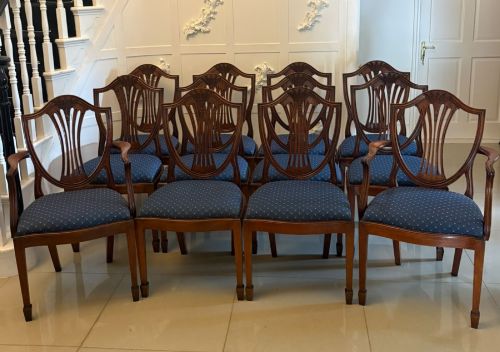
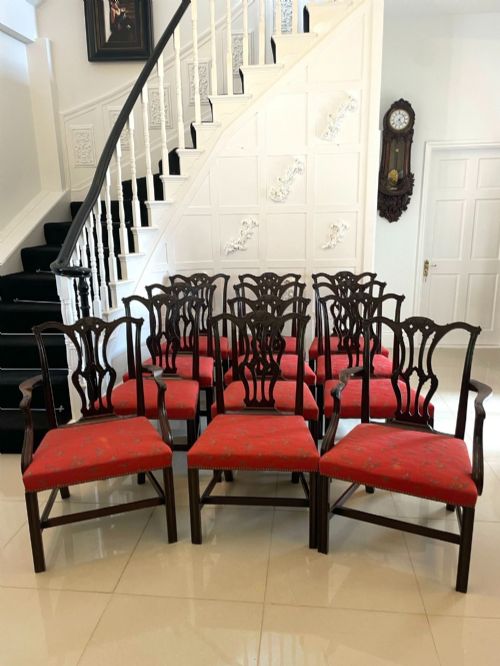
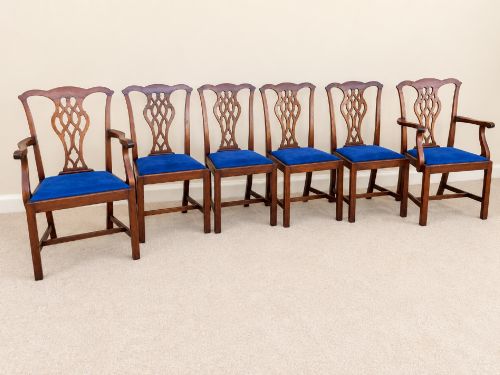
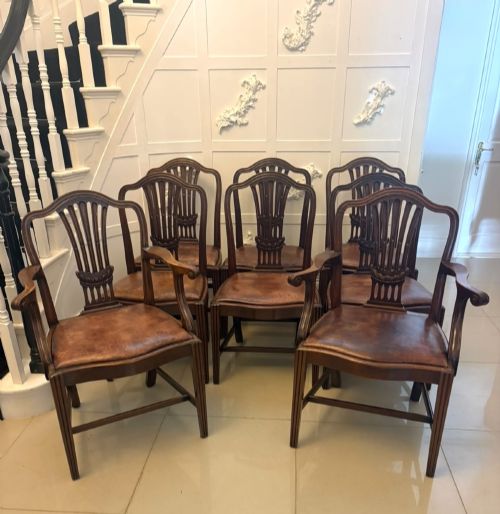
Carved Mahogany Carver Seat
A carved mahogany carver seat delivers robust timber and confident arm support, anchoring period dining rooms with substantial presence.
Carved Mahogany Carver Seat
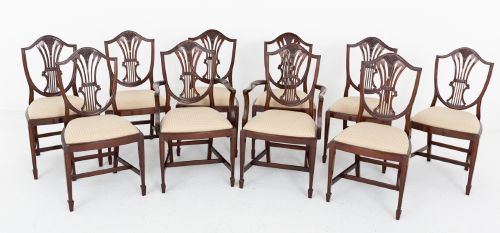
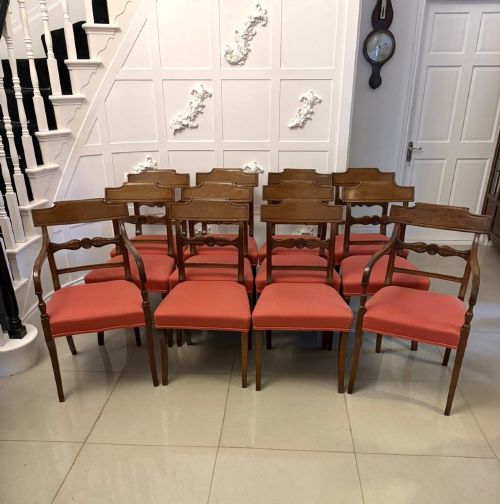
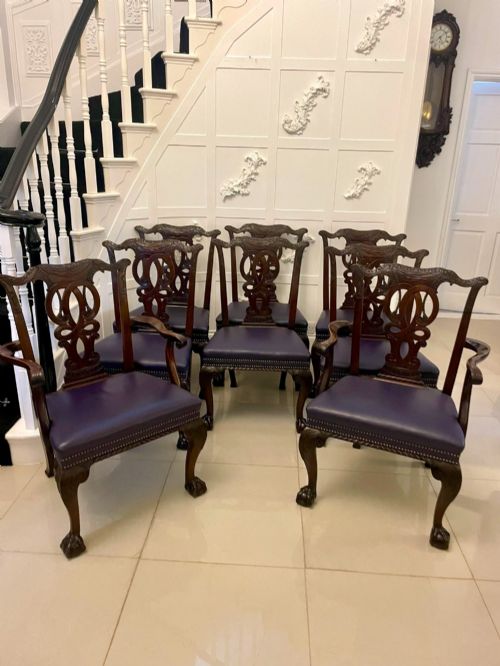
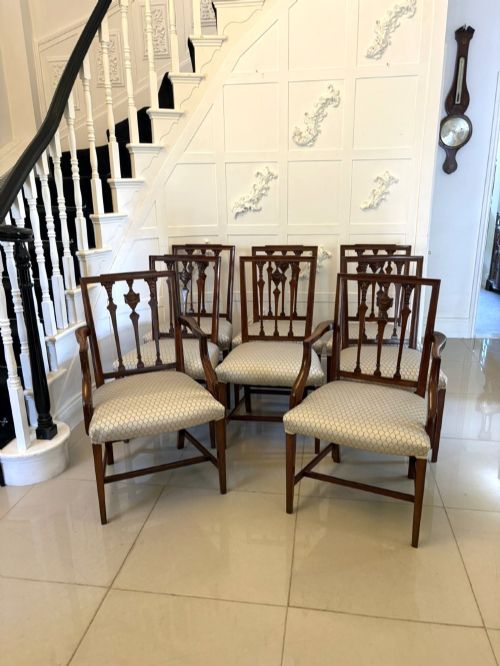
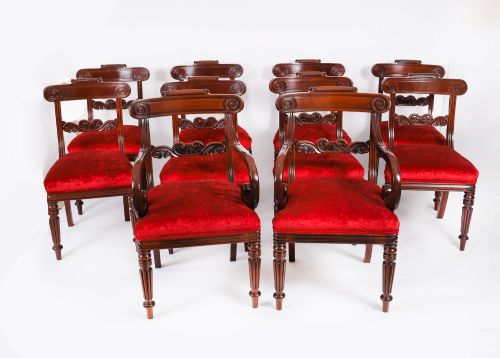
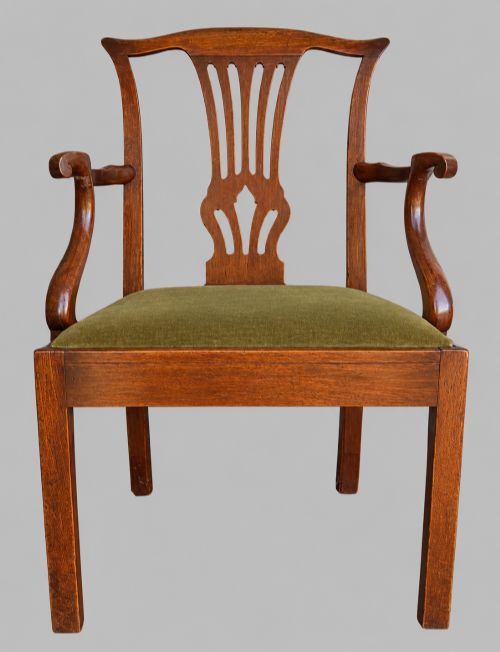
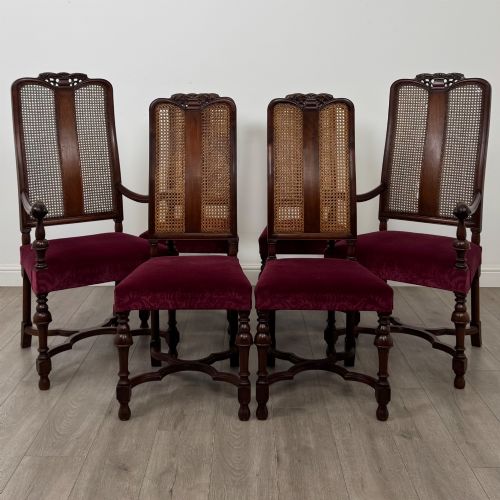
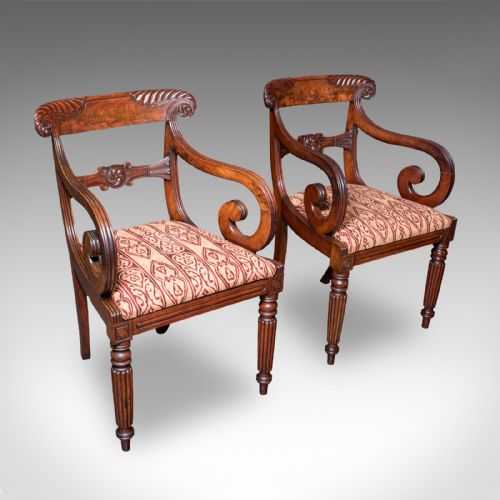
A carved mahogany carver seat combines structural timber with generous elbow rests, taking shape primarily as dining armchairs or library seats across the eighteenth, nineteenth, and twentieth centuries. Buyers searching for a carved mahogany carver seat will encounter examples spanning Georgian elegance, Regency restraint, and later revival movements like Chippendale and Hepplewhite.
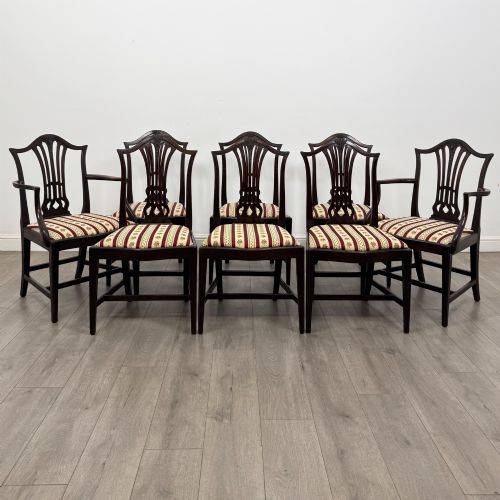
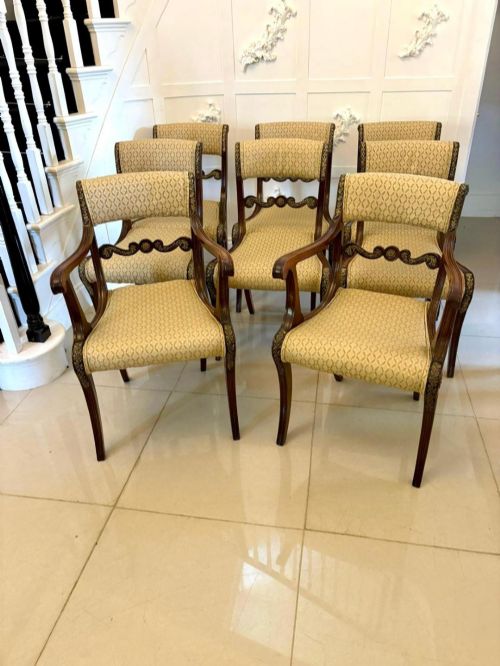
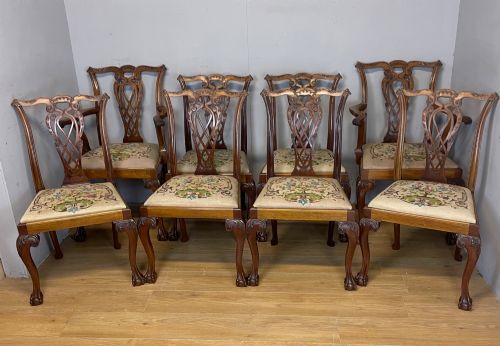
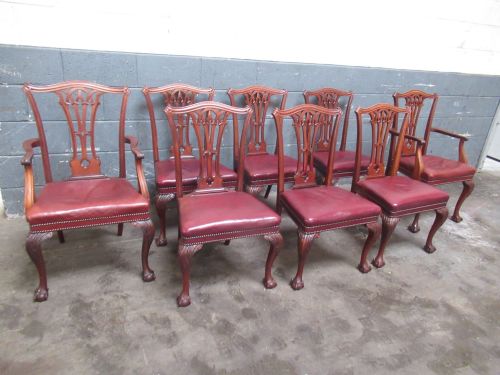
The material record shows solid mahogany frames carrying elaborate back splats, shield backs, or lyre forms, frequently complemented by open arms. These seating pieces appear singly, in pairs, or as part of larger dining suites where the armchairs match standard side chairs.
Origins stretch from English workshops to Scottish and Irish makers, incorporating styles from William IV developments up to Edwardian interpretations. The surviving examples demonstrate how seating designs evolved while retaining the characteristic timber frame and carved details.
Materials and Construction
Makers utilised dense tropical mahogany for structural stability and fine grain, allowing carvers to execute intricate pierced splats and ribbon backs without compromising strength. This timber was joined using traditional tenon methods to support the weight and movement inherent in functional seating.
Upholstery materials such as leather, velvet, fabric, and cane were integrated into drop-in or fixed pads, providing surface texture alongside the polished wood. Brass accents occasionally appeared in structural reinforcement or decorative detailing, matching the primary timber components.
Surface finishing relied on hand-applied polishes that highlighted the natural red-brown tones of the mahogany, while carved motifs like wheat ears, drapery, and foliage were chiselled directly into the solid timber frame.
Listings span the eighteenth, nineteenth, and twentieth centuries, featuring mahogany paired with cane, leather, velvet, and fabric upholstery.
Craftsmanship and Proportion
Quality rests in the crispness of the carving and the integrity of the joinery, distinguishing finely rendered pierced splats from softer, later machine cuts. Well-proportioned arms and raked legs indicate thoughtful design that balances visual grace with physical support.
The degree of original retention in the timber and structural frame determines the integrity of a piece, separating untouched surfaces from heavily restored examples. Superior sets maintain uniform matching across all carved elements, reflecting coherent workshop production rather than assembled pairings.
Maple and Co·Wheelers of Arncroach·Warings
The Carved Mahogany Carver Seat Glossary
- Carver
- An armchair designed with elbow rests, traditionally positioned at the head of a dining table alongside matching side chairs. This term is widely used in British antique trade terminology.
- Splat
- The vertical wooden strip down the centre of a chair back, frequently pierced and carved in Chippendale styles. It provides structural bracing while offering a canvas for decorative joinery.
- Drop-in seat
- A removable upholstered frame that fits into a rebated wooden ledge within the chair seat rails. This construction allows easy reupholstery without disturbing the structural frame.
- Lyre back
- A chair back featuring a central splat shaped like an ancient Greek lyre string instrument. This motif is strongly associated with Regency design.
Carved Mahogany Carver Seat: Frequently Asked Questions
How do I identify a Regency carver?
Regency carvers typically feature Saber legs, brass inlay, and classical motifs like reeding or lyre backs. These design elements reflect the early nineteenth-century interest in Greek and Roman antiquity.
The timber used during this period is often dark mahogany with a smooth, polished finish, maintaining clean architectural lines without excessive ornamentation.
What is a Chippendale revival carver?
A Chippendale revival carver is a later nineteenth or early twentieth-century piece that copies the pierced splats, claw and ball feet, and ribbon-back motifs of eighteenth-century master furniture makers. These pieces were produced by workshops responding to renewed demand for historic British domestic styles.
Skilled cabinet makers used period techniques to replicate the substantial proportions and carved details of the original Georgian designs.
How should I care for mahogany frames?
Mahogany frames require stable indoor humidity away from direct heat sources to prevent timber shrinkage and veneer separation. Regular dusting with a dry, soft cloth preserves the polished surface without building up chemical residues.
Conditioning oils should be used sparingly, and upholstered drop-in seats should be checked periodically to ensure the internal webbing remains secure.