


Carved Lyre Chairs
Carved lyre chairs bring classical grace to a room through distinctive musical splats, and mahogany is the timber you will encounter most often.
Carved Lyre Chairs
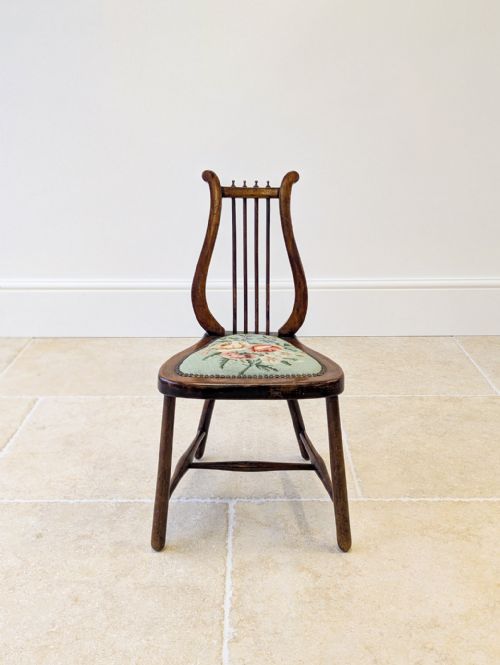
Carved lyre chairs take their name from the openwork backsplat shaped like an ancient stringed instrument, a motif borrowed from neoclassical design. You will find them primarily as dining chairs, armchairs, and side chairs spanning the nineteenth century up to the nineteen-thirties.
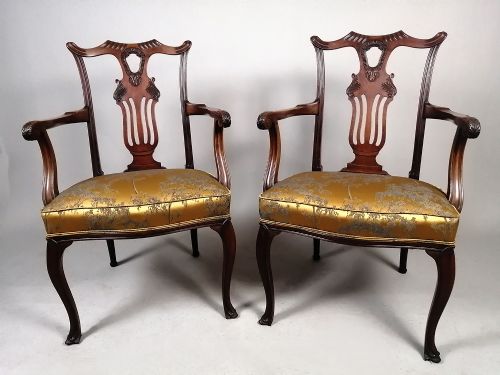
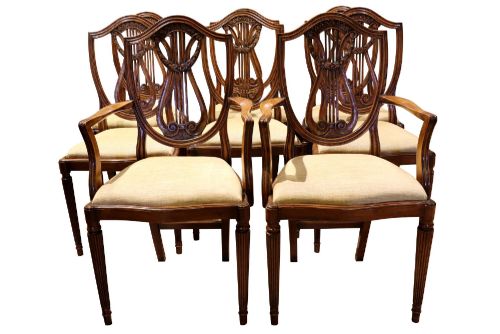
Mahogany is the predominant wood for these seating pieces, though examples also appear in walnut, beech, and elm. The form ranges from strict Regency style and Grand Regency interpretations to Edwardian variations and Hepplewhite style revivals.
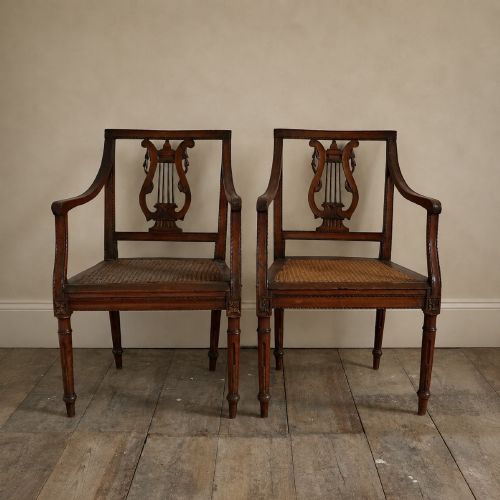
Many of these chairs incorporate upholstered seats covered in fabric, leather, tapestry, or needlepoint, while others feature cane work. The selection on this page includes elbow chairs, dressing table chairs, and occasional seating reflecting diverse regional revivals.
Materials and construction
Cabinetmakers constructed these frames using solid hardwoods like mahogany and walnut, selected for their strength and grain. The central lyre splat required precise fretsaw work and hand-carving to achieve the curved strings and frame of the instrument motif.
Joints were typically mortised and tenoned to ensure stability under daily use. Secondary woods such as beech appear in simpler frames, while high-status seating often received brass accents and fine textile upholstery.
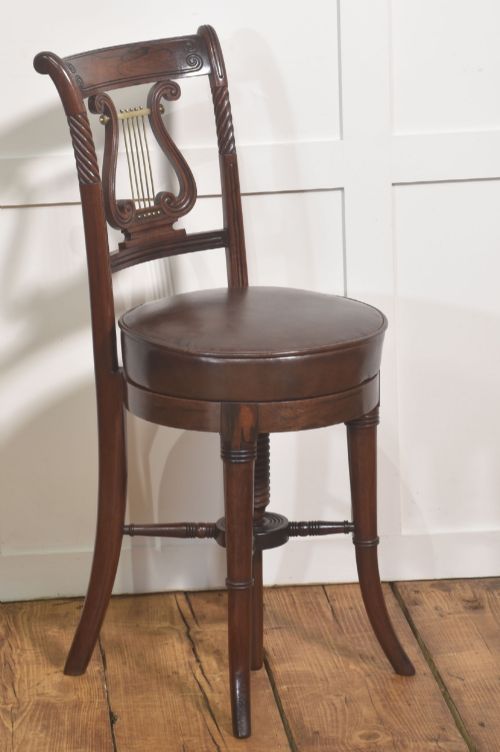
Seating forms on this page include dining chairs, elbow chairs, library chairs, dressing table chairs, and revolving piano stools.
Judging quality in carved lyre chairs
Quality rests primarily on the depth and crispness of the wood carving, particularly around the delicate scrolls of the lyre splat. Crisp, well-defined detailing indicates a maker who took time with the neoclassical ornament.
The choice of timber and the integrity of the frame construction dictate longevity. Dense, well-figured mahogany or walnut with tight joinery separates standard production pieces from finer examples.
The Carved Lyre Chairs Glossary
- Lyre back
- A chair back featuring an openwork splat shaped like a ancient Greek lyre. This motif became popular during the neoclassical revival.
- Splat
- The vertical central strip of wood in the back of a chair. In these pieces, it takes the form of a musical instrument.
- Elbow chair
- An armchair with shorter arms that do not extend past the front of the seat. They often serve as carvers at the ends of dining tables.
- Neoclassical
- A style spanning the eighteenth and nineteenth centuries that revived classical Greek and Roman motifs. Carved lyre chairs draw directly from this aesthetic.
- Cane seat
- A seat woven from split rattan or cane strips. This technique provides a light, flexible surface found on several period examples.
Carved Lyre Chairs: Frequently Asked Questions
How do I date a carved lyre chair?
Dating relies on timber choice, construction methods, and stylistic cues within the revival periods. Nineteenth-century pieces often display heavier mahogany construction, while Edwardian and nineteen-thirty versions show lighter framing.
Examine the underside and joints for tool marks and wear patterns that correspond to known furniture eras. Comparing the carving style to established neoclassical and Regency idioms helps narrow the decade of manufacture.
Are these chairs suitable for daily dining use?
Most antique carved lyre chairs remain sturdy enough for regular seating if the frame joints are sound. Solid mahogany and walnut structures handle normal dining room use well.
Check that the seat frame and legs show no structural wobble before putting them into service. Professional reupholstery can also refresh worn padding while preserving the historical wooden frame.
What is the difference between a side chair and an armchair?
Side chairs are built without arms and were traditionally designed to be tucked away against room walls when not in use. They occupy a smaller footprint around a dining table.
Armchairs include supportive side rests, making them more suitable as occasional seating or as head-of-table carvers. Both variants share the signature lyre-shaped backrest across this collection.