

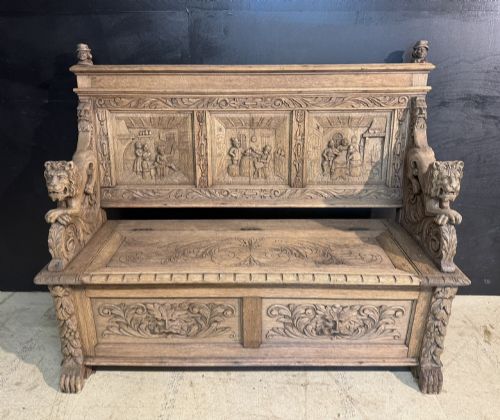
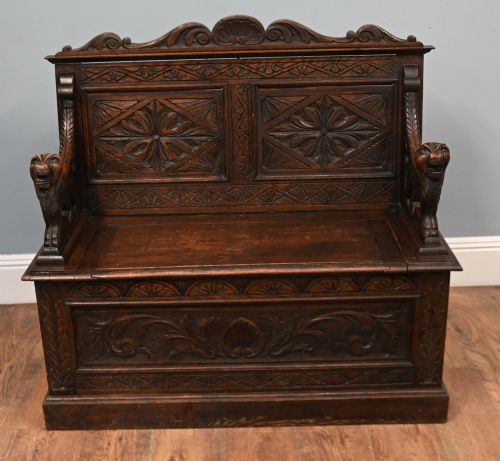
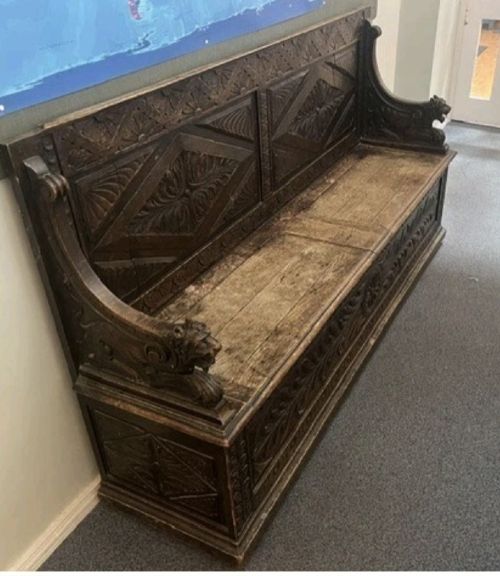
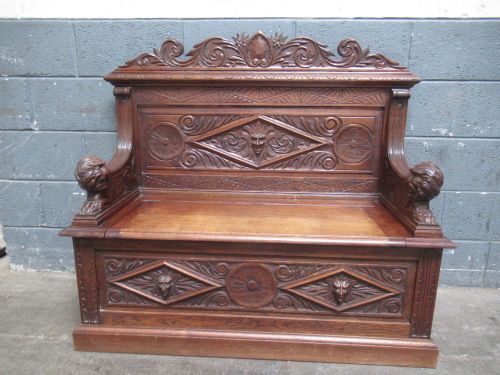


Carved Lion Oak Coffer
These carved lion oak coffer pieces and related forms bring robust timber construction and historic relief work into domestic spaces.
Carved Lion Oak Coffer
A carved lion oak coffer or related seating piece presents substantial storage furniture shaped by centuries of revivalism. Buyers searching for a carved lion oak coffer will encounter robust timber constructions spanning the seventeenth century through to the twentieth century.
The selection here draws primarily upon nineteenth-century and early twentieth-century interpretations, including Jacobean Revival, Gothic Revival, and Victorian Baronial designs. Forms range from traditional chests and coffers to adaptable monks benches, hall seats, and settle benches.
Originating across British and continental workshops, these items utilise dense hardwoods to deliver enduring utility alongside architectural presence. The visual weight relies upon deep relief carving, panelled construction, and substantial proportions suited to entrance halls and reception rooms.
How they were made
The primary material across these listings is oak, supplemented by walnut, general hardwood, and metal or iron hardware. Carpenters employed traditional joinery methods, utilising pegged mortise and tenon joints to secure heavy panelled frameworks.
Surface decoration relies upon hand-carved relief work, bringing figural motifs, tracery, and heraldic details directly into the timber. Iron hinges, brackets, and structural fixings provide both functional reinforcement and visual contrast to the dark timber surfaces.
Carved Lion Oak Coffer Retail Price Guide 2026
Typical asking prices for carved lion oak coffer among the pieces listed under this phrase on Sellingantiques today, from the lower quarter to the upper quarter. They describe what is for sale here now, not the wider market.
Green Man masks peer out from historic timber, watching over the hallway with leafy expressions carved centuries ago.
What varies in quality
The standard of a piece rests upon the crispness and depth of the timber carving, distinguishing fluid hand execution from mechanical production. Timber selection also dictates merit, with tightly grained oak holding sharper detail and deeper patination than secondary hardwoods.
Structural integrity defines the upper tier of survivals, where original ironwork, sound panel joints, and unaltered proportions remain intact. Pieces that retain their functional versatility as dual-purpose seats and storage trunks demonstrate superior historical joinery.
The Carved Lion Oak Coffer Glossary
- Cofer
- A large wooden chest used for storing valuables, linen, or documents. These heavy storage boxes often featured hinged lids and robust iron locks.
- Monks Bench
- A convertible piece of furniture functioning as both a bench with a backrest and a table when the back is tilted forward. This versatile form gained immense popularity during revivalist periods.
- Cassone
- An Italian ornate chest intended for holding household goods or bridal trousseaus. These Italian Renaissance examples display distinct continental carving traditions compared to British oak work.
- Jacobean Revival
- A nineteenth-century stylistic movement imitating the heavy, geometric, and carved oak furniture of the early seventeenth century. Makers utilised dark finishes and strapwork decoration to evoke the earlier era.
- Baronial
- A style descriptor denoting large-scale, imposing furniture influenced by medieval castle architecture. Such pieces incorporate heraldic motifs, linenfold panels, and deep relief carvings.
Carved Lion Oak Coffer: Frequently Asked Questions
Where should I place a monks bench?
These convertible seating pieces suit entrance halls, reception rooms, and spacious hallways where their dual function provides both a seat and a surface. Their substantial depth requires adequate floor space to allow the pivoting backrest to operate freely.
Positioning them away from direct heat sources prevents the dense oak timbers from drying out and splitting over time. They serve well as anchor pieces against long expanses of wall in traditional interiors.
How do I care for antique oak furniture?
Maintaining these timber surfaces involves regular dusting with a soft, dry cloth to prevent grit accumulation in the deep carved recesses. Applying a traditional beeswax occasionally nourishes the hardwood and preserves the natural lustre without building up heavy residues.
Avoid placing these items in areas subject to rapid humidity fluctuations or strong direct sunlight. Stable indoor conditions protect the historic joints and prevent movement in the solid panels.
What is a Victorian baronial settle?
A Victorian baronial settle is a high-backed wooden bench designed in the nineteenth century to evoke medieval castle and great hall seating. These large items frequently incorporate deep relief carving, panelled backs, and substantial armrests.
They were produced during revival periods to create an atmosphere of historical gravitas in large domestic interiors. The construction relies on heavy oak timbers built to withstand generations of daily use.
How do I distinguish seventeenth-century work from revival pieces?
Differentiating authentic seventeenth-century pieces from nineteenth-century revivals requires examining the tool marks, timber shrinkage patterns, and assembly methods. Revival pieces often utilise machine-sawn components and standardised fixings hidden beneath applied patination.
Early originals display irregular hand- Hewn surfaces, natural timber wear, and pegged joints that have shifted organically over centuries. Consulting the specific construction details within each listing clarifies the exact period of manufacture.