


Carved Linden Wood
These carved linden wood sculptures and furnishings bring robust animal forms and intricate regional carving straight into domestic spaces.
Carved Linden Wood
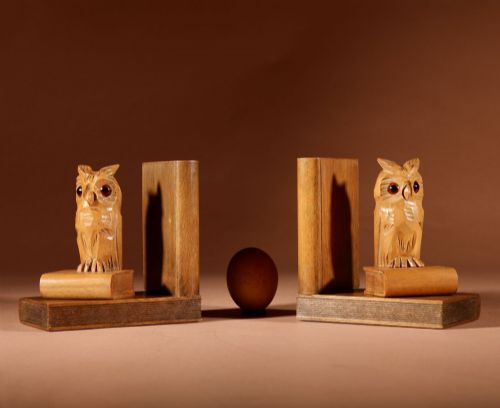
When you examine carved linden wood on this page, you encounter substantial animal sculptures, bookends, inkwells, and larger items like centre tables and hall stands originating from the late nineteenth and early twentieth centuries. The selection draws heavily upon Black Forest, Swiss, and Japanese folk art traditions.
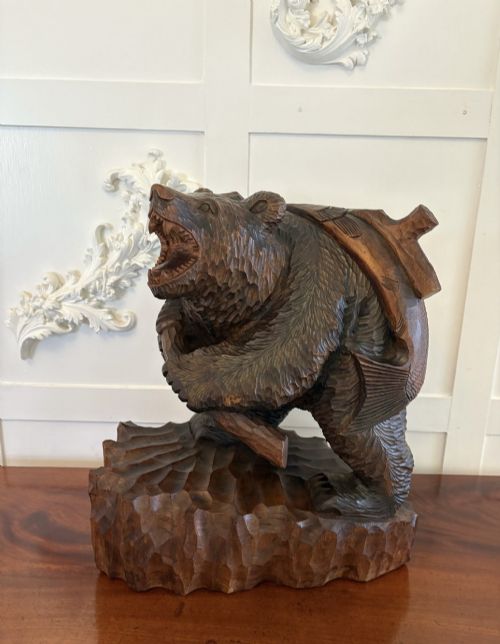
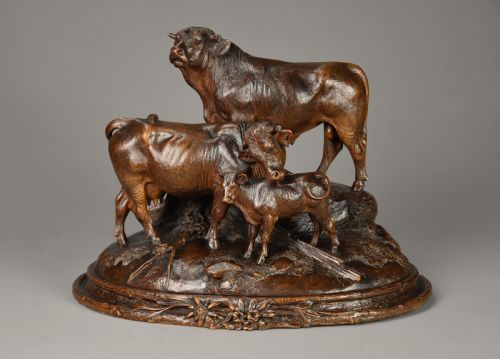
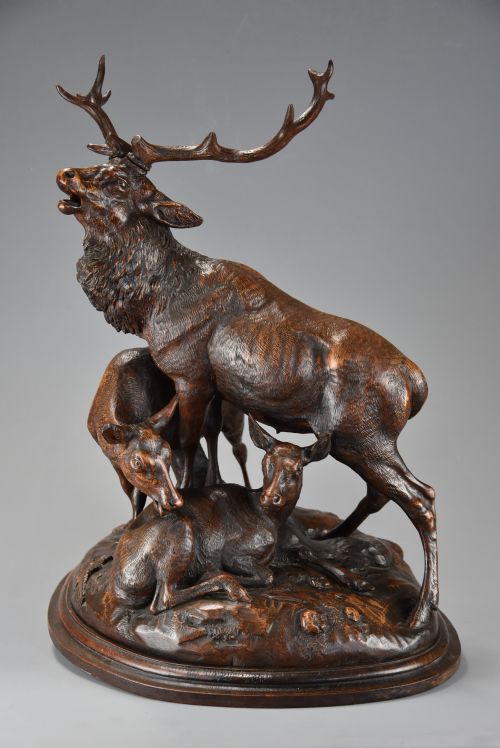
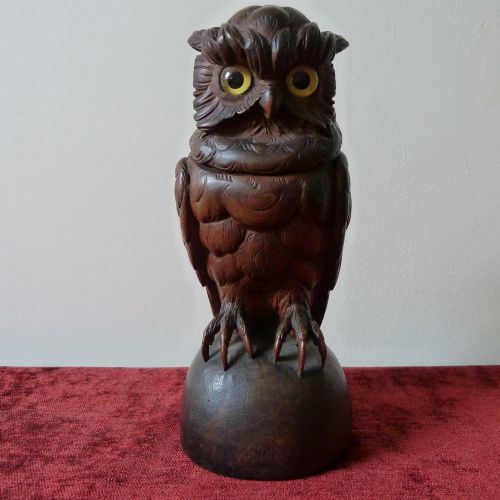
Bears, owls, deer, cattle, and dogs dominate the forms, rendered either as standalone figures or integrated into functional objects such as tobacco boxes and clocks. The most frequent encounters involve bears depicted carrying fish, holding logs, or forming the bases of table lamps and stands.
How they were made
Carvers utilised the pale, even grain of linden wood because its soft yet firm texture allowed for deep undercutting and minute detail without splitting. Artisans combined this timber with glass eyes, brass fittings, and occasional deer antler or horn to build realistic animal studies and functional items.
Makers applied hand-carving chisels directly to the raw timber to create textured fur, feathers, and naturalistic tree trunk bases. Finished pieces received dark stains and wax polishes to highlight the deep relief work.
Bears double as hall stands, coat hooks, and table lamps while steadfastly clutching their wooden logs.
What varies in quality
The degree of anatomical observation and depth of relief carving separate standard production from masterwork execution. Superior examples display realistic musculature, glass eyes fitted with precision, and fur rendered in distinct, individual strokes rather than uniform scoring.
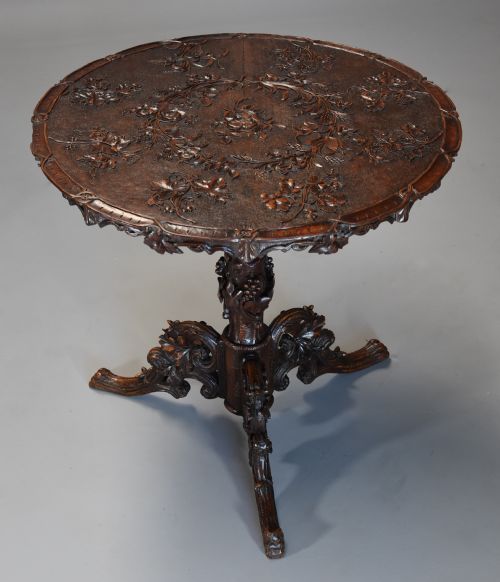
The complexity of the form dictates distinction, shifting simple surface decoration toward fully articulated figures integrated seamlessly into heavy furniture such as hall stands and centre tables.
J HUGGLER·Bergen & Co·The Huggler family
The Carved Linden Wood Glossary
- Black Forest
- A style of wood carving originating from the mountain regions of Switzerland and Germany. These works typically depict regional fauna in deep relief.
- Linden wood
- A pale, close-grained timber favored by nineteenth-century carvers for its malleability. The wood takes fine detail cleanly without splintering along the grain.
- Undercutting
- A carving technique where timber is removed beneath a subject to create three-dimensional depth. This method separates advanced sculptural work from flat surface relief.
- Humidor
- A specialised box designed to store tobacco or cigars while maintaining humidity. In this medium, they frequently take the form of carved bears or owls.
Carved Linden Wood: Frequently Asked Questions
What animals appear in these carvings?
Bears, owls, deer, cattle, chamois, ibex, foxes, and dogs populate the sculptural works. These creatures often interact with natural elements like logs, fish, or foliage.
Craftsmen drew inspiration from alpine wildlife and traditional folk art motifs.
How do I identify a table lamp conversion?
Table lamps typically feature vertical bear or column figures fitted with modern or period electrical wiring threaded through the timber. Examine the base and upper sections for drilled channels.
Original solid sculptures lack these apertures.
Where were these pieces made?
Production centred on Switzerland and Germany during the late nineteenth and early twentieth centuries. Workshops catered to domestic markets and international visitors.
Some pieces reflect Japanese folk art influences adopted by European carvers.
How should I clean linden wood carvings?
Dust surfaces gently with a soft, dry brush to preserve the recessed details of the fur and feathers. Avoid liquid polishes and damp cloths.
Apply a microcrystalline wax sparingly if the timber appears dry.