
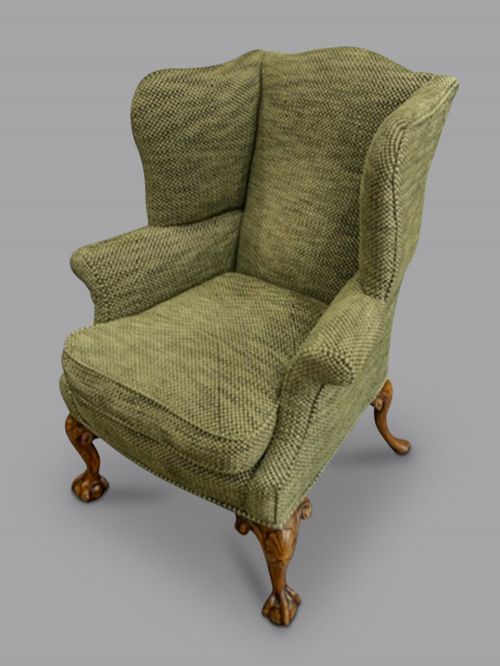
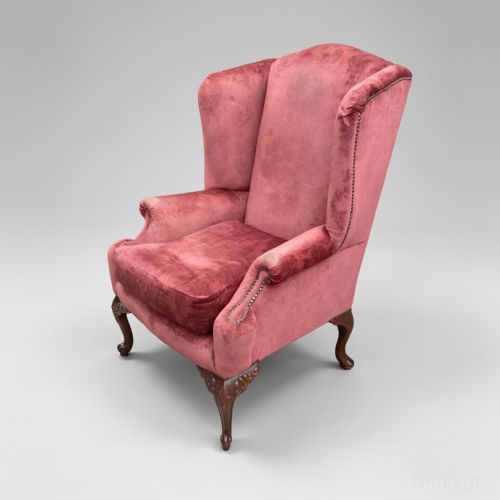
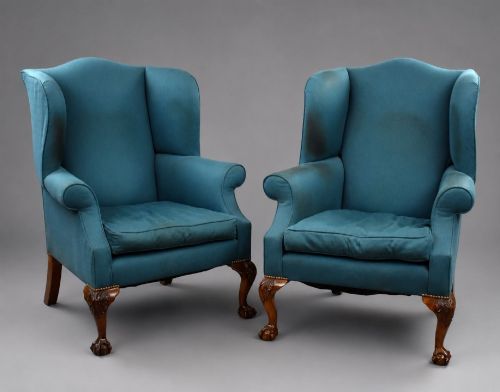
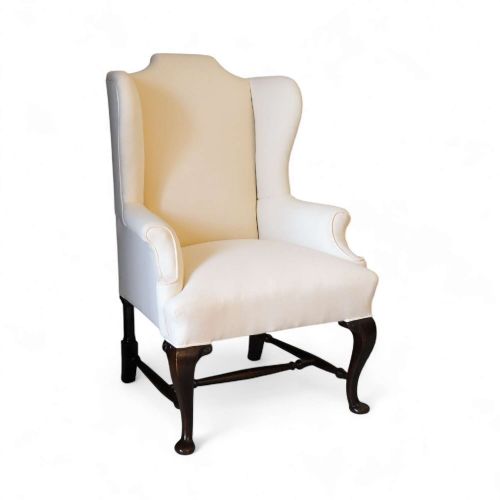
Carved Leg Wingback
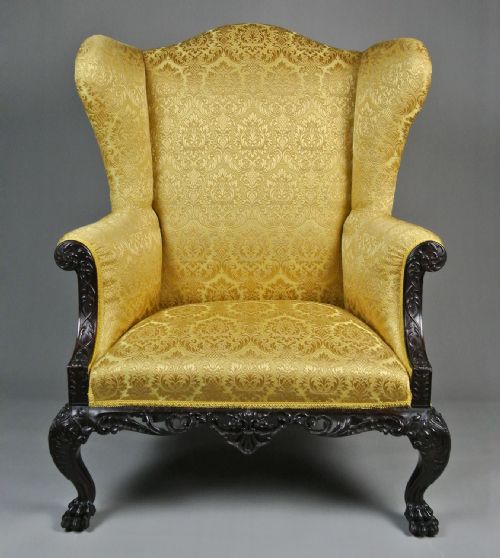
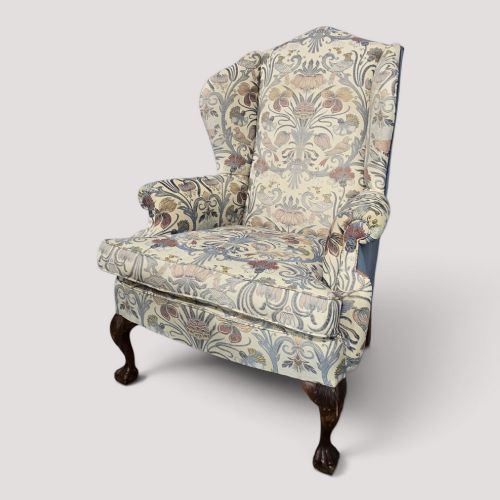
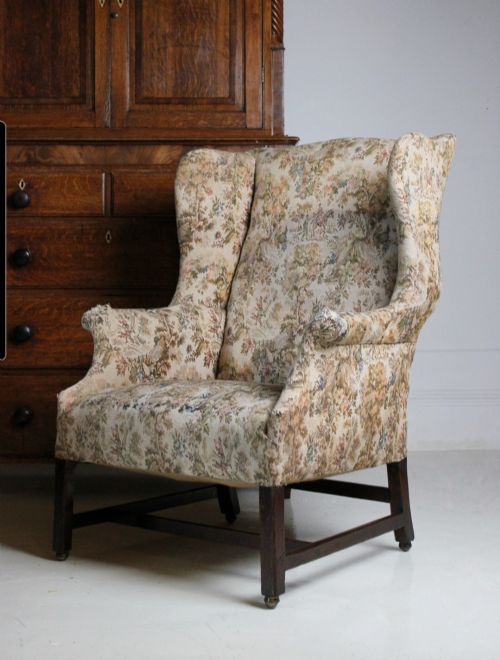
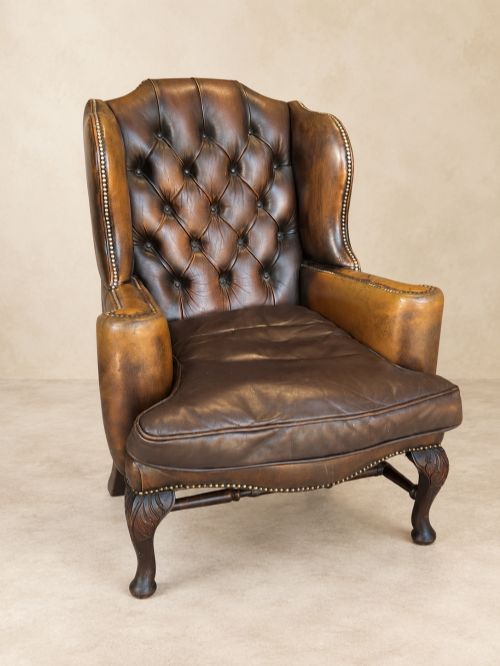
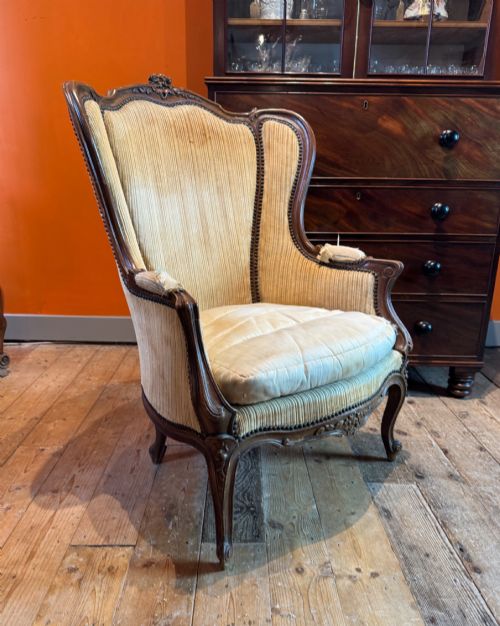
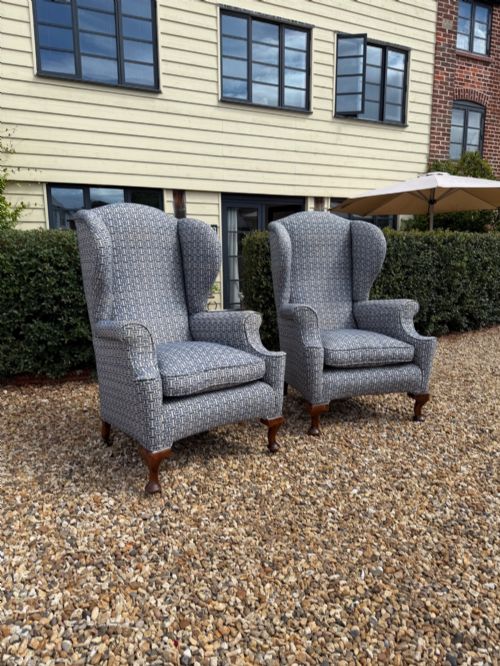
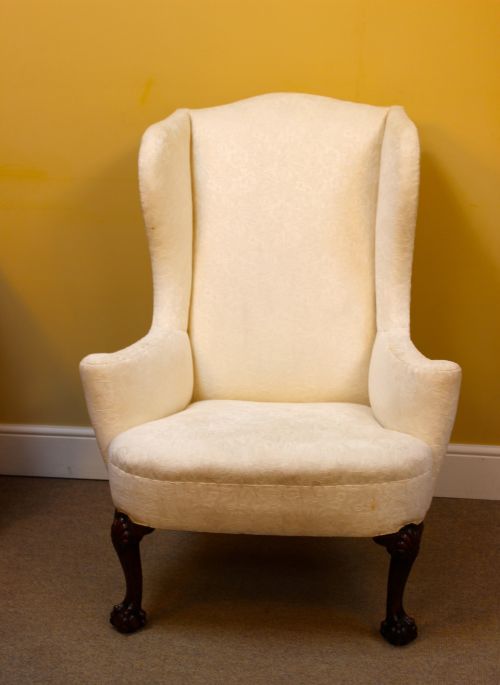
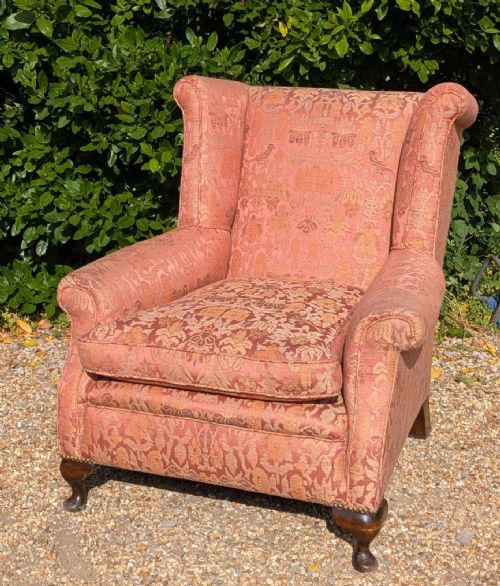
A carved leg wingback provides draught-excluding comfort and period presence, drawing the eye with its upright silhouette and shaped wooden supports.
Carved Leg Wingback
A carved leg wingback is an upholstered seating form designed to shield the sitter from cold draughts by enclosing the head and shoulders in protective padded wings. These chairs and sofas appear across various eras, uniting practical warmth with formal presence in a room.
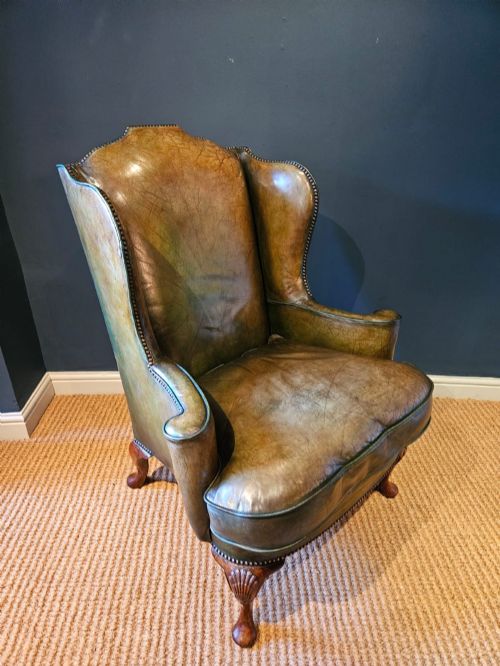
Most examples found here hail from the nineteenth century alongside revival periods and earlier Georgian eras. Walnut and mahogany frame woods predominate, supporting coverings in leather, velvet, fabric and calico.
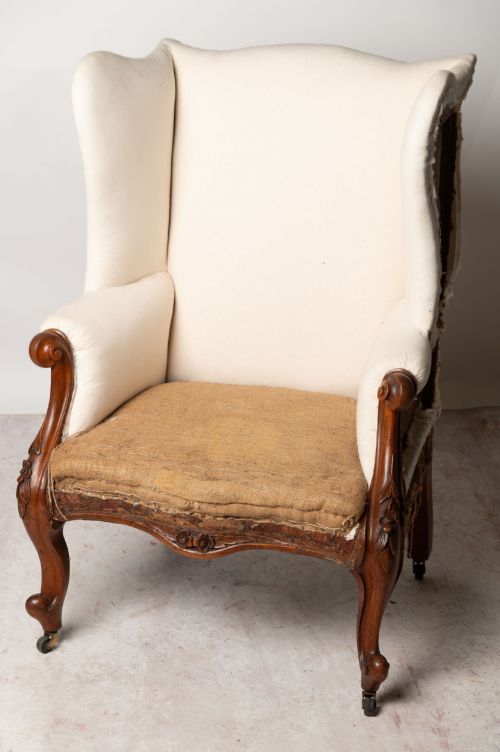
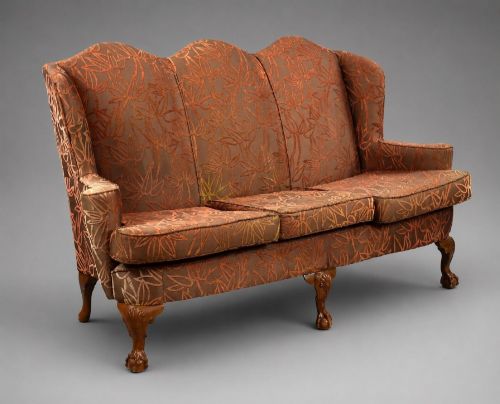
The defining feature rests below the seat, where cabriole or straight wooden supports receive hand-carving in styles ranging from Chippendale to Queen Anne. Buyers meet both individual armchairs and matched pairs, alongside occasional three-seat sofas sharing the characteristic winged profile.
How they were made
Makers constructed the structural frames of these seats using dense hardwoods such as mahogany, walnut, oak and general timber. Joinery relied on traditional mortise and tenon methods to ensure the frame withstood the outward tension of internal stuffing.
Upholstery techniques involved lashing springs or webbing across the seat base, packing stuffing materials within textile layers, and securing the outer covering with brass tacks. Woodworkers shaped the exposed lower framework by hand, carving motifs directly into the timber supports.
The high upholstered wings were originally engineered to trap heat from the hearth, effectively acting as personal greenhouses for the chilly sitter.
What varies in quality
The crispness of the timber carving on the cabriole legs sets superior pieces apart from plain production. Sharp relief work and balanced proportions indicate a more skilled hand during the initial shaping of the wood.
The integrity of the internal stuffing and the quality of the outer textile dictate the tactile experience. Feather fillings and heavy leather or velvet retain their shape and provide a firmer, more substantial sit than lesser materials.
The Carved Leg Wingback Glossary
- Wingback
- An armchair style featuring high sides and projecting panels designed to trap heat around the head. The wings also served to block flickering light from open fireplaces.
- Chippendale style
- A decorative manner originating in the eighteenth century marked by carved mahogany woodwork and restrained ornamentation. Pieces in this style display intricate leg carving and substantial proportions.
- Calico stage
- An intermediate state of upholstery where a chair is covered in plain cotton calico before final decorative fabric is applied. This allows a buyer to select their own visible textile finish.
- Bergere
- An enclosed upholstered armchair with wooden framing visible around the sides and back. French examples often incorporate canework or fine textiles into the padded frame.
Carved Leg Wingback: Frequently Asked Questions
What is a carved leg wingback?
A carved leg wingback is a high-backed upholstered chair featuring protective side panels and decorative wooden supports beneath the seat. These pieces combine enclosed seating comfort with ornamental woodwork.
Craftsmen produced them across multiple centuries, adapting classical shapes like Queen Anne and Chippendale to suit changing domestic fashions for fireside seating.
How do I date a wing chair?
Dating relies upon examining the timber species, the profile of the arm supports, and the specific carving motifs on the legs. Walnut frames frequently point toward earlier Georgian or revival eras.
Construction details hidden beneath the upholstery, such as webbing types and hand-cut joinery, also offer clues to the period of manufacture.
Were wingbacks used only for reading?
These chairs served primarily as draught-excluding seats near fireplaces, shielding the occupant's head and neck from cold air currents in older homes. Their enclosed shape offered privacy and warmth.
Over time they transitioned into general library and living room seating, valued as much for their imposing silhouette as their thermal practicalities.
How do I care for leather wingbacks?
Leather upholstery requires regular dusting and occasional treatment with appropriate conditioners to prevent the hide from drying and cracking. Keeping the chair away from direct heat sources preserves the material.
Wooden legs benefit from gentle cleaning and wax polishing to maintain the finish without harming the historic surface.