
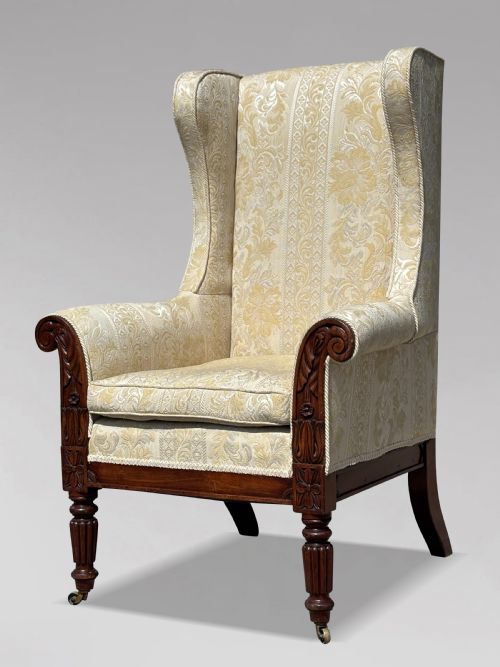


Damask Wing Chair
A damask wing chair brings deep comfort and formal presence to a room, wrapping high upholstered sides around you to keep out the draughts.
Damask Wing Chair
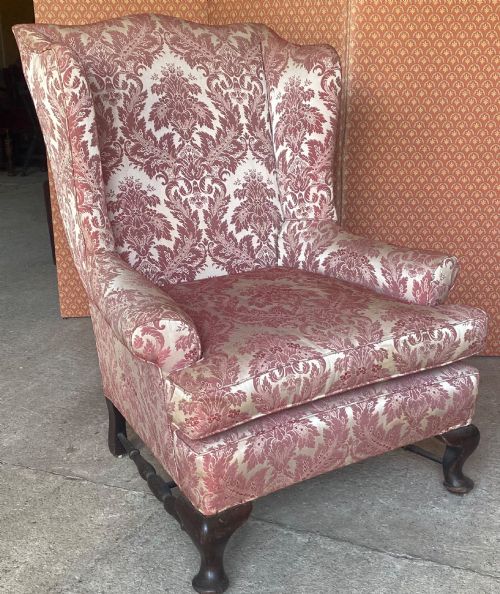
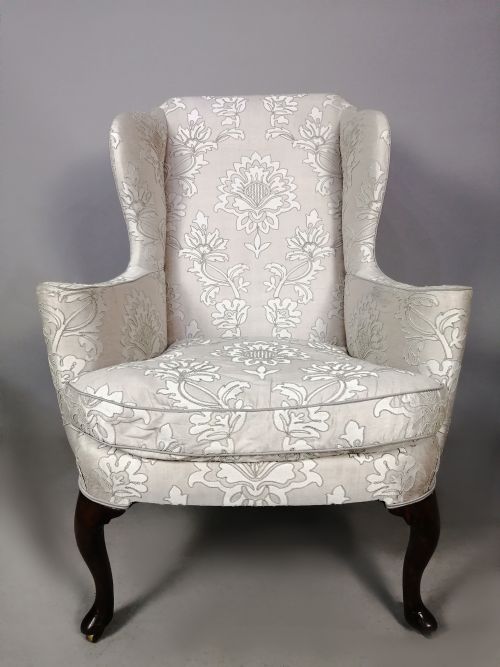
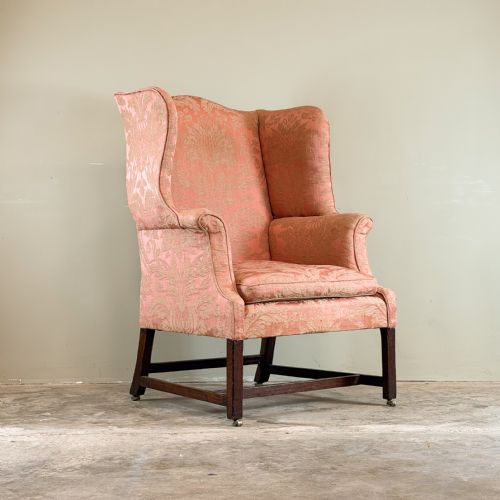
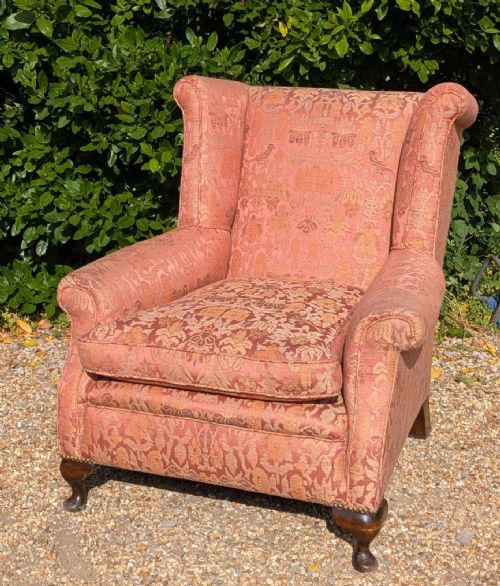
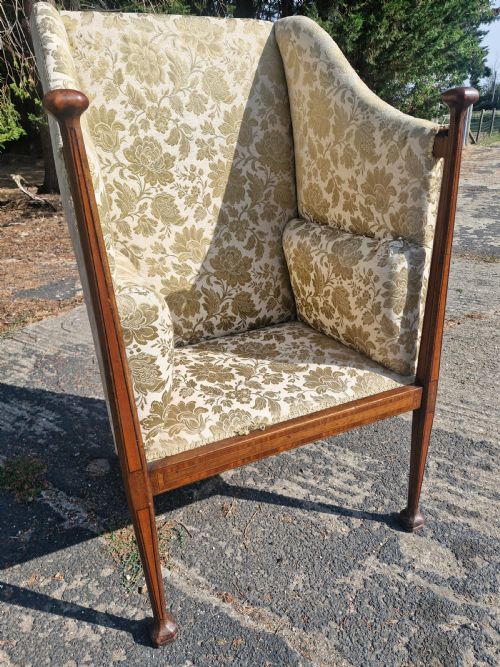
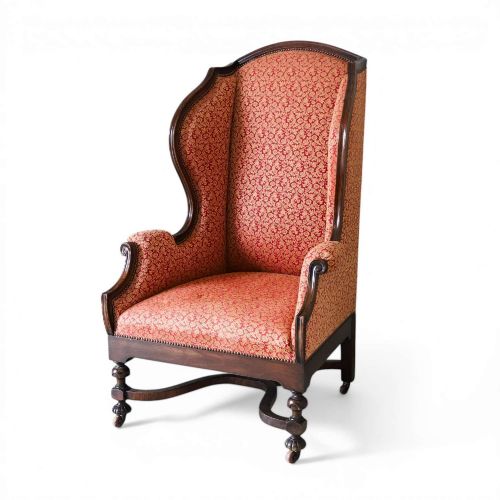
A damask wing chair is a traditional fireside armchair designed with protective side panels, known as wings, attached to the arms and back to shield the sitter from chilly air. When you browse this selection, you encounter pieces spanning the eighteenth, nineteenth, and early twentieth centuries, rooted in Georgian, Victorian, and Edwardian periods.
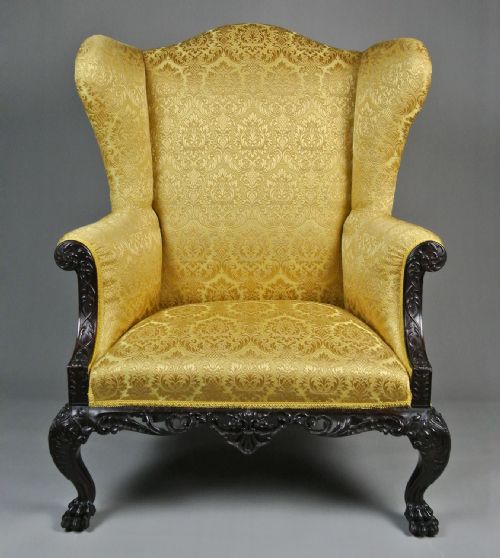
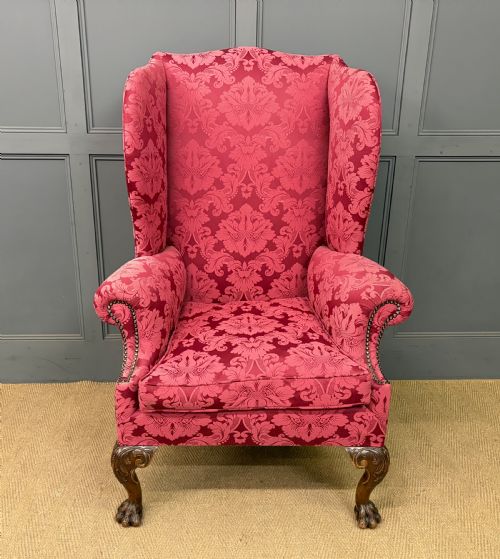
The most common examples you meet here are framed in mahogany or walnut, featuring deep upholstery and substantial scrolled or straight legs. They range from eighteenth-century George II and George III origins to later revival styles like Carolean and Chippendale, often upholstered in rich red or patterned damask fabric.
Makers across these eras built them as library chairs, fireside seats, and drawing room armchairs, prioritising high backs and generous proportions. You will find both single armchairs and matched pairs, some enhanced with brass castors, feather filling, or carved wooden details.
How they were made
These armchairs rely on sturdy timber frames constructed predominantly from solid mahogany or walnut, joined with traditional cabinetmaking techniques to support heavy daily use. Woodcarvers shaped the cabriole or straight legs by hand, sometimes adding intricate details such as ball and claw feet or carved flourishes along the knees and arms.
Upholsterers built up the seat and high back using traditional stuffing materials, enclosing them in durable fabric and finishing the edges with tight rows of brass tacks or gimp braid. Damask upholstery, woven with distinctive patterned motifs, provides the characteristic textured surface that defines the classic appearance of these chairs.
Common architectural forms include Georgian, Victorian, and Edwardian armchairs, alongside specific revival styles such as Carolean and Chippendale.
What varies in quality
Quality rests heavily on the crispness of the hand-carving on the exposed wooden frame and the architectural balance of the wings in relation to the seat base. Pieces from the eighteenth century or those adhering closely to Georgian proportions display a refined harmony that lesser nineteenth-century copies occasionally miss.
The integrity of the internal construction and the quality of the textile selection further separate standard examples from exceptional finds. Superior chairs retain their original timber patina and feature substantial, well-balanced frames that hold their commanding silhouette without appearing bulky.
The Damask Wing Chair Glossary
- Damask
- A reversible figured fabric with patterns formed by contrasting warps and wefts, traditionally woven from silk, wool, or cotton. It provides the lustrous, textured upholstery seen on many traditional fireside chairs.
- Cabriole leg
- A furniture leg that curves out at the knee and tapers inward to an ankle, ending in a pad, claw, or foot. This form originates from ancient Chinese designs and became a defining feature of eighteenth-century seating.
- Carolean
- A seventeenth-century English style associated with the reign of Charles II, characterised by rich carved woodwork, elaborate scrollwork, and luxurious textiles. Later revival pieces adopted these ornate motifs.
- Chippendale style
- A furniture design style drawing on the mid-eighteenth-century pattern books of Thomas Chippendale, notable for carved mahogany frames and classical decorative details. It heavily influenced later nineteenth-century revival seating.
Damask Wing Chair: Frequently Asked Questions
What is a wing chair used for?
These armchairs were originally placed close to fireplaces in large draughty rooms, where the upholstered side panels trapped body heat and blocked cold air from reaching the sitter's head and neck.
Over time, they moved into libraries and drawing rooms as reading and relaxing seats, offering a high back for head support and generous armrests for long periods of sitting.
How do I date a wing chair?
Dating relies on observing the timber species, leg geometry, and framing methods used beneath the upholstery. Eighteenth-century models generally display lighter, more balanced proportions and hand-carved details on walnut or mahogany frames.
Nineteenth-century revival pieces often feature heavier timber sections and machinery-cut components, while Edwardian and later examples adopt softer stuffing and distinct twentieth-century fabric patterns.
Are damask wing chairs comfortable?
They offer a very supportive sitting experience due to their high backs, deep seats, and enclosed sides. Many period examples incorporate generous padding and feather-filled cushions designed for prolonged relaxation by the fire or with a book.
The upright posture encouraged by the rigid back and firm armrests makes them practical as functional seating rather than deep lounging chairs.
How do I style a wing chair in a modern room?
A damask wing chair works well as a statement reading seat in a corner or paired beside a fireplace to anchor the room's seating arrangement. The rich texture of the damask fabric and warm tones of the mahogany or walnut frame contrast effectively against plain walls and contemporary interiors.
Choosing a neutral or boldly patterned upholstery allows the chair to serve as a visual focal point without requiring matching furniture suites.