




Carved Leg Rectangular Ottoman
These carved leg rectangular ottoman pieces are sturdy timber footstools and salon seating designed to anchor a traditional room.
Carved Leg Rectangular Ottoman
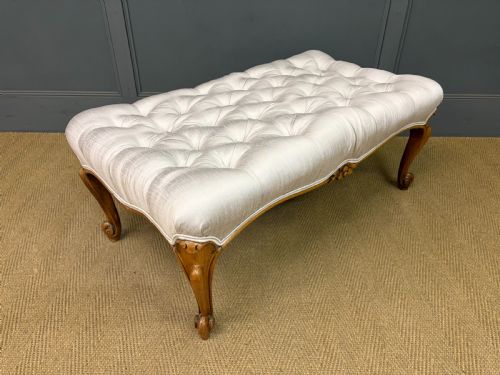
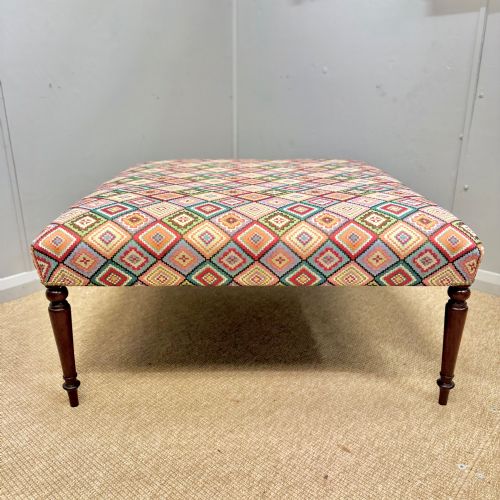
A carved leg rectangular ottoman is a low timber seat or footstool, appearing here most frequently in Victorian and revival forms from the nineteenth century. These pieces span standard salon stools, larger centre stools, and long footstools shaped with rectangular frames.
The assortment on this page draws on English Country House tastes alongside specific period revivals such as George II and Chippendale styles. Makers utilised diverse timbers, producing both substantial rosewood and walnut frames and lighter cane or rattan variants.
Materials and construction
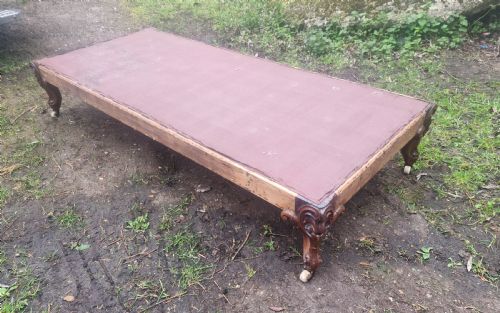
Frames are constructed from dense hardwoods like mahogany, rosewood, walnut, oak, and teak, matched with brass hardware where appropriate. Carving is applied directly to the timber legs, rendering deep relief work that defines the revival styles.
Upholstery techniques range from drop-in and lift-out padded seats to woven cane, rattan, and fabric textiles including cream damask and wool. Many examples survive as bare frames or require reupholstering to match modern interiors.
Carved Leg Rectangular Ottoman Retail Price Guide 2026
Typical asking prices for carved leg rectangular ottoman among the pieces listed under this phrase on Sellingantiques today, from the lower quarter to the upper quarter. They describe what is for sale here now, not the wider market.
Judging the quality
Quality rests in the crispness of the timber carving and the density of the chosen wood, with heavy rosewood and walnut framing indicating superior production. Finer examples display balanced proportions and deep, deliberate hand-carved detailing on the legs rather than shallow machine profiling.
The integrity of the structural joinery dictates durability, separating robust daily-use furniture from decorative survivals. Original upholstery systems, such as lift-out timber seats, offer better internal craft than later amateur alterations.
The Carved Leg Rectangular Ottoman Glossary
- Centre stool
- A large freestanding seat intended to sit in the middle of a room rather than against a wall. These pieces feature finished woodwork on all four sides.
- Chippendale style
- A decorative revival drawing on eighteenth-century designs. It is characterised by ornate carved cabriole legs and classical motifs.
- Liftout seat
- A drop-in upholstered frame that rests within the main wooden structure. This design allows the padded section to be removed easily for reupholstering.
- Caning
- A woven lattice made from rattan or split cane. It provides a lightweight, flexible surface for seat panels.
- Damask
- A reversible figured fabric traditionally woven on a jacquard loom. It appears on formal nineteenth-century upholstery.
Carved Leg Rectangular Ottoman: Frequently Asked Questions
What is a centre stool?
A centre stool is a large piece designed to stand in the middle of a room rather than pushed against a wall. These substantial seats are finished on all sides.
They often function as coffee table alternatives or flexible seating in larger reception spaces.
How do I style an antique footstool?
Antique footstools work well positioned in front of sofas or grouped near a fireplace for extra seating. Their low profiles keep sightlines open in a room.
Choosing fabric that complements existing textiles helps integrate nineteenth-century woodwork into modern schemes.
What is a liftout seat?
A liftout seat is an upholstered pad that fits loosely into a rebated wooden frame. This construction allows the top section to be taken out without dismantling the legs.
It makes reupholstering significantly simpler while preserving the original timber structure.
How do I identify a revival style?
Revival pieces copy earlier historical fashions, such as eighteenth-century George II or Chippendale designs, using nineteenth-century timber and joinery methods. Look at the sharpness of the carving and the wood species to date the piece correctly.
These later interpretations combine older decorative vocabulary with Victorian proportions.