

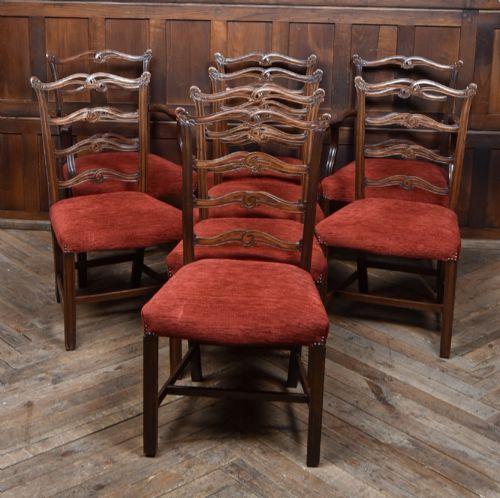
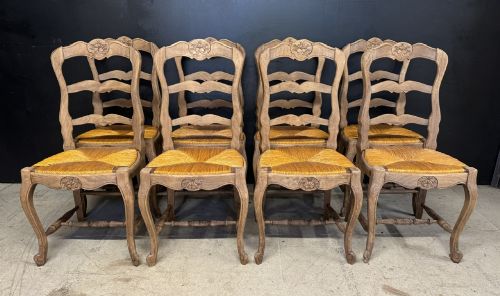
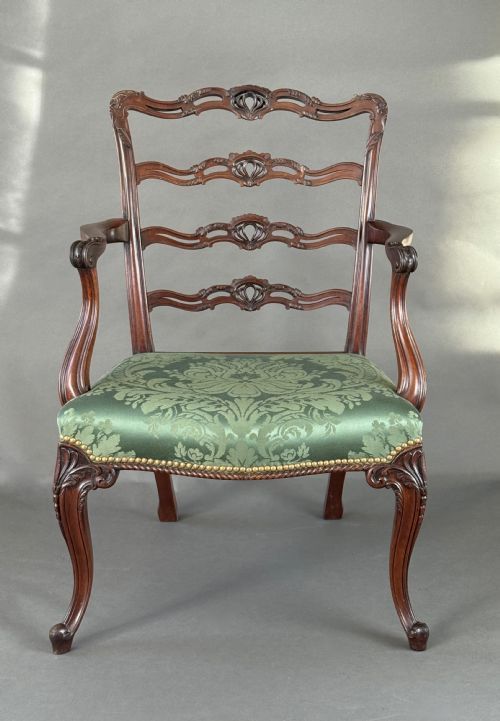
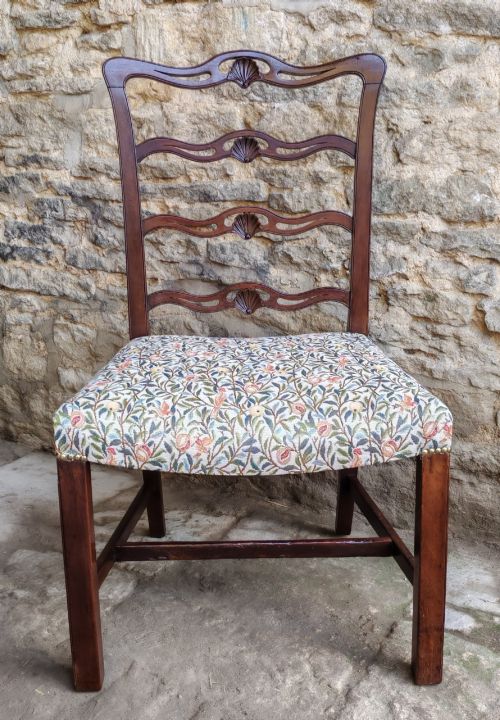
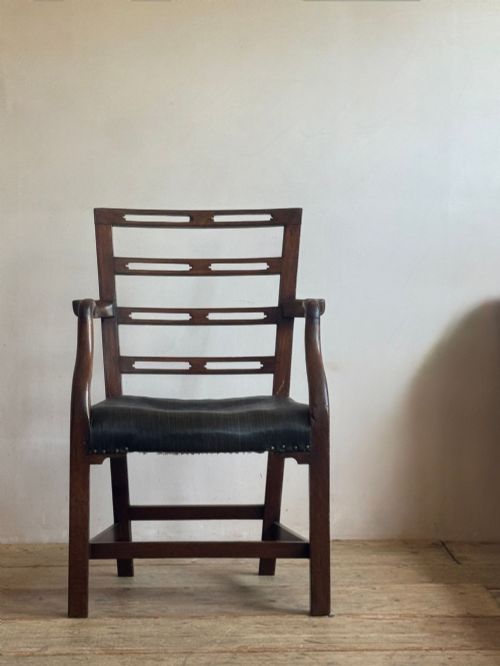


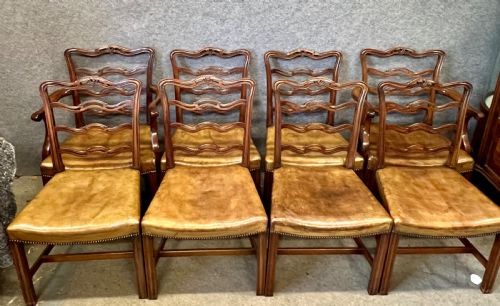


Carved Ladderback Dining Chair
These carved ladderback dining chair examples bring practical rustic elegance to a room, offering sturdy seating built with traditional joinery.
Carved Ladderback Dining Chair
A carved ladderback dining chair provides sturdy seating through horizontal slats fitted between upright posts, often accented with hand carving along the crest rail or splats. Buyers searching for a carved ladderback dining chair will encounter single pieces as well as larger matched sets suitable for a main dining table.
The selections span multiple eras including the eighteenth and nineteenth centuries, along with later revival styles that mimic earlier craftsmanship. Formats vary from simple country side chairs to substantial armchairs and desk chairs equipped with rush or upholstered seats.
Origin points range from British workshops to French provincial makers and Irish ateliers, showing regional preferences in wood choice and ornamental detail. Oak and mahogany serve as the primary timbers, supporting both formal dining rooms and informal kitchens.
Materials and construction methods
Cabinetmakers utilised solid hardwoods like oak and mahogany to construct the frames, relying on mortise and tenon joinery for structural stability. These timbers endure heavy daily use while taking deep finishes that highlight the natural grain.
Seats incorporate woven rush or drop-in pads covered in leather, velvet, fabric, or tapestry, fastened securely to the wooden rails. Metal elements such as brass appear occasionally in hardware or castors, complementing the traditional woodwork.
Carved Ladderback Dining Chair Retail Price Guide 2026
Typical asking prices for carved ladderback dining chair among the pieces listed under this phrase on Sellingantiques today, from the lower quarter to the upper quarter. They describe what is for sale here now, not the wider market.
Listings feature periods from the eighteenth century through the Edwardian era, constructed from oak and mahogany with rush and fabric seats.
Quality factors in construction and design
Superior examples display crisp, hand-carved detailing on the ladder rails and crests rather than flat or machine-moulded surfaces. The integrity of the frame depends on tight joints and seasoned timber that resists warping over decades of service.
Completeness of a matched set heavily influences desirability, particularly when sets reach six, eight, or ten chairs. The condition of original woven rush or period upholstery also dictates the refinement of the piece.
The Carved Ladderback Dining Chair Glossary
- Ladderback
- A chair design featuring horizontal slats or rails positioned between the upright rear posts, resembling the rungs of a ladder. This form dates back centuries and remains a staple of country and formal seating.
- Rush
- Dried marsh grass twisted into cords and hand-woven to form durable, textured chair seats. It provides a flexible yet supportive surface.
- Splat
- The vertical wooden strip down the centre of a chair back, sometimes carved or pierced in revival styles. It offers structural support while adding decorative interest.
- Armchair
- A seating piece fitted with side supports for the arms, often accompanying larger dining sets as carver chairs. They typically sit at the heads of dining tables.
- Crest rail
- The uppermost horizontal member of a chair back, frequently shaped or carved to define the style period. It receives the primary visual focus when viewed from the front.
Carved Ladderback Dining Chair: Frequently Asked Questions
How do I clean rush seats?
Clean woven rush seats gently using a soft brush or a slightly damp cloth to remove surface dust without soaking the natural fibres. Avoid harsh chemical cleaners that can dry out and weaken the plant material.
Allow the seat to dry completely in a well-ventilated area before sitting on it again. Regular gentle maintenance preserves the flexibility and strength of the weave.
Are these chairs comfortable for long dinners?
Most traditional dining chairs feature upright wooden backs and firm woven or upholstered pads designed for formal dining posture. Adding custom squab cushions can increase comfort during extended gatherings.
Armchair versions provide additional support through side rests, making them suitable for prolonged seating at the table.
How can I tell eighteenth century from later revival pieces?
Eighteenth-century examples typically display hand-tooled joinery marks, patinated timber surfaces, and specific regional construction traits unique to the period. Revival pieces made around nineteen hundred often utilise machine assistance and display uniform factory finishing.
Examine the underside and joints for tool marks and timber shrinkage that indicate genuine age.
Can I mix these with modern tables?
Mixing traditional timber seating with contemporary tables creates a striking contrast of textures and eras within a dining space. The warm tones of oak and mahogany complement modern glass, metal, or stone surfaces.
Ensure the seat heights align correctly with the underside clearance of the modern table.