



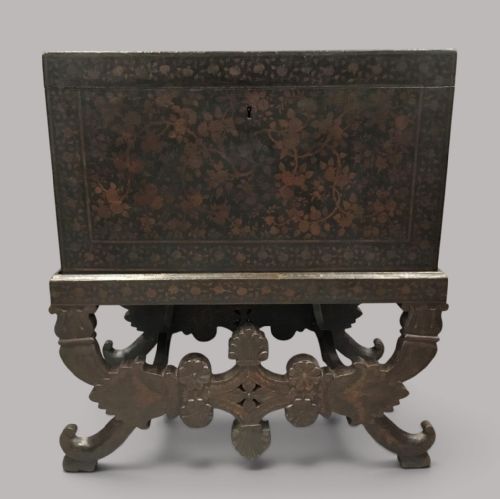


Carved Lacquer Coffer
A carved lacquer coffer brings rich surface depth and enduring utility to a room, offering tactile storytelling through layered Asian and export craftsmanship.
Carved Lacquer Coffer
A carved lacquer coffer combines heavy timber construction with detailed surface carving, typically presenting low-relief patterns built up through successive coats. These storage pieces appear across nineteenth-century Chinese export workshops and Anglo-Indian variants, bringing robust utility alongside decorative depth.
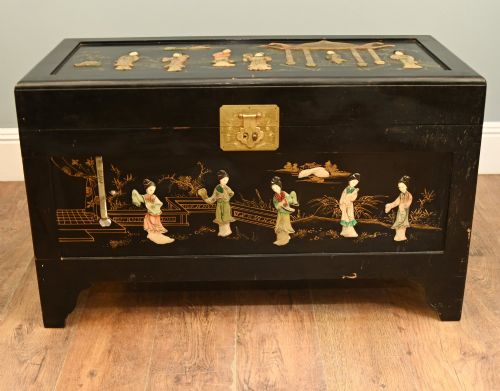
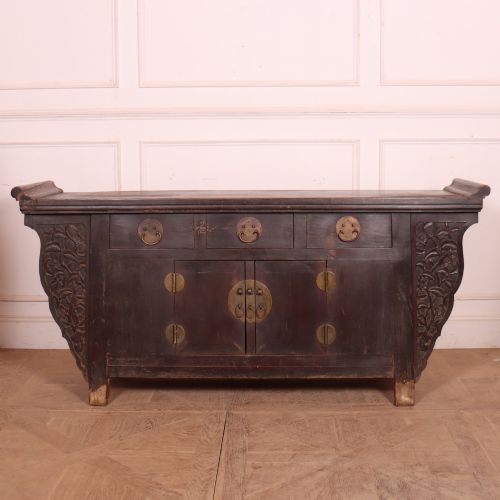
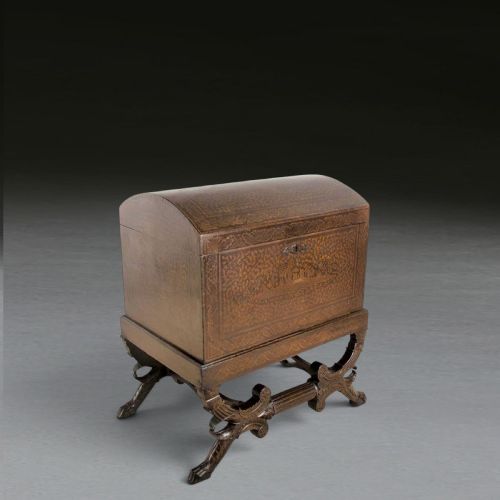
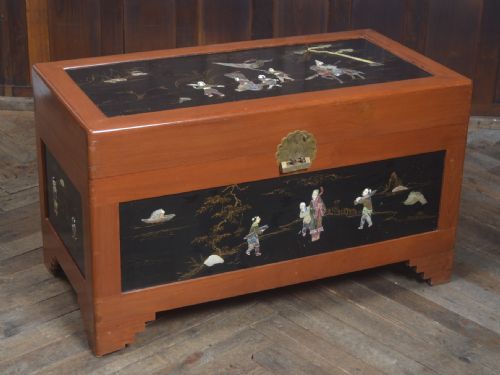
The versions most commonly met on this page include wedding storage boxes, blanket chests, and cabinets raised on stands. Elm, camphor wood, and general timber frameworks serve as the substrate for the lacquered and carved exteriors.
Geographic origins span Chinese regional and Qing dynasty traditions alongside Chinoiserie and Anglo-Indian interpretations. Buyers encounter variations ranging from compact trunks to monumental cupboards built for substantial storage.
Materials and construction methods
Construction relies on sturdy internal woods such as elm and camphor wood, chosen for their stability and resistance to warping. These timber frames receive multiple applications of red or black lacquer, building up the dense coating required for deep relief carving.
Surface ornamentation is achieved by carving directly into the hardened lacquer layers or by applying contrasting elements such as soapstone and brass fittings. Artisans shape floral, figurative, and geometric motifs into the material before it fully cures.
Carved Lacquer Coffer Retail Price Guide 2026
Typical asking prices for carved lacquer coffer among the pieces listed under this phrase on Sellingantiques today, from the lower quarter to the upper quarter. They describe what is for sale here now, not the wider market.
Listings feature nineteenth-century manufacturing dates alongside transitional pieces from nineteen hundred and nineteen twenty.
Assessing craftsmanship and depth
Quality rests in the thickness and stability of the lacquer layers, where finer examples display crisper relief and greater resistance to chipping. The depth of the carving and the precision of the underlying timber joinery separate standard utility boxes from superior decorative pieces.
The integrity of the structural wood beneath the lacquer, whether camphor wood or elm, dictates the longevity and weight of the coffer. Finer instances maintain cohesive mounts in brass and well-preserved surface finishes that retain their original sheen.
The Carved Lacquer Coffer Glossary
- Lacquer
- A durable resin derived from tree sap, applied in successive coats to wood and carved once cured. It provides a hard, lustrous finish that protects the timber beneath.
- Camphor wood
- An aromatic timber frequently utilised in nineteenth-century chests and trunks. Its natural scent acts as a deterrent to insects, preserving stored textiles.
- Chinoiserie
- European interpretations of Chinese artistic traditions, popular in decorative furnishings and export pieces. It mimics Asian motifs through Western manufacturing techniques.
- Qing Dynasty
- The final imperial dynasty of China, spanning from the seventeenth to the early twentieth century. Pieces from this era often feature traditional motifs and regional stylistic variations.
- Soapstone
- A soft, talc-based mineral occasionally inlaid into carved surfaces to add colour and texture. It appears in relief work on various nineteenth-century export items.
Carved Lacquer Coffer: Frequently Asked Questions
What is a carved lacquer coffer used for?
These pieces functioned historically for storing garments, wedding goods, and valuable documents within traditional households. Today they serve equally well as prominent coffee tables, storage benches, or statement cabinets in contemporary interiors.
Their robust timber construction and lidded or cabinet designs allow them to conceal household clutter while adding texture and history to a living space.
How do I care for lacquer surfaces?
Protect the finish by keeping the piece away from direct sunlight, extreme temperature shifts, and excessive moisture. Dust gently with a dry, soft cloth and avoid chemical polishes that can degrade the resin.
Maintaining a stable indoor climate prevents the underlying wood from expanding, which protects the brittle lacquer layers from cracking or lifting.
How do I identify nineteenth-century pieces?
Examine the construction joints, timber types such as elm or camphor wood, and the hand-applied nature of the lacquer. Nineteenth-century examples often exhibit tool marks and material patination consistent with manual workshop production.
Stylistic cues, including regional Chinese designs and Anglo-Indian export characteristics, help place the piece within the broader nineteenth-century timeline.
Are these pieces waterproof?
Traditional lacquer creates a highly resilient and moisture-resistant surface, but these antiques are not entirely waterproof. Spills should be wiped away immediately to prevent liquid from seeping into unsealed joins or aged cracks.
Care must be taken around hinges and interior wood surfaces, which typically lack the protective resin coating found on the carved exterior.