

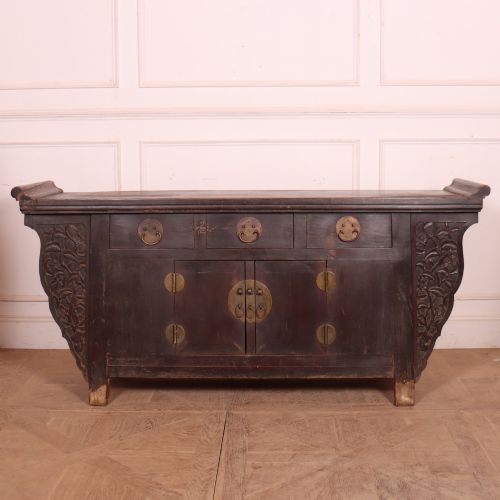


Carved Lacquer Cabinet
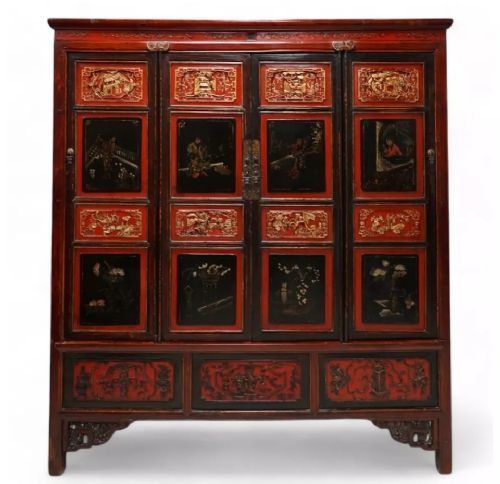
A carved lacquer cabinet brings tactile depth and rich surface ornament to a room, ranging from intricate Japanese shodanas to bold Chinese marriage cupboards.
Carved Lacquer Cabinet
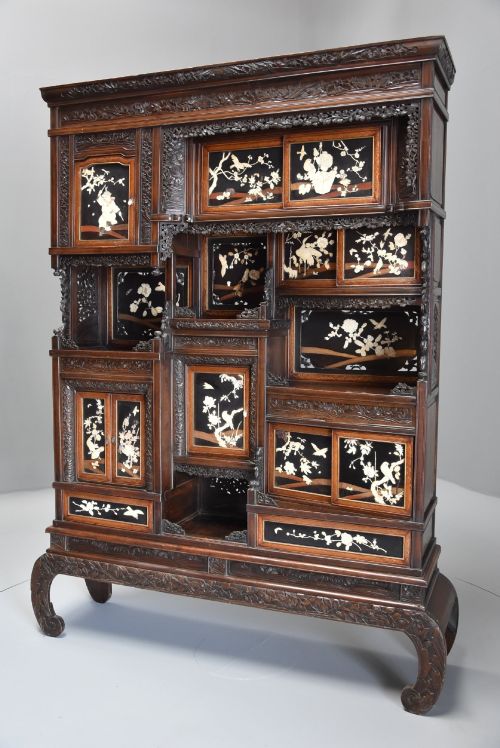
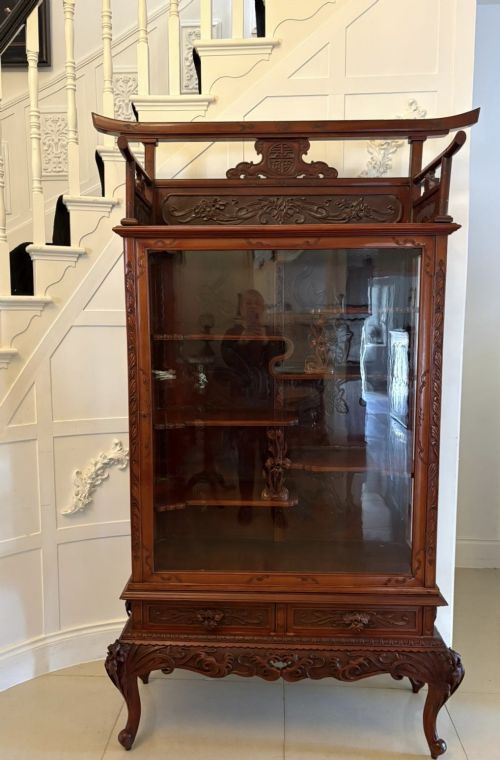
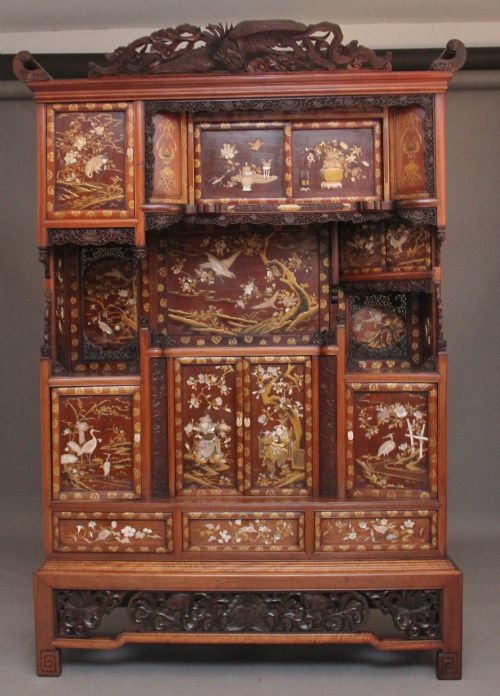
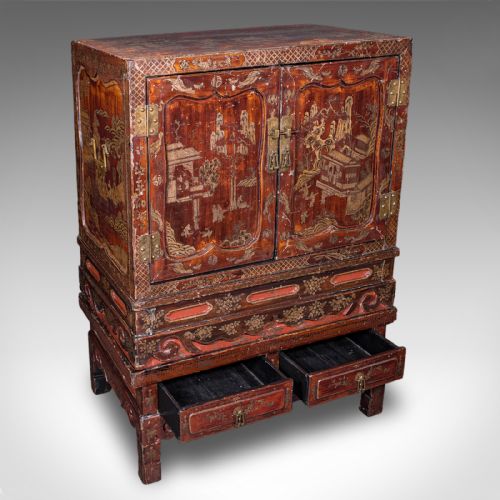
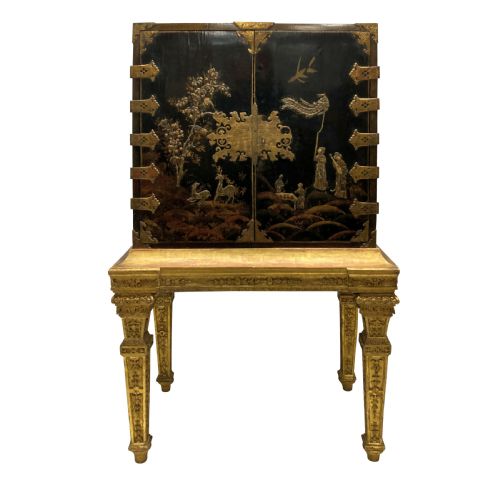
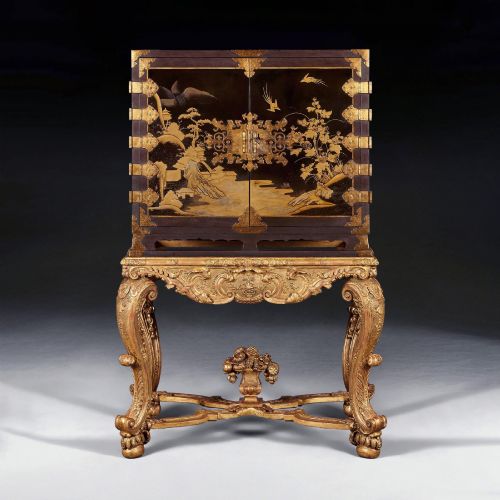
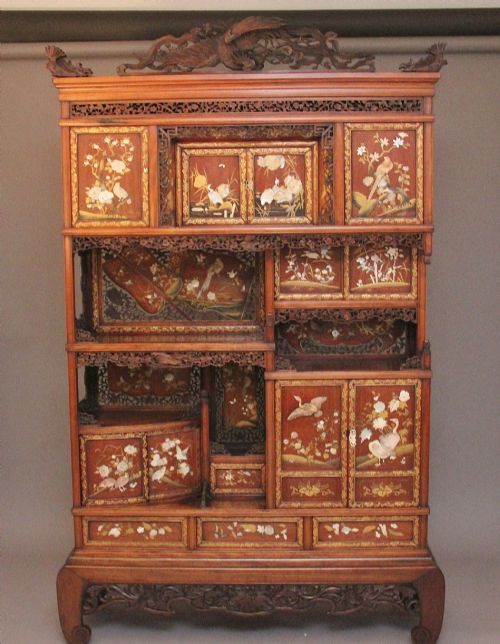
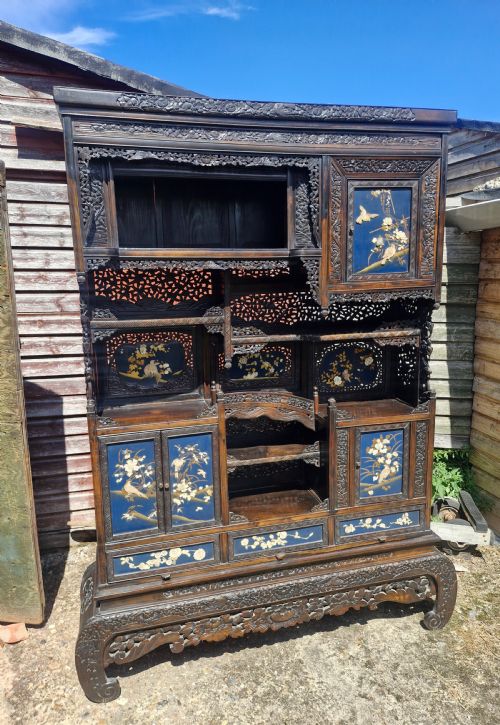
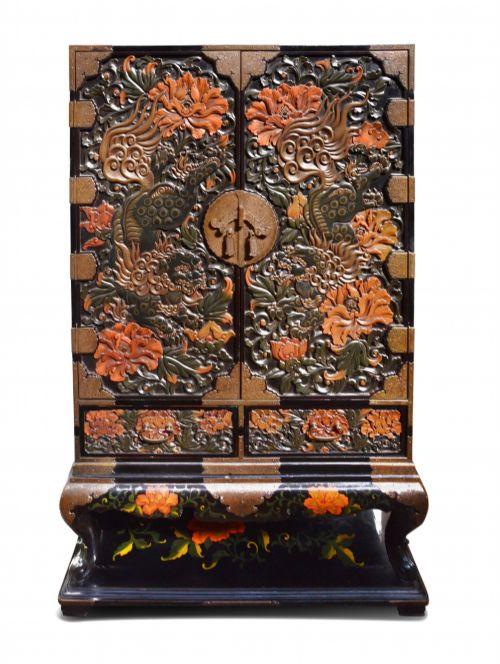
A carved lacquer cabinet is a storage piece or display unit coated in successive layers of resin that are carved with figurative or floral scenes once set. When you search for a carved lacquer cabinet, you encounter forms that span Chinese cupboards, Japanese shodana display units, and European pieces executed in Chinoiserie styles. These cabinets serve as focal points in interiors, offering enclosed shelving alongside intricate exterior carving.
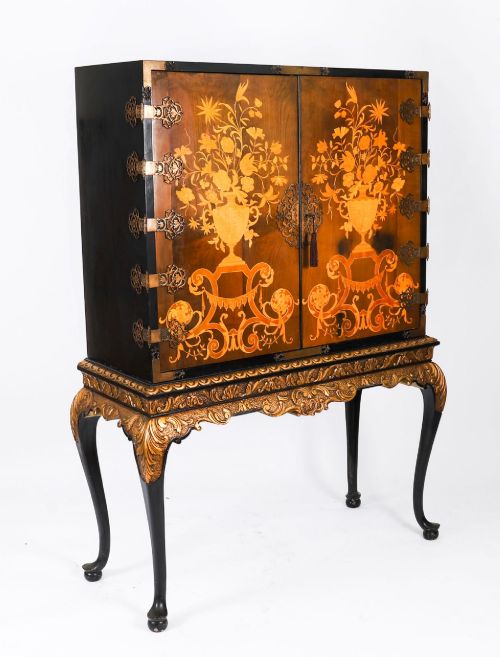
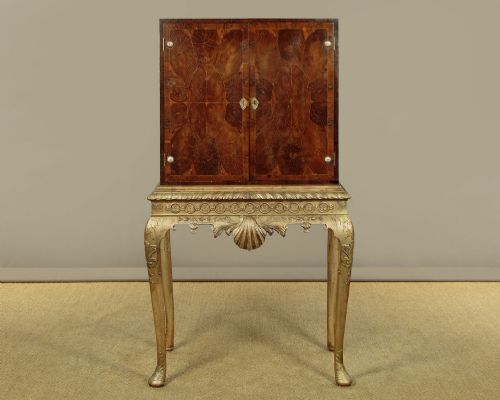
The pieces on this page originate from the seventeenth century through to the 1930s, encompassing Victorian examples and pieces from the Japanese Meiji period. Forms include small table cabinets, larger sideboards, and dramatic cabinets raised on stands carved from wood or giltwood. The construction typically integrates hardwoods or elm as a carcass to support the layered lacquer skin.
What varies in quality
The depth and precision of the carved lacquer define the upper tiers of quality, where figures and landscapes maintain sharp edges across multiple layers. Lesser examples display shallow, uniform carving with minimal relief, often losing the distinct dimensionality seen in finer Meiji period shodanas and seventeenth-century work.
The integrity of the underlying woodwork and the harmony between the cabinet and its stand heavily influence the piece. Cabinets that retain their original stands, whether silver-gilt, brass-mounted, or carved hardwood, demonstrate superior coherence compared to married pieces where stands are later replacements.
Carved Lacquer Cabinet Retail Price Guide 2026
Typical asking prices for carved lacquer cabinet among the pieces listed under this phrase on Sellingantiques today, from the lower quarter to the upper quarter. They describe what is for sale here now, not the wider market.
Listings feature cabinets spanning the 17th century to the 1930s, utilising lacquer, hardwood, elm, brass, mother of pearl, bone, and giltwood.
The Carved Lacquer Cabinet Glossary
- Shodana
- A Japanese tabletop or floor display cabinet featuring asymmetrical shelving, sliding doors, and carved decorative panels. These pieces were produced in large numbers during the Meiji period.
- Chinoiserie
- A European decorative style that imitates Chinese and East Asian artistic traditions, often applied to cabinets on stands during the seventeenth and twentieth centuries.
- Cinnabar lacquer
- A specific variety of carved lacquer utilising red mercuric sulphide pigment built up in thick layers. Artisans carve intricate pictorial motifs directly into this dense red material.
- Meiji period
- The era of Japanese history lasting from 1868 to 1912, associated with intricate craftsmanship in lacquer, shibayama inlay, and carved woodwork.
Carved Lacquer Cabinet: Frequently Asked Questions
How do I identify a cabinet on stand?
A cabinet on stand consists of an enclosed upper storage section resting on a separate supporting base. The base can range from simple wooden legs to elaborate giltwood frames.
This form elevates the decorative lacquer work to eye level and was popular in both seventeenth-century European and twentieth-century revival pieces.
What distinguishes cinnabar lacquer?
Cinnabar lacquer is made by applying numerous coats of red resin onto a core before carving deep patterns into the hardened surface. The resulting decoration shows rich tonal depth.
These pieces typically display dense floral or figurative motifs carved entirely in red.
Where were Chinoiserie cabinets made?
Chinoiserie cabinets were produced in Europe by craftsmen interpreting East Asian design motifs during revival periods such as the seventeenth century and the 1930s.
They combine European cabinet forms with japanning and lacquered surfaces inspired by imported Asian goods.