
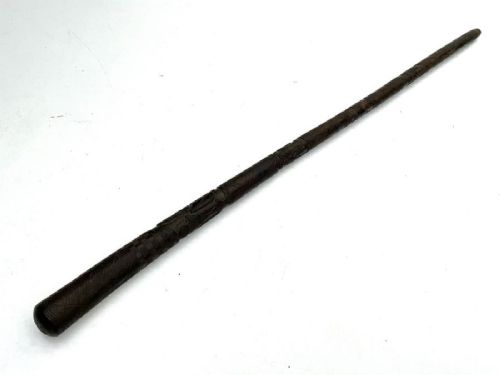




Carved Hardwood Weapon
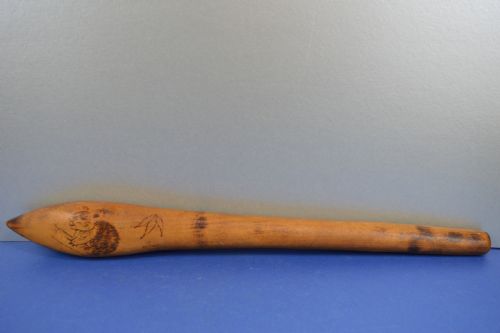
These carved hardwood weapon pieces are striking tribal artefacts and traditional implements shaped from dense timbers for combat, ceremony, and daily authority.
Carved Hardwood Weapon
A carved hardwood weapon encompasses traditional implements created across global indigenous cultures, primarily originating from the nineteenth century. Buyers searching this phrase encounter a rich mix of regional forms, including throwing clubs, war clubs, fighting sticks, ceremonial axes, and spear throwers.
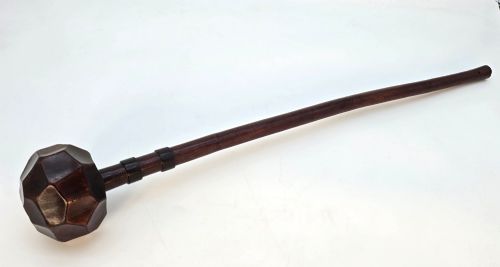
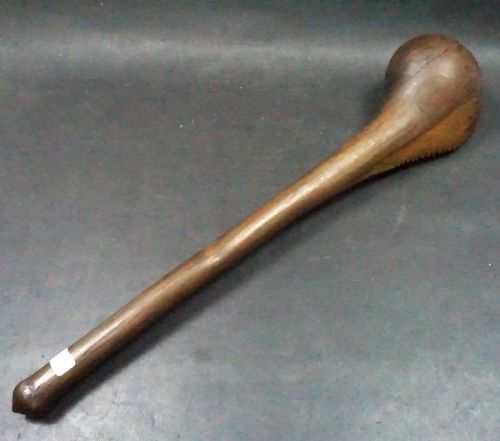
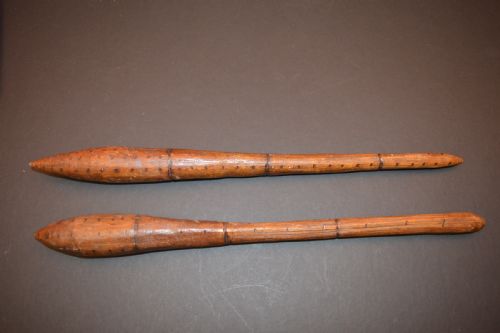
The pieces on this page span several distinct geographical and cultural traditions, featuring works from Australian Aboriginal, Oceanic, African, and Japanese makers. Among these, Australian Aboriginal nulla-nulla clubs and Southern African knobkerries appear frequently alongside Pacific island war clubs.
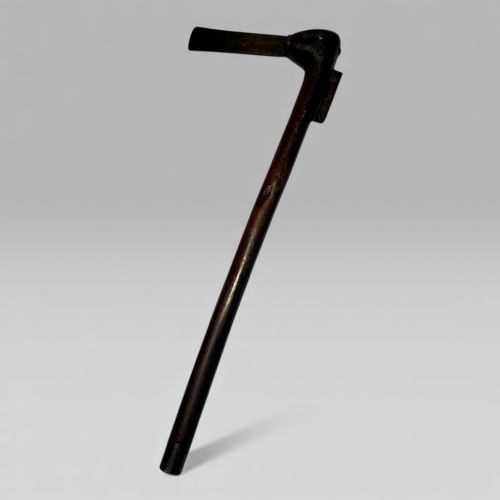
Many examples serve functional roles in combat or hunting, while others hold ceremonial significance, such as royal messengers' axes from Dahomey or intricately shaped paddle clubs from Polynesia. Each object reflects the specific martial or cultural requirements of the community that produced it.
Materials and construction methods
Maker communities relied on dense local timbers and indigenous hardwoods selected for weight and resilience in combat or ceremonial use. Craftsmen shaped these tough materials using traditional hand tools, carving intricate surface details, fluting, and ribbed patterns directly into the solid timber.
Certain objects incorporate supplementary elements such as plant fibre lashings, natural resin, and forged iron blades integrated into wooden shafts. The natural grain of the hardwood provides structural strength, finished through handling and patination over decades of use.
Current listings feature hardwood materials, plant fibre, and forged iron across items originating from the eighteenth and nineteenth centuries.
Assessing quality in traditional pieces
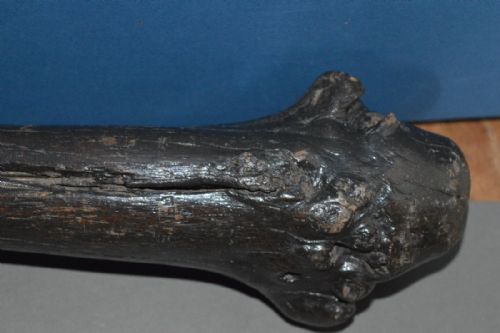
Superior quality in a carved hardwood weapon shows in the balance of the piece, the confidence of the hand-carved details, and the depth of the surface patination. Master carvers achieved precise symmetry and sculptural form that set functional combat pieces apart as works of art.
The historical integrity of the timber, alongside minimal modern intervention, distinguishes finer examples from heavily restored or altered items. Evidence of genuine tribal use and age adds significant weight to the visual and historical merit of each object.
The Carved Hardwood Weapon Glossary
- Knobkerrie
- A traditional Southern African wooden club featuring a heavy rounded knob at the end of a shaft. These were utilised for both hunting and warfare.
- Nulla-nulla
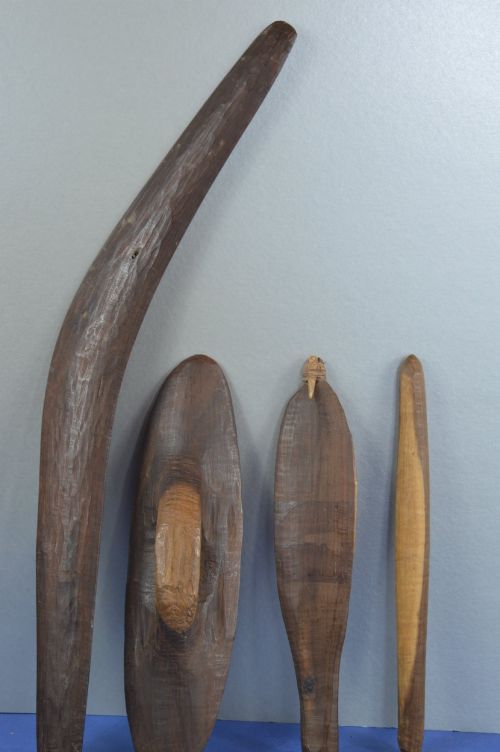
- An Australian Aboriginal wooden club or throwing stick used in close combat or for hunting game. They are carved from dense native hardwoods.
- Ula
- A Fijian throwing club characterised by a distinct bulbous head designed to be hurled at opponents in battle. Multiple examples demonstrate varied head profiling.
- Woomera
- An Australian Aboriginal spear-thrower that acts as a lever to increase the velocity and range of a thrown spear. These wooden implements often double as carrying vessels.
- Bokken
- A traditional Japanese wooden sword used for training in martial arts. They replicate the size and shape of a katana.
Carved Hardwood Weapon: Frequently Asked Questions
How do I care for a wooden club?
Keep the object away from direct heat sources and fluctuating humidity to prevent the hardwood from splitting.
Dust the surface gently with a dry, soft cloth and avoid applying modern polishes or oils.
Are these clubs functional?
These pieces were originally manufactured as genuine martial, hunting, or ceremonial implements by indigenous makers.
Today, they are collected and displayed as historical tribal art and ethnographic artefacts.
How can I tell the region of origin?
Regional identification relies on distinct forms, such as the rounded head of a Southern African knobkerrie or the ribbed shaft of a Polynesian paddle club.
Carving styles and specific wood types further point to particular cultures like Australian Aboriginal or Oceanic traditions.
What is the typical age of these pieces?
The majority of pieces date from the nineteenth century, with some examples reaching back into the late eighteenth century.
Age is determined through material patination, tool marks, and stylistic comparison with documented cultural artefacts.