






Carved Hardwood Shelves
These carved hardwood shelves bring intricate Asian and Anglo-Indian joinery into a room, offering display space with dense architectural detail.
Carved Hardwood Shelves
Carved hardwood shelves encompass an array of intricate wall brackets, open shelving units, and elaborate display cabinets rooted in nineteenth and early twentieth century traditions. When you search for carved hardwood shelves, you encounter pieces originating from Chinese, Japanese, and Anglo-Indian workshops that emphasise display and storage.
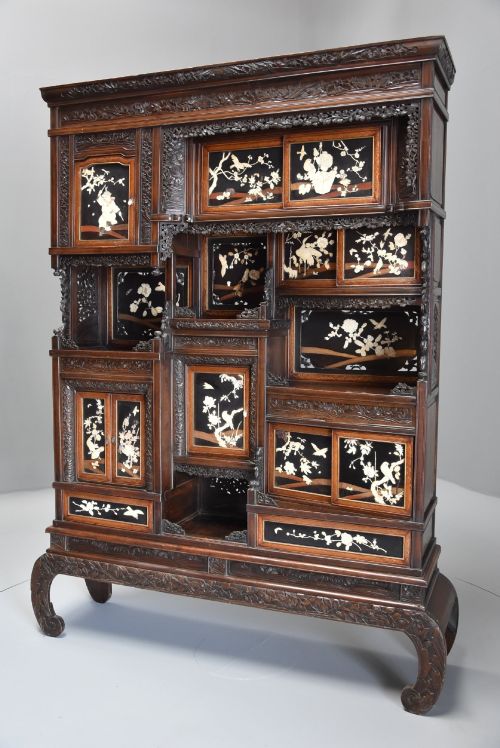
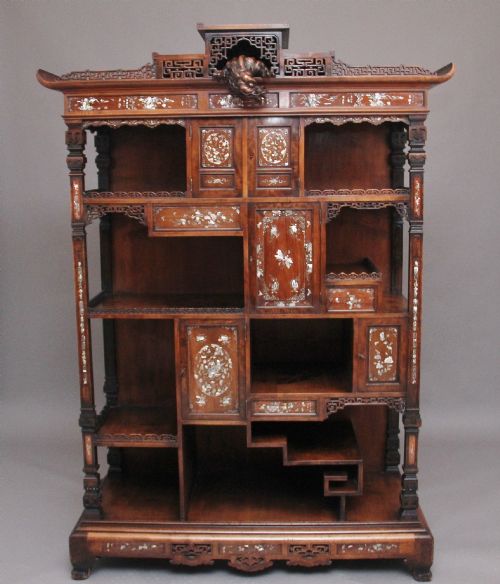
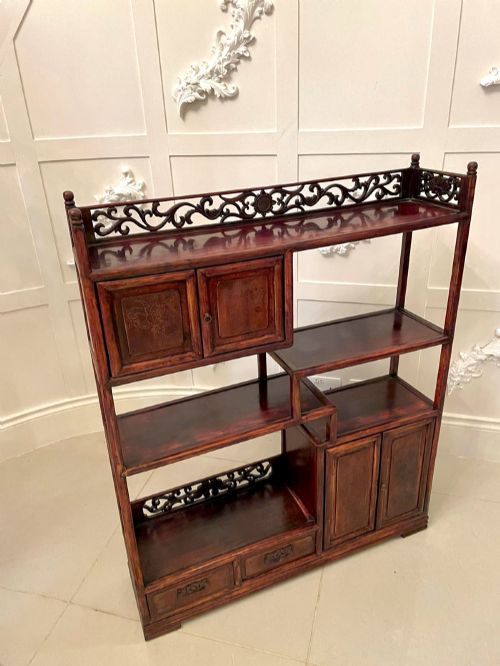
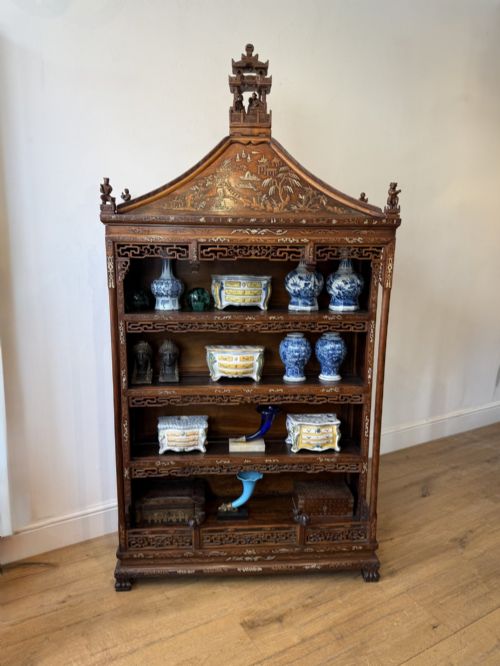
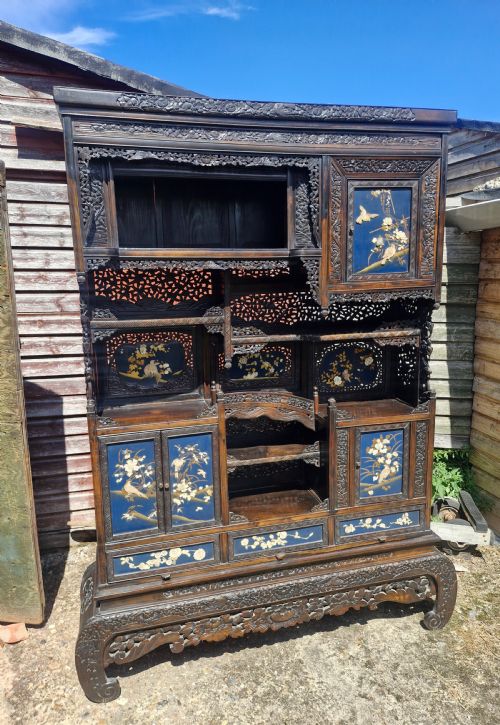
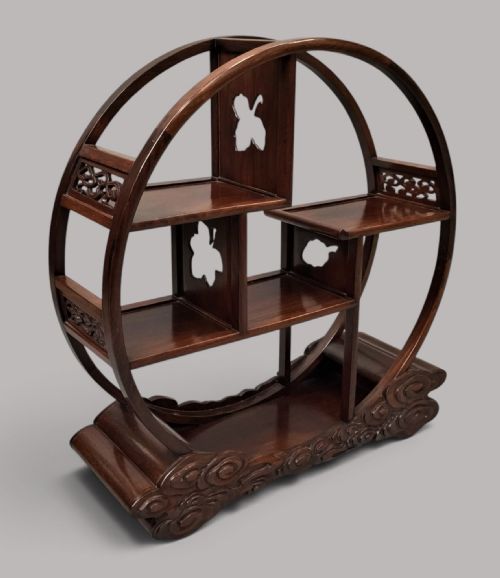
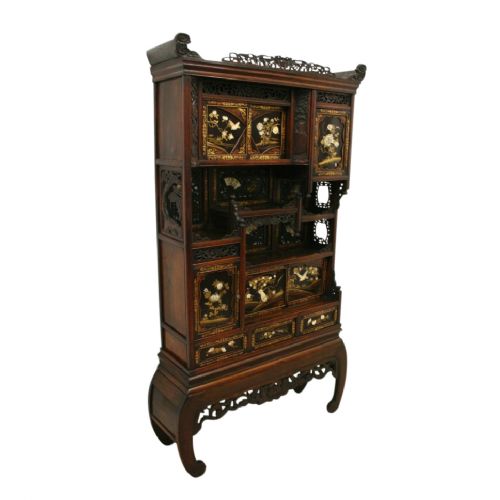
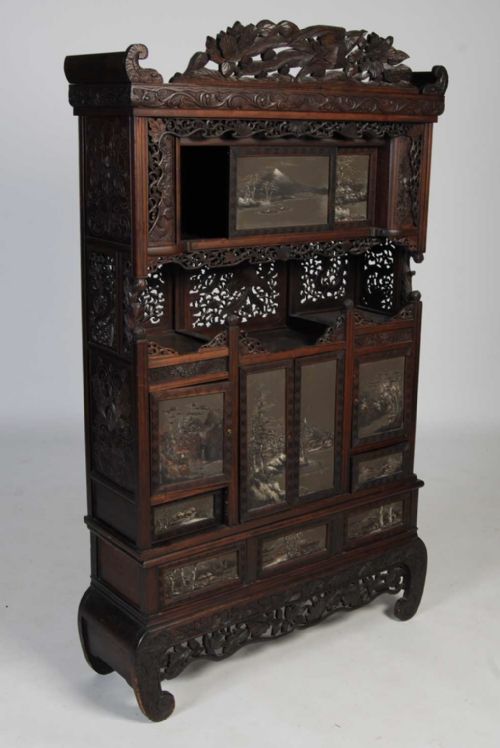
The pieces on this page lean heavily towards Japanese shodana cabinets, Chinese Hongmu open cabinets, and wall brackets from the nineteenth century. These forms vary from compact dwarf side-cabinets on stands to tall pagodas and floor clocks featuring dedicated display niches.
Originating across different Eastern and colonial contexts, these items reflect specific regional joinery methods, such as the asymmetrical layout of a Japanese shodana or the profuse carving seen on Chinese Qing Dynasty side-cabinets.
How they were made
Carpenters utilised dense timbers such as Hongmu, rosewood, and padauk to construct these robust shelving units and cabinets. These heavy hardwoods allowed artisans to carve deep, structural relief without compromising the integrity of the frame.
Decoration relied heavily on intricate hand-carving alongside detailed inlays of bone, mother-of-pearl, and contrasting woods. This combination of structural joinery and surface ornamentation produced the complex facades characteristic of the period.
Carved Hardwood Shelves Retail Price Guide 2026
Typical asking prices for carved hardwood shelves among the pieces listed under this phrase on Sellingantiques today, from the lower quarter to the upper quarter. They describe what is for sale here now, not the wider market.
Listings span the nineteenth and early twentieth centuries, featuring materials such as bone inlay, mother-of-pearl, rosewood, and Hongmu across various cabinet forms.
What varies in quality
The depth and clarity of the hand-carving set individual pieces apart, with superior items displaying crisp undercutting and well-defined motifs rather than shallow stamping. The precision of the joinery in complex assemblies like shodana cabinets also dictates the overall standard.
The choice of material heavily influences the calibre of a piece, with dense Hongmu and padauk achieving a finer finish than softer or substitute woods. Intricate detailing such as bone inlay and mother-of-pearl work further differentiates standard production from exceptional examples.
The Carved Hardwood Shelves Glossary
- Shodana
- A Japanese multi-tiered display cabinet featuring staggered shelves and compartments. These pieces are designed for exhibiting small art objects and curios.
- Hongmu
- A dense, dark Chinese hardwood frequently utilised for traditional furniture and display stands. It translates literally to red wood and holds a fine polish.
- Padauk
- A heavy tropical hardwood known for its strength and reddish tint. Anglo-Indian makers often selected this timber for substantial carved furniture.
- Meiji Period
- An era in Japanese history lasting from eighteen sixty-eight to nineteen twelve. Cabinets from this time embrace complex asymmetrical shelving and detailed motifs.
Carved Hardwood Shelves: Frequently Asked Questions
How do I style a shodana cabinet?
These multi-tiered Japanese cabinets work best when populated with small ceramics, bronzes, or glassware that complement the staggered shelving layout.
Keep the surrounding decor simple to allow the dense woodcarving and asymmetrical compartments to remain the focal point of the room.
What is the difference between open shelving and a shodana?
Open shelving provides direct, unobstructed access and visibility from all sides for books or decorative items.
A shodana typically incorporates enclosed cupboards, small drawers, and staggered display tiers behind a structured cabinet format.
How should I care for antique hardwood furniture?
Maintain a stable room temperature away from direct heat sources to prevent the dense hardwood from splitting or warping.
Dust regularly with a dry cloth and occasionally apply a neutral wax to preserve the natural lustre of the timber.
Can these cabinets support heavy objects?
The dense hardwoods used in these pieces, such as Hongmu and padauk, offer considerable structural strength for normal display purposes.
However, delicate wall brackets and intricate staggered shelves are best reserved for lighter decorative objects rather than heavy volumes.