
Carved Hardwood Furniture
These pieces of carved hardwood furniture bring dense regional ornament, rich timber tones and solid form into domestic spaces.
Carved Hardwood Furniture
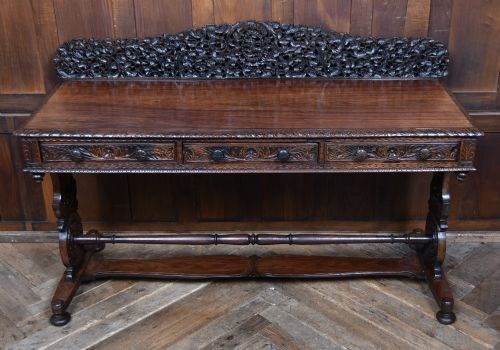
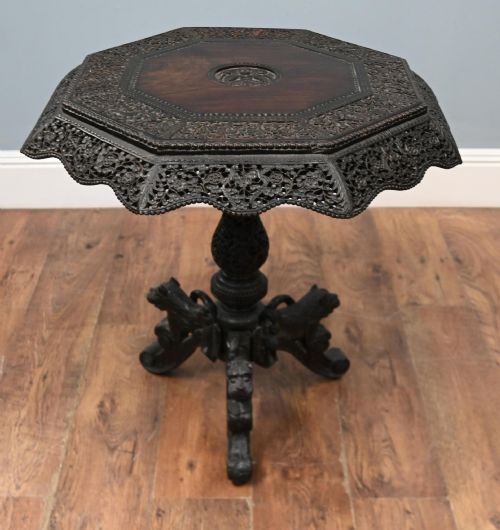
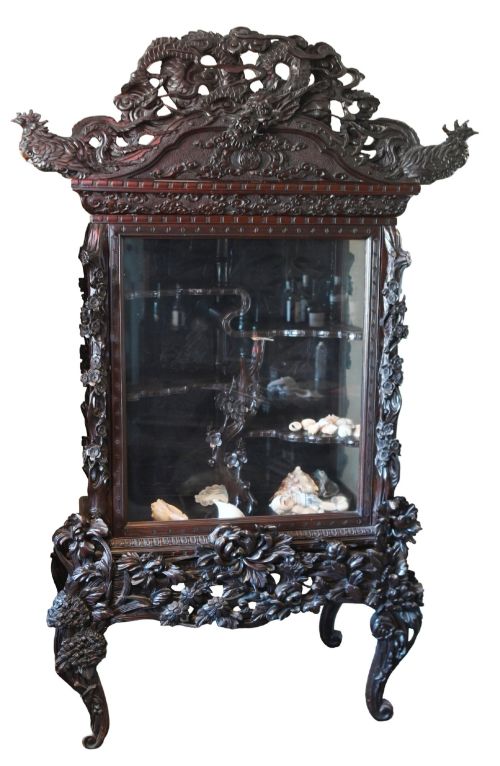
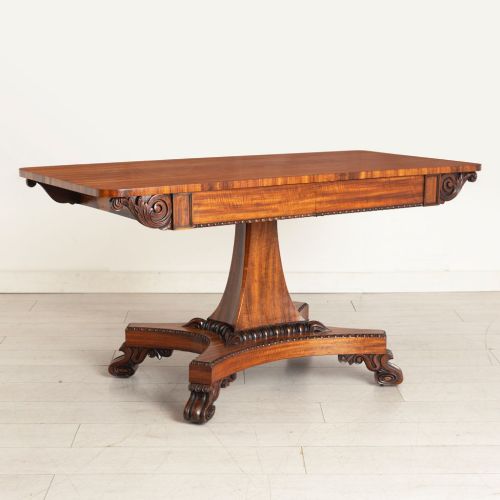
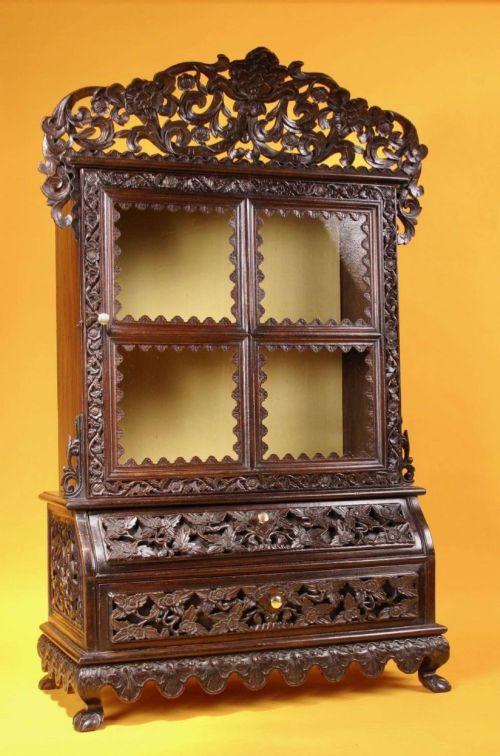
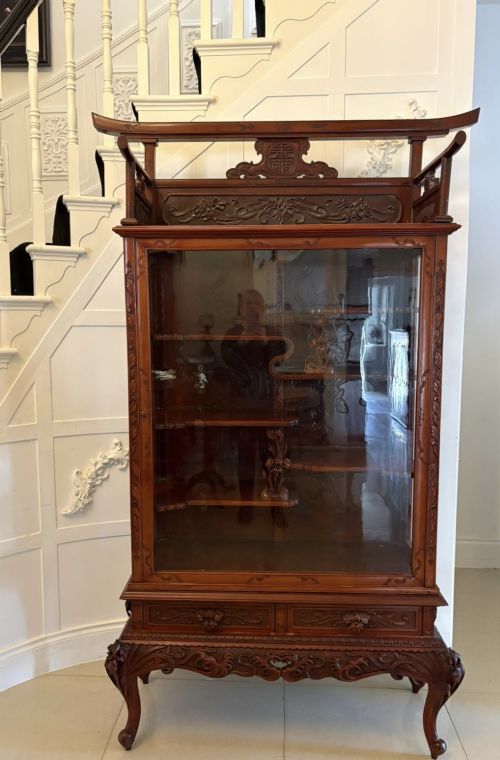
When searching for carved hardwood furniture, buyers encounter global workshops spanning the nineteenth and early twentieth centuries, including Anglo-Indian colonial production, Chinese Qing Dynasty pieces, and Japanese Meiji period works. Forms range widely from side tables, display cabinets and plant stands to armchairs, benches, console tables and library tables.
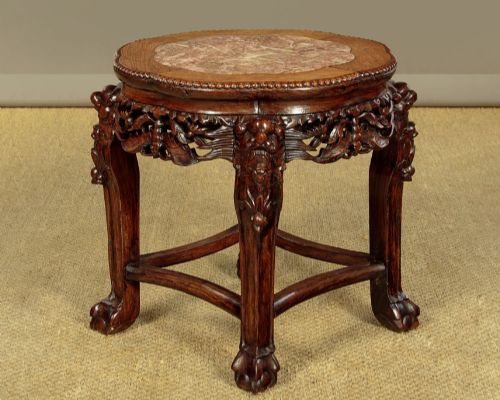
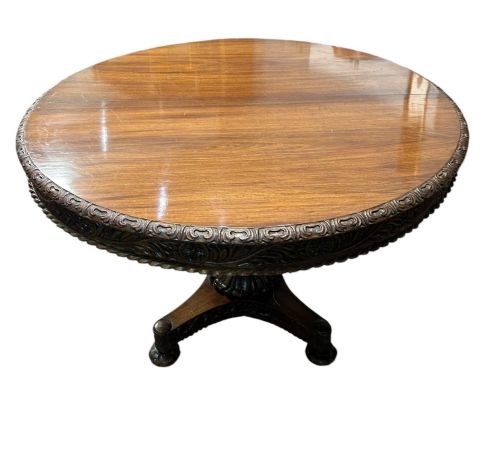
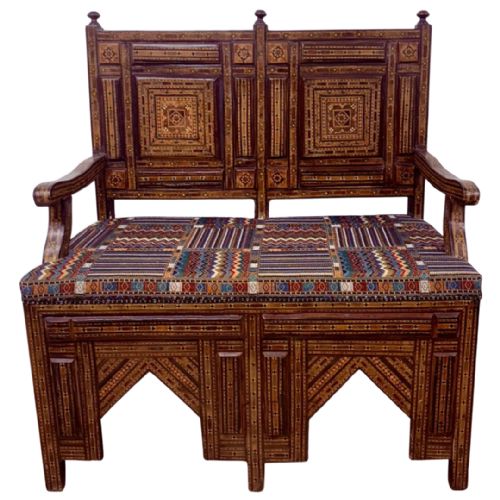
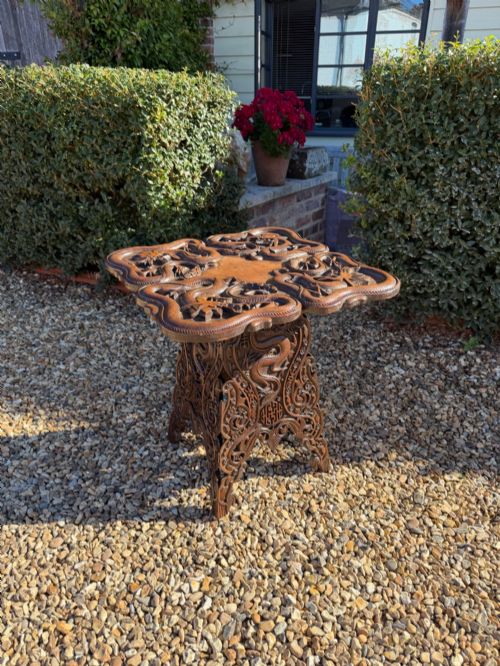
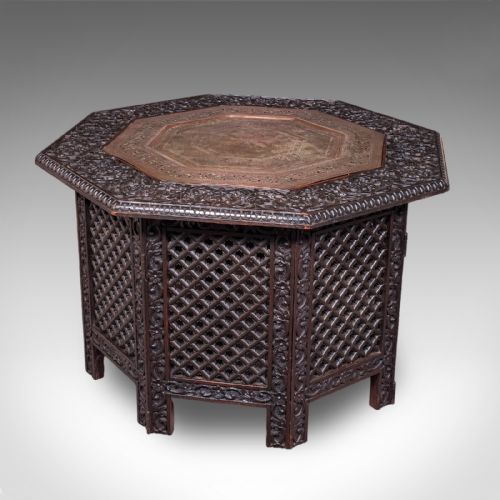
The most common examples on this page are nineteenth-century Chinese low tables, occasional tables and nests, alongside Burmese and Indian tables featuring deep relief carving. Syrian and North African benches, trunks and armchairs also appear, often incorporating inlay or leather work alongside the primary timber.
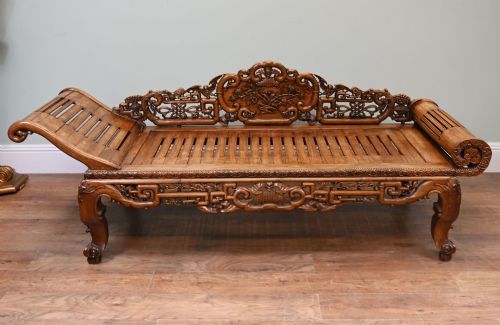
Originating across diverse cultural traditions, these items served varied daily functions, from scholarly altar tables and opium beds to colonial veranda tea tables and domestic display cabinets. Their survival reflects durable dense timbers shaped by regional craftspeople for both local use and export markets.
What varies in quality
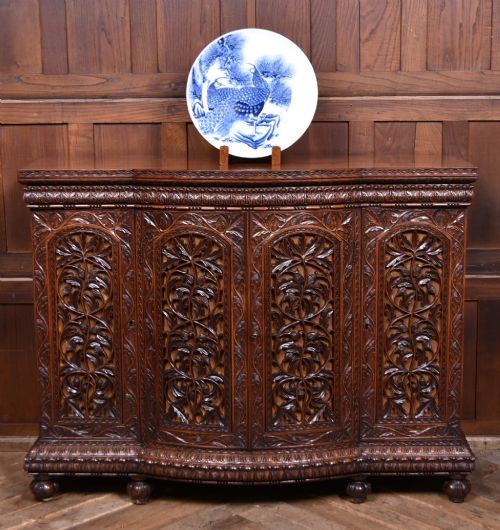
The standard of carving defines the upper tier of pieces, showing crisp undercut details, balanced composition and deep relief rather than shallow, mechanical scoring. Superior examples maintain symmetry and precision across intricate foliage or figural scenes without losing structural integrity.
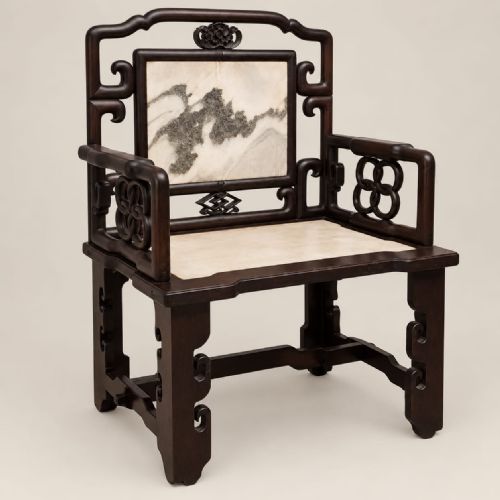
Material selection separates exceptional items from standard production, seen in the choice of heavy figured padouk or dense Hongmu rosewood alongside well-fitted marble tops and intact bone or mother-of-pearl inlay. Poorer examples utilise lighter secondary woods stained to imitate tropical timbers or display crude repairs to structural joints.
Integrity of construction and original surface patination determine desirability, with untouched timber surfaces commanding more interest than heavily stripped or over-polished instances. Complete sets, such as nests of tables or matching armchairs, demonstrate higher initial craftsmanship and better survival.
Listings feature items spanning the 18th century through to the 1930s, encompassing Victorian, Art Deco, and Meiji periods.
The Carved Hardwood Furniture Glossary
- Padouk
- A heavy, durable tropical hardwood with a reddish-brown colour that darkens with age. It is frequently found in nineteenth-century colonial and Chinese export furniture.
- Hongmu
- A traditional Chinese term translating to red wood, used to describe dense, dark hardwoods including various species of rosewood. It provides a heavy, stable ground for intricate carving.
- Shodona
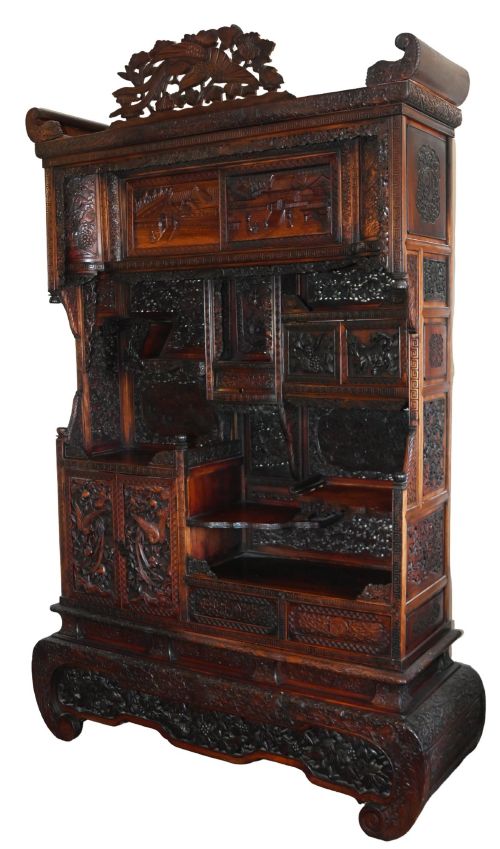
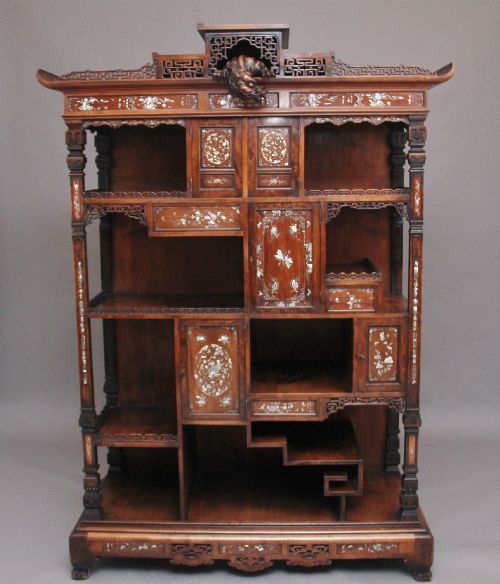
- A Japanese multi-tiered display cabinet featuring staggered shelves, cupboards and sliding doors, popular during the Meiji period. These pieces demonstrate complex joinery and decorative lacquer or carving.
- Altar table
- A traditional Chinese rectangular form featuring high ends or upturned flanges, originally designed for ritual use. In domestic settings, they function as substantial console or side tables.
- Benares
- A North Indian city known for brassware production, where tables were frequently constructed with folding wooden bases and hammered brass tray tops. They reflect nineteenth-century export tastes for intricate metalwork.
Carved Hardwood Furniture: Frequently Asked Questions
How do I date carved hardwood furniture?
Dating relies on combining stylistic markers, construction methods, and material choices recorded in the piece. Nineteenth-century examples often display deep regional carving styles associated with colonial trade or specific dynastic periods.
Examination of the underside and interior joinery reveals whether hand tools or early industrial machinery shaped the timber. Comparing the wear patterns and timber shrinkage with known historical production dates helps narrow the timeline.
How should I care for antique hardwood furniture?
Maintenance requires protecting the dense timber and delicate inlay from rapid humidity and temperature fluctuations. Regular dusting with a soft, dry cloth prevents particulate accumulation without introducing moisture.
Application of appropriate waxes should be minimal and infrequent to avoid building up a hazy film over the original polish. Keeping pieces away from direct heat sources prevents the timber from shrinking and loosening inlaid bone or mother-of-pearl.
Where were Anglo-Indian pieces made?
Anglo-Indian furniture was produced in various workshops across the Indian subcontinent during the nineteenth century, tailored specifically for British colonial residents and export markets. Regional centres developed distinct carving signatures, utilising local padouk, teak and ebony.
These items merge traditional European furniture forms, such as side tables and display cabinets, with dense Indian botanical and figural relief carving. The resulting pieces represent a direct synthesis of Eastern craftsmanship and Western domestic requirements.