







Carved Hardwood Club
These carved hardwood club examples are regional weapons and ceremonial objects crafted across global indigenous traditions.
Carved Hardwood Club
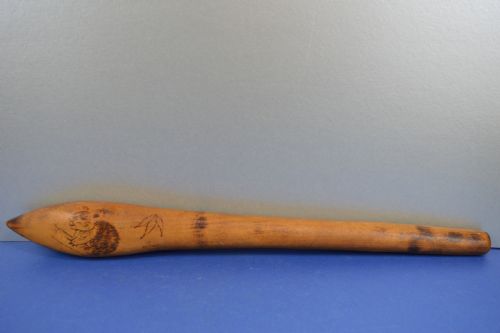
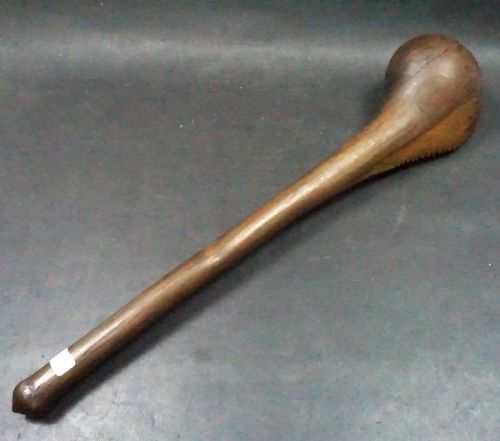
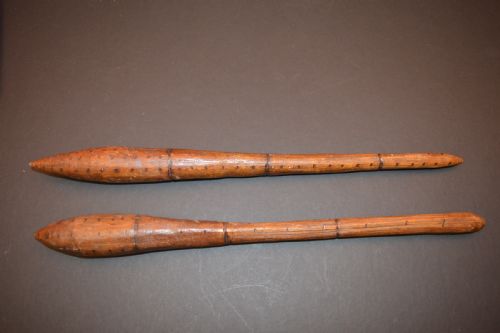
When you search for a carved hardwood club, you encounter ethnographic pieces originating from Oceanic, African, and Indigenous Australian cultures. These objects range from heavy throwing implements to ceremonial weapons made for combat or status.
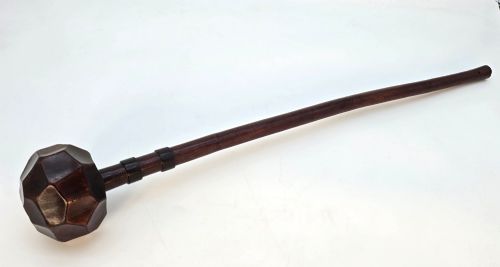
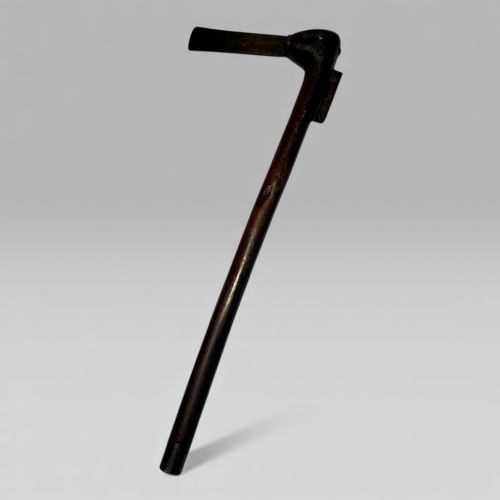
The pieces on this page span the eighteenth, nineteenth, and early twentieth centuries, reflecting diverse regional styles such as Zulu, Fijian, and Kanak craftsmanship. Forms include the traditional knobkerrie, the ribbed paddle club, and the gun stock war club.
Makers shaped these implements from dense native timbers, occasionally incorporating organic bindings, leather, or bone elements. Each region developed distinct profiles suited for specific utilitarian, ritual, or martial functions.
Materials and construction
Carvers selected dense indigenous hardwood varieties capable of withstanding heavy impact without splintering or fracturing during use. Artisans worked these tough timbers using traditional hand tools to shape functional heads and balanced shafts.
Many examples integrate supplementary materials like plant fibre bindings, leather wraps, or forged iron additions to reinforce structural integrity. Natural resin is also utilised across certain regional traditions to secure grips and components.
Carved Hardwood Club Retail Price Guide 2026
Typical asking prices for carved hardwood club among the pieces listed under this phrase on Sellingantiques today, from the lower quarter to the upper quarter. They describe what is for sale here now, not the wider market.
Some nineteenth-century throwing clubs feature distinct bird head motifs carved directly into the striking wood.
Assessing quality in carved hardwood club pieces
Quality rests in the precision of the carving, the symmetry of the form, and the density of the chosen timber. Superior examples display crisp surface decoration and balanced proportions that reflect the maker's mastery.
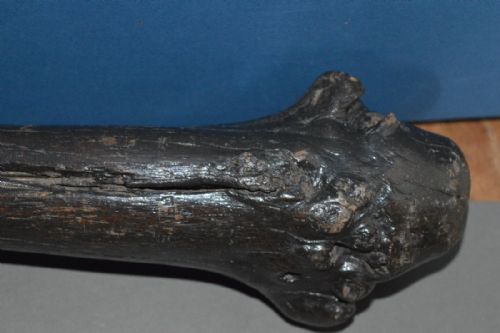
Condition and patina play a significant role in distinguishing fine items, particularly where handling wear reveals genuine age and native use. Intact bindings, original surface finishes, and clear regional characteristics elevate an artifact's integrity.
The Carved Hardwood Club Glossary
- Knobkerrie
- A traditional southern African wooden club featuring a heavy rounded knob at the end of the shaft. It served effectively as both a hunting weapon and a throwing implement.
- Nulla-nulla
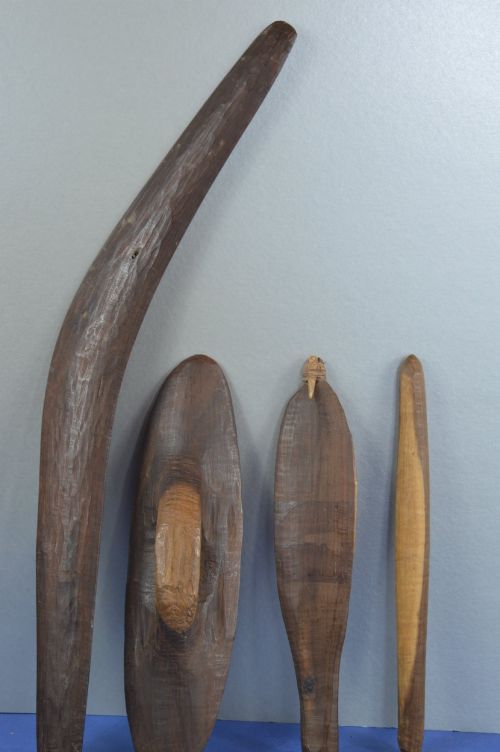
- An Australian Aboriginal wooden club utilised for hunting, combat, or settling disputes. These implements typically exhibit a curved or straight shaft terminating in a solid striking head.
- Ula
- A traditional throwing club originating from Fiji, distinguished by its heavily lobed or multi-pronged head. Warriors hurled these items at opponents during engagements.
- Gatawaka
- A specific Fijian war club form characterised by a curved head resembling a gun stock. This design evolved during periods of extended contact and local warfare.
- Ethnographic
- Pertaining to the scientific description of peoples and cultures. In this context, it classifies human-made artefacts created by indigenous and tribal societies.
Carved Hardwood Club: Frequently Asked Questions
How were Oceanic war clubs used?
Oceanic war clubs served as primary martial weapons for striking opponents during island warfare and tribal skirmishes. Specific forms were also carried as badges of rank by chiefs and warriors.
Their heavy construction and varied head shapes, from ribbed paddles to lobed striking ends, reflect the tactical preferences of different island groups.
How do I identify a Fijian ula?
A Fijian ula is recognised by its short handle and distinctively lobed or carved multi-pointed head designed for throwing. Warriors carried multiple versions tucked into belts.
The geometry of the head ensured a rotational throw that struck targets with significant force.
What woods were used for tribal clubs?
Maker communities relied upon indigenous hardwoods native to their specific geographical regions, including dense tropical timbers and African varieties. These materials offered exceptional weight and tensile strength.
The natural density of the wood prevented the striking heads from shattering upon impact.
How should I display these artifacts?
Display these wooden artefacts away from direct sunlight and sudden humidity shifts to protect the integrity of the antique timber and organic bindings. Stable interior conditions prevent cracking.
Utilise secure mountings that support the weight of the object without putting stress on fragile areas.