

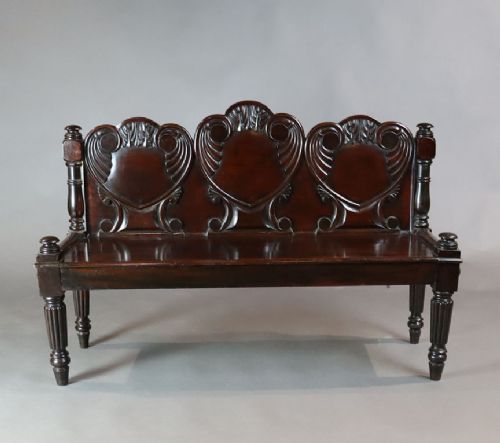
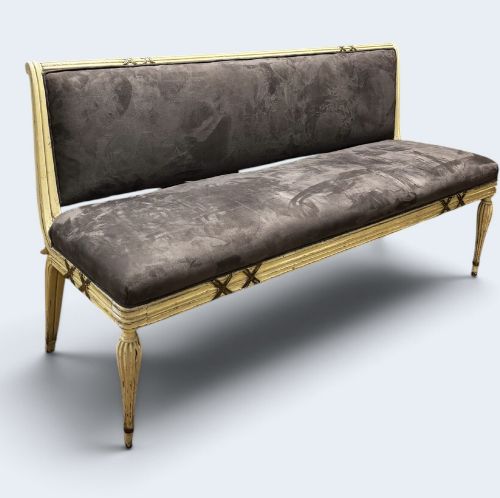
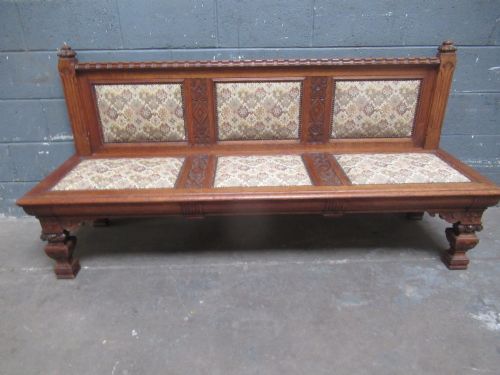
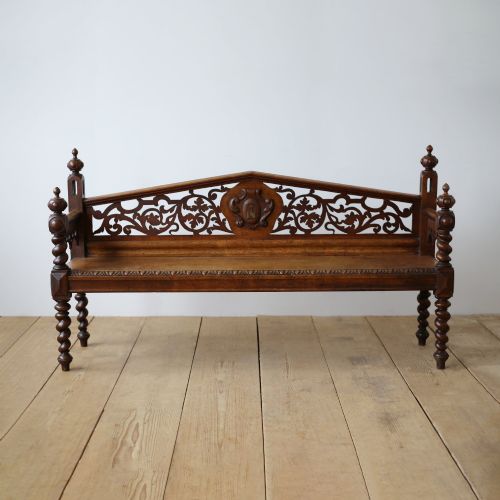
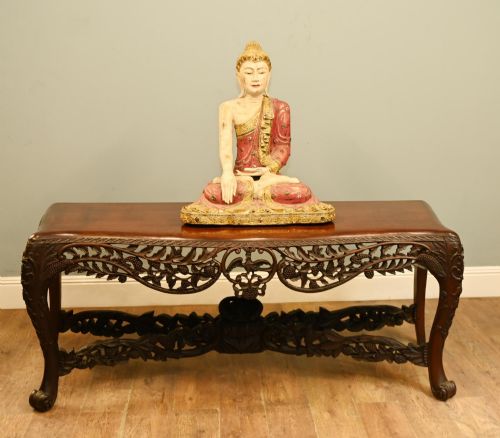
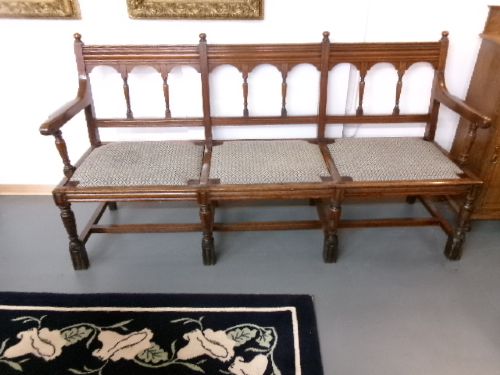
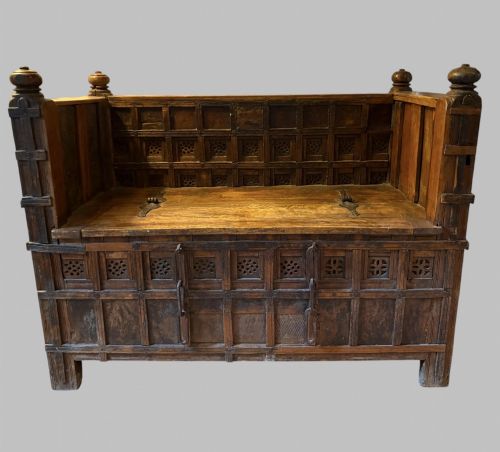
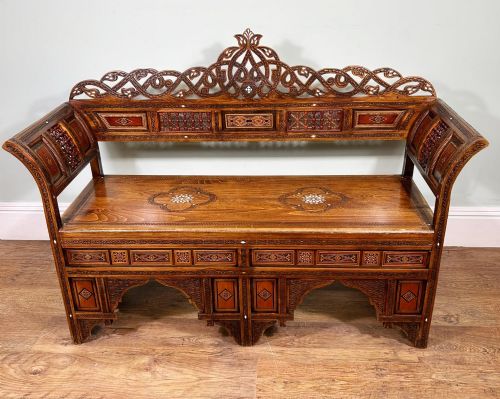
Carved Hallway Bench
A carved hallway bench offers a practical seat and architectural presence, drawing the eye immediately upon entering a home.
Carved Hallway Bench
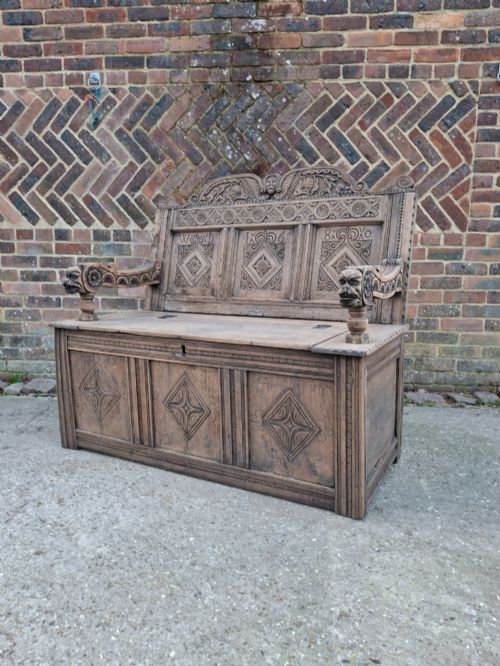
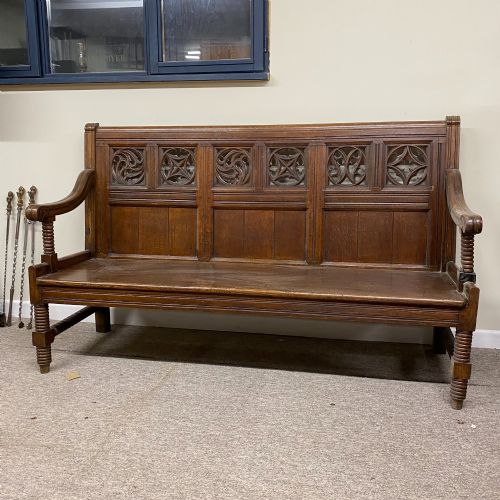
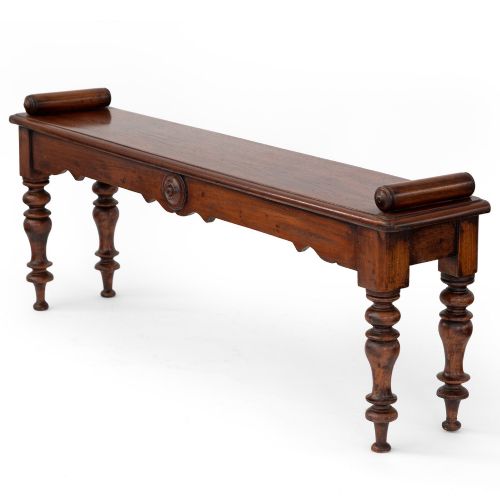
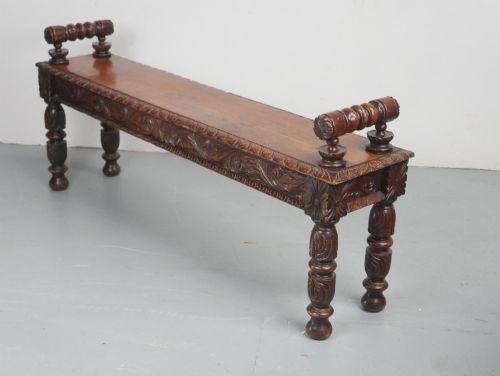
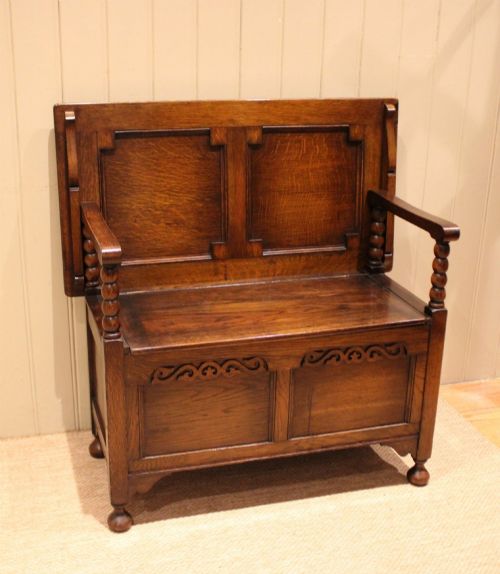
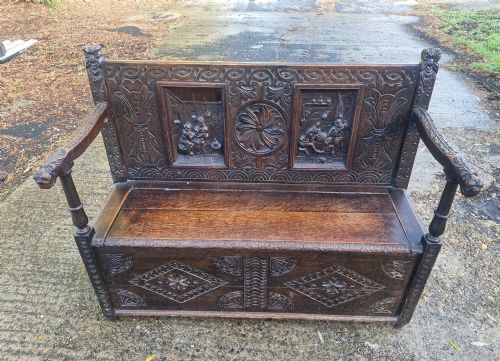
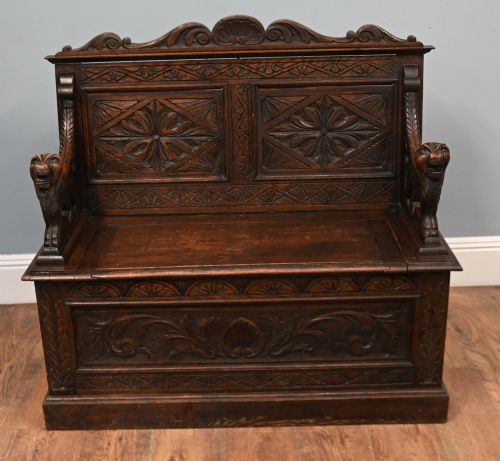
A carved hallway bench serves as both a functional seat and an imposing architectural statement for an entryway, mudroom or corridor. These pieces appear frequently in robust oak, mahogany and walnut, carrying styles from the Victorian and Edwardian eras down through Arts & Crafts and Jacobean Revival movements.
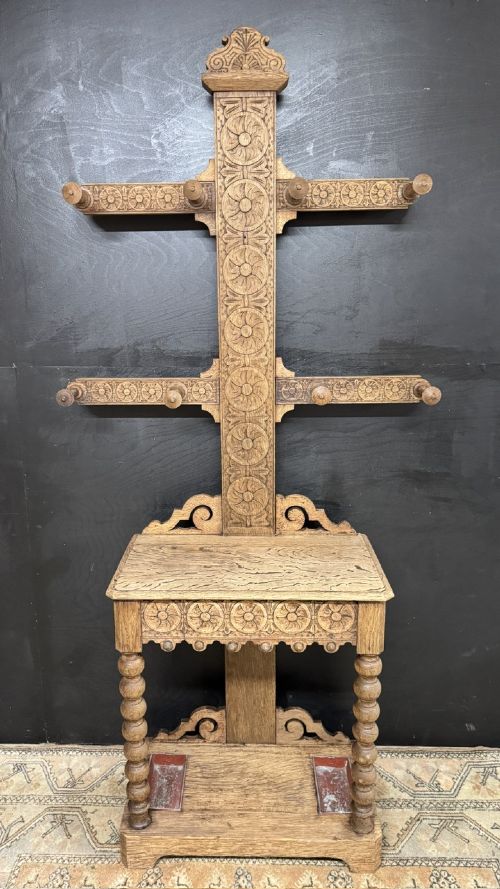
Most examples found on this page date from the nineteenth and early twentieth centuries, though earlier Georgian and eighteenth-century origins emerge periodically alongside Qing Dynasty hardwood consoles and Syrian inlay work. Forms range from simple settles with lift-up lids and integrated boot stores to substantial hall stands equipped with hat pegs and umbrella racks.
Buyers seeking a carved hallway bench typically encounter sturdy timber frames embellished with linenfold panels, geometric strapwork, or organic floral motifs. Certain variants incorporate hinged seats that conceal storage compartments for blankets and winter wear, while others combine low seating with vertical mirrors and brass coat hooks.
Materials and construction methods
Makers relied principally upon solid oak, mahogany and walnut for structural integrity, utilising dense hardwoods that withstand heavy daily use in busy corridors. Panels and decorative accents occasionally incorporate softer fruitwoods or exotic hardwoods, while supporting hardware employs cast brass and iron for hinges, hooks and umbrella wells.
Joinery methods reflect traditional cabinet-making practices such as mortise and tenon frames, panelled backs and hand-carved detailing executed directly into the timber. Surfaces received wax, polish or oil finishes that protected the wood while highlighting the natural grain and the depth of the chisel work.
Carved Hallway Bench Retail Price Guide 2026
Typical asking prices for carved hallway bench among the pieces listed under this phrase on Sellingantiques today, from the lower quarter to the upper quarter. They describe what is for sale here now, not the wider market.
Listings feature oak, mahogany, walnut, and hardwood across Victorian, Edwardian, and eighteenth-century periods.
Distinctions in craftsmanship and design
Quality rests upon the crispness of the hand-carved ornamentation and the selection of timber, where tightly figured grain distinguishes superior cabinet work from plain utility items. Heavier timber gauges, sophisticated joinery like pegged mortises, and integrated secondary functions such as stick stands or storage boxes elevate a piece.
The integrity of the structural frame and the retention of original hardware, including brass coat hooks and brass-mounted rails, separate standard utilitarian hall furniture from workshop-attributed or maker-stamped productions.
Gillows·James Shoolbred & Co.·Shapland & Petter·Liberty
The Carved Hallway Bench Glossary
- Settle
- A wooden bench with a high back, solid arms, and often a hinged seat concealing a storage box below. This form kept drafts away from occupants in older hallways.
- Hall stand
- A combined piece of furniture incorporating a bench seat, a back panel with coat hooks, a mirror, and umbrella stands at the base. It served multiple functional needs near the front door.
- Jacobean Revival
- A nineteenth-century design style emulating seventeenth-century English furniture through heavy geometric mouldings, strapwork, and deep panel carving. It imparts a dark, substantial aesthetic.
- Arts & Crafts
- A movement prioritising visible handcraftsmanship, sturdy construction, and simple or vernacular forms over machine-made ornamentation. Pieces in this manner celebrate honest timber and structural joinery.
- Inlay
- A decorative technique where contrasting materials such as lighter wood veneers, mother of pearl, or brass are inserted into recesses cut into the primary surface. It creates flat, ornamental patterns.
Carved Hallway Bench: Frequently Asked Questions
What is a carved hallway bench used for?
A carved hallway bench provides a firm seat for putting on footwear while welcoming visitors into a home. Many versions also incorporate storage compartments beneath the seat or integrated racks for coats and umbrellas.
Historically, these furnishings anchored the entrance hall of large country houses and town residences alike. They combined seating with practical organisation for outerwear before modern fitted wardrobes existed.
How do I tell Victorian from Edwardian hall benches?
Victorian hallway benches tend to feature heavier, darker timber with dense, deep relief carvings and imposing proportions. They often reflect revival styles like Gothic or Jacobean influences.
Edwardian pieces generally present lighter oak or mahogany with cleaner lines, occasionally featuring inlaid decoration or simpler Arts & Crafts styling. The overall visual weight is noticeably reduced compared to nineteenth-century examples.
Did hall benches always have storage?
Not all hall benches include storage, as many functioned purely as open seats or window-style benches. Those built with lift-up lids, box bases or blanket chest configurations were specifically designed to hold linens, boots or heavy wraps.
When evaluating a piece, look for the presence of original hinges and a divided interior compartment. Open frames without storage served strictly as seating and occasional luggage or hat stands.
How do I fit a hall bench into a modern interior?
A carved hallway bench anchors a contemporary entrance by introducing texture, historical warmth, and practical surface space. Pairing a dark oak or mahogany bench against neutral walls lets the carved details stand out.
In narrow corridors, select a neat model with a shallow depth or an integrated hat stand to maximise vertical space. The hidden storage within box settles also helps keep modern clutter out of sight.