
Carved Gothic Revival Seating
Carved gothic revival seating brings dramatic architectural forms and intricate ornamentation into domestic interiors through heavy timber and medieval motifs.
Carved Gothic Revival Seating
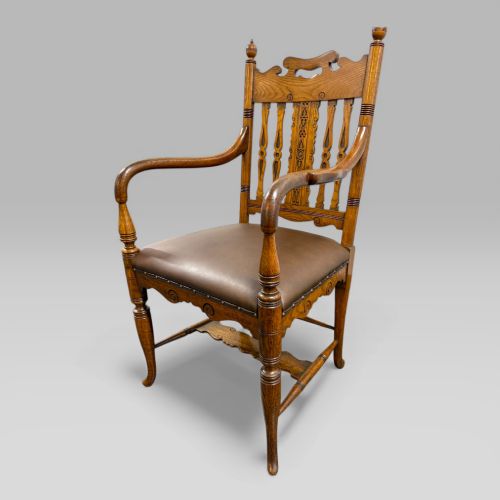
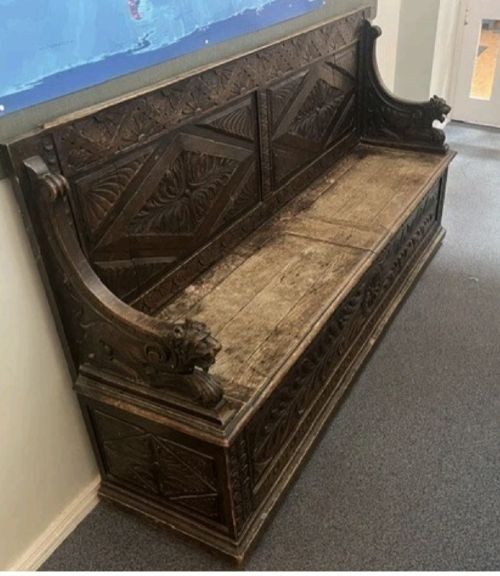
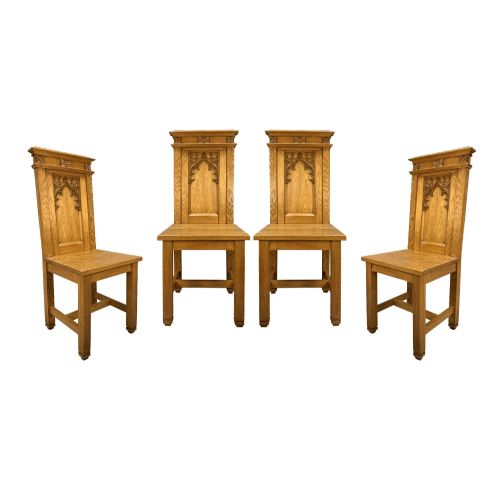
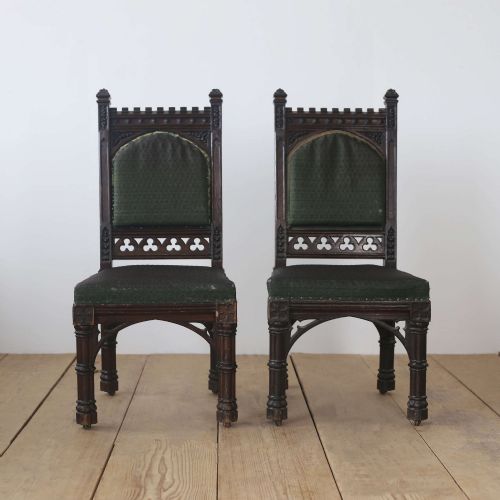
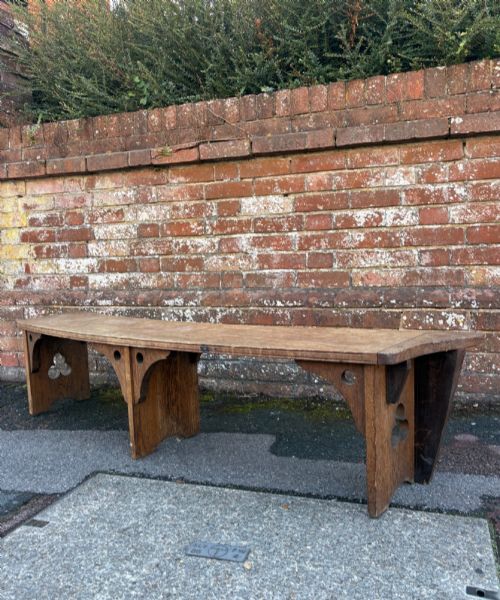
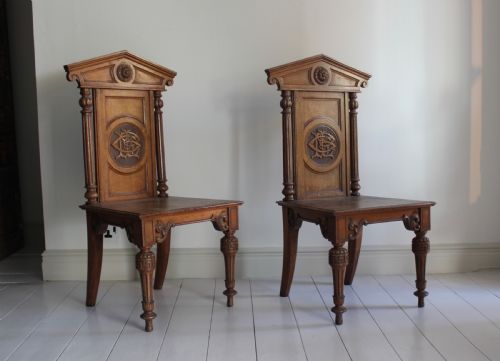
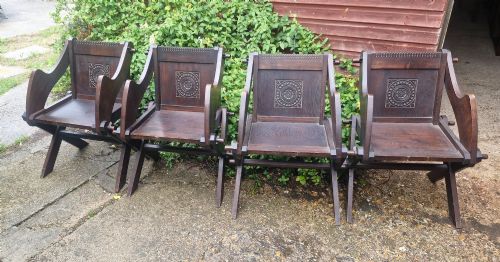
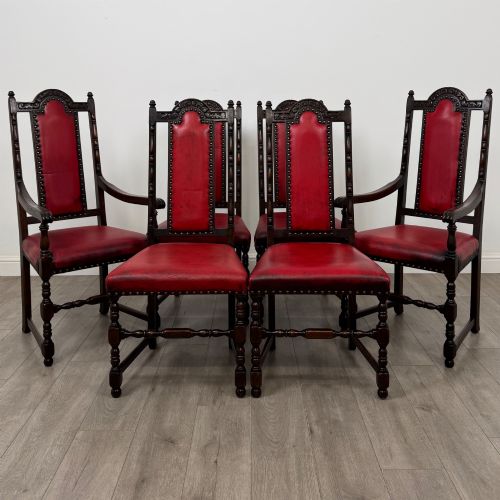
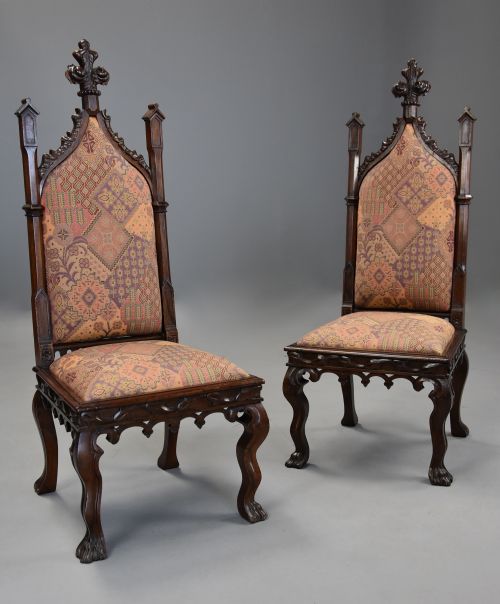
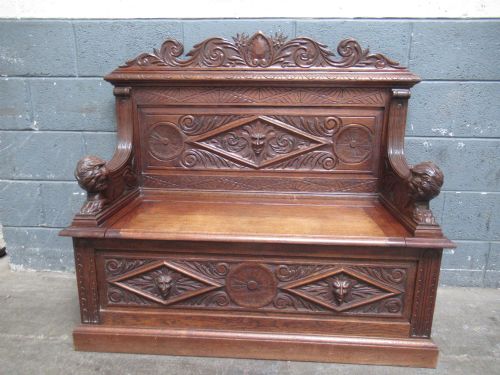
When you search for carved gothic revival seating, you encounter an array of heavy timber furnishings spanning the nineteenth century, including oak hall chairs, armchairs, benches, and dining chairs. These pieces draw heavily on medieval architectural vocabulary, displaying pointed arches, trefoil carvings, and high backs.
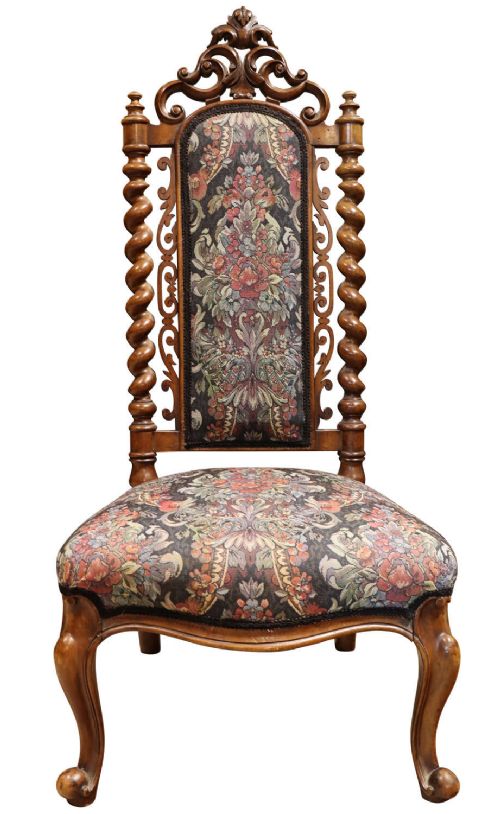
The selection here leans heavily towards nineteenth-century British and European production, featuring substantial oak framework alongside occasional rosewood and walnut examples. Pieces range from austere hall seating to upholstered reception chairs and generous benches.
Forms vary from sturdy Glastonbury chairs with cross-frames to monumental Scottish baronial stools and architectural hall benches. Makers often incorporated deep relief carving, linenfold panels, and heraldic details into the solid wood structures.
Materials and construction
Carpenters relied primarily on solid oak, walnut, and rosewood to construct these substantial chairs and benches, ensuring structural stability for deep relief carving. Timber selection determined both the weight of the piece and the crispness achievable with chisel work.
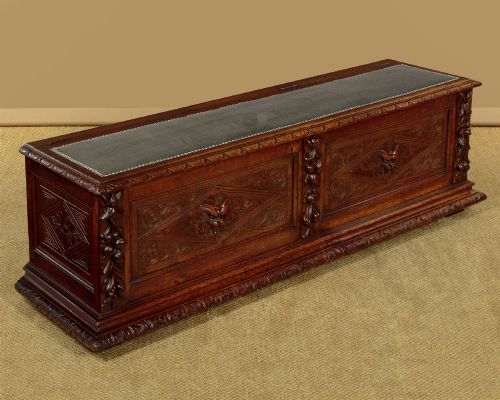
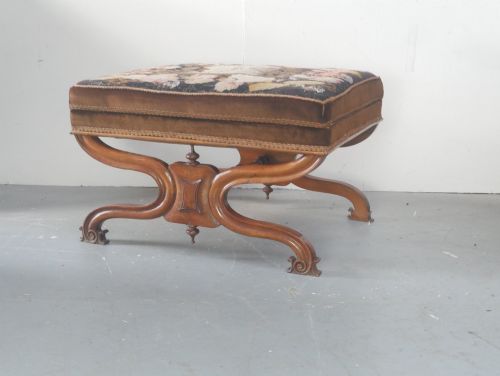
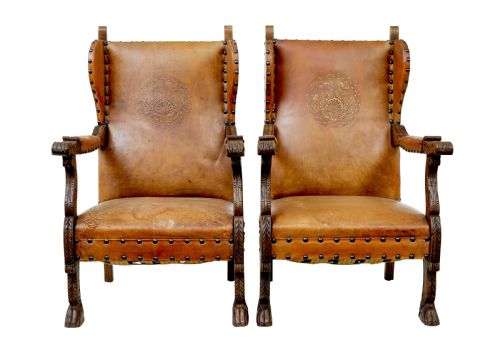
Upholstered variants combined the timber framework with applied fabric, tapestry, or embossed leather secured by brass tacks. Joinery techniques relied on traditional mortise and tenon joints to support the heavy loads demanded by architectural furniture.
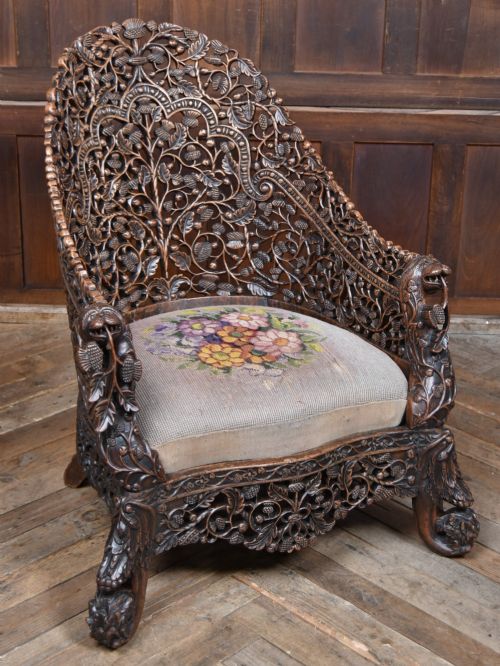
One unexpected nineteenth-century design even brings a Burmese thistle motif into the gothic seating mix.
Evaluating quality in revival seating
Quality rests upon the depth and precision of the hand carving, where crisp trefoils and sharp architectural mouldings distinguish superior workshop output from simpler production. The choice of timber grain and the integrity of the joinery dictate the longevity of the heavy framework.
Proportion and architectural coherence separate standard utilitarian hall seating from ambitious pieces designed by prominent cabinet makers. Original surfaces, unaltered patination on the timber, and authentic period upholstery materials elevate the standing of an individual chair or bench.
GIllows·Bruce James Talbert·W A Willcocks·Pugin
The Carved Gothic Revival Seating Glossary
- Glastonbury chair
- A portable cross-framed chair with a sloping back and panel seat, popular during the nineteenth-century revival. This form traces its lineage back to ecclesiastical designs.
- Trefoil
- A three-lobed ornamental design resembling a clover leaf, frequently pierced through chair splats and bench supports. It forms a cornerstone of gothic architectural detailing.
- Scottish Baronial
- A heavy architectural style employing robust proportions, crenellations, and fortress-like detailing. Stools and chairs in this idiom reflect nineteenth-century romanticism of historic castles.
- Hall chair
- A stiff, upright wooden seat designed for an entrance hall or corridor, often bearing a carved family crest or shield. These pieces prioritise architectural presence over cushioned comfort.
Carved Gothic Revival Seating: Frequently Asked Questions
How do I identify a gothic revival chair?
Look for distinct architectural elements such as pointed arched backrests, trefoil cutouts, and heavy tracery carved directly into the solid timber frame. These pieces often utilise dark oak and display strong vertical lines reminiscent of medieval cathedrals.
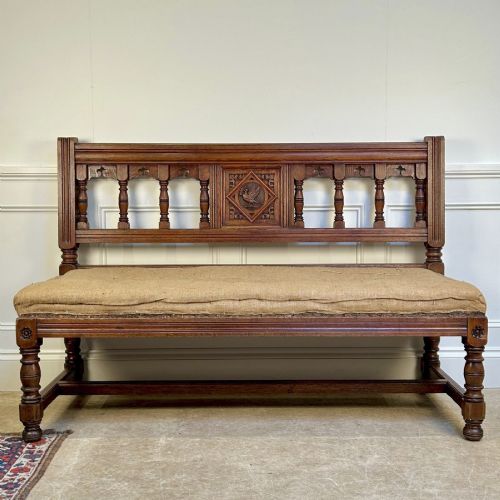
Proportions tend to be heavy and substantial compared to lighter domestic furniture of the same era. Many examples incorporate linenfold panels or chunky turned legs to reinforce the ecclesiastical aesthetic.
Were these chairs used in everyday dining?
While some sets served around large dining tables, many surviving examples functioned as occasional seating, library chairs, or decorative entrance hall furniture. High-backed variants were specifically built to make a formal visual statement rather than to provide lounging comfort.
Sturdier oak sets appearing in nineteenth-century homes were indeed pulled up to dining tables, whilst grander armchairs and benches remained stationed against hallway walls.
How should I care for antique oak seating?
Maintain the timber by applying a traditional beeswax sparingly to nourish the grain and preserve the historic patination built up over the centuries. Avoid placing heavy oak furniture near direct heat sources or in fluctuating humidity to prevent wood splitting.
Leather and tapestry elements require gentle dusting with a soft dry cloth. Keep upholstered surfaces protected from direct sunlight to prevent fading of the historic textiles.
How do I tell an 1850 piece from 1900?
Mid-nineteenth-century pieces often exhibit deeper, more meticulous hand carving and heavier structural proportions driven by the height of the gothic revival movement. Later examples from the turn of the century frequently integrate cleaner Arts and Crafts influences or lighter framing.
Tool marks, timber shrinkage, and the style of the upholstery backing provide further physical clues to narrow down the decade of manufacture.