

Carved Gothic Oak Cupboard
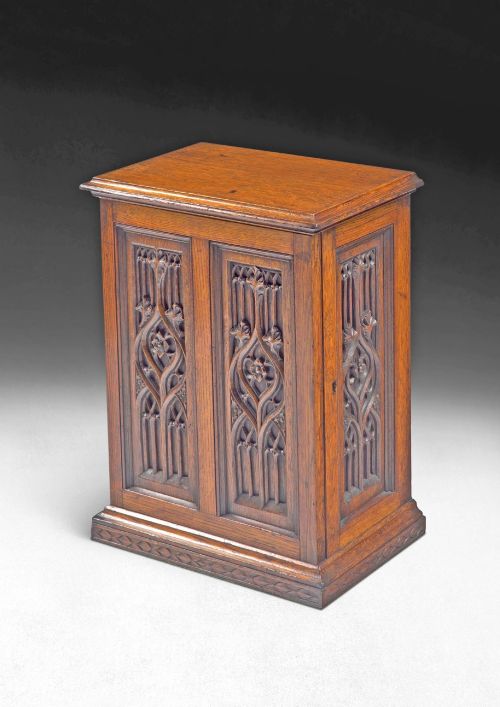
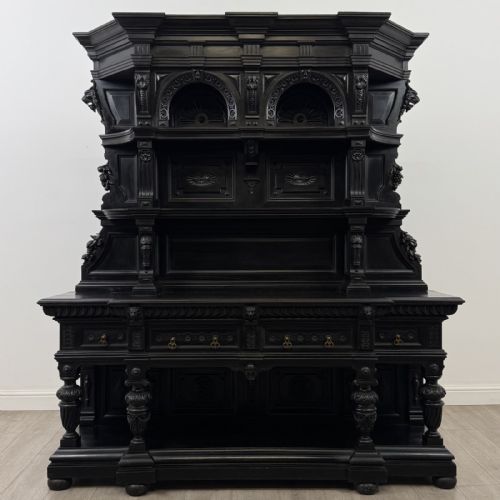
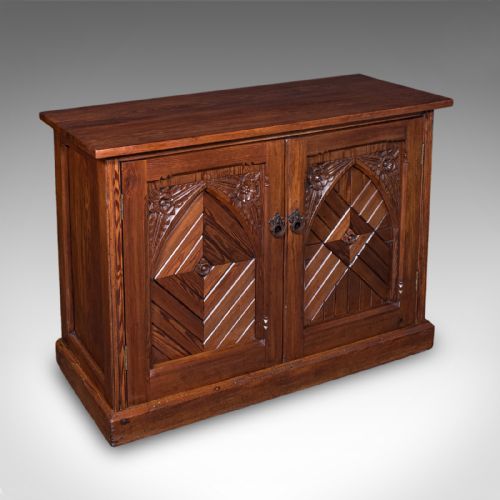
A carved gothic oak cupboard brings medieval presence and sturdy timber grain into a room through pointed arches and heavy relief carving.
Carved Gothic Oak Cupboard
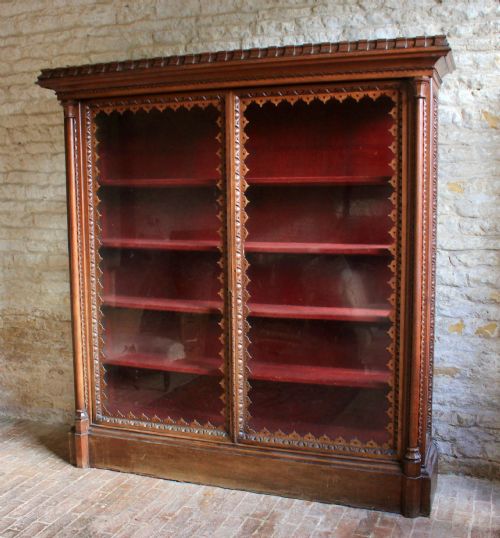
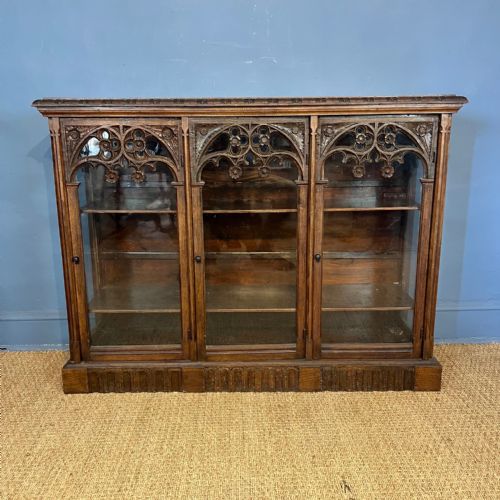
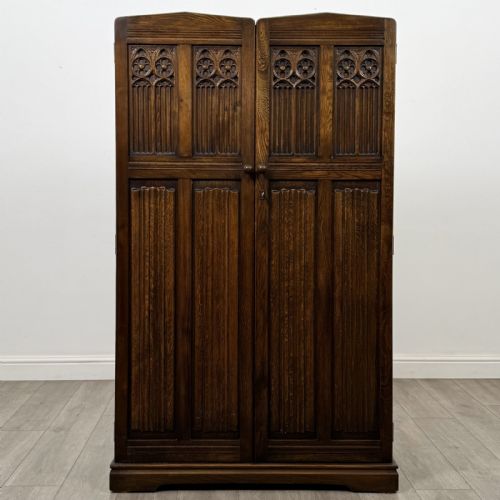
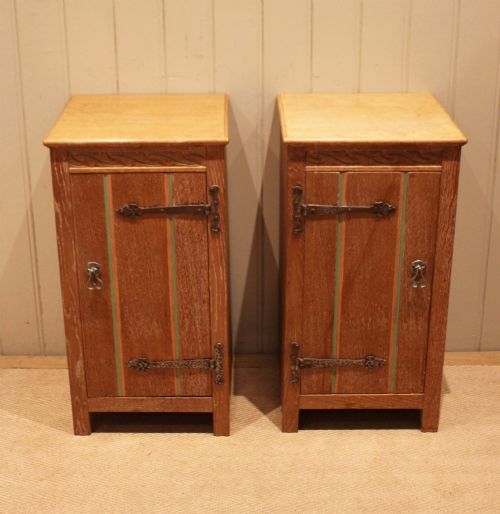
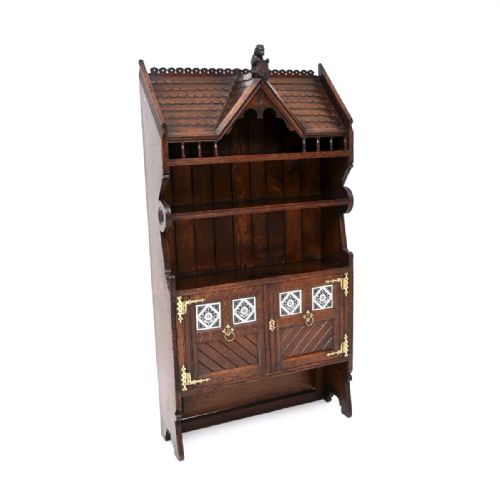
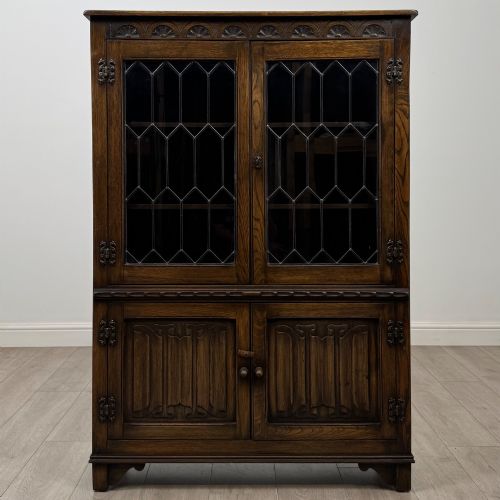
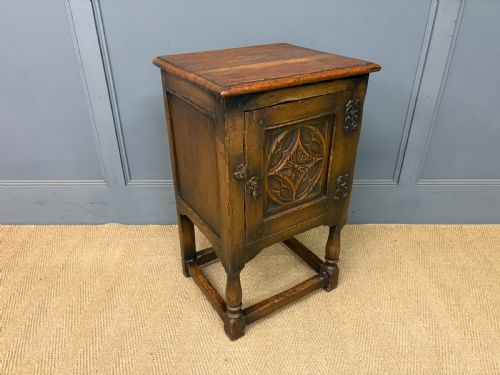
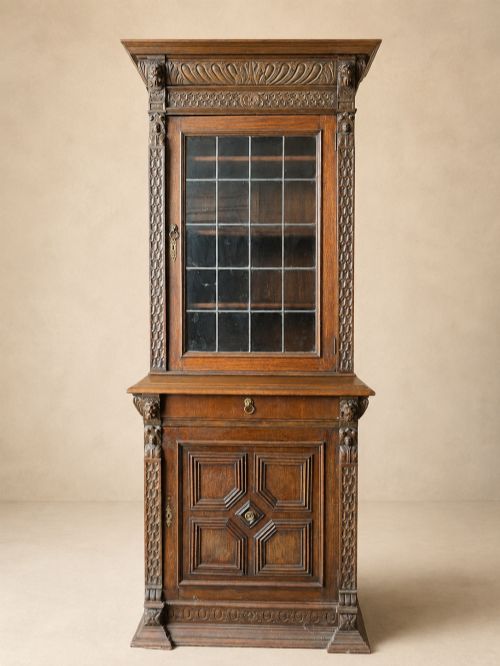
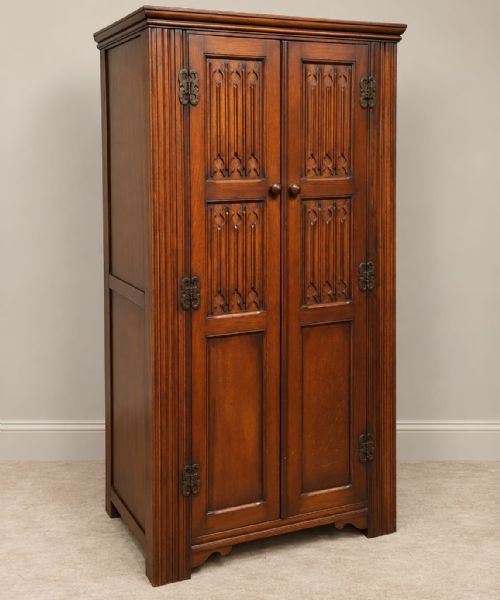
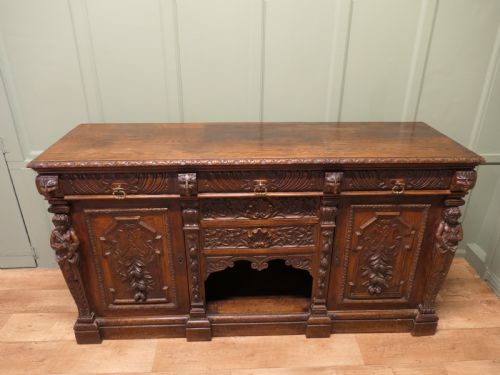
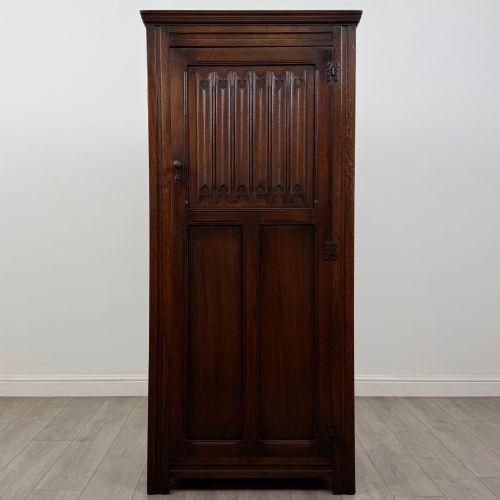
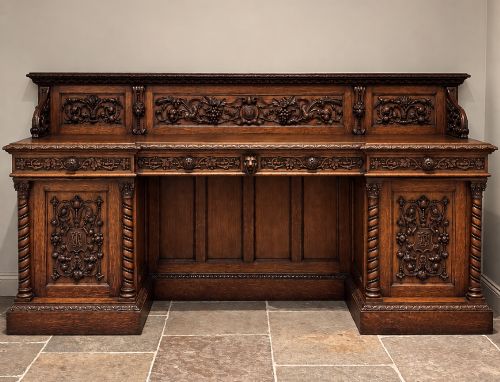
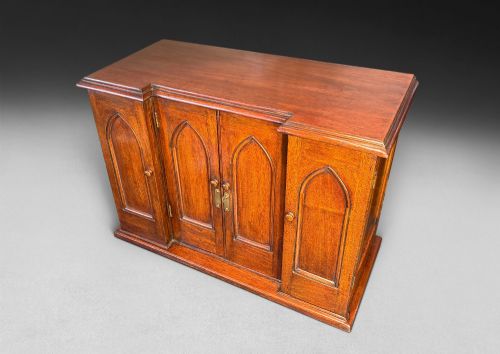
A carved gothic oak cupboard takes many forms on this page, appearing as sideboards, bedside cabinets, wardrobes, and display cabinets alongside dresser bases and smaller tabletop pieces. Buyers searching for a carved gothic oak cupboard encounter works spanning the nineteenth century through the 1930s, with strong representation from the Victorian period, Edwardian era, and the 1920s.
The aesthetic draws heavily on Gothic Revival, Jacobean Revival, and Arts and Crafts styles. Makers utilise architectural elements such as linenfold panels, pointed archways, and detailed motifs like Green Man masks or lion carvings to echo medieval stonework in solid timber.
Materials and Technique
Construction relies primarily on solid oak, occasionally paired with ebonised hardwood, pine, or fruitwoods for contrast and internal structure. Metalwork hardware utilises iron, brass, and wrought iron for hinges, handles, and locks, while select display pieces incorporate leaded or clear glass panels.
Joinery is robust, employing mortise and tenon frames to support deep relief hand-carving. Surfaces receive various finishes, from natural waxed grain and limed treatments to dark polishing, highlighting the dense figure of the timber.
Carved Gothic Oak Cupboard Retail Price Guide 2026
Typical asking prices for carved gothic oak cupboard among the pieces listed under this phrase on Sellingantiques today, from the lower quarter to the upper quarter. They describe what is for sale here now, not the wider market.
A Green Man carved into the timber watches over your hallway, quietly blending medieval forest folklore with Victorian domestic storage.
Judging Quality
Quality rests upon the crispness and depth of the hand-carving, where sharply defined foliage, figures, and tracery separate master carvers from routine production. The choice of timber grain, particularly quarter-sawn oak displaying prominent medullary rays, indicates careful selection by the cabinetmaker.
Structural integrity also defines the tier of a piece, shown by substantial panel thicknesses, tightly fitted joints that withstand heavy doors, and the retention of original iron or brass hardware rather than later replacements.
John Moyr Smith
The Carved Gothic Oak Cupboard Glossary
- Linenfold
- A carved wooden panel motif representing folded parchment or cloth. It appears frequently on Tudor Revival and Edwardian wardrobe doors.
- Green Man
- A sculptural architectural ornament depicting a human face disgorging foliage or vines. This motif symbolises rebirth and recurs across Victorian and nineteenth-century pieces.
- Tracery
- Openwork stonework patterns translated into wooden cabinet panels and glazed doors. It defines the Gothic Revival aesthetic.
- Stretcher Base
- A horizontal wooden brace connecting the lower legs of a cabinet or sideboard for added stability. It is a common feature on larger nineteenth-century dining room storage.
- Ebonised
- Timber treated with chemical stains or black finishes to imitate costly ebony. This technique gained popularity during the Victorian era for dramatic contrast.
Carved Gothic Oak Cupboard: Frequently Asked Questions
How do I care for an oak cabinet?
Feed the timber periodically with a traditional beeswax polish to maintain moisture and prevent the grain from drying out in heated rooms.
Avoid placing these heavy wooden pieces in direct sunlight or near heat sources, which causes the solid oak panels to warp or split.
Are these cupboards suitable for modern clothes storage?
Many examples from the Edwardian period and the 1920s offer deep hanging space or adjustable shelving inside large double wardrobes.
Internal depths vary across older Victorian pieces, so checking specific internal measurements ensures modern hangers fit inside enclosed compartments.
How do I distinguish Gothic Revival from Jacobean Revival?
Gothic Revival items utilise pointed arches, tracery, and vertical ecclesiastical lines derived from medieval architecture. This style dominates Victorian church and domestic furniture.
Jacobean Revival pieces feature heavier geometric mouldings, split spindles, and strapwork ornamentation inspired by seventeenth-century domestic joinery.
Where were these pieces originally placed in a home?
Large sideboards and dresser bases stood in dining rooms to store heavy tableware, serving platters, and bottled spirits. Smaller cabinets and bookcases served sitting rooms and studies.
Wardrobes and bedside chests functioned as bedroom furniture, providing enclosed storage for garments before fitted closets became standard.