




Carved Gothic Library Desk
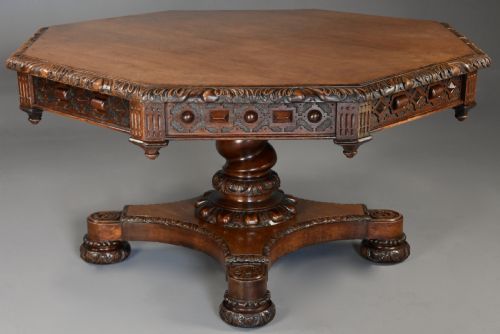
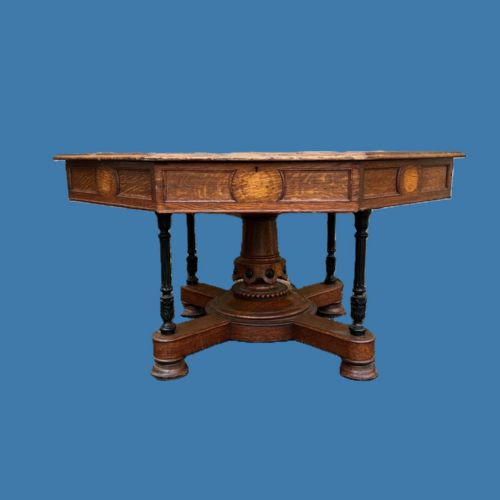
A carved gothic library desk brings heavy timber, pointed arches and rich ecclesiastical ornament directly into a working study.
Carved Gothic Library Desk
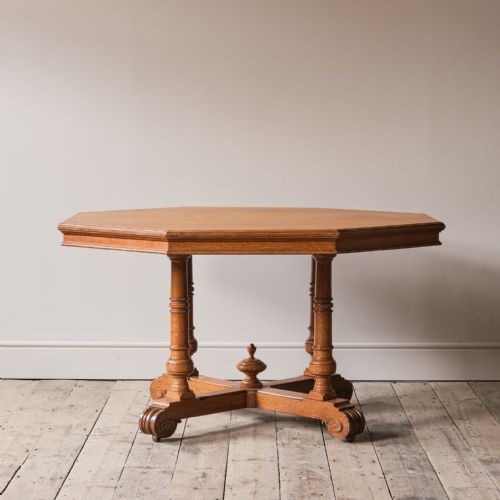
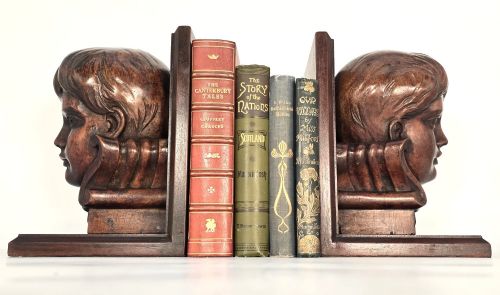
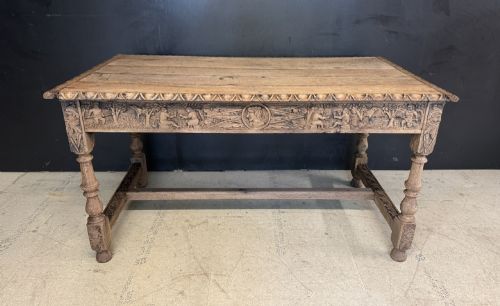
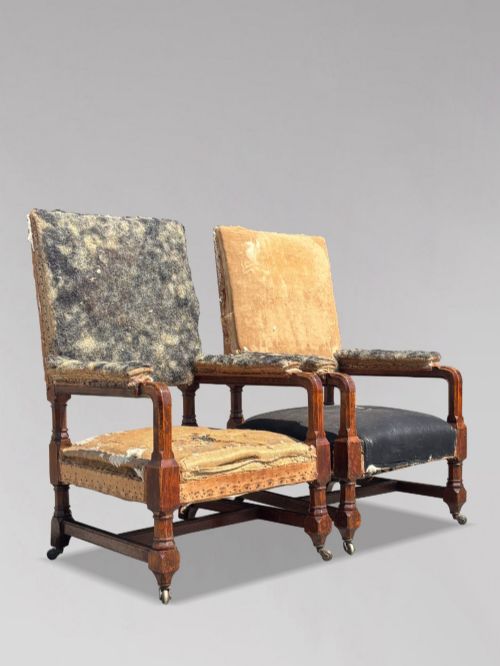
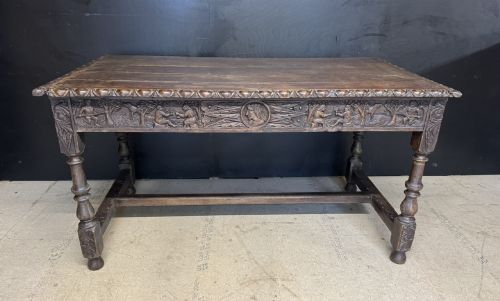
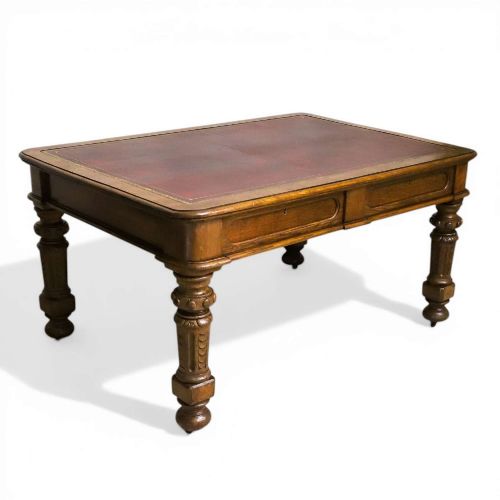
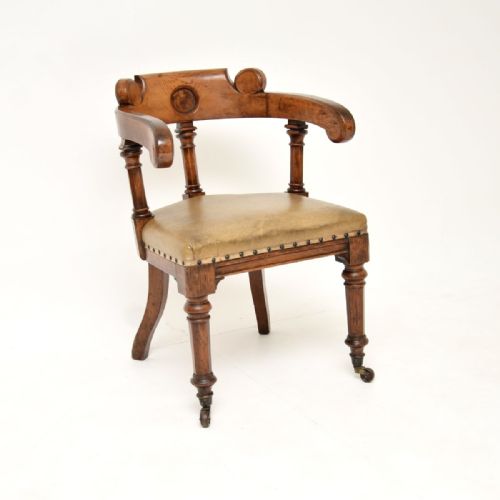
A carved gothic library desk sits at the intersection of nineteenth-century revivalism and heavy scholarly utility, taking the form of writing tables, partners desks and specialised writing chairs rather than simple writing boxes. These pieces emerge predominantly from the Victorian era, particularly the mid to late nineteenth century, spanning decades characterised by a revival of medieval architectural motifs. When exploring a carved gothic library desk, a buyer encounters substantial timber furniture built to anchor a substantial room, often accompanied by matching armchairs, centre tables and bookends.
The prevalent materials shaping these objects are solid oak and walnut, frequently paired with inset leather writing surfaces and brass hardware. While mahogany and rosewood appear in select examples influenced by Chippendale or eclectic revival designs, oak remains the primary medium for conveying the robust architectural character associated with the style. These desks and tables incorporate deep relief carving, traceried panels, and structural elements drawn from ecclesiastical and Tudor precedents.
Materials and construction methods
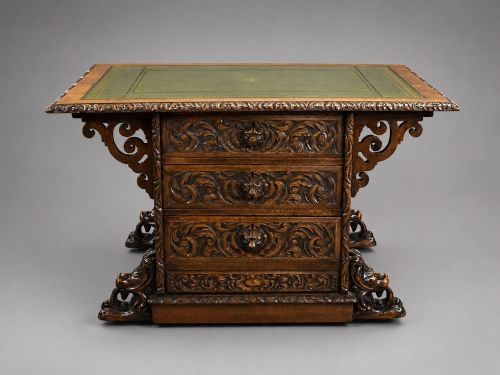
Makers of a carved gothic library desk relied heavily on solid oak, utilising its dense grain to support deep hand-carved details like lions' heads, green men, and pointed archways. Timber boards were joined using traditional framing techniques to withstand the heavy proportions typical of Victorian and Gothic Revival furniture.
Surfaces frequently integrate tooled leather writing inserts, secured with blind tooling or gilt borders, providing a durable and traditional workspace. Metal components, particularly brass handles, hinges and castors, offer functional contrast to the dark, polished woodwork.
Listings for gothic library furniture demonstrate a strong prevalence of nineteenth-century oak, accompanied by occasional examples in walnut, mahogany and rosewood.
Distinctions in craftsmanship
The distinction between ordinary production and superior work rests entirely in the depth, crispness and ambition of the hand carving. Pieces attributed to notable designers or workshops display sculptural confidence in motifs such as tracery and figural corbels, whereas lesser examples rely on shallow, mechanical stamping.
Proportion and structural honesty also define the upper tier of these pieces. Higher-grade examples maintain balanced architectural weight across partners desks and armchairs, utilising dense, well-figured timber that has aged to a deep, even patina.
Gillows·Bruce James Talbert·Charles Bevan
The Carved Gothic Library Desk Glossary
- Gothic Revival
- A nineteenth-century movement that revived medieval architectural forms, pointed arches and decorative tracery in domestic and ecclesiastical architecture and furniture.
- Partners Desk
- A large double-sided writing table designed for two people to work opposite one another, typically fitted with drawers and cupboards on both elevations.
- Green Man
- A decorative architectural motif depicting a human face disgorged from foliage, frequently carved into the woodwork of nineteenth-century revival furniture.
- Tracery
- Openwork ornamental stone or woodwork characterised by intersecting ribs, commonly replicated in the panel work and glazing bars of gothic furniture.
- Cross-Frame
- A structural furniture support utilising intersecting diagonal members, often seen in nineteenth-century armchairs and library tables influenced by earlier folding forms.
Carved Gothic Library Desk: Frequently Asked Questions
How do I identify a true nineteenth century gothic desk?
Examine the construction methods beneath the timber and look for hand-cut joints, thick oak framing, and period-appropriate hardware like brass castors. The carving should show individual chisel marks rather than uniform machine moulding.
Check for inset leather tops with period tooling and timber that exhibits natural oxidation and deep patination accumulated over generations of use.
Where should I place a large partners desk?
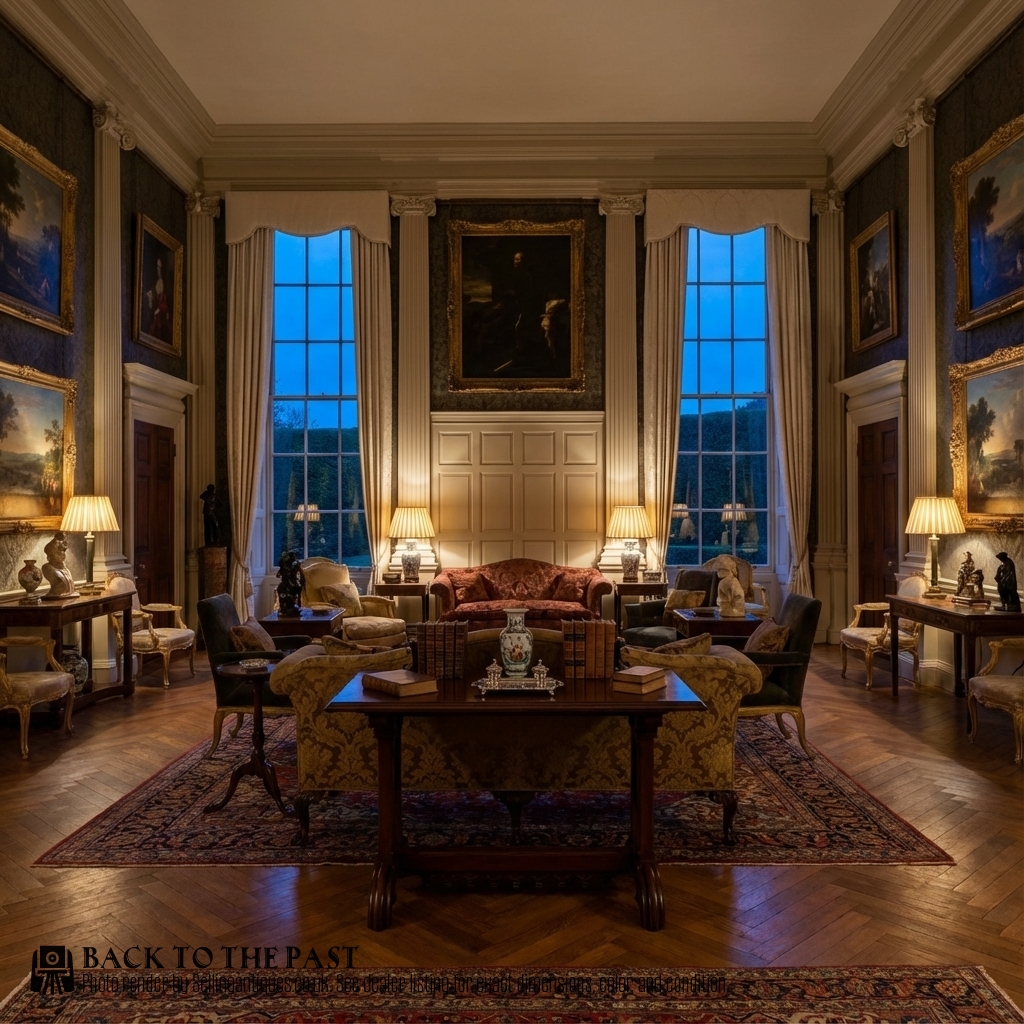
These substantial tables require generous floor space, ideally positioned freestanding in the centre of a room rather than pushed against a wall. Because partners desks finished on all sides, they function best as sculptural centrepieces.
Ensure adequate clearance around the piece for chairs to pull out comfortably, allowing the carved pedestals and panels to remain fully visible from every angle.
What is the difference between gothic revival and jacobean styles?
Gothic revival draws primarily on medieval architecture, featuring pointed arches, trefoils, quatrefoils and ecclesiastical tracery. Jacobean influences lean towards earlier seventeenth-century domestic ornament, displaying strapwork, geometric moulding and heavy bulbous turnings.
Many nineteenth-century library pieces blend these vocabularies, pairing medieval carved panels with seventeenth-century structural proportions.
How do I care for antique leather writing surfaces?
Maintain antique leather by keeping it away from direct sunlight and heat sources that can dry and crack the material. Apply a specialised leather conservation cream periodically to preserve flexibility.
Avoid harsh modern cleaning chemicals, using only a soft, dry cloth for routine dusting of both the leather insert and the surrounding carved oak timber.