





Carved Giltwood Shelf
A carved giltwood shelf brings brilliant metallic warmth and sculptural depth to a room, catching the light across 18th to 20th-century revivals.
Carved Giltwood Shelf
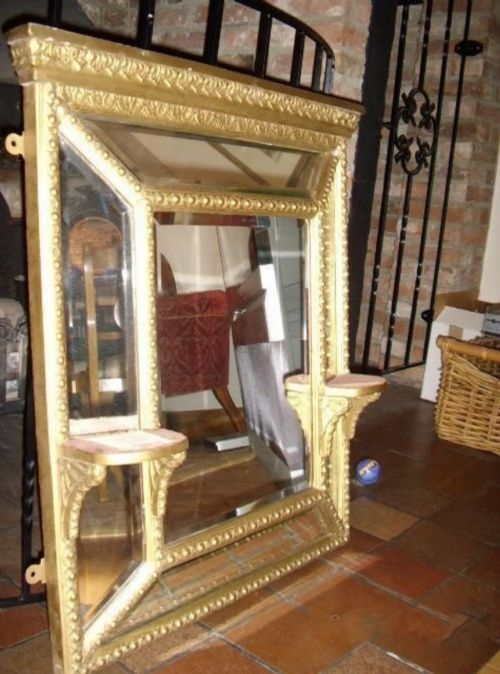
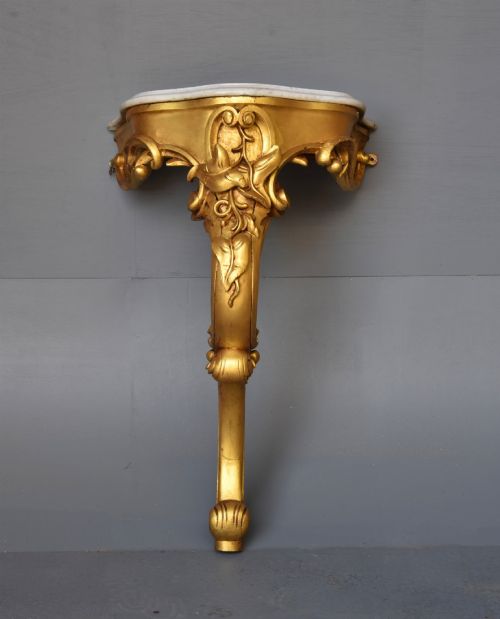
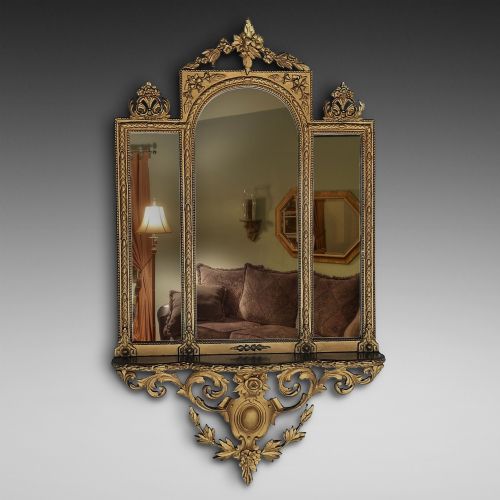
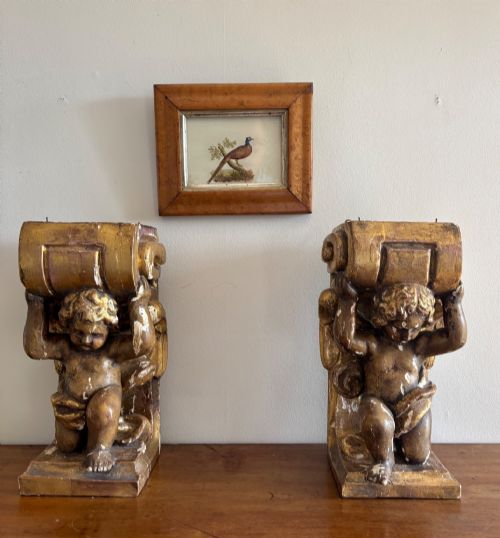
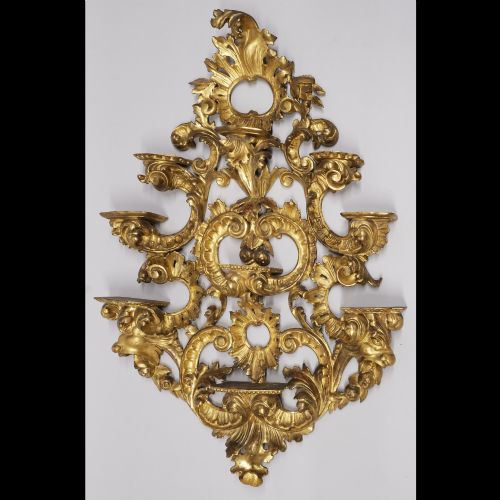
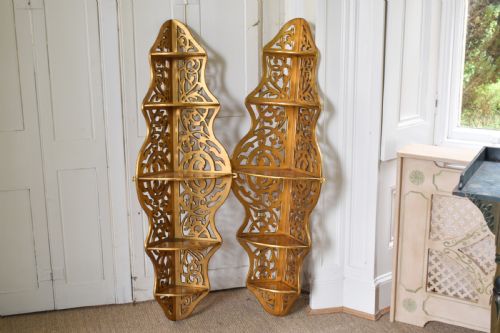
A carved giltwood shelf provides a dramatic ledge for displaying small ornaments or standing alone as a decorative wall piece. You will frequently find these formed as wall brackets, corner shelves, and console additions dating from the 18th to the early 20th century.
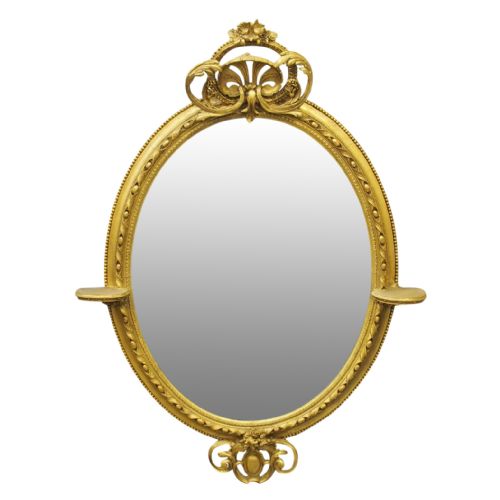
The selection on this page leans heavily toward 19th-century Victorian examples alongside Italian and French Rococo Revival pieces. These range from single wall brackets and matched pairs to elaborate mirror combinations such as girondoles and pier glasses.
Builders and designers originally conceived them to reflect candlelight and anchor grand interior schemes. Today they serve equally well in compact spaces to draw the eye upward and add texture to plain plaster.
How they were made
Makers shaped the foundational body from carved wood, applying gesso layers to smooth the surface before adding fine details. This composite build allowed artisans to carve deep acanthus leaves, cherubs, and scrollwork with crisp definition.
Craftspeople then applied thin gold leaf over the prepared ground, burnishing parts of the metal to a high gleam while leaving other areas matte. Painted elements and mirror glass frequently accompany the gilt finish on Italian and French revival pieces.
Carved Giltwood Shelf Retail Price Guide 2026
Typical asking prices for carved giltwood shelf among the pieces listed under this phrase on Sellingantiques today, from the lower quarter to the upper quarter. They describe what is for sale here now, not the wider market.
Several of these small shelves spent their early days reflecting flickering candlelight instead of holding modern porcelain.
What varies in quality
The crispness of the hand-carved detail beneath the metallic surface dictates the sculptural strength of the piece. Superior examples exhibit sharp undercutting and fluid lines rather than soft, rounded moulding.
The integrity and depth of the gilding further separate standard items from exceptional ones. Original gold leaf develops a rich, mellow patina over the gesso, whereas inferior re-gilding often looks flat and uniform.
Strahan of Dublin·Pauly et Cie
The Carved Giltwood Shelf Glossary
- Giltwood
- Timber coated with gold leaf or gold paint for a decorative metallic finish. This surface layer defines the primary visual appeal of the shelf.
- Gesso
- A plaster mixture applied to wood surfaces to provide a smooth base for carving and gilding. It allows for intricate relief work before the gold leaf is laid down.
- Girondole
- A branched wall mirror designed to hold candles and reflect light around a room. These often incorporate a carved shelf or bracket at the base.
- Rococo Revival
- A 19th-century design style emulating the asymmetrical scrolls, shells, and floral motifs of the 18th century. It dominates the decorative vocabulary of many brackets on this page.
- Pier Glass
- A tall mirror specifically made to hang on the pier wall between windows. They frequently feature an integrated shelf or console component below the glass.
Carved Giltwood Shelf: Frequently Asked Questions
How do I hang a heavy carved giltwood shelf safely?
These decorative ledges require secure fixing directly into wall studs or solid masonry rather than relying solely on plasterboard. Due to the dense timber and gesso construction, proper weight distribution protects both the wall and the antique structure.
Employing a professional installer ensures the bracket remains level and stable under any displayed objects. Check the back fixings carefully before mounting to ensure the original joints can bear the load.
How do I clean a giltwood surface safely?
Dust the carving gently with a very soft, dry brush or a feather duster to remove loose particles. Avoid all commercial cleaning sprays, polishes, and water, which can strip or discolour the delicate gold leaf.
If stubborn grime persists, consult a professional conservator rather than attempting wet cleaning. The thin gold leaf applied over gesso is exceptionally fragile and easily rubbed away.
What is the difference between a wall bracket and a console table?
A wall bracket fixes directly to the wall as a projecting shelf and typically relies entirely on wall support. These often feature decorative hanging aprons or carved supports beneath the main ledge.
A console table stands on legs against the wall, though smaller 19th-century versions can share similar giltwood aesthetics. Some wall consoles bridge this category by incorporating front legs alongside direct wall fixing.
How do I distinguish Victorian revival from 18th-century originals?
Examining the timber beneath the gesso and the composition of the plaster reveals clues about the age of the piece. Victorian and later revival pieces often utilise machine-sawn backing boards or uniform pine substrates.
Style cues also provide guidance, as 19th-century makers frequently exaggerated the Rococo Revival motifs with heavier proportions. Consulting the specific period attribution helps clarify the exact date of manufacture.