

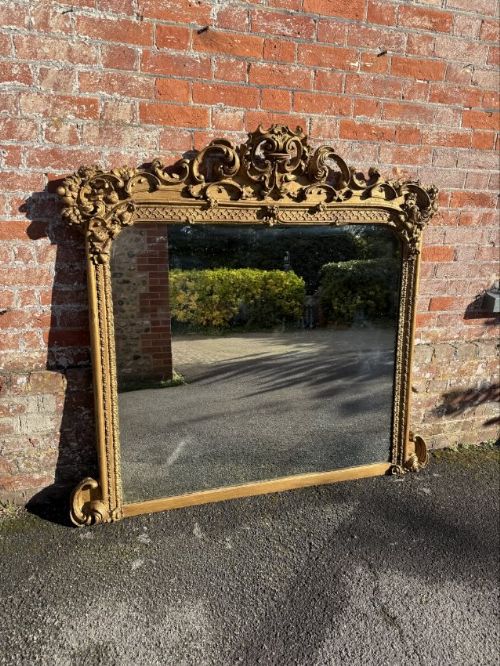
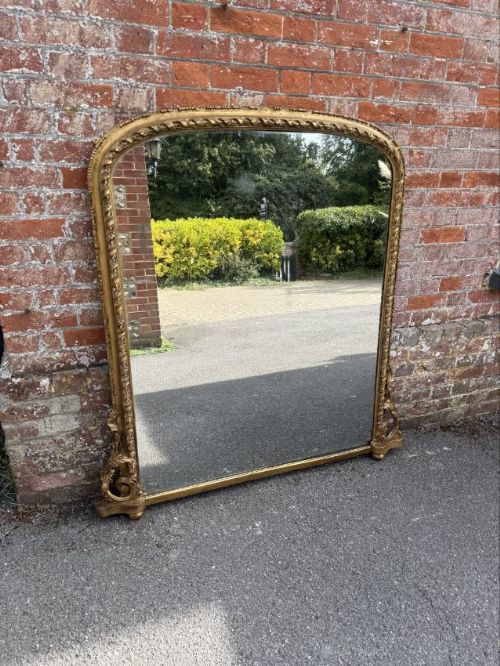
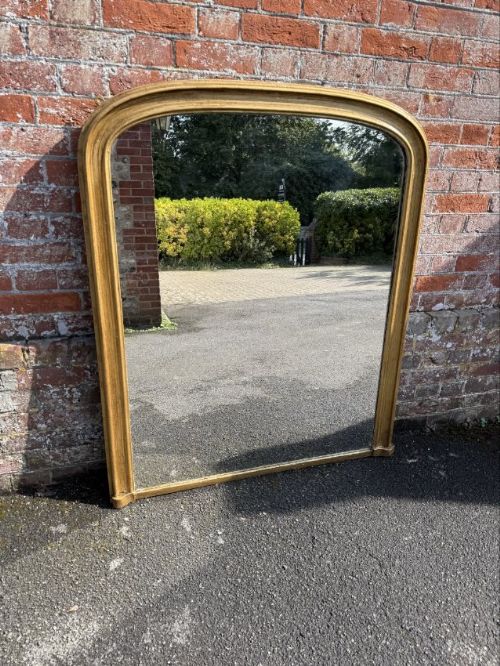
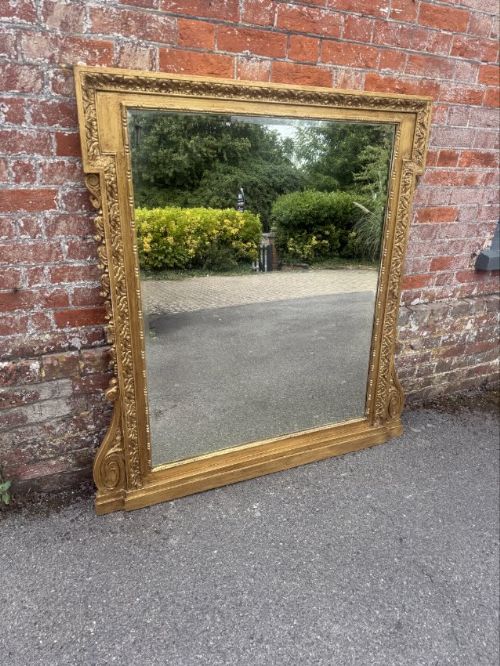
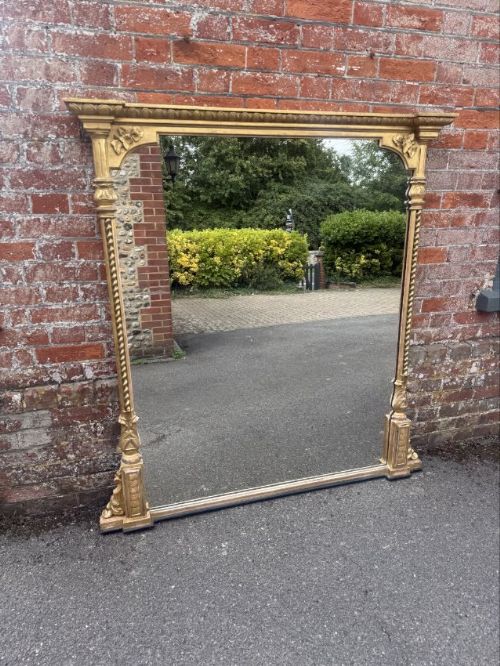
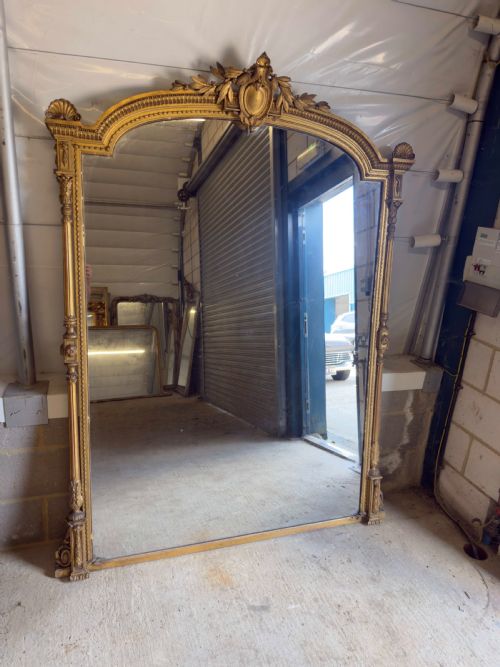


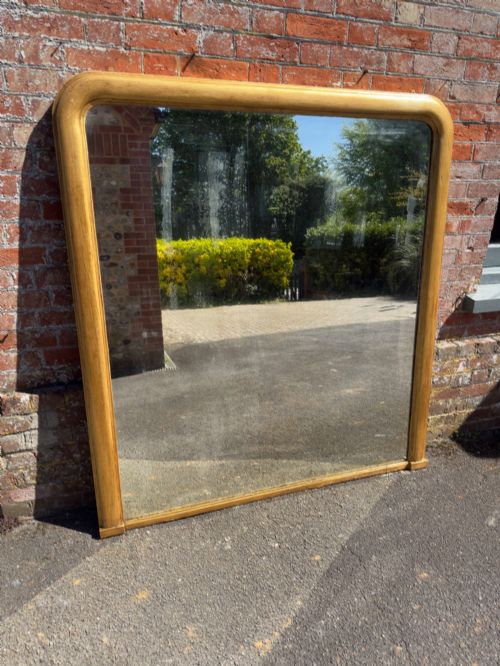


Carved Gesso Chimney Glass
These large carved gesso chimney glass pieces bring imposing 19th-century scale and light to a room, dominated by grand Victorian overmantel mirror forms.
Carved Gesso Chimney Glass
A carved gesso chimney glass typically presents as a large overmantel mirror designed to sit directly above a fireplace hearth. The pieces found here span the 18th century, the Victorian era, and into the 20th century, displaying grand proportions.
Most examples originate from English workshops of the 19th century, featuring arched tops, shaped frames, and rectangular wall mirror formats. Makers also produced French Chateau and Victorian Rococo revival styles to suit formal interior schemes.
The dominant format on this page is the substantial Victorian overmantel mirror, built to command attention over a chimney breast. These items function primarily as architectural focal points that reflect light around drawing rooms and parlours.
Materials and construction methods
Craftsmen built the foundational structure using carved wood, forming robust frames capable of supporting heavy mirror glass. Over this timber base, they applied layers of gesso - a mixture of plaster and binder - to build up intricate decorative reliefs.
Surface decoration relied heavily on the application of gold leaf, giltwood, and metallic paint to achieve a brilliant reflective finish. Artisans also utilised paint and silvering techniques, alongside specialised rope twist and ribbed column mouldings carved directly into the gesso and wood.
Carved Gesso Chimney Glass Retail Price Guide 2026
Typical asking prices for carved gesso chimney glass among the pieces listed under this phrase on Sellingantiques today, from the lower quarter to the upper quarter. They describe what is for sale here now, not the wider market.
Materials recorded across these mirrors include gesso, glass, wood, gold leaf, giltwood, mirror glass, and paint.
What separates the finest examples
Quality in a carved gesso chimney glass rests upon the crispness of the modelling in the gesso relief and the depth of the underlying carved wood. Superior pieces exhibit sharp, well-defined ornamentation like rope twists and ribbed columns that retain their structural integrity.
The choice of surface finish further differentiates the range, with original gold leaf and giltwood displaying a warmer, more nuanced patina than later repainting. Heavier, substantial frames with intact architectural silhouettes and original mirror glass command greater appreciation among collectors.
Ciceri and Co
The Carved Gesso Chimney Glass Glossary
- Gesso
- A plaster-based mixture applied over a wooden substrate to create a smooth surface for carving or gilding. It allows artisans to shape intricate relief details on mirror frames.
- Overmantel mirror
- A large wall-hanging or resting glass specifically proportioned to hang on the wall above a mantelpiece. These pieces often anchor the decorative scheme of a historic room.
- Giltwood
- Timber that has been coated with a thin layer of gold leaf or metallic powder. This finish gives antique frames their characteristic luminous appearance.
- Rococo Revival
- A 19th-century design style drawing on 18th-century French aesthetics characterised by asymmetrical scrolls and natural motifs. It appears frequently on Victorian mirror frames.
- Chimney glass
- A traditional term for a large mirror designed to sit above a fireplace. It serves to bounce firelight and daylight into the darker corners of a parlour.
Carved Gesso Chimney Glass: Frequently Asked Questions
Where should I hang a chimney glass?
These large mirrors are traditionally placed directly above a fireplace mantelpiece to anchor the room's main focal point. They work best when hung securely against a sturdy wall where their height can reflect natural light.
Because of their substantial weight, proper wall fixings into structural studs or masonry are essential for safe placement. They also function effectively on principal living room walls away from fireplaces if the room proportions allow.
How do I identify a Victorian overmantel mirror?
Victorian examples typically feature heavy wooden frames coated in gesso, often displaying arched tops, rope twist carvings, or ornate neoclassical and rococo revival motifs. Examining the backboards, fixings, and the composition of the gesso helps confirm the 19th-century origin.
Stylistic cues such as ribbed columns and giltwood finishes also point directly to the Victorian period of manufacture. Comparing the glass silvering and frame construction provides further clues to its exact age.
What is the difference between gesso and carved wood?
Carved wood forms the structural skeleton and heavy framework of the mirror, providing the necessary strength for large pieces. Gesso is a plaster mixture layered over that wood to build up soft, intricate ornamental details and mouldings.
While the wood bears the physical load, the gesso carries the artistic flourishes and decorative surface relief. Artisans sculpt the gesso before applying gold leaf, paint, or giltwood finishes.
How should I clean an antique gesso mirror?
Dust the carved gesso frame gently with a soft, dry brush to prevent any moisture from damaging the plaster layer. Avoid commercial chemical sprays or excessive water, which can dissolve historic gesso and lift the delicate gold leaf.
Clean the mirror glass itself sparingly using a mild glass cleaner applied to a cloth rather than sprayed directly onto the surface. This prevents liquid from seeping behind the glass and harming the old backing or wooden frame.