


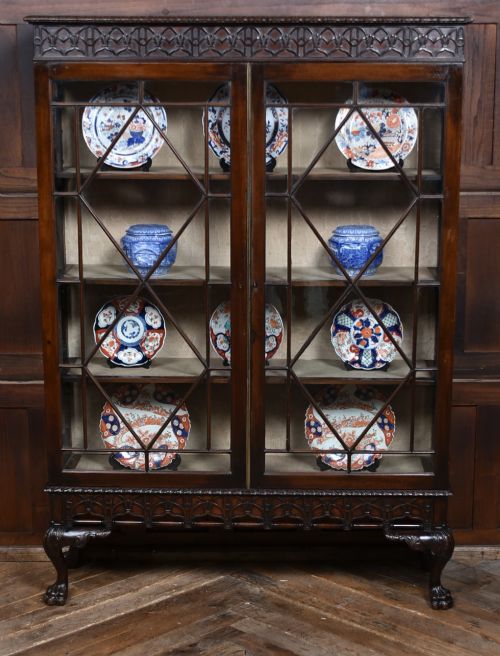


Carved Fretwork Bookcase
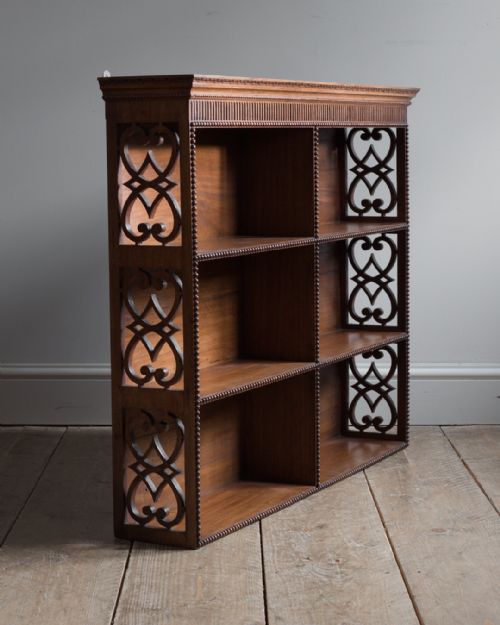
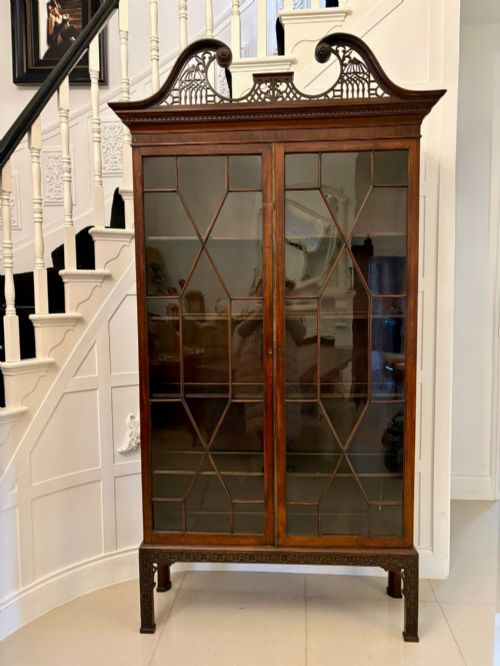
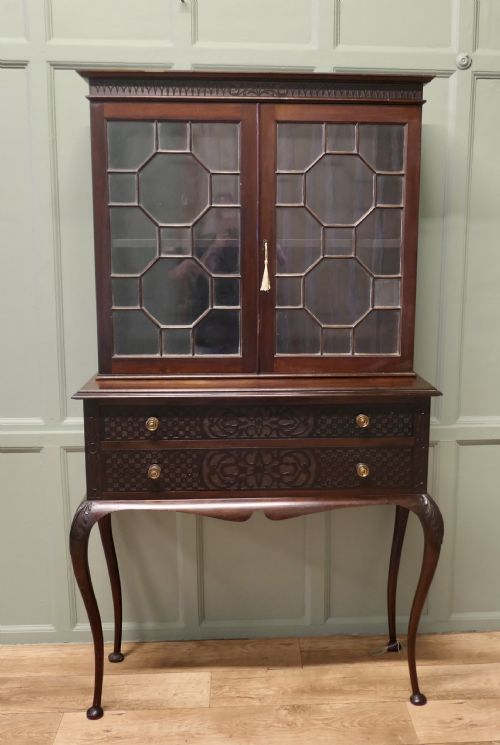
These carved fretwork bookcase pieces are striking timber cabinets and shelves built to display volumes with decorative pierced woodwork.
Carved Fretwork Bookcase
A carved fretwork bookcase combines functional shelving for books with intricate openwork timber decoration, often drawing upon Chinese Chippendale or revival styles. Buyers examining this category encounter forms ranging from large breakfront libraries to compact wall-hanging shelves and display cabinets.
The pieces appearing in this selection span the Victorian, Edwardian, and Regency periods, alongside specific dated examples from the nineteenth and early twentieth centuries. Mahogany forms the backbone of the inventory, accompanied by walnut, burr walnut, oak, padouk, and other dense hardwoods.
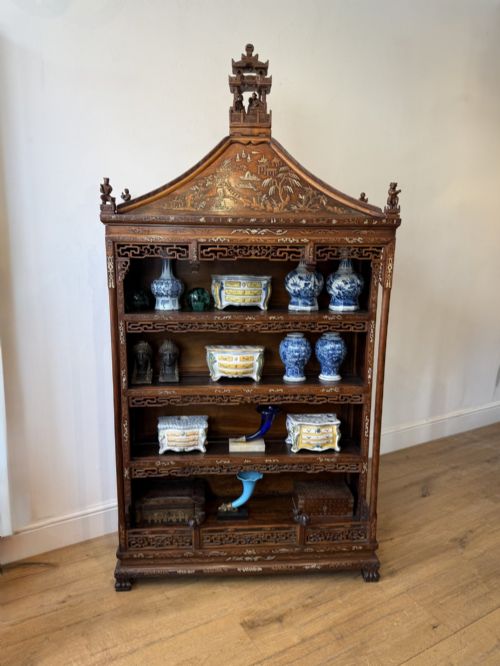
Makers and workshops utilised specific regional designs, resulting in items featuring astral glazing, mirrored backs, and pagoda tops alongside standard shelving. The smaller wall-mounted formats and corner whatnots provide alternative options for homes lacking space for full-size freestanding breakfront cabinets.
Materials and construction methods
Cabinet makers constructed these items primarily from solid and veneered timbers such as mahogany, walnut, and oak, applying surface details through piercing and carving. Fretwork panels require precise hand-cutting or early mechanical jigsaw techniques to achieve the characteristic pierced lattice patterns.
Secondary decorative elements involve brass hardware, glass panes for glazed display doors, and occasional inlaid details using bone or mother-of-pearl. Carved motifs draw heavily on Chinese export and Chinoiserie traditions, integrating pagoda profiles and geometric fret designs directly into the timber frame.
Carved Fretwork Bookcase Retail Price Guide 2026
Typical asking prices for carved fretwork bookcase among the pieces listed under this phrase on Sellingantiques today, from the lower quarter to the upper quarter. They describe what is for sale here now, not the wider market.
Object forms range from compact wall-hanging shelves and corner whatnots to large breakfront library bookcases and glazed display cabinets.
Assessing craftsmanship and condition
Superior examples demonstrate crisp, deep carving in the fretwork panels and tight joinery in the main carcass, whilst lesser items rely on shallow surface stamping or machine-molded embellishments. The crispness of the pierced timber edges and the stability of the timber frame indicate the original workshop standard.
The choice of primary timber also dictates the tier of the piece, with figured burr walnut or dense padouk sitting above standard commercial mahogany or oak. Intricate additions such as bone inlay, brass mounts, and properly fitted astragal glazing elevate the standing of individual cabinets.
Gabriel-Frederic Viardot·Robert Strahan
The Carved Fretwork Bookcase Glossary
- Fretwork
- Decorative woodwork cut into patterns using a fretsaw, creating a light, pierced lattice effect. This technique defines the visual style of these bookcases.
- Astragal
- A small moulded strip of timber dividing panes of glass within a glazed cabinet door. These mouldings form geometric patterns across the front of the display sections.
- Whatnot
- An open set of multi-tiered shelves used for displaying ornaments and small books. They appear frequently in Victorian and Edwardian inventories.
- Breakfront
- A large cabinet design where the central section projects forward from the flanking wings. This architectural form adds depth and presence to larger library pieces.
- Chippendale Revival
- A late nineteenth and early twentieth century style copying the eighteenth century designs of Thomas Chippendale. It heavily influences the carved fretwork and Chinese aesthetic seen in these listings.
Carved Fretwork Bookcase: Frequently Asked Questions
How do I date a carved fretwork bookcase?
Dating relies on identifying the timber selection, construction methods, and stylistic revival markers visible across the piece. Victorian and Edwardian examples often feature machine-assisted fretwork alongside traditional hand-finishing.
Examining the secondary woods inside drawers and behind panels provides further clues to the exact manufacturing decade. Comparing the design against known nineteenth-century revival patterns helps narrow down the origin.
Where should I place a wall-hanging bookcase?
Smaller wall shelves and hanging whatnots require a solid wall capable of supporting the weight of dense hardwood and books. Positioning them away from direct sunlight protects vulnerable timber finishes and glass panels.
These compact formats suit studies, hallways, or living rooms where floor space is limited. Their open fretwork design benefits from neutral wall backgrounds that highlight the pierced patterns.
What is the difference between a display cabinet and a bookcase?
Bookcases focus primarily on housing volumes with open or glass-fronted shelving designed for heavy loads. Display cabinets incorporate mirrored backs, delicate glazing, and prominent framing intended for fragile ornaments and porcelain.
Many examples on this page blur these boundaries by combining book storage with display compartments behind glazed doors. The inclusion of fretwork panels usually serves an aesthetic purpose in both types.
How do I clean and maintain antique mahogany timber?
Routine maintenance involves dusting with a dry, soft cloth to prevent particulate buildup on carved fretwork surfaces. Avoid modern silicone sprays that can penetrate the timber pores and degrade the original polish.
Applying occasional high-grade beeswax nourishes the mahogany or walnut grain and preserves the lustre. Maintaining stable room humidity prevents the timber from splitting around intricate pierced joints.