




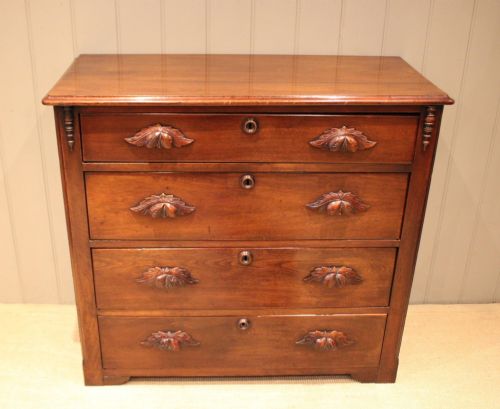


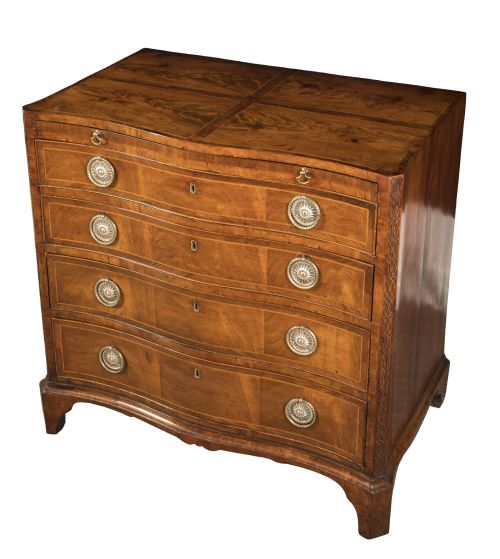

Carved Four Drawer Chest
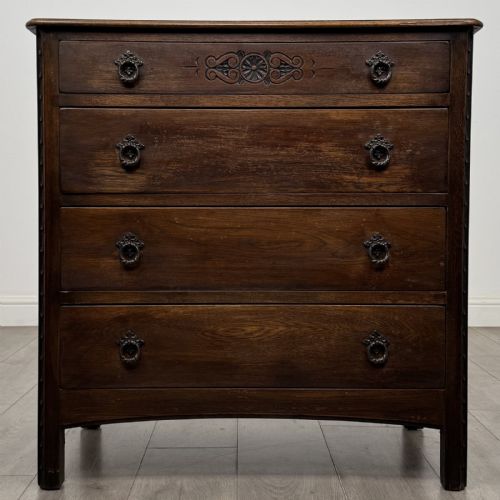
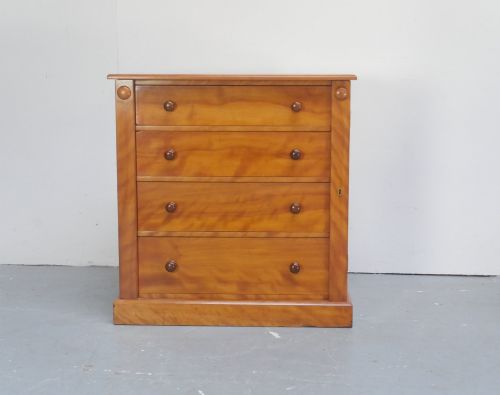
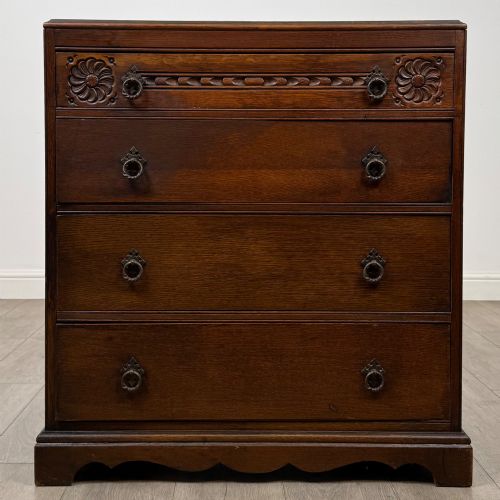
A carved four drawer chest brings substantial timber storage into a room, offering deep drawers set beneath heavily detailed woodwork.
Carved Four Drawer Chest
A carved four drawer chest provides robust storage across four graduated or equal tiers, standing upon sturdy feet or flush bases. These pieces emerge across the seventeenth, eighteenth, and nineteenth centuries, spanning periods from William and Mary through the Edwardian era and into nineteen-thirty.
The version most commonly met on this page is constructed from oak or walnut, often featuring carved detail concentrated upon the top drawer or upper frieze. Makers span British, Scandinavian, French, and American origins, employing timbers such as mahogany, elm, birch, pine, and burr walnut.
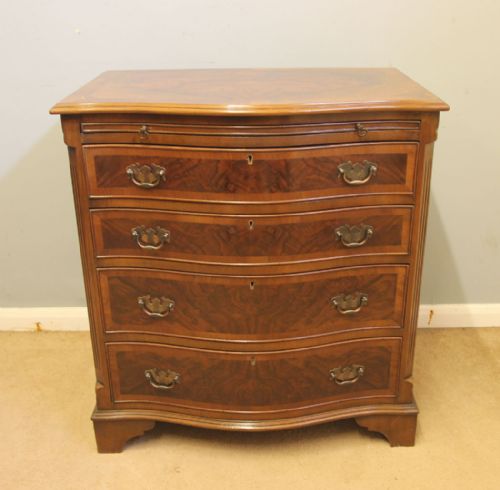
Forming the backbone of traditional bedroom storage, these chests appear in various formats including serpentine outlines, bow fronts, and neat Scottish or compact proportions. Brass hardware frequently accompanies the timber construction, alongside occasional iron fittings.
How they were made
Cabinetmakers utilised solid timbers such as oak, walnut, and mahogany, frequently applying figured veneers like burr walnut and elm to primary display surfaces. Carving was executed by hand directly into the solid wood of drawer fronts, top rails, and mouldings.
Internal drawer boxes relied on traditional joinery methods, while brass and iron handles were fitted securely to the drawer faces to handle daily use. Secondary woods like pine and birch were often employed for internal drawer linings and structural framing.
A Scottish chest arrives with an inherent stubbornness, refusing to sit level on modern floors without a sympathetic wedge of cedar.
What varies in quality
The depth and crispness of the hand-carved detail separate standard workshop output from exceptional examples, particularly where carving decorates the top drawer or framing. Timber selection dictates presence, with well-figured burr walnut, rich mahogany, and dense oak commanding higher regard than plain or utility woods.
Proportion and structural line define the architectural success of a piece, especially in serpentine and bow front forms where curves demand precise geometry. Original brass hardware, uncompromised timber surfaces, and period-appropriate feet maintain the integrity of the design.
James Shoolbred
The Carved Four Drawer Chest Glossary
- Serpentine
- A front outline that curves outward at the centre and inwards at the sides, or vice versa. This fluent shape demands exceptional skill from the cabinetmaker.
- Bow Front
- A convex, outwardly curved front profile popular in Georgian and Victorian furniture. It softens the boxy geometry of standard storage pieces.
- Burr Walnut
- Timber taken from the warted excrescence of a walnut tree, yielding swirling grain patterns. It was sliced into thin veneers for high-status cabinet work.
- Frieze
- The flat horizontal band situated beneath the top surface of a chest. Carvers frequently decorated this zone with linear or floral motifs.
- Graduated Drawers
- A set of drawers decreasing in depth from bottom to top, improving the visual balance of the piece. This layout is common in eighteenth and nineteenth-century examples.
Carved Four Drawer Chest: Frequently Asked Questions
How do I date a carved four drawer chest?
Dating relies on timber choice, construction methods, and stylistic cues present in the hardware and carving. Seventeenth-century pieces typically display heavy oak construction with geometric mouldings, while eighteenth-century examples favour mahogany and refined serpentine outlines.
Nineteenth-century and Victorian pieces often incorporate machine-sawn elements alongside hand-carved details, reflecting industrial shifts in workshop practices. Examining internal drawer linings and timber shrinkage helps confirm the age of the piece.
Where should I place a carved four drawer chest?
These chests function effectively in bedrooms, hallways, or living spaces where substantial storage and display surface are required. Their deep drawers accommodate bulky clothing, linens, or household items while keeping surfaces clear.
Position the chest away from direct heat sources and strong sunlight to protect vulnerable wood veneers and prevent timber splitting. Ensuring adequate clearance allows the drawers to open smoothly without obstruction.
What is the difference between oak and walnut chests?
Oak chests generally date from earlier periods, presenting a heavier, more rustic aesthetic with deep, robust carving suited to Jacobean or Arts and Crafts tastes. Walnut offers a smoother, darker grain that accepts fine carving and high-polish finishes with great clarity.
Walnut and burr walnut are frequently associated with more formal eighteenth-century and Victorian revival designs. Oak remains prized for its durability and structural honesty across centuries of domestic use.