
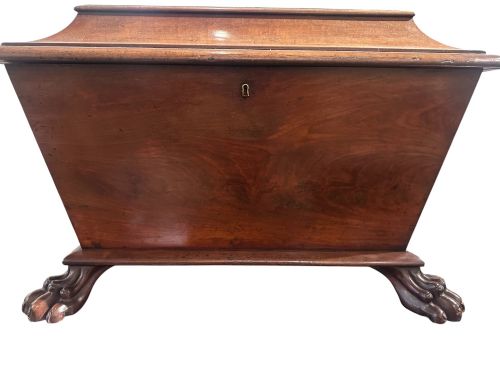


Carved Foot Cellarette
A carved foot cellarette brings architectural dignity and practical bottle storage to a room through solid timber and carved support.
Carved Foot Cellarette
A carved foot cellarette is a dedicated wine cooler or storage vessel designed to hold bottles safely near the dining table. Most examples on this page date from the Georgian, Regency, and nineteenth-century periods, showing substantial timber construction.
The dominant form is the sarcophagus shape, often elevated on carved paw feet or similar supports. These pieces frequently appear in rich timbers such as mahogany, reflecting their original domestic function in formal dining rooms.
Materials and construction
Makers built these pieces primarily from solid and figured mahogany, along with occasional examples in oak, padouk, and walnut. Brass mounts, metal linings, and lead or zinc components frequently appear inside or as structural hardware.
Joinery methods focused on creating robust, heavy containers capable of holding liquid and heavy glass bottles. Carved details on the feet and borders required skilled hand-chiselling to shape solid hardwoods.
Some nineteenth-century cellarettes contained internal lead or zinc linings so servants could pack them with ice without rotting the wood.
Assessing quality and proportion
Quality rests in the choice of timber, particularly the grain figuration selected for the main body and lid. Well-executed carving on the feet separates standard utilitarian boxes from more ambitious cabinet work.
Proportion and scale dictate the visual weight of the piece within a room. Finer examples maintain crisp lines in their sarcophagus moulding and integrate the support feet harmoniously with the primary body.
Gillows
The Carved Foot Cellarette Glossary
- Cellarette
- A lockable container used for storing wine bottles near the dining table. They evolved from simpler buckets into elaborate architectural pieces during the eighteenth and nineteenth centuries.
- Sarcophagus form
- A casket-like shape with a domed or peaked lid tapering slightly toward the base, popular during the Regency period. This profile lent a monumental, classical appearance to dining room furniture.
- Paw foot
- A carved furniture support shaped like the foot of an animal, often a lion or bear. These feet lift the heavy body of the wine cooler off the floor.
- Figured mahogany
- Timber exhibiting a decorative, wavy, or mottled grain pattern prized for surface aesthetics. Cabinetmakers used veneers or solid boards of this wood on primary display surfaces.
Carved Foot Cellarette: Frequently Asked Questions
What is a cellarette?
A cellarette is a specialised piece of furniture designed to store and cool wine bottles for the dining room. They were typically placed beneath the sideboard or in a corner.
Most surviving examples date from the Georgian and Regency eras, constructed to hold multiple bottles securely in individual internal compartments.
How were they used?
Servants filled the internal metal or lead-lined compartments with ice or cold water to chill wine before it was served to guests at the table.
They also served as secure storage for valuable vintages, often featuring locks to prevent unauthorized access by household staff.
Where should I place one?
These pieces suit living rooms, studies, or dining spaces where their substantial wooden forms can act as focal points. Their flat tops allow them to hold lamps, books, or decorative objects.
Keep them away from direct heat sources to protect the aged mahogany and prevent timber splitting.
How do I spot a Regency piece?
Regency examples often feature bold sarcophagus shaping, heavy brass handles, and classical carved feet such as animal paws. The timber selection typically emphasises rich, dark mahogany.
Construction details like hand-cut dovetails and original metal liners help confirm the period of manufacture.