



Carved Floral Chest Drawers
These carved floral chest drawers combine substantial storage with intricate marquetry, offering a tangible piece of historic craftsmanship that anchors a traditional room.
Carved Floral Chest Drawers
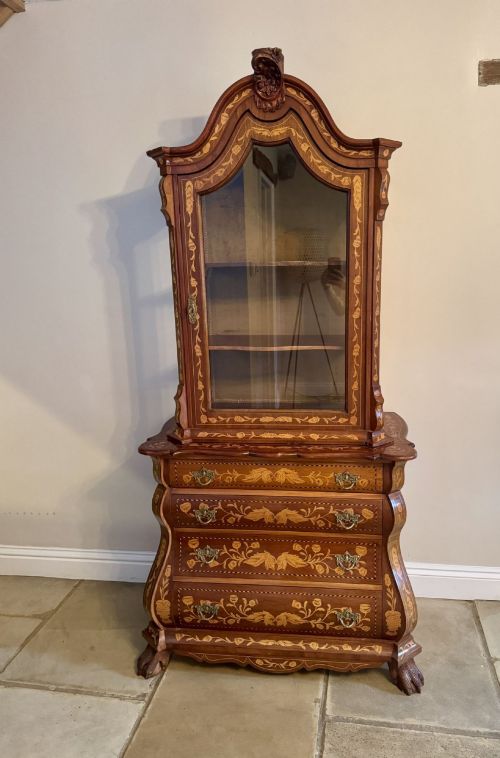
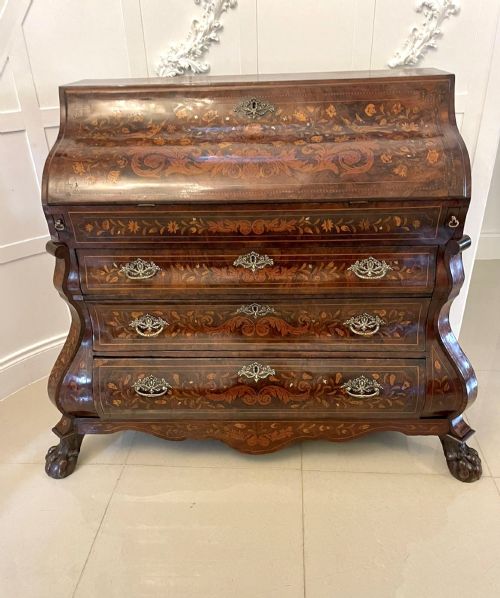
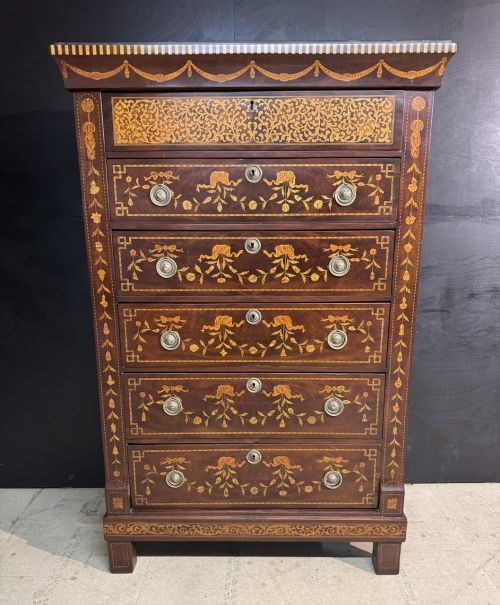
When you search for carved floral chest drawers, you encounter a selection of historic case pieces ranging from 17th century oak coffer styles to 18th century marquetry commodes and bureaux. The pieces on this page span several distinct periods including the Georgian era, the 19th century, and early 20th century revivals, reflecting diverse European influences.
The dominant forms you are most likely to meet on this page are tall chests of drawers, bombe commodes, and bureau desks fitted with fall fronts. These items originate from English, Dutch, French, and Italian workshops, displaying regional preferences in proportion, silhouette, and ornamental detailing.
Mule chests and writing desks also appear under this designation, bridging the gap between utilitarian storage and specialised writing furniture. Each object utilises traditional drawer configurations housed within solid timber frames, frequently decorated with floral imagery.
Materials and construction methods
Construction relies heavily on sturdy timbers such as oak, walnut, mahogany, and fruitwood, providing a stable carcase for the decorative facades. Carved elements stand out in solid oak, while elaborate floral patterns utilise fruitwood inlay and marquetry techniques across bureau flaps and drawer fronts.
Marquetry execution involves cutting thin veneers of contrasting woods, including burr walnut, to create pictorial floral motifs that are meticulously fitted into the primary surface. Metalwork hardware such as brass handles and escutcheons secure the drawer assemblies and complement the timber tones.
Carved Floral Chest Drawers Retail Price Guide 2026
Typical asking prices for carved floral chest drawers among the pieces listed under this phrase on Sellingantiques today, from the lower quarter to the upper quarter. They describe what is for sale here now, not the wider market.
Dutch cabinetmakers hid secret compartments behind tulip marquetry drawers, leaving modern owners hunting for forgotten floorboards.
Assessing quality and execution
Quality separates along the precision of the marquetry work and the crispness of any carved details. Finer pieces demonstrate tight, seamless veneer joints in the floral patterns and sophisticated shaping to the carcase, such as bombe silhouettes.
The integrity of the underlying timber construction and the retention of original brass hardware significantly influence the standing of a piece. Finer examples maintain harmony between the structural carcase and the decorative surface embellishments.
The Carved Floral Chest Drawers Glossary
- Marquetry
- Decorative veneer work arranged in pictorial patterns, often depicting floral motifs using various coloured woods. This technique requires meticulous cutting and fitting.
- Bombe
- A bulging, outward-curving chest or commode shape popular in continental European furniture design. It demands advanced woodworking skill to achieve the curved facade.
- Mule chest
- A traditional storage chest featuring one or two drawers at the base beneath the main lift-top compartment. They evolved from simpler coffers to incorporate practical drawer storage.
- Bureau
- A desk featuring a sloping hinged writing flap that conceals an interior arrangement of small drawers and pigeonholes. These often sit atop a chest of drawer base.
- Coffer
- A heavy wooden chest traditionally used for storing valuables, linens, or documents. Early examples display robust pegged oak construction and hand carving.
Carved Floral Chest Drawers: Frequently Asked Questions
How do I care for marquetry furniture?
Marquetry surfaces require stable indoor humidity levels and protection from direct sunlight to prevent the fine fruitwood veneers from drying out or lifting. Regular dusting with a soft, dry cloth preserves the polished finish without harming the inlay.
Avoid placing wet items or silicone-based polishes on the wood, as these can penetrate the delicate veneer joints and cause permanent damage.
What is the difference between a bureau and a chest?
A chest of drawers provides vertical storage accessed solely through stacked exterior pull-out drawers. A bureau incorporates a sloping writing flap that drops down to reveal a fitted interior workspace.
Both forms frequently share floral marquetry decoration and similar period construction methods, but serve distinct functional purposes.
How do I identify a William and Mary period chest?
William and Mary furniture dates from the late 17th century and typically showcases rich walnut timbers, geometric veneer patterns, and early marquetry techniques. These pieces often feature sturdy structural proportions and applied mouldings.
Examining the interior secondary woods and joinery methods helps confirm the age and regional origin of these early case pieces.