





Carved Figural Torchere
A carved figural torchere brings dramatic Venetian theatre indoors, holding a light or plant upon the shoulders of a hand-carved wooden figure.
Carved Figural Torchere
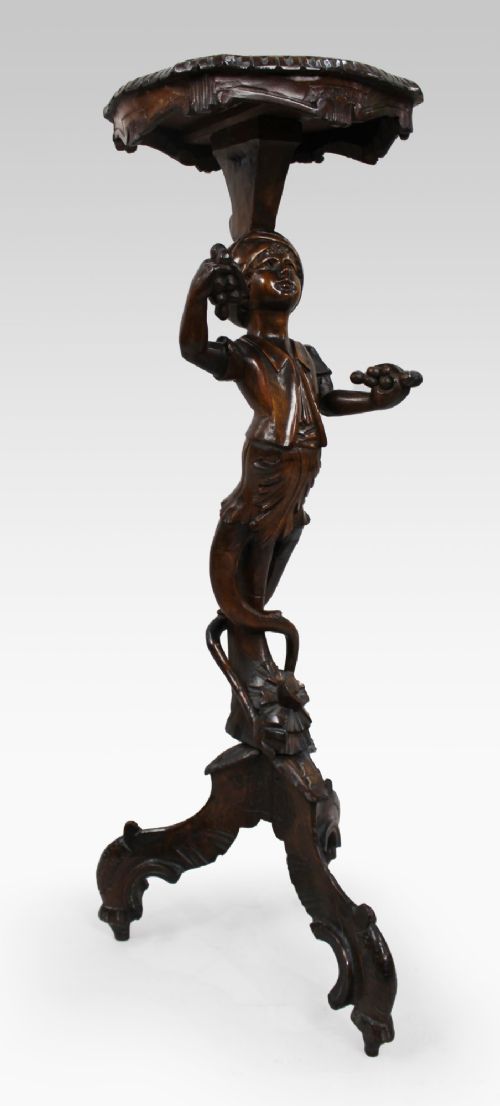
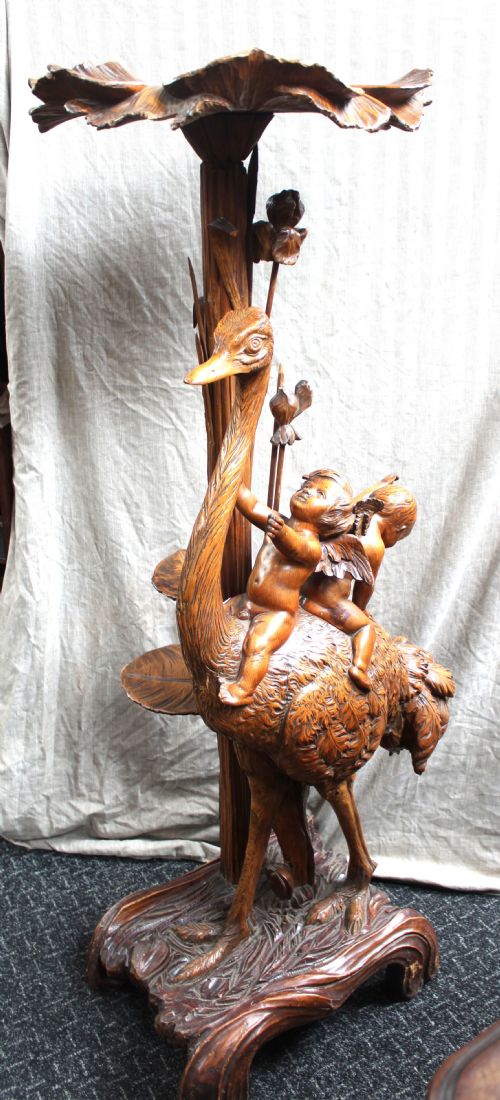
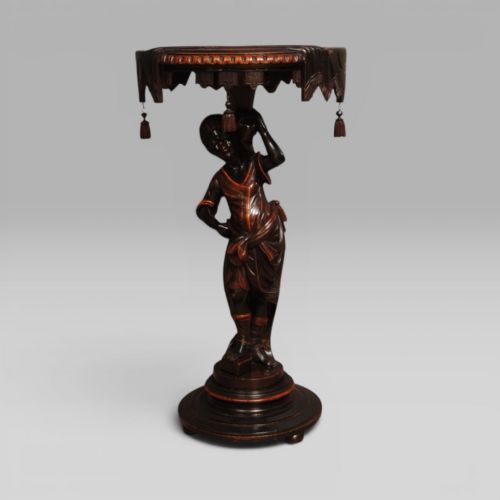
A carved figural torchere stands as a bold sculptural support, taking the form of a caryatid, crouching figure, or blackamoor holding a tray, torch, or basin. These heavy display pieces function as tables, plant stands, and standard lamps within grand interiors.
Most examples found here date from the nineteenth century, particularly the eighteen-eighties and eighteen-nineties, alongside Edwardian and nineteen-twenties interpretations. Venetian Baroque, Renaissance Revival, and Rococo revivals dominate the forms, reflecting a Victorian appetite for theatrical Italian woodwork.
The objects serve primarily to elevate lamps or decorative urns in hallways and reception rooms. Buyers encounter standing figures carved from walnut, oak, and other woods, often enriched with polychrome paint and gold leaf.
How they were made
Surface decoration frequently involved layers of gesso applied to carved wood, which was then painted in polychrome schemes or gilded with gold leaf. This combination of carved wood, gesso, and metallic leaf gave Venetian pieces their characteristic richness and shimmering finish.
Carved Figural Torchere Retail Price Guide 2026
Typical asking prices for carved figural torchere among the pieces listed under this phrase on Sellingantiques today, from the lower quarter to the upper quarter. They describe what is for sale here now, not the wider market.
Listings here span the nineteenth century, Edwardian era, and nineteen-twenties, featuring walnut, oak, and glass components.
What varies in quality
The vigour of the carving separates exceptional figures from stiff, mechanical reproductions. Master carvers captured tension in limbs and lifelike expressions in the faces of crouching figures and caryatids, whereas lesser examples appear flat and hastily rendered.
The integrity of the original surface finish dictates desirability. Pieces retaining their authentic polychrome paint and gold leaf without heavy modern overpainting command greater respect among collectors of nineteenth-century revival furniture.
The Carved Figural Torchere Glossary
- Torchere
- A tall stand designed to carry a light or candle, evolving into nineteenth-century pedestals for lamps and urns. These decorative supports often take human form in Italian revival designs.
- Caryatid
- A sculpted female figure serving as an architectural support in place of a column. They appear frequently on nineteenth-century pedestals holding up tabletops.
- Polychrome
- The practice of decorating architectural elements or sculpture in a variety of colours. Venetian figures often utilise this technique alongside gold leaf to heighten realism.
- Gesso
- A plaster mix applied to wood surfaces as a base for painting and gilding. This smooth layer allowed carvers to achieve crisp detail before applying gold leaf.
- Blackamoor
- A decorative sculptural figure, often depicted in exoticised historical dress holding a tray or light. These pieces reflect eighteenth-century Venetian tastes revived during the Victorian era.
Carved Figural Torchere: Frequently Asked Questions
What is a carved figural torchere used for?
These sculptural stands support table lamps, standard lamps, or heavy ceramic bowls in large rooms and hallways.
Historically designed to illuminate dark corners, they continue to function as striking display pedestals for plants and decorative objects.
How do I date a nineteenth-century figure stand?
Dating relies on examining the timber species, the tool marks beneath the base, and the composition of the gesso layers.
Stylistic cues such as Venetian Baroque revival motifs and nineteenth-century construction methods help separate genuine period pieces from later copies.
Are these pieces made of solid wood?
Carved figural supports are typically fashioned from solid hardwoods like walnut or oak to bear the weight placed upon them.
Softer woods or composite materials sometimes form the internal structures or subsidiary elements beneath gesso and gold leaf finishes.
How do I care for a gilded wooden pedestal?
Gilded and polychromed surfaces require gentle dusting with a soft, dry brush to protect the delicate gold leaf and paint.
Keeping the wood away from direct sunlight and sudden temperature changes prevents the underlying gesso from cracking or lifting.